How to Mix Wood Tones Without Making a Room Feel Disjointed
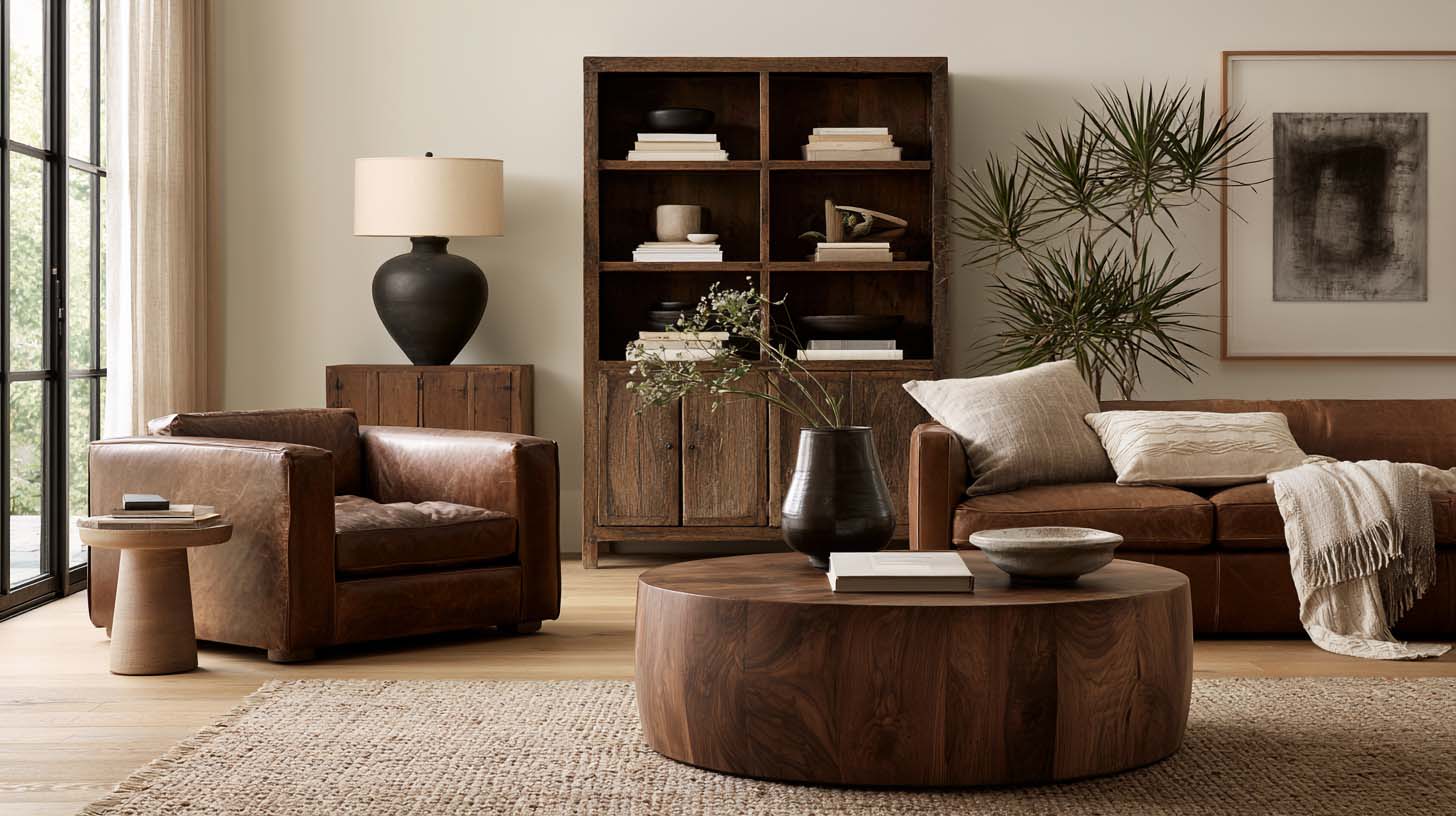
Most homes contain more wood than we initially realize. There are the floors, of course, but then come the dining table, cabinetry, doors, trim, bookshelves, coffee tables, side tables, picture frames, desks, and chairs. Very quickly, the question becomes unavoidable: does all of this wood need to match?
Fortunately, no. In fact, some of the most sophisticated interiors deliberately combine several different wood species and finishes. The difference is that those rooms don't treat every piece of wood as an independent decision. They establish relationships.
Learning how to mix wood tones is therefore less about finding identical finishes and more about understanding undertones, contrast, repetition, and visual hierarchy. Once you understand those principles, mixing wood becomes considerably less intimidating.
First, Stop Trying to Match Everything
Walk through an old house that has been furnished thoughtfully over several generations. You may encounter oak floors, a mahogany desk, walnut chairs, an antique pine chest, and cherry cabinetry. Nothing matches perfectly, yet somehow, it belongs.
Compare that with a room purchased entirely from one furniture collection: matching coffee table, matching end tables, matching console, matching bookcase. Everything coordinates, yet the room can feel strangely artificial. This reveals an important distinction: cohesion and uniformity aren't the same thing. Uniformity comes from making things alike. Cohesion comes from creating enough relationships between different things that they still feel as though they belong together. Wood is particularly good at this because natural variation is already part of its character. The objective shouldn't be eliminating those differences. It should be organizing them.
Designer Eyes
When evaluating a room, stop asking whether the woods match. Instead, look for relationships between them. Does one wood clearly dominate? Does another deliberately contrast? Does a third repeat somewhere else? Those relationships matter considerably more than identical stain colors.
Choose a Dominant Wood Tone First
Every successful composition needs hierarchy. When mixing wood, one finish should usually function as the dominant tone. In many homes, that decision has already been made for you. If you have hardwood floors throughout the room, they're likely the dominant wood simply because of their visual acreage. In another room, it might be extensive cabinetry. In a library, perhaps floor-to-ceiling walnut millwork establishes the dominant language.
Once you've identified that primary wood, stop treating every subsequent purchase as a blank slate. Instead ask: what relationship should this new piece have with the dominant wood? It can reinforce it, or it can provide deliberate contrast, but it shouldn't simply introduce another unrelated brown. This is where many rooms begin feeling disjointed. Nothing is necessarily ugly; there are simply too many competing wood identities without any clear hierarchy.
Understand the Undertone Before the Species
One of the easiest mistakes is shopping by species name alone: "these are both oak, so they should work together." Not necessarily. Depending on the cut, finish, stain, age, and lighting, two pieces of oak can look dramatically different.
Instead, learn to identify wood undertones. Warm woods often reveal hints of red, orange, honey, amber, or gold. Cooler woods may lean toward gray, taupe, muted beige, or subtle olive. Some woods remain comparatively neutral. This matters because your eye notices temperature relationships even when you don't consciously recognize them. A gray-washed table placed over strongly orange flooring can feel uncomfortable despite both pieces being attractive individually. The issue isn't necessarily the difference in color. It's the disagreement underneath it. For a deeper explanation of identifying these temperatures, see our guide to Warm Wood vs. Cool Wood.
Don't Fear Contrast
Once people realize woods don't need to match, they often make another mistake. They choose finishes that are almost identical. This can actually be more difficult than choosing obvious contrast.
Imagine medium-brown hardwood flooring with a dining table that's only slightly darker. If the undertones aren't identical, the combination may appear as though you attempted to match them and failed. Now imagine those same floors with a substantially darker walnut table. Suddenly, the difference looks intentional. The eye understands the relationship immediately: one is light, one is dark, and there is no confusion about whether they were supposed to match. This is one of the great paradoxes of mixing wood: sometimes greater contrast creates greater harmony.
Designer Eyes
When two finishes are close but not quite right, don't automatically search for something closer. Try moving farther apart. A decisive contrast often looks considerably more sophisticated than an unsuccessful near-match.
Mixing Wood Furniture With Wood Floors
Before you keep reading, grab our free color palette guide.
Wood floors create one of the most common dilemmas. Homeowners see an enormous wooden surface and assume every piece of wooden furniture must somehow coordinate with it. That would severely limit the room.
Instead, treat the floor as the foundation rather than the furniture specification. If you have medium oak floors, for example, you might introduce a dark walnut coffee table and repeat that darker wood through a console or picture frames. If your floors are very dark, lighter oak or ash furniture can prevent the room from becoming visually heavy. The goal is not floor equals table equals chairs equals cabinetry. The goal is floor plus furniture plus architecture equals one coherent composition.
Rugs also become enormously useful here. A rug interrupts the direct comparison between wood furniture and wood flooring, allowing each material to maintain its own identity. This is one reason properly scaled rugs do more than introduce softness. They help organize material relationships throughout a room. Our Rug Size Guide explores this idea further.
Repeat Each Important Wood Tone
Introducing contrast isn't enough. You also need repetition. Imagine a room with warm oak floors and one dark walnut cabinet. The cabinet may look isolated. Add a walnut coffee table on the opposite side of the room and something changes. The first piece no longer appears accidental. You've created a pattern.
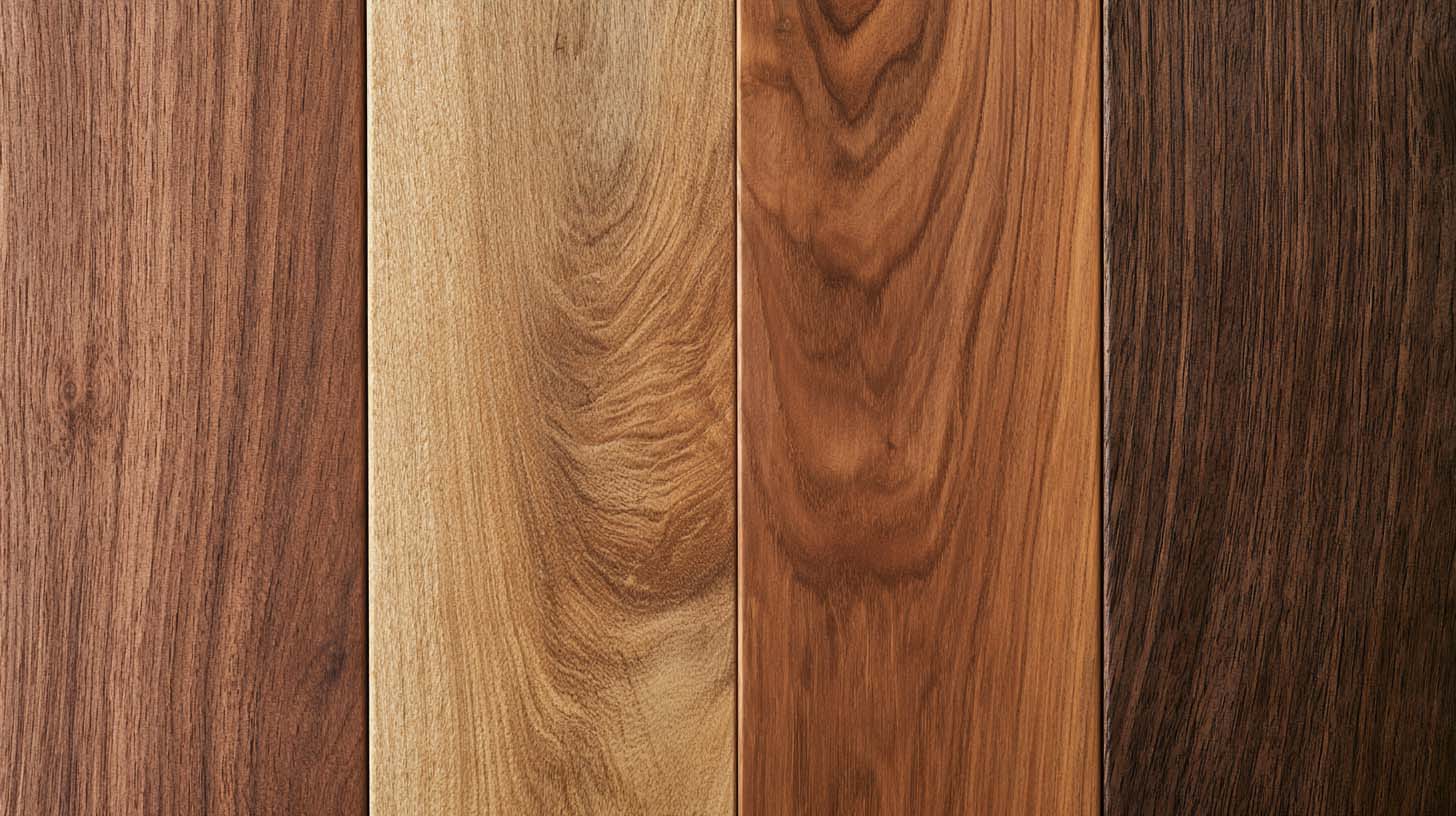
This doesn't mean every wood needs to appear three or four times, but important secondary finishes generally benefit from an echo somewhere else in the composition. That repetition might be subtle. A walnut desk could relate to walnut picture frames. A mahogany table might find companionship in an antique box. Oak cabinetry could communicate with the frame of an occasional chair. The pieces don't need to come from the same manufacturer, or even be the same species. They simply need enough visual similarity for the eye to recognize the relationship.
Use Other Materials as Bridges
A room shouldn't consist entirely of wood. This sounds obvious, but it's especially important when multiple wood tones are involved. Leather, wool, linen, stone, metal, glass, and plaster create breathing room between wooden surfaces.
Consider a walnut coffee table sitting directly on oak flooring. The comparison between the two woods is immediate. Place a large wool rug underneath it, and suddenly the walnut isn't competing directly against the oak. Each material gets its own territory. The same principle applies elsewhere. A brass lamp can sit comfortably on mahogany. A leather chair can mediate between oak floors and walnut shelving. Stone can introduce a neutral pause between several warmer materials. Good interiors aren't merely collections of compatible objects. They're sequences of materials.
Designer Eyes
Pay attention to what sits between two wood finishes. Sometimes the solution to conflicting woods isn't changing either wood. It's introducing a third material that gives them enough separation to coexist.
Mixing Wood Cabinets, Furniture, and Trim
Kitchens, studies, libraries, and open-concept rooms introduce another challenge: fixed architectural wood. Cabinetry and trim carry more visual authority than a side table because they belong to the architecture. Treat them accordingly.
If cabinetry is the dominant wood, furniture should respond to it rather than compete for equal attention. This doesn't mean matching the cabinetry. A room with white oak built-ins might look beautiful with a darker walnut desk. The contrast establishes hierarchy. But adding cherry chairs, reddish flooring, honey-toned tables, and orange-stained trim to the same room could quickly become visually confused. Architecture should establish the sentence. Furniture should complete it.
Pay Attention to Grain, Not Just Color
Color isn't the only characteristic differentiating wood. Grain matters. Some woods appear quiet and orderly. Others are highly expressive. Rift-sawn white oak often presents relatively straight, disciplined lines. Walnut can introduce broad flowing movement. Ash has a more pronounced grain. Burl wood can become extraordinarily active.
When several highly figured woods compete within one room, the result can become visually noisy even if their colors coordinate beautifully. Think of grain as pattern. You probably wouldn't combine five assertive textile patterns without considering their relationship. Wood deserves the same attention. If one piece has dramatic grain, allow quieter woods to support it. This is especially important with large furniture such as dining tables, desks, cabinetry, and case goods.
Let Age and Patina Participate
Perfectly matching woods becomes even less realistic when antiques enter the room. Fortunately, that's part of their appeal. Wood changes with age. Sunlight alters color, finishes mellow, edges wear, and patina develops.
An antique chest shouldn't look like it was manufactured yesterday to coordinate with your new dining table. Its difference tells part of the story. The objective is simply to make sure that difference feels intentional within the broader room. This is where collected interiors become richer than coordinated ones. A home assembled over time naturally develops variations that no furniture showroom can reproduce convincingly. Rather than removing those variations, good design gives them context.
Be Careful With Too Many Wood Tones
Mixing is not permission for randomness. A room containing one dominant wood and one or two supporting finishes can feel wonderfully layered. A room containing seven unrelated wood tones can become difficult to understand.
There isn't a strict numerical rule. The question is whether your eye can identify a hierarchy. If every wooden object demands equal attention, simplify. If one tone establishes the foundation while the others support or contrast with it, you're probably moving in the right direction. This is the same principle we explore in What Makes a Room Feel Cohesive? Cohesion isn't achieved by removing variety. It's achieved by organizing it.
Lighting Can Change the Woods You Thought You Chose
Never evaluate wood finishes under only one lighting condition. Natural daylight can reveal undertones that disappear at night. Warm artificial lighting can intensify amber and red tones. Cooler illumination may emphasize gray.
A walnut sample that appeared beautifully neutral in a brightly illuminated showroom can become considerably warmer inside a dim library. Whenever possible, bring samples into the actual room. Place them near the floor, against the cabinetry, beside the furniture they'll accompany. Then observe them in morning light, afternoon light, and under the fixtures you'll use after sunset. Materials don't exist independently of lighting. We perceive the two simultaneously. This is one reason layered lighting has such an enormous effect on the way interiors feel.
A Simple Framework for Mixing Wood Tones
When you're unsure whether several woods belong together, don't begin by asking whether they match. Work through the room in this order:
Identify the dominant wood. Usually the flooring, cabinetry, millwork, or largest furniture piece.
Determine its undertone. Does it lean warm, cool, or relatively neutral?
Choose whether secondary woods should harmonize or contrast. Don't accidentally land somewhere between the two.
Repeat important secondary tones. Give the eye enough evidence to understand that the choice was intentional.
Separate woods with other materials. Use rugs, upholstery, stone, metal, and textiles to prevent excessive competition.
Consider grain. Balance highly expressive woods with quieter ones.
Evaluate everything in the room itself. Lighting can completely change the relationship.
This framework works whether you're combining two woods or furnishing an entire house.
The Room Should Feel Collected, Not Coordinated
There is an important difference between a room that has been coordinated and one that has been collected. Coordinated rooms often reveal the shopping process. Everything seems to have arrived together. Collected rooms reveal the owner.
Perhaps there is an old campaign chest beside a contemporary sofa, a walnut writing desk inherited from family, oak floors original to the house, or a mahogany side table discovered while traveling. None of these objects needs to match. They need context. And that is ultimately what good design provides. It allows different objects, different periods, and different materials to coexist without losing their individuality.
Final Thoughts
Learning how to mix wood tones isn't really about mastering a complicated set of decorating rules. It's about learning to see relationships. Identify the dominant wood, understand its undertone, introduce contrast deliberately, repeat important finishes, allow other materials to create separation, and pay attention to grain, architecture, lighting, and proportion.
Do that, and the room no longer needs matching wood. It needs something far more interesting: a shared visual language. The best interiors aren't assembled from objects that all look alike. They're assembled from objects different enough to be interesting, and related enough to belong.
Want every wood and finish chosen together? Explore Full-Service Interior Design
Frequently Asked Questions
Can you mix different wood tones in the same room?
Yes. Mixing wood tones can create a richer, more collected interior. Establish one dominant wood, pay attention to undertones, and repeat secondary finishes so they feel intentional.
Do wood furniture and wood floors need to match?
No. Furniture can contrast beautifully with wood flooring. In many cases, deliberate light-and-dark contrast looks more sophisticated than attempting to find an imperfect match.
How many wood tones can you mix in one room?
There is no absolute number, but most rooms benefit from a clear hierarchy. One dominant wood with one or two supporting tones is often easier to manage than numerous unrelated finishes.
Can you mix warm and cool wood tones?
You can, but the combination requires greater care. If the temperatures strongly conflict, use deliberate contrast, repetition, and intermediary materials to make the relationship feel intentional.
Should all wood furniture be the same color?
No. Matching every wood finish can make a room feel overly coordinated. Different finishes add depth when they share compatible undertones, intentional contrast, or repeated visual characteristics.
What should I do if my wood furniture clashes with my floors?
First identify whether the problem is color, undertone, or lack of contrast. Sometimes introducing a rug between the furniture and flooring is enough. In other cases, choosing a distinctly lighter or darker furniture finish creates a more intentional relationship.

Facebook
Instagram
Youtube