How Big Should a Coffee Table Be? The Rules of Scale and Proportion
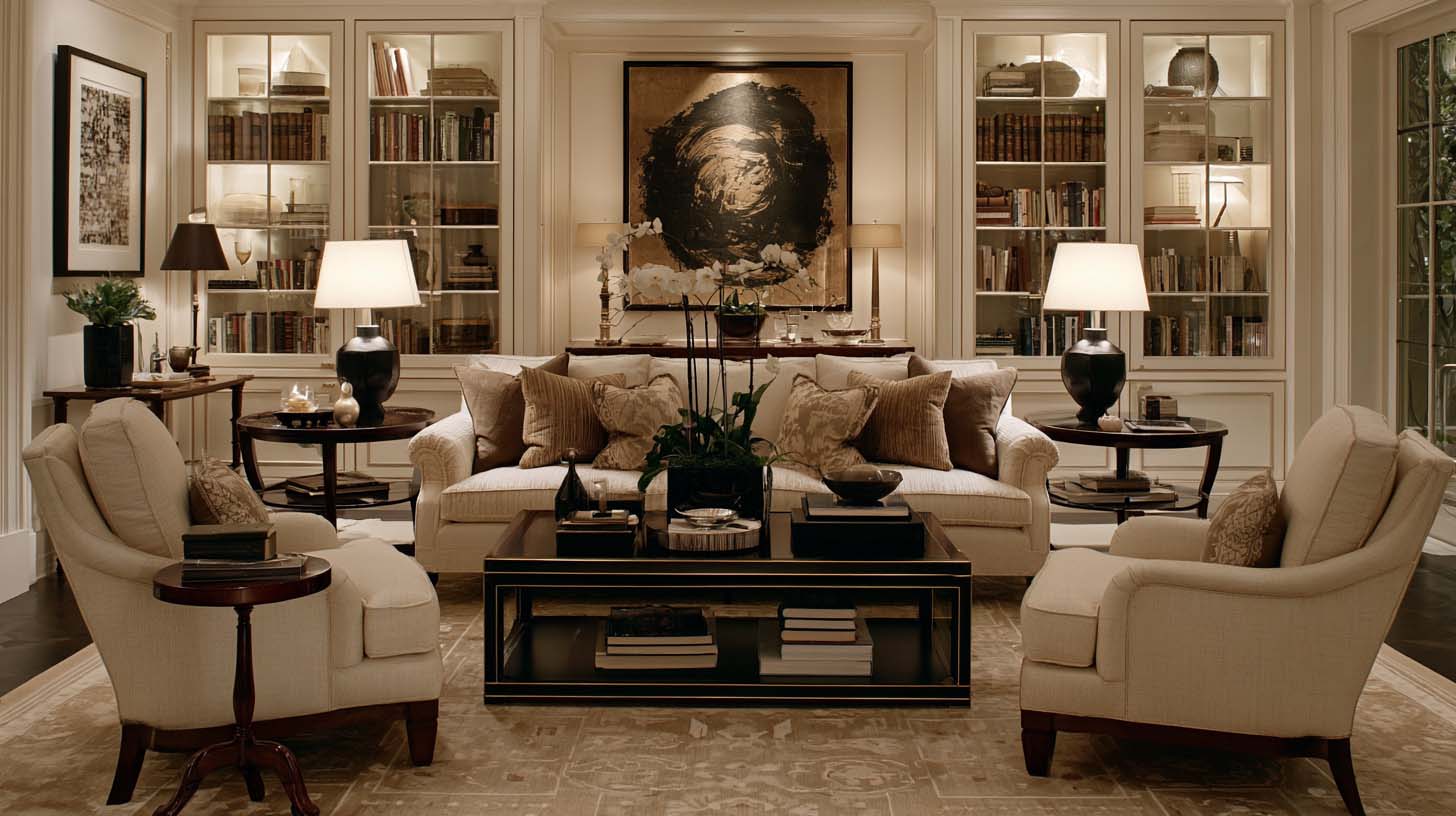
A coffee table can be beautiful and still be completely wrong for the room. The material may be exceptional, the craftsmanship may be impressive, and the shape may suit the architecture perfectly. Yet if the table is too small, the entire seating arrangement can somehow feel weaker.
This is one of those design problems people frequently sense before they understand. The sofa feels substantial, the chairs feel comfortable, the rug seems appropriate, but in the middle of everything sits a coffee table that appears to be apologizing for its presence.
Understanding the right coffee table size isn't simply about memorizing dimensions. It's about understanding proportion: how the table relates to the sofa, the surrounding chairs, the rug, and the amount of space the entire seating group occupies. Get those relationships right, and even a simple coffee table can make a room feel remarkably composed. Get them wrong, and an expensive room can still feel unresolved.
The Coffee Table Is the Center of the Composition
We tend to think of coffee tables as accessories. Designers don't. In a living room, the coffee table often occupies the literal center of the primary furniture arrangement. The sofa faces it, chairs turn toward it, the rug sits beneath it, objects gather on top of it, and people reach toward it. That gives the coffee table an architectural responsibility far greater than its relatively simple function suggests. It must hold the seating arrangement together.
Imagine four people standing in a circle. Move them farther apart without changing the size of the circle they're standing around, and suddenly the relationship begins to weaken. Furniture behaves similarly. A small table surrounded by substantial seating creates too much unresolved space between the center and the edges of the composition. The pieces stop feeling connected.
Designer Eyes
Don't evaluate a coffee table by looking at the table. Look at the negative space surrounding it. If the empty floor between the table and seating becomes more visually dominant than the table itself, the composition may need something larger.
The Basic Coffee Table-to-Sofa Proportion
A useful starting point is to choose a coffee table approximately two-thirds the length of your sofa. This isn't an unbreakable law. It's a proportion. A 90-inch sofa, for example, will generally feel more comfortable beside a coffee table around 60 inches long than one measuring only 36 inches.
Why? Because the table acknowledges the visual weight of the sofa. A substantial sofa creates a long horizontal line, and the coffee table should respond with enough width to participate in that same composition. Go dramatically smaller, and the table begins looking incidental. Go excessively large, and it can overpower the seating. The objective is visual conversation, not mathematical perfection.
Why Undersized Coffee Tables Make Rooms Feel Weak
This is one of the most common mistakes we see. Homeowners choose a table because it fits comfortably within the available floor space. Technically, it works. Visually, it doesn't.
The problem becomes particularly obvious with large sofas. Imagine a generous 96-inch leather sofa paired with a small 30-inch round table. The table isn't anchoring the sofa. It's floating in front of it. The same problem appears when two large club chairs sit opposite the sofa. Now the seating group has considerable visual weight around its perimeter and almost nothing at the center. The composition feels hollow. This is why larger coffee tables can sometimes make a room feel more organized rather than more crowded. They fill the correct space.
Designer Eyes
Scale isn't about making everything large. It's about making objects substantial enough to acknowledge one another. A large sofa doesn't automatically require a massive table. It does require a table that looks as though it belongs in the same room.
How Far Should a Coffee Table Be From the Sofa?
The table must feel connected to the seating while remaining comfortable to navigate. A useful range is approximately 14 to 18 inches between the sofa and coffee table. That usually provides enough room for someone to walk through while keeping the table close enough to reach comfortably.
But again, the measurement is a starting point. Consider how the room will actually be used. If the table regularly holds drinks, books, or remotes, excessive distance quickly becomes inconvenient. If the room receives significant foot traffic through the seating arrangement, slightly more space may be appropriate. The important thing is avoiding the strange middle ground where the table is neither conveniently close nor intentionally distant. Furniture relationships should feel deliberate.
Coffee Table Height Matters More Than People Think
Before you keep reading, see our full room-by-room approach to style direction.
Height changes both function and visual character. As a general guideline, a coffee table should sit approximately level with the sofa cushions or slightly below them. This creates a comfortable relationship between the horizontal surfaces.
A table sitting dramatically above the seat can feel awkward and intrusive. One sitting extremely low may look elegant in certain contemporary interiors but become inconvenient in a room designed for everyday use. Pay particular attention to sofas with unusually high or low seat heights. A standard coffee table selected without considering the actual sofa may produce an unexpected mismatch. The sofa and table don't need identical heights. They simply need to acknowledge each other.
Coffee Table Size for Sectionals
Sectionals make coffee table sizing more interesting because the table isn't responding to one straight sofa. It's responding to an enclosure. An L-shaped sectional creates a central pocket of negative space, and the coffee table should occupy that space confidently without obstructing circulation.
This is why small rectangular tables often look especially weak inside large sectionals. The furniture wraps around them, making their insufficient scale even more obvious. Square and round coffee tables frequently work beautifully with sectionals because their shapes respond naturally to the enclosed seating area. Large rectangular tables can also work when the sectional has an elongated configuration. Instead of asking how long the sectional is, examine the usable opening inside it. The table belongs to that opening, not to the overall dimensions of the sectional.
Round Coffee Tables and Sectionals
Round tables deserve special consideration. Their lack of corners improves circulation, particularly around sectionals and closely spaced seating. They also introduce useful contrast into rooms dominated by straight furniture.
But round doesn't mean small. One of the most common mistakes is selecting a 30- or 36-inch round table for an enormous sectional simply because the shape seems appropriate. The geometry may be right. The scale is still wrong. A substantial sectional may need a 42-, 48-, or even larger round table depending on its proportions. The principle remains unchanged: the center of the composition needs enough visual weight to hold the seating together.
Rectangular Coffee Tables
Rectangular coffee tables are among the easiest to proportion with traditional sofas. Their horizontal form naturally echoes the sofa's length. They're particularly effective when the room contains one primary sofa, a sofa with chairs opposite, two facing sofas, or long, narrow seating arrangements.
The length creates visual continuity while the narrower depth maintains circulation. This is also where the two-thirds guideline becomes especially useful. You don't need to calculate the relationship down to the inch. You simply want the table to feel substantial enough to participate.
Square Coffee Tables
Square tables work especially well when the seating arrangement itself approaches a square: a sectional wrapping around two sides, two sofas meeting at right angles, or four chairs organized around a central point. The shape reinforces the geometry of the furniture.
Square tables also provide generous surface area, which can be useful in larger rooms where a narrow rectangular table leaves chairs too far away to use it comfortably. Remember that coffee table shape isn't merely decorative. It's spatial. The table should respond to the geometry created by the furniture around it.
The Coffee Table and the Rug Should Work Together
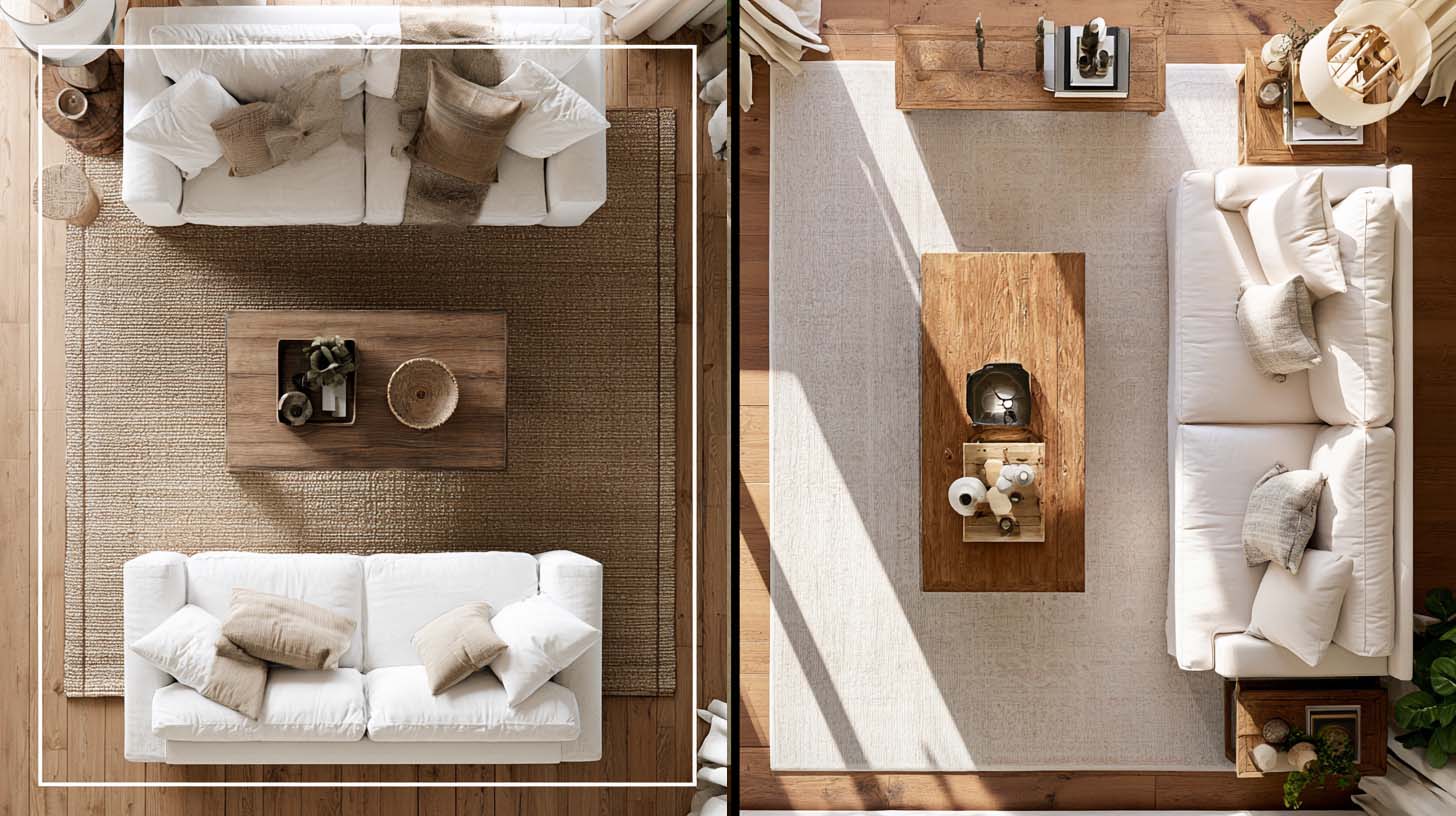
Coffee table sizing can't be considered independently from the rug. Both elements establish the center of the seating composition. A large rug with a tiny coffee table can exaggerate the table's insufficient scale. Likewise, a substantial coffee table placed on an undersized rug creates another visual contradiction.
Ideally, the rug establishes the outer territory of the seating group while the coffee table reinforces its center. One defines the boundary. The other establishes the anchor. This relationship is explored more deeply in our Guide to Choosing the Right Rug Size. When both are correctly proportioned, the entire arrangement becomes easier for the eye to understand.
Consider the Chairs, Not Just the Sofa
Many coffee table size guides focus entirely on the sofa. Real rooms often contain more than one seating piece. Imagine a sofa facing two club chairs. The coffee table needs to serve all three. If it is perfectly proportioned to the sofa but sits too far from the chairs to be useful, the arrangement hasn't truly been resolved.
This becomes even more important in conversation rooms. The coffee table should feel accessible from the major seats surrounding it. Sometimes this means selecting a wider table. Sometimes it means choosing a square or round form instead of a narrow rectangle. And sometimes the correct answer is using multiple smaller tables rather than one enormous centerpiece. Design begins with how people inhabit the room.
When Two Coffee Tables Work Better Than One
Large seating arrangements occasionally exceed the practical scale of a single table. This is particularly common with very long sofas, oversized sectionals, and expansive conversation areas. Rather than searching for one enormous piece, designers may pair two complementary tables. This creates flexibility while maintaining sufficient visual mass.
Two square tables placed together can read almost like one larger coffee table. A pair of substantial round tables can introduce movement. Nesting forms can allow the composition to expand when entertaining. The important distinction is between intentional multiplicity and clutter. Two tables should read as one design decision, not as two unrelated pieces that happened to occupy the same space.
Visual Weight Changes the Equation
Two coffee tables with identical dimensions can appear completely different in scale. Consider a solid block of dark walnut, then compare it with a thin glass table supported by delicate metal legs. Same dimensions. Completely different visual weight. The walnut table feels more substantial because it occupies more perceptual space, while the glass table almost disappears.
This means dimensions alone never tell the entire story. Material, thickness, color, leg design, and shape all influence how large the table feels. In a visually heavy room filled with leather seating, dark wood, and substantial upholstery, an extremely delicate table may struggle to anchor the composition even if its measurements are technically correct. Conversely, a massive stone table may overwhelm lighter furniture at the same dimensions.
Designer Eyes
Measure with your eyes as well as your tape. Dimensions tell you how much floor space an object occupies. Visual weight tells you how much of the room it occupies. Both matter.
Architecture Changes the Right Coffee Table Size
A large living room doesn't automatically require large furniture, but the architecture does establish expectations. Tall ceilings, broad windows, large fireplaces, substantial millwork, and generous room dimensions increase the perceived scale of the environment. Furniture must possess enough presence to coexist with them.
This is why undersized furniture becomes especially noticeable in grand rooms. A coffee table that looks perfectly substantial in a modest apartment may disappear inside a living room with 12-foot ceilings and a monumental fireplace. The table doesn't exist in isolation. It's being judged against the architecture.
The Most Important Measurement Isn't on the Table
Before shopping, measure the entire seating composition, not simply the sofa. Place painter's tape on the floor where you're considering a table, then step back. Walk into the room from the doorway. Sit on the sofa. Sit in the chairs. Look across the room.
Does the taped area feel substantial enough? Can you comfortably move around it? Can you reach it? Does it occupy the center confidently? This exercise is often more useful than comparing product dimensions online, because you're testing the table in relation to the actual room. That's the relationship that ultimately matters.
A Simple Coffee Table Size Guide
Use these measurements as starting points rather than commandments:
Length: Aim for roughly two-thirds the length of the primary sofa.
Distance from seating: Approximately 14 to 18 inches is comfortable in many rooms.
Height: Generally level with the sofa seat or slightly lower.
Sectionals: Size the table according to the central opening created by the sectional rather than the sectional's total length.
Shape: Allow the geometry of the seating arrangement to guide whether rectangular, square, round, or multiple tables make the most sense.
Visual weight: Adjust for material and construction. A solid wood table will feel substantially larger than a delicate glass table with identical measurements.
These numbers help narrow your options. Proportion makes the final decision.
What Makes the Right Coffee Table Feel Right?
A well-scaled coffee table rarely calls attention to its dimensions. That's the point. It simply makes everything surrounding it feel more resolved. The sofa appears properly anchored, the chairs feel connected, the rug feels purposeful, the negative space becomes controlled, and conversation feels natural.
Visitors may never think "that's the perfect size coffee table." They'll simply feel that the room works. And that's usually how good proportion reveals itself.
Final Thoughts
Finding the correct coffee table size isn't really about finding the perfect number. It's about understanding the responsibility of the table. The coffee table occupies the center of one of the most important compositions in the home. It connects seating, organizes negative space, responds to the rug, supports daily life, and quietly establishes the scale of the entire arrangement.
Choose one that's too small, and even substantial furniture can begin feeling strangely disconnected. Choose one that's appropriately scaled, and the room gains weight, order, and confidence. The lesson extends far beyond coffee tables. Good interiors aren't created by selecting beautiful objects independently. They're created by understanding how large, how close, how high, and how visually substantial each object should be in relation to everything around it. That's proportion. And once you learn to see it, furniture shopping becomes an entirely different exercise.
Want the whole seating area scaled for you? Explore Full-Service Interior Design
Frequently Asked Questions
What is the ideal coffee table size?
A useful starting point is a coffee table approximately two-thirds the length of your sofa. The final size should also consider surrounding chairs, room dimensions, circulation, and the visual weight of the table.
How far should a coffee table be from a sofa?
Approximately 14 to 18 inches works well in many living rooms. This keeps the table within comfortable reach while leaving sufficient room for movement.
Should a coffee table be higher or lower than the sofa?
Coffee tables generally look and function best when they're approximately level with the sofa cushions or slightly lower. Dramatically taller tables can feel awkward, while very low tables may sacrifice functionality.
What size coffee table works with a sectional?
Measure the open area created inside the sectional rather than relying on the sectional's total dimensions. The table should confidently occupy that central space while maintaining comfortable circulation around it.
What shape coffee table is best for an L-shaped sectional?
Round, square, and appropriately proportioned rectangular tables can all work. Round tables are particularly useful for improving circulation, while square tables often complement the geometry of an L-shaped sectional.
Why does my coffee table look too small?
The table may lack sufficient length, width, or visual weight relative to your seating. Large sofas and sectionals create substantial visual mass, and an undersized table can leave the center of the arrangement feeling empty and disconnected.
Can I use two coffee tables instead of one?
Yes. Large seating arrangements can benefit from two complementary tables when one appropriately sized table would become impractical. The pair should visually read as one coordinated composition.

Facebook
Instagram
Youtube