Picture Lights Explained
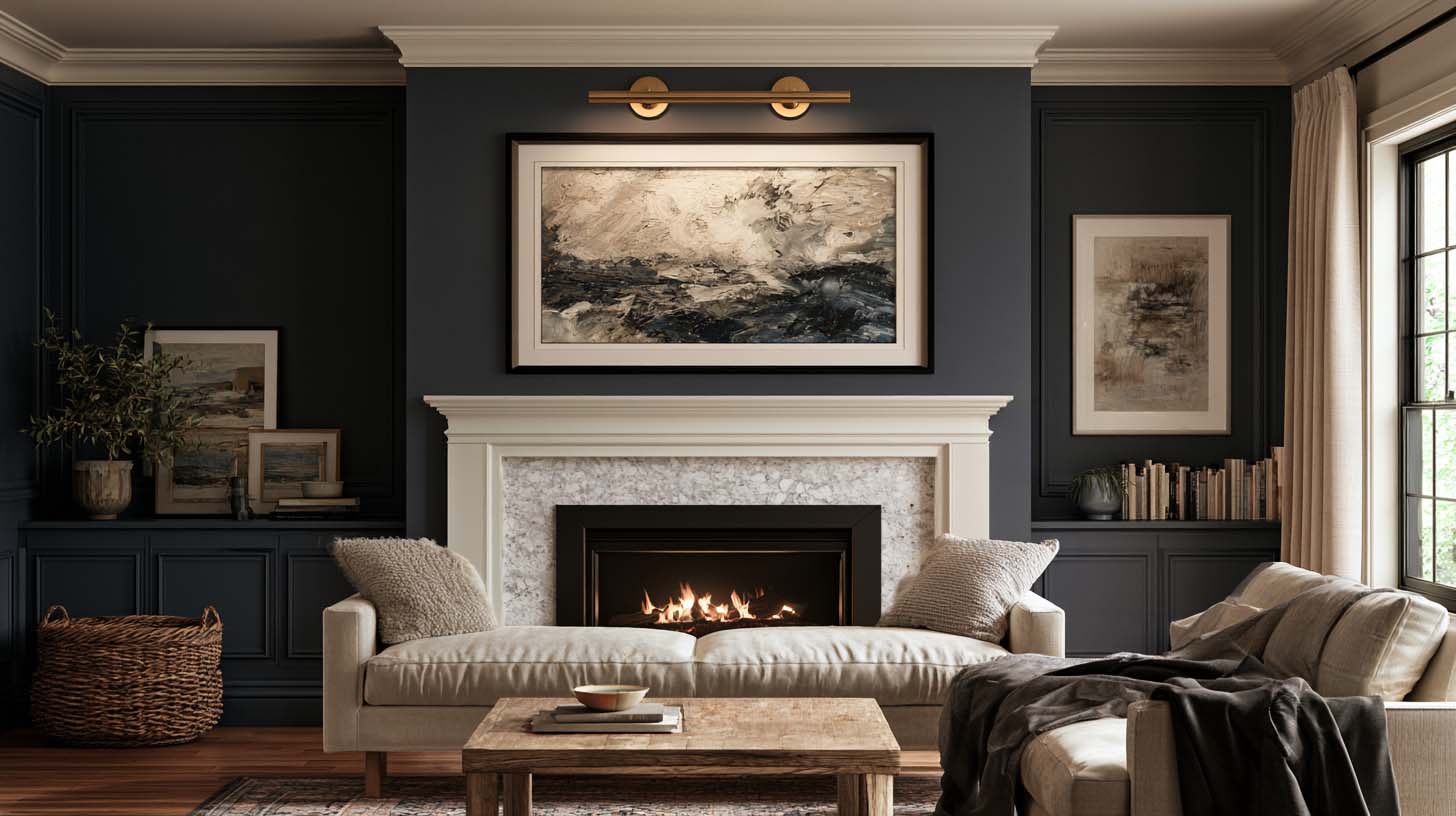
Walk into a distinguished library, a luxury hotel, or a well-designed private study, and you'll often notice something difficult to identify. The room doesn't simply feel well lit. It feels intentional. Your attention seems to move naturally from one object to another. Artwork appears more important. Bookshelves gain depth. Architectural details suddenly seem richer.
Many people assume this effect comes from expensive furniture. Often, it comes from something much smaller: picture lights.
Despite their name, picture lights do far more than illuminate artwork. They shape attention. They create hierarchy. Perhaps most importantly, they teach the eye what deserves to be noticed.
Understanding picture lights isn't really about learning another type of lighting fixture. It's about understanding one of the quietest tools designers use to create atmosphere.
What Is a Picture Light?
Traditionally, a picture light is a small fixture mounted above a piece of artwork. Its purpose is simple: to illuminate the artwork without overwhelming the room. Over time, however, designers realized something interesting. The fixture wasn't only improving visibility. It was changing how the entire room felt.
Today, picture lights appear above paintings, bookshelves, built-in cabinetry, fireplaces, hallway artwork, library shelving, and decorative collections. The principle remains the same: draw gentle attention rather than overwhelming brightness.
Picture Lights Don't Add Light
This may sound surprising, but the primary purpose of a picture light isn't increasing illumination. It's directing perception.
Imagine walking through an art museum. Every gallery is carefully lit, not because visitors couldn't otherwise see the paintings, but because lighting quietly tells the eye where to pause. Homes work the same way. General lighting allows us to function. Picture lighting allows us to appreciate. Those are two very different experiences.
Designer Eyes Observation #1
The best picture lights often go unnoticed. Visitors remember the artwork. They remember the shelves. They remember the atmosphere. Rarely do they remember the fixture responsible for creating it.
Picture Lights Above Artwork
Before you keep reading, grab our free color palette guide.
This is the application most homeowners recognize. Done well, a picture light transforms artwork from decoration into architecture. Without dedicated lighting, a painting often becomes one object among many. With thoughtful illumination, it becomes a destination.
The light introduces subtle contrast between the artwork and the surrounding wall, allowing the composition to command attention without appearing theatrical. This is especially valuable in the evening, when natural daylight disappears and many paintings simply fade into the background. A picture light ensures the artwork continues participating in the room after sunset.
Picture Lights for Bookshelves
Bookshelves are rarely about books alone. They tell stories: collections, travel, interests, family history. Yet without thoughtful lighting, much of that personality remains hidden.
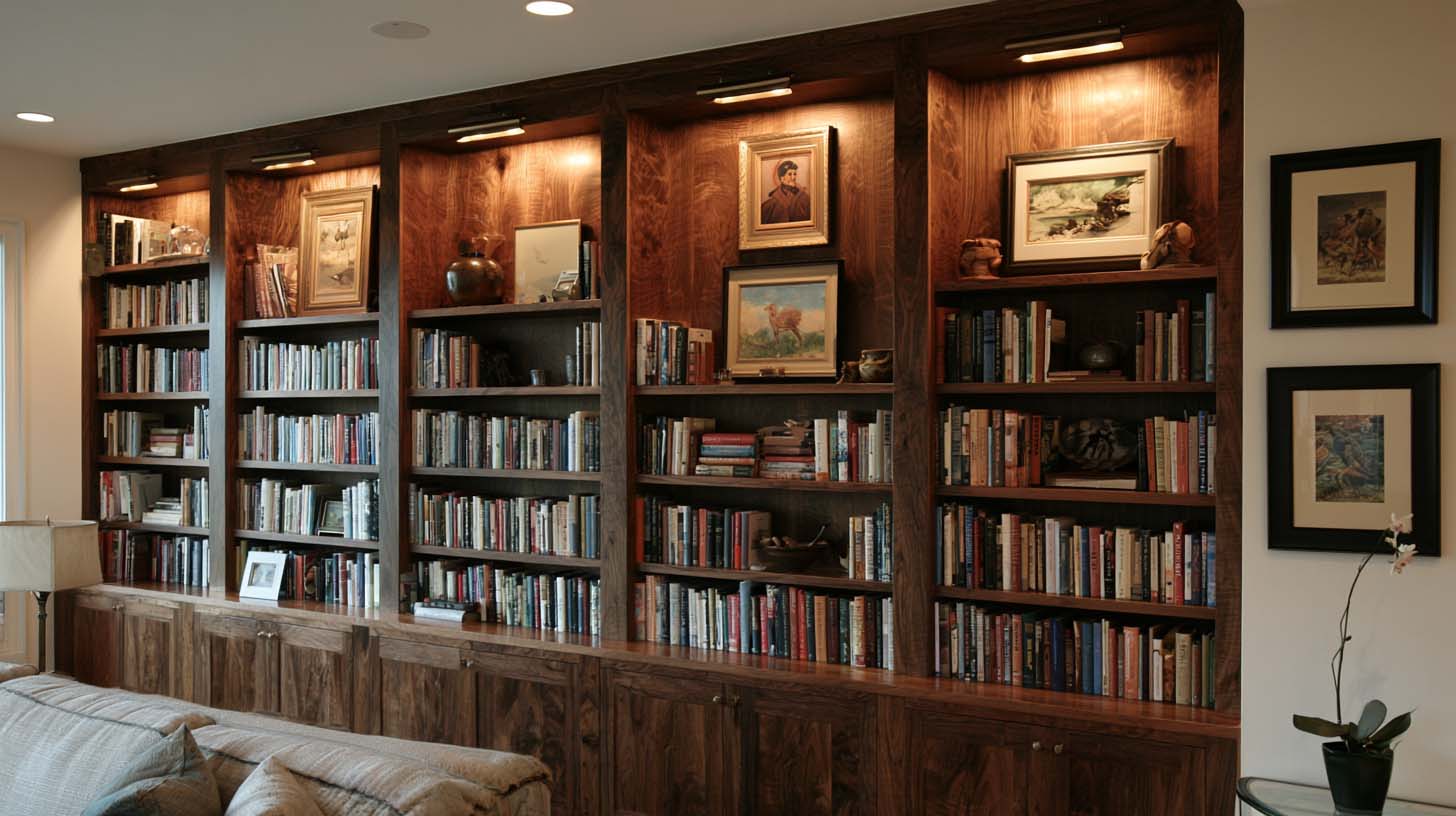
Picture lights mounted above bookshelves introduce gentle vertical illumination that reveals texture, wood grain, bindings, and carefully chosen objects. Instead of becoming dark recesses, shelves begin contributing to the room's atmosphere. This is one reason libraries in historic homes often feel so inviting after dark. The shelves themselves appear alive.
Designer Eyes Observation #2
Books rarely create atmosphere by themselves. They're simply objects. It's the combination of books, wood, shadow, and carefully directed light that creates the feeling people associate with distinguished libraries.
Built-In Cabinetry
Built-ins naturally create architectural rhythm, and picture lights strengthen that rhythm. Rather than washing an entire wall with uniform brightness, individual fixtures establish repeating points of emphasis. Your eye moves comfortably from one section to the next. The cabinetry suddenly appears more custom, more permanent, more intentional.
Interestingly, the lighting often makes the millwork feel more substantial than it actually is. Not because the cabinetry changed, but because your attention changed.
Hallways
Hallways are transitional spaces. People move through them rather than gathering inside them, which makes lighting especially important.
Picture lights create a sequence of visual moments. Instead of one long corridor, the hallway becomes a curated journey. Artwork receives emphasis. The architecture feels more layered. Movement becomes more enjoyable because the eye always has something quietly waiting ahead.
Luxury hotels frequently use this principle. The hallway becomes part of the experience instead of merely connecting rooms.
Libraries and Home Offices
Few rooms benefit from picture lights more than libraries. Libraries already contain many of the ingredients associated with warmth: wood, leather, books, texture. Picture lights complete the atmosphere.
Mounted above shelving, artwork, or cabinetry, they create pools of warm illumination that make the room feel occupied even before someone enters. This explains why many classic studies appear equally beautiful whether occupied or empty. The lighting itself suggests presence.
Designer Eyes Observation #3
One illuminated bookshelf often contributes more atmosphere than adding another expensive piece of furniture. Luxury is frequently created by emphasis, not accumulation.
Why Picture Lights Feel Luxurious
Picture lights communicate something subtle. They suggest that someone cared enough to illuminate a single object, and that act alone changes how the room is perceived.
General lighting treats every surface equally. Picture lighting introduces hierarchy. It quietly says, "This deserves your attention." Luxury interiors rarely illuminate everything. They illuminate the right things.
The Psychology of Directed Light
Environmental psychology has shown that our eyes naturally move toward areas of contrast. Picture lights take advantage of that tendency. Rather than asking visitors to search the room for interesting details, lighting gently guides their attention.
The result feels effortless. Nothing announces itself. Nothing competes. The room simply unfolds one observation at a time. Good hospitality works this way. Good museums work this way. The finest interiors do as well.
Common Mistakes
One of the biggest misconceptions is assuming brighter is better. It isn't. Overly bright picture lights flatten artwork and destroy atmosphere.
Another mistake is trying to illuminate every decorative object. If everything receives equal emphasis, nothing feels important. Picture lights work because they're selective. They're editing tools, not floodlights.
Should Every Home Use Picture Lights?
Not necessarily. But nearly every thoughtfully designed home can benefit from at least one: a favorite painting, a library, custom built-ins, a meaningful collection.
Picture lights reward objects worth lingering over. That's ultimately their purpose. Not brighter rooms. Better experiences. It's one of the details our founder, Chaudry Ghafoor, insists on in every project.
Final Thoughts
Picture lights aren't really about helping people see. They're about helping people notice. They transform artwork into destinations, bookshelves into architecture, built-ins into focal points, hallways into experiences, libraries into places people never want to leave.
Most homeowners think lighting exists to eliminate darkness. Designers understand that lighting exists to shape attention. Because exceptional interiors don't simply reveal everything equally. They reveal the right things, at exactly the right moment.
And few fixtures accomplish that more elegantly than a picture light.
Want lighting and art planned together? Explore Full-Service Interior Design
Frequently Asked Questions
What are picture lights used for?
Picture lights are designed to illuminate artwork, bookshelves, built-ins, and other architectural features. Their primary purpose is to create emphasis and atmosphere rather than simply increasing brightness.
Can picture lights be used on bookshelves?
Absolutely. Picture lights add depth to bookshelves by highlighting books, decorative objects, and the natural texture of wood, creating a warmer and more inviting atmosphere.
Are picture lights only for traditional homes?
No. While often associated with classic interiors, picture lights work beautifully in contemporary, transitional, and modern homes when selected with an appropriate design.
Do picture lights provide enough light for a room?
No. Picture lights are accent lighting, not general lighting. They should complement ambient and task lighting as part of a layered lighting plan.
Where do picture lights make the biggest impact?
They are especially effective above artwork, built-in cabinetry, bookshelves, fireplaces, hallway art, and library shelving where they can create visual hierarchy and highlight important architectural features.

Facebook
Instagram
Youtube