How to Layer Lighting Like an Interior Designer
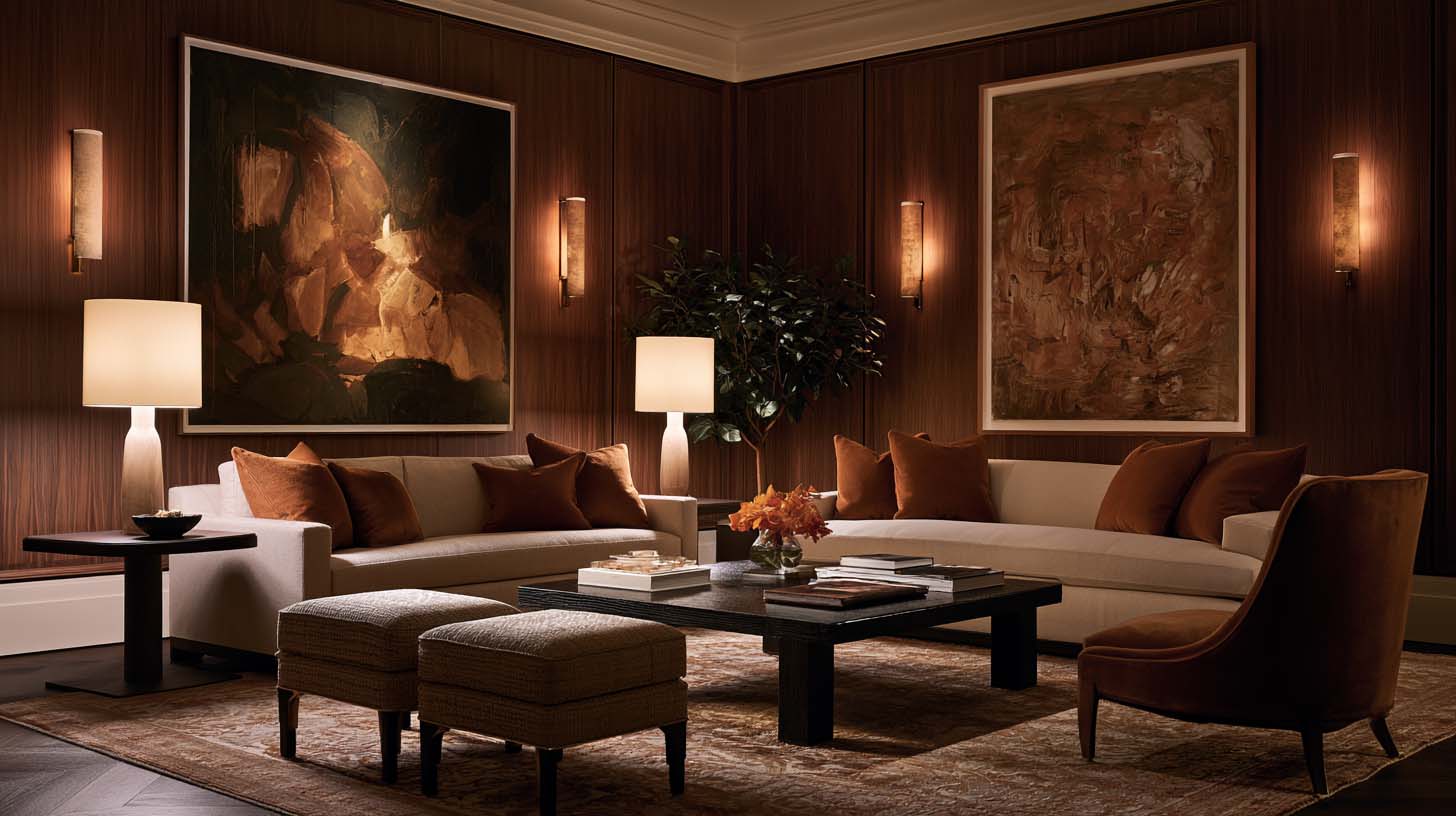
Walk into a luxury hotel after sunset. Notice what doesn't happen. No single ceiling fixture floods the room with light. Instead, the space seems to glow. Corners feel inviting. Artwork quietly draws your attention. Bookshelves reveal depth. Conversation areas feel intimate. The room doesn't simply become visible. It becomes memorable.
Most homeowners assume this atmosphere comes from expensive furniture. Designers know the truth. It comes from lighting. More specifically, layered lighting.
Learning how to layer lighting may be the single most transformative skill in interior design because lighting doesn't simply reveal a room. It determines how the room is experienced.
Why Lighting Matters More Than Furniture
Imagine listening to an orchestra where every instrument plays at the same volume. Nothing stands out. Nothing recedes. Everything competes.
Lighting behaves the same way. If every surface receives equal brightness, nothing feels important. Luxury interiors rarely illuminate everything equally. They establish hierarchy. They guide attention. They create moments. The room becomes something you experience rather than simply occupy.
Designer Eyes Observation #1
When people describe a room as "cozy," "elegant," or "expensive," they're often describing the lighting, even if they never consciously realize it. Atmosphere is usually seen before it is understood.
What Is Layered Lighting?
Layered lighting is the practice of combining multiple types of illumination that each serve a different purpose. Rather than relying on one fixture to do everything, designers assign different responsibilities throughout the room. These layers include ambient lighting, task lighting, accent lighting, and decorative lighting.
Each contributes something unique. Together, they create the richness that people instinctively associate with professionally designed interiors.
Layer One: Ambient Lighting (The Foundation)
Before you keep reading, see our full room-by-room approach to style direction.
Ambient lighting provides the room's overall illumination. It's what allows people to comfortably move through the space. Typical examples include recessed lighting, ceiling fixtures, indirect cove lighting, and large chandeliers providing general light.
Ambient lighting establishes visibility. But visibility alone isn't atmosphere. Think of ambient lighting as the canvas: everything else will paint upon it.
One of the biggest mistakes homeowners make is assuming this layer is sufficient. It isn't. It's only the beginning.
Layer Two: Task Lighting (Light Where Life Happens)
Task lighting supports specific activities: reading, cooking, writing, working, applying makeup, preparing food. Unlike ambient lighting, task lighting has a very focused purpose.
Examples include desk lamps, reading lamps, kitchen under-cabinet lighting, bedside lamps, and vanity lighting. Good task lighting eliminates strain without overwhelming the rest of the room. It quietly supports the activity taking place. The best task lighting almost disappears because it feels so natural.
Designer Eyes Observation #2
Task lighting shouldn't announce itself. You should notice the book, not the lamp helping you read it.
Layer Three: Accent Lighting (Directing Attention)
Accent lighting is where atmosphere truly begins. Its purpose isn't helping people see. Its purpose is deciding what deserves to be seen. This layer introduces hierarchy.
Examples include picture lights, cabinet lighting, bookshelf lighting, artwork lighting, wall grazing, display lighting, and uplighting architectural details. Accent lighting creates visual depth by establishing areas of emphasis against darker surroundings. Without it, rooms often appear flat. With it, objects begin telling stories.
Layer Four: Decorative Lighting (Lighting That Becomes Furniture)
Some fixtures perform another role entirely. They become part of the room's composition. Think about chandeliers, sculptural pendants, decorative sconces, lanterns, and statement lamps.
These fixtures certainly produce light. But they're also visual objects. They contribute scale, material, texture, silhouette. In exceptional interiors, decorative lighting remains beautiful even when switched off. That's an important distinction.
Designer Eyes Observation #3
If removing a light fixture changes the room's personality, it wasn't merely lighting. It was architecture.
Why Designers Combine These Layers
Most homeowners ask, "How many lights does this room need?" Designers ask, "What experiences should happen here?"
A library requires something different than a kitchen. A dining room behaves differently than a bedroom. The activities determine the lighting.
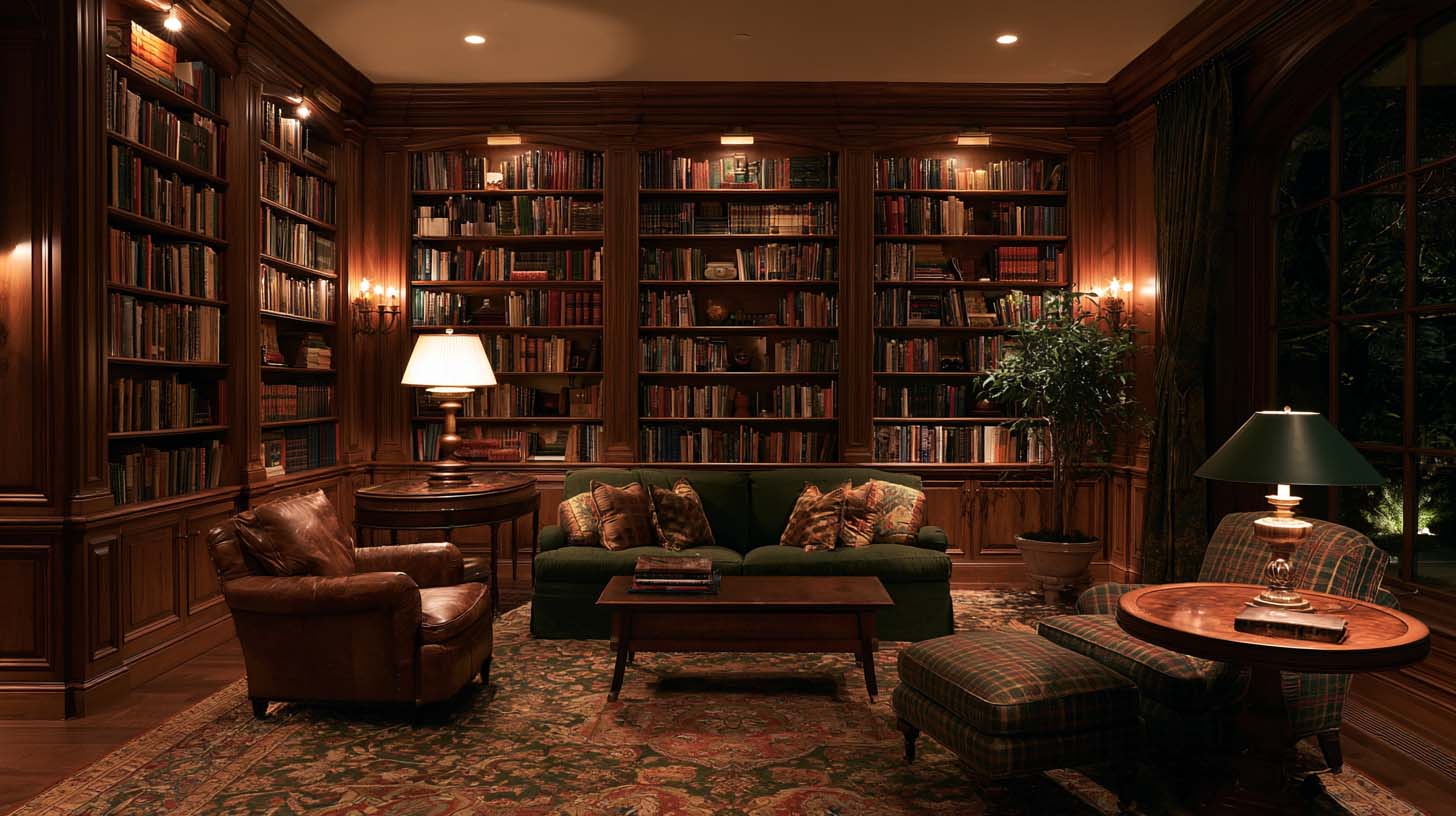
Consider a library. Ambient lighting establishes visibility. Task lighting supports reading. Accent lighting highlights bookshelves and artwork. Decorative lighting introduces character through brass sconces or table lamps. Each layer contributes something the others cannot. The room becomes richer because no single fixture is responsible for everything. You can see this layered approach throughout our project gallery.
Creating Depth Instead of Brightness
One of the defining characteristics of luxury interiors is contrast. Not darkness. Contrast.
Bright objects emerge from quieter surroundings. Bookshelves softly glow. Artwork receives gentle emphasis. Tables feel inviting. Corners remain comfortably subdued. Depth appears whenever the eye moves between brighter and darker areas.
This is why increasing brightness rarely makes a room feel more luxurious. It often accomplishes the opposite. Flat lighting produces flat experiences.
The Psychology of Light
Environmental psychology has consistently shown that lighting influences behavior. Bright, uniform environments encourage activity. Lower, layered lighting encourages conversation, relaxation, and reflection.
Hospitality designers have understood this for decades. Restaurants don't simply lower the lights. They create visual destinations. The same principle applies at home. Lighting teaches people how to inhabit a room. Long before anyone sits down, the lighting has already established expectations.
Common Lighting Mistakes
Most disappointing rooms don't suffer from too little lighting. They suffer from too little variety. Common mistakes include:
Depending entirely on recessed ceiling lights
Installing oversized fixtures that dominate the room
Using only one color temperature throughout the home without considering atmosphere
Ignoring artwork and architectural details
Treating lamps as decoration instead of functional lighting layers
Attempting to illuminate every corner equally
Luxury interiors understand something different. Not everything deserves equal attention.
A Simple Layered Lighting Exercise
Stand in your living room after sunset. Turn off every light. Now begin introducing illumination one fixture at a time: a table lamp, a floor lamp, a picture light, a bookshelf light, a wall sconce.
Notice how each addition changes the room, not simply by increasing brightness, but by changing what feels important. That observation alone teaches more than memorizing lighting rules ever could.
Final Thoughts
Layered lighting isn't about adding more fixtures. It's about assigning purpose.
Ambient lighting allows the room to function. Task lighting supports daily life. Accent lighting creates hierarchy. Decorative lighting establishes personality. Together, they transform ordinary rooms into memorable experiences.
The finest interiors don't impress because they're bright. They impress because they reveal themselves gradually. One illuminated painting. One glowing bookshelf. One carefully positioned lamp. One welcoming reading chair. The room begins telling a story, not through furniture alone, but through light.
Because in exceptional design, lighting isn't the finishing touch. It's the medium through which everything else is experienced.
Ready for a professional lighting plan? Explore Full-Service Interior Design
Frequently Asked Questions
What is layered lighting?
Layered lighting is the combination of ambient, task, accent, and decorative lighting to create a functional, visually balanced, and atmospheric interior.
What are the four layers of lighting?
The four primary lighting layers are ambient lighting for overall illumination, task lighting for specific activities, accent lighting to highlight important features, and decorative lighting that contributes both illumination and visual character.
Why do professionally designed homes use so many lamps?
Lamps provide multiple lighting layers, create visual depth, reduce harsh overhead lighting, and make rooms feel more inviting than relying solely on ceiling fixtures.
What is the difference between accent lighting and decorative lighting?
Accent lighting emphasizes specific architectural features or objects, while decorative lighting serves as both a light source and an important visual design element.
Can layered lighting make a room feel more luxurious?
Yes. Layered lighting introduces hierarchy, contrast, and atmosphere, three characteristics consistently found in luxury interiors regardless of budget.

Facebook
Instagram
Youtube