Why Your Room Still Feels Empty After You've Furnished It
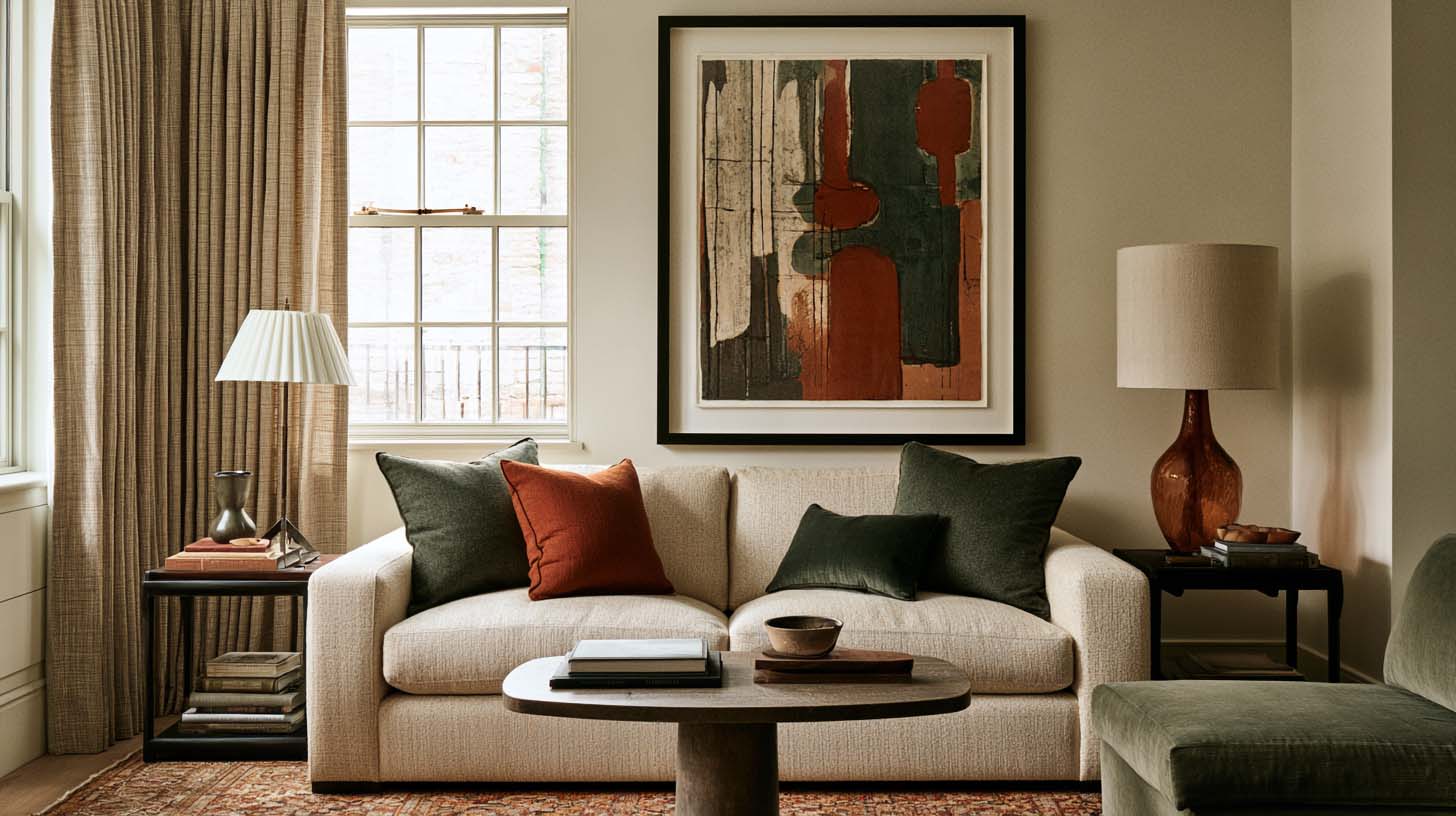
A room can contain all the major furniture it needs and still feel strangely unfinished. The sofa is there, the chairs are there, the coffee table is there, and perhaps the rug is too, and yet the room still feels empty.
This usually leads to the same response: buy more decor. More objects, more pillows, more accessories, more things to put on tables. But that is often not the real problem. When people ask why does my room feel empty, the answer is usually that the room is missing its middle layer. The large pieces have been selected, the architecture exists, but there is not enough visual material connecting one to the other.
That middle layer is where rooms begin to feel inhabited: lamps, artwork, curtains, secondary furniture, books, collections, architectural detail, objects that carry the eye upward, outward, and between the major furniture pieces. Without them, the room may be furnished, but it is not yet complete.
Furnished Is Not the Same as Finished
This distinction is important. A furnished room contains function. A finished room contains relationships. A sofa gives you somewhere to sit. A lamp beside the sofa creates a place. Artwork above it gives the wall purpose. Curtains frame the architecture. A side table supports the lamp. Books or objects introduce personality.
The room becomes layered. This is why buying the correct sofa rarely solves the entire room. Large furniture establishes the skeleton. The middle layer gives it life.
Designer Eyes
Stand in the doorway and ask yourself: where does my eye stop between the floor and ceiling? If nearly everything occupies the lower third of the room, the space may feel empty because its vertical composition is unresolved.
The Missing Middle Layer
Most people notice two categories when furnishing a room: large furniture and small decor. The middle is frequently ignored. That middle includes floor lamps, table lamps, side tables, benches, consoles, occasional chairs, artwork, window treatments, bookshelves, larger plants, screens, pedestals, sculptures, collections, and wall molding.
These objects are substantial enough to influence the composition but not large enough to dominate it. They create transitions. Without them, major furniture can feel isolated.
Why Large Furniture Alone Looks Sparse
Imagine a living room containing a sofa, two chairs, a coffee table, and a rug. Technically, the room is furnished. But now look at the walls, the corners, the vertical space beside the seating, the windows, and the transitions between furniture pieces.
There may be large visual gaps everywhere. The furniture occupies the floor, and the rest of the room remains unresolved. This is why even expensive furniture can appear underwhelming when it is surrounded by emptiness. The issue is not quality. It is density. Not clutter. Visual density.
Lamps Fill More Than Darkness
Before you keep reading, a Room Audit can show you exactly what to fix.
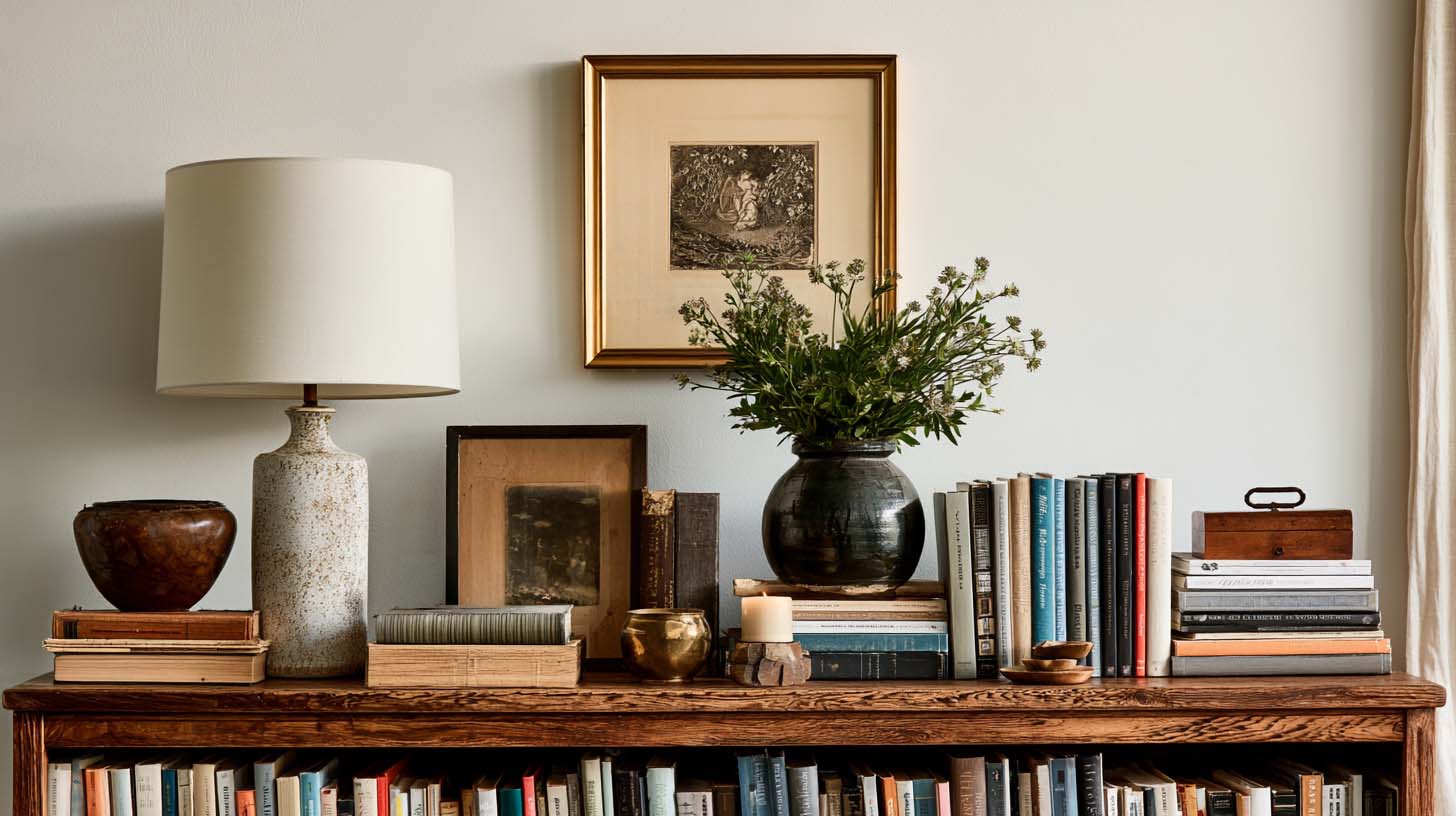
Lamps are among the most important objects in the middle layer. They do several jobs at once. A floor lamp fills vertical space. A table lamp gives weight to a side table. A lamp beside a chair creates a reading zone. Two lamps can establish rhythm.
At night, they create pools of light that make the room feel occupied. This is why rooms lit only from the ceiling often feel emptier than rooms with multiple lower light sources. The lamps themselves matter, but so does the territory their light creates. Our guide to Layered Lighting explores this in greater detail.
Artwork Gives Walls a Role
Blank walls are not always a problem, but unresolved walls are. A large wall behind a sofa often needs something to help connect the furniture to the architecture. Artwork does this beautifully.
The sofa occupies the lower portion, and the artwork continues the composition upward. The wall stops feeling separate from the room. This is especially important when the furniture is substantial. Tiny artwork above large furniture often makes the wall feel emptier, not fuller. The scale must acknowledge the object beneath it. This is why correct artwork placement matters as much as the artwork itself.
Window Treatments Complete the Perimeter
Bare windows can make a room feel incomplete even when everything else is resolved. This becomes more noticeable in the evening. During the day, windows provide views and daylight. At night, they become dark voids.
Curtains frame them. They add height, texture, softness, and acoustic control. They visually connect the window to the floor and ceiling. This is one reason window treatments can make a room feel dramatically more finished without adding a single decorative object. They resolve architecture.
Secondary Furniture Creates Transitions
Large furniture rarely wants to sit alone. A sofa benefits from side tables. A chair may need a small table. An empty wall may need a console. A large bedroom may need a bench. An entry may need a narrow table.
These pieces are secondary in function but crucial in composition. They create transitions between major elements. Without them, rooms often feel like furniture has been placed in separate islands. Secondary furniture creates continuity.
Corners Often Reveal the Problem
Empty corners are useful diagnostic tools. Not every corner needs furniture, but several unresolved corners can make the entire room feel sparse. A floor lamp, a tall plant, a pedestal, a small reading chair, a cabinet, or a stack of framed artwork can give a corner visual purpose.
The important thing is not filling corners for the sake of filling them. It is deciding whether the room needs more vertical or visual weight in that area.
Vertical Elements Matter More Than Most People Realize
Many rooms are too horizontal: sofa, console, coffee table, rug, everything stays low. This makes the ceiling feel distant. Vertical elements solve this. Examples include floor lamps, tall bookcases, curtains, large artwork, mirrors, cabinets, plants, wall sconces, and architectural paneling.
These objects pull the eye upward. They help connect furniture to the architecture. The room feels more complete because the composition occupies more of its available volume.
Designer Eyes
Look at the room in thirds: lower third, middle third, upper third. If almost every object sits in the lower third, the room is likely missing vertical balance.
Textiles Add Depth Without Adding Clutter
Textiles are often treated as decoration. They are really material layers: rugs, curtains, pillows, throws, upholstery. These surfaces absorb light differently, soften acoustics, introduce texture, and create visual contrast.
The key is not quantity. It is variation. A room filled with hard surfaces will feel emptier than one with a thoughtful mix of wood, leather, wool, linen, and other tactile materials. Texture gives the eye more to experience.
Collections Add Density With Meaning
One of the best ways to make a room feel fuller without making it feel generic is to introduce collections: books, maps, sculptures, travel objects, antiques, photographs, vintage tools, ceramics.
The objects themselves matter less than the relationship between them. Collections create narrative. A group of related objects feels intentional. Random decor often does not. This is the same principle we explore in How to Decorate Bookshelves Without Making Them Look Staged. A room becomes more compelling when its objects belong to someone.
Architectural Detail Fills Space Permanently
Sometimes the room feels empty because the architecture is too plain: flat walls, minimal trim, no built-ins, no ceiling detail, no visual rhythm. In these cases, adding more furniture may not solve the problem. The room may need architectural structure: wainscoting, picture frame molding, built-ins, crown molding, ceiling beams, paneled walls.
These elements give the walls weight. They create shadow, proportion, and rhythm. A room with stronger architecture can often support less furniture because the envelope itself is doing more work.
Why Buying More Decor Often Makes Things Worse
When a room feels empty, the instinct is understandable: add more things. But small decor cannot replace missing structure. Ten small objects on a console do not create the same visual weight as one substantial lamp and one large piece of artwork. Five tiny frames do not replace one properly scaled painting. A pile of pillows does not fix furniture that is too far apart.
More objects can actually make the room feel both cluttered and empty at the same time. This sounds contradictory, but it happens constantly. The surfaces are busy. The architecture remains unresolved.
Scale Is Usually Part of the Problem
Rooms often feel empty because the pieces in them are too small: a small rug, a narrow coffee table, tiny side tables, small lamps, undersized artwork. The room technically contains all the correct categories, but each piece lacks enough visual presence.
This is one reason scale matters so much. A properly sized coffee table can make the entire seating area feel stronger. A larger rug can connect the furniture. Substantial lamps can fill vertical gaps. Large artwork can give a wall authority. The room needs fewer apologies.
Repetition Creates Completion
A finished room rarely contains one isolated example of every material. Instead, elements repeat. Brass in a lamp appears again in hardware. Walnut reappears across the room. Black frames echo dark lighting. A curved chair relates to a round table.
These repetitions create rhythm. The eye understands the room more quickly. Without repetition, every object feels like an independent event. That makes the room feel less complete.
Negative Space Is Still Necessary
The answer is not to fill every wall, every corner, every surface. A finished room still needs negative space. The difference is that the empty areas should feel intentional.
A large blank wall beside a properly scaled piece of art can feel calm. A completely blank room surrounding undersized furniture feels unfinished. The goal is not maximum density. It is controlled density: enough visual material to create relationships, enough emptiness to let those relationships breathe.
A Room Can Feel Empty Because It Lacks Personality
Sometimes the proportions are correct, the lighting is good, and the artwork is appropriately scaled, and yet the room still feels generic. This is a different kind of emptiness. The room lacks evidence of the person who lives there.
No books, no objects with history, no collections, no photographs, no interests, no contradictions. Nothing tells you why this room belongs to this owner. That absence can be felt. Good interiors are not only visually complete. They are biographical.
A Simple Framework for Finishing an Empty-Feeling Room
If your room still feels unfinished, work through these questions.
Are all the major pieces too low? Add vertical elements.
Are the walls unresolved? Consider appropriately scaled artwork, mirrors, shelving, or architectural detail.
Are there large gaps between furniture pieces? Introduce side tables, lamps, benches, or other secondary furniture.
Are the windows bare? Consider curtains or another appropriate treatment.
Is the room relying on ceiling lighting? Add lower lighting layers.
Are most surfaces hard? Introduce textiles and softer materials.
Are there no meaningful objects? Add books, collections, photographs, or personal pieces.
Are the objects too small for the room? Increase scale before increasing quantity.
Does anything repeat? Create rhythm through materials, shapes, and finishes.
Is there still enough negative space? Edit after adding.
This sequence solves the room before it simply decorates it.
The Best Rooms Feel Accumulated
A fully resolved room rarely feels as though every object arrived on the same day. It feels layered: a lamp added because the chair needed light, artwork collected over time, books acquired because someone read them, curtains chosen because the architecture needed softness, a side table placed because people needed somewhere to set a drink, a sculpture brought home from travel, an antique inherited.
The room becomes more complete because the layers have reasons. That is the difference between accumulation and clutter.
Final Thoughts
If you keep asking why does my room feel empty, the answer may not be that you need more decor. You may need more structure between the large furniture and the architecture: the missing middle layer. Lamps, artwork, curtains, secondary furniture, vertical elements, textiles, collections, architectural detail.
These are the things that connect the room together. They fill visual gaps, create rhythm, add height, introduce personality, and make the major furniture feel like it belongs. The goal is not to make the room fuller. It is to make it more complete, because a finished room is not one that contains the most things. It is one where the important spaces between things have finally been resolved.
Want help finishing the room? Explore Full-Service Interior Design
Frequently Asked Questions
Why does my room still feel empty after I bought furniture?
The room may be missing the middle layer: lamps, artwork, window treatments, side tables, textiles, vertical elements, and personal objects that connect the major furniture to the architecture.
How do I make a room feel finished without adding clutter?
Focus on scale and hierarchy. Add fewer, larger elements such as substantial lamps, properly scaled artwork, curtains, and secondary furniture instead of many small decorative objects.
Why does my living room feel unfinished?
Common causes include undersized furniture, bare walls, bare windows, too much overhead lighting, unresolved corners, lack of vertical elements, and insufficient personal objects.
Do empty walls make a room feel unfinished?
Not always. Negative space can be beautiful. But large unresolved walls behind major furniture often need artwork, shelving, or architectural detail to connect the furniture to the room.
What is the missing middle layer in interior design?
It refers to the elements between major furniture and small decor, such as lamps, side tables, consoles, artwork, curtains, benches, bookcases, and larger decorative objects.
How do I know if my decor is too small?
If the room contains many objects but still feels sparse, scale may be the issue. Larger lamps, artwork, rugs, tables, and vertical elements often solve the problem more effectively than adding more small accessories.

Facebook
Instagram
Youtube