How to Choose the Right Rug Size for Every Room
Few design mistakes have a greater impact on a room than choosing the wrong rug.
Ironically, it isn't because the rug itself is unattractive, it's because the size of the rug quietly determines how we perceive the proportions of the entire room.
A well-chosen rug can make furniture feel intentionally arranged, architecture appear more generous, and even a modest room feel thoughtfully designed. A rug that's too small has the opposite effect: it causes furniture to appear disconnected, compresses the visual footprint of the room, and creates the impression that each piece is occupying its own separate island.
Most rug size guides stop at dimensions. This one explains something more valuable: why rug size changes the way a room feels, and how to choose the right size with confidence.
Why Rug Size Matters More Than Most People Realize
People often think of rugs as decorative accessories. Designers rarely do. A rug functions more like an architectural element: it establishes a visual foundation that tells the eye which objects belong together. Without that foundation, even beautiful furniture can appear randomly scattered throughout the room.
Imagine looking at a city from above. Individual buildings make sense because they're organized into streets, blocks, and neighborhoods. A rug performs a similar role inside a room: it creates a visual district where furniture belongs. When that district is too small, everything begins to feel cramped. When it's appropriately scaled, the room immediately feels calmer and more cohesive.
Designer Eyes Observation #1
Most people notice furniture first. Designers notice the space between the furniture. A properly sized rug organizes those negative spaces before anyone consciously realizes it. The result isn't simply a prettier room. It's a room that feels easier to understand.
The Most Common Rug Sizing Mistake
The mistake isn't choosing a rug that's slightly undersized. It's choosing one that's dramatically too small because it "fits" beneath the coffee table.
This usually happens because people shop based on the size of the furniture rather than the size of the seating arrangement, and those are two very different measurements. The coffee table isn't the composition; the conversation area is. The rug should support the entire composition, not merely the object placed at its center.
The Fundamental Principle of Rug Sizing
Before you keep reading, grab our free color palette guide.
Before looking at room-specific recommendations, there's one principle that applies almost everywhere: a rug should connect furniture, not merely decorate the floor.
Whenever possible, multiple pieces of furniture should visually belong to the rug. If the rug only touches one object, or sits isolated beneath a coffee table, it usually isn't large enough.
Instead of asking "Will the rug fit here?" ask "Will this rug unify the furniture?" That simple shift changes nearly every sizing decision.
Living Room Rug Size Guide
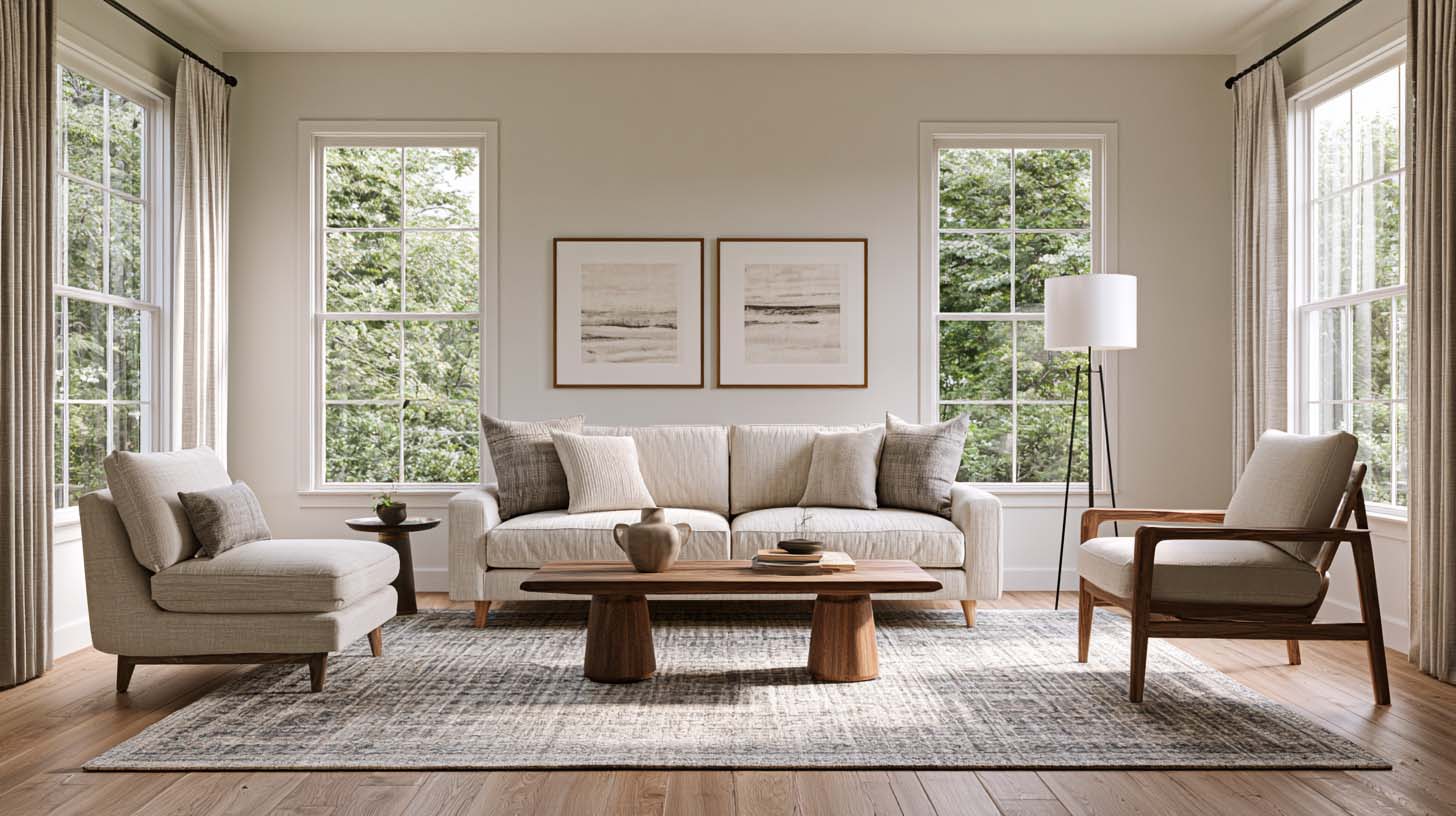
The living room is where rug sizing has the greatest visual impact. Furniture naturally wants to function as a single conversation group, and the rug should reinforce that relationship.
Best Practice
The front legs of all major seating pieces should rest on the rug. In larger rooms, placing the entire seating arrangement on the rug often creates an even more substantial appearance.
Avoid
Tiny rugs floating beneath the coffee table. Although common, this arrangement visually separates every chair and sofa from one another. Instead of creating one comfortable gathering space, the room feels fragmented.
Designer Eyes Observation #2
Large rugs don't simply make rooms look larger. They reduce visual interruptions across the floor. Fewer interruptions allow the eye to travel farther before stopping, making the room feel more expansive. It's less about square footage than uninterrupted visual flow.
Bedroom Rug Size Guide
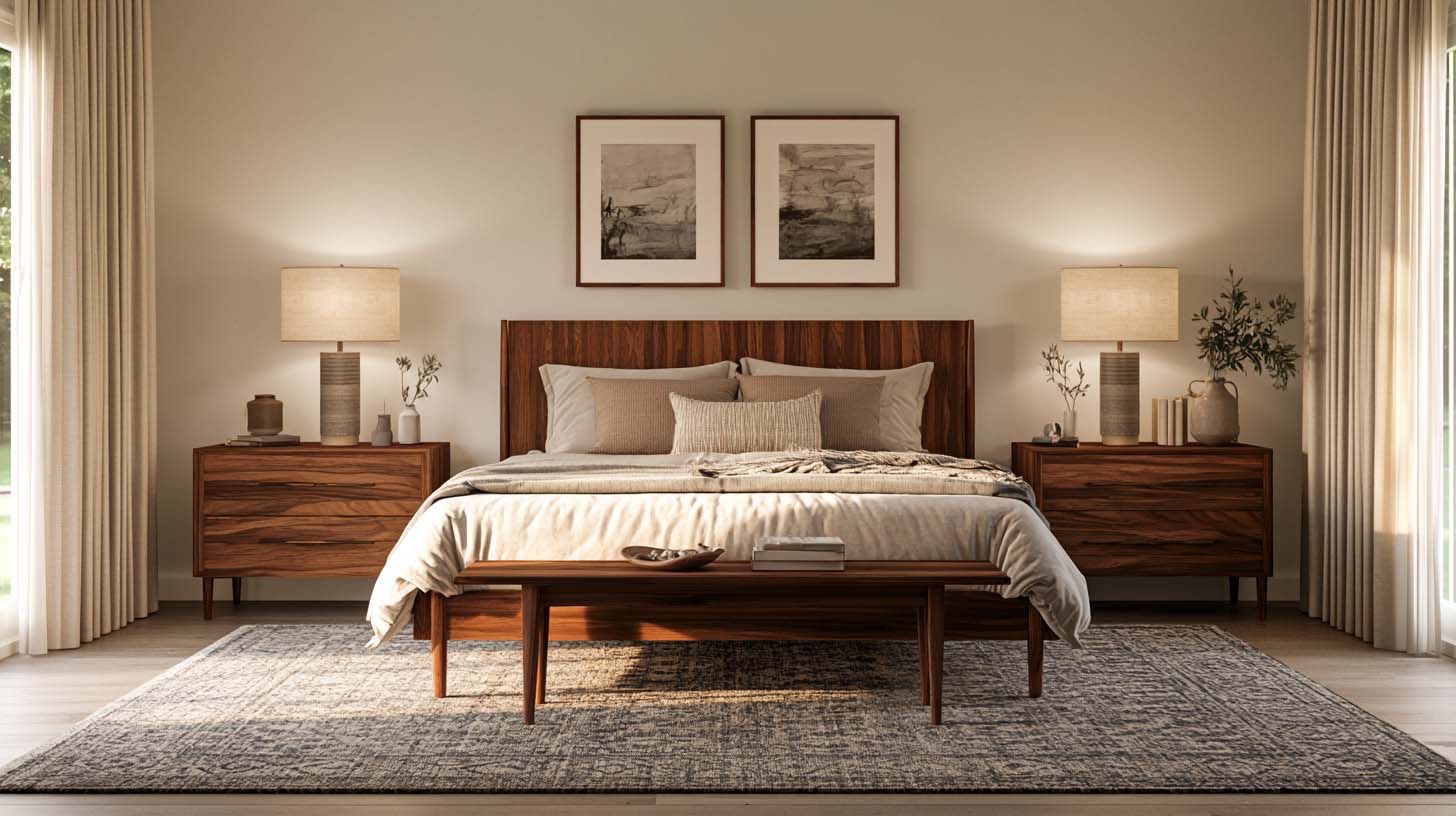
Bedrooms introduce a different challenge. Here, the rug isn't organizing conversation, it's extending the visual footprint of the bed, which is already the dominant object in the room. The rug should make it feel even more anchored.
Best Practice
Allow the rug to extend generously beyond both sides and the foot of the bed. That extension creates balance while providing comfortable surfaces where your feet naturally land each morning.
Avoid
Small rugs tucked only beneath the lower third of the bed. Although they technically add softness underfoot, they often appear disconnected from the room's primary piece of furniture.
Dining Room Rug Size Guide
Dining rooms require thinking about movement. The chairs, not just the table, must remain on the rug. Otherwise, guests experience chairs catching on the rug edge every time they sit down or stand up, which is both visually awkward and physically inconvenient.
Best Practice
Choose a rug large enough that chairs remain comfortably on the rug even when pulled away from the table. This creates a more polished appearance while improving everyday usability.
Entryway Rug Size Guide
Entryways create first impressions within seconds. A rug that's too small often makes the entrance feel hesitant; one that's properly scaled immediately communicates intention.
Rather than filling every inch of the floor, aim to create a clear arrival zone that feels proportionate to the architecture. The rug should acknowledge the space, not disappear inside it.
Home Office Rug Size Guide
Home offices are frequently overlooked when selecting rugs, yet they're among the easiest rooms to improve. A rug should visually support the desk rather than compete with it. If seating is positioned opposite the desk, the rug should help connect both areas into one unified workspace.
Especially in masculine offices, a generous rug often contributes as much warmth as wood, leather, or lighting.
How Rug Size Changes the Psychology of a Room
Environmental psychology has long shown that our brains quickly organize visual information into meaningful groups. Rooms work the same way. When furniture shares one visual foundation, our minds interpret the arrangement as intentional. When every piece appears isolated, the room requires more mental effort to understand.
Most people don't consciously identify the rug as the cause. They simply describe one room as feeling calm, and another as feeling slightly off. That's the quiet power of proportion.
Designer Eyes Observation #3
If guests say, "This room feels expensive," they're rarely complimenting the rug. They're responding to the order the rug quietly creates beneath everything else. Good design often succeeds by making individual decisions disappear into one coherent experience.
A Simple Rug Size Test
If you're unsure whether your rug is large enough, ask yourself three questions:
Does the rug visually connect the furniture?
Does the room feel organized rather than fragmented?
Does the rug support the architecture instead of floating within it?
If the answer to any of these is no, the rug is probably too small. Interestingly, homeowners almost never regret choosing the larger option. They far more often wish they had. You can hear how this has played out for real clients in our client reviews.
Final Thoughts
Learning how to choose the right rug size isn't really about memorizing dimensions. It's about learning to recognize what the rug is doing.
The best rugs aren't simply soft surfaces beneath our feet. They're visual frameworks that organize furniture, reinforce architecture, and quietly determine whether a room feels complete.
Once you begin seeing rugs this way, you'll stop asking, "What size rug fits this room?" and start asking the far more useful question: "What size rug allows this room to function as one unified composition?"
That's the question designers have been answering all along.
Want the whole room planned around the right rug? Explore Full-Service Interior Design
Frequently Asked Questions
What is the biggest mistake when choosing a rug size?
The most common mistake is choosing a rug that's only large enough for the coffee table. A rug should visually connect the seating arrangement rather than simply occupy the center of the room.
Should all furniture sit on the rug?
Not always. In many living rooms, having the front legs of sofas and chairs on the rug creates an ideal balance. In larger spaces, placing all furniture on the rug can create an even more cohesive appearance.
Does a larger rug make a room look bigger?
In many cases, yes. Larger rugs reduce visual breaks across the floor, allowing the eye to perceive the room as more expansive and unified.
How far should a rug extend beyond a bed?
A bedroom rug should extend generously beyond both sides and the foot of the bed so the bed feels anchored and there is comfortable flooring underfoot when getting in and out.

Facebook
Instagram
Youtube