What Makes a Room Feel Cohesive
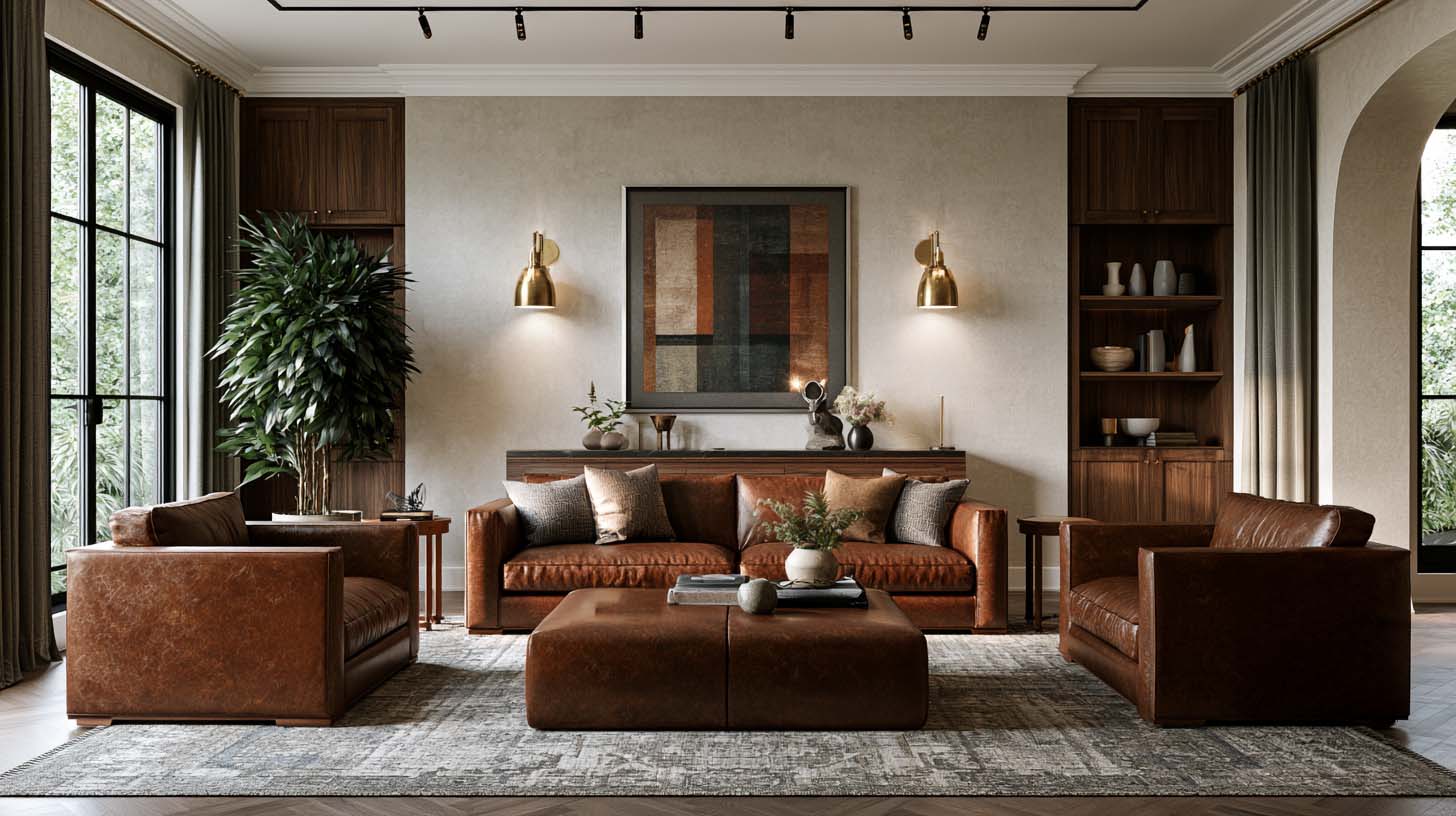
Have you ever walked into a room where nothing seemed objectively wrong, yet something still felt unsettled? The sofa was attractive. The rug was expensive. The artwork was beautiful. Every individual piece worked. Together, they somehow didn't.
This is one of the most common frustrations homeowners experience, and one of the hardest to explain. Many assume the solution is buying matching furniture: matching lamps, matching wood finishes, matching everything. Professional designers almost never approach a room that way, because cohesion doesn't come from matching. It comes from speaking one visual language.
The most memorable rooms aren't filled with identical objects. They're filled with objects that quietly agree with one another. Learning how to make a room feel cohesive is really the process of learning how those conversations happen.
Cohesion Is Something You Feel Before You Notice
Think about listening to an orchestra. Violins don't sound like cellos. Trumpets don't sound like pianos. Yet together, they create one piece of music.
Imagine if every musician played a different song. Each instrument might sound beautiful on its own. The experience would still feel chaotic. Rooms work exactly the same way. Furniture doesn't need to match. It needs to belong to the same composition.
Designer Eyes Observation #1
People often say, "Everything just works." What they're actually noticing is consistency. Not repetition. Consistency.
Why Matching Furniture Often Feels Artificial
Furniture stores have trained us to believe that buying an entire collection guarantees a beautiful room: matching sofa, matching loveseat, matching chair, matching coffee table, matching end tables. The result usually feels predictable. Not luxurious.
Luxury interiors almost never rely on complete furniture sets. Why? Because real homes evolve. Objects arrive at different moments. Collections grow. Heirlooms remain. Travel introduces new materials. The room develops character because it accumulates thoughtfully, not all at once.
Professional designers seek harmony. Not uniformity.
Principle One: Repeat Materials
Before you keep reading, a Room Audit can show you exactly what to fix.
One of the easiest ways to create cohesion is by repeating materials. Notice how exceptional rooms quietly echo the same natural elements. Walnut appears in the coffee table, then again in the bookshelf, then perhaps in a picture frame. Brass returns in a lamp, then cabinet hardware, then a floor lamp. Leather appears in seating, then a desk accessory, then a tray.
Nothing matches exactly. Everything belongs together. The material becomes part of the room's vocabulary.
Principle Two: Repeat Shapes
Shapes communicate just as powerfully as colors. Rounded forms feel welcoming. Sharp geometry feels disciplined. Arches introduce softness. Straight lines emphasize order.
One isolated curved chair inside a room filled with rigid geometry often feels accidental. But when curved forms quietly reappear, perhaps in a lamp, an armchair, a mirror, a coffee table, the room begins speaking consistently. Designers don't simply repeat objects. They repeat ideas.
Designer Eyes Observation #2
Most visitors couldn't describe why a room feels harmonious. They've simply been responding to recurring shapes all along.
Principle Three: Repeat Colors
Color doesn't require perfect matching. In fact, it usually works better when it doesn't. Instead of repeating one exact shade everywhere, designers repeat families of color: deep browns, warm creams, muted greens, charcoal grays.
The eye begins recognizing relationships. Not duplication. This creates richness without visual confusion. One carefully repeated color often contributes more than five unrelated accent colors.
Principle Four: Repeat Proportion
One of the least discussed principles of cohesion is proportion. Furniture should feel related in visual weight. A massive sectional paired with an undersized coffee table immediately feels disconnected. Tiny artwork floating above a grand fireplace feels hesitant. Oversized lamps beside delicate chairs create similar tension.
Professional designers constantly compare objects against one another. Not individually. Collectively. The room succeeds when everything appears to belong to the same scale of living.
Principle Five: Repeat Architectural Cues
Architecture should lead. Furniture should respond. Notice how successful interiors acknowledge existing features. Strong horizontal windows often inspire long furniture arrangements. Traditional millwork encourages classic furniture silhouettes. Modern architecture welcomes cleaner geometry.
Problems usually appear when furniture ignores the architecture entirely. The room begins speaking two different languages. Instead, allow the architecture to establish the grammar. Furniture becomes the conversation.
Designer Eyes Observation #3
Designers don't decorate around furniture. They decorate around architecture. Everything else follows naturally.
Principle Six: Create Rhythm
Perhaps the most invisible principle of cohesion is rhythm. Music depends on repeated patterns. Architecture depends on repeated forms. Interiors work the same way.
Lighting repeats across a room. Materials quietly return. Wood tones reappear. Artwork establishes cadence. Furniture heights feel related. Nothing is identical. Everything participates.
Rhythm allows your eye to travel comfortably through the room instead of constantly stopping to solve visual puzzles.
The Psychology of Cohesion
Environmental psychologists have long observed that people naturally prefer environments balancing order and complexity. Too much repetition becomes monotonous. Too much variation becomes exhausting. The most satisfying rooms occupy the space between those extremes. They surprise without confusing. They repeat without becoming predictable.
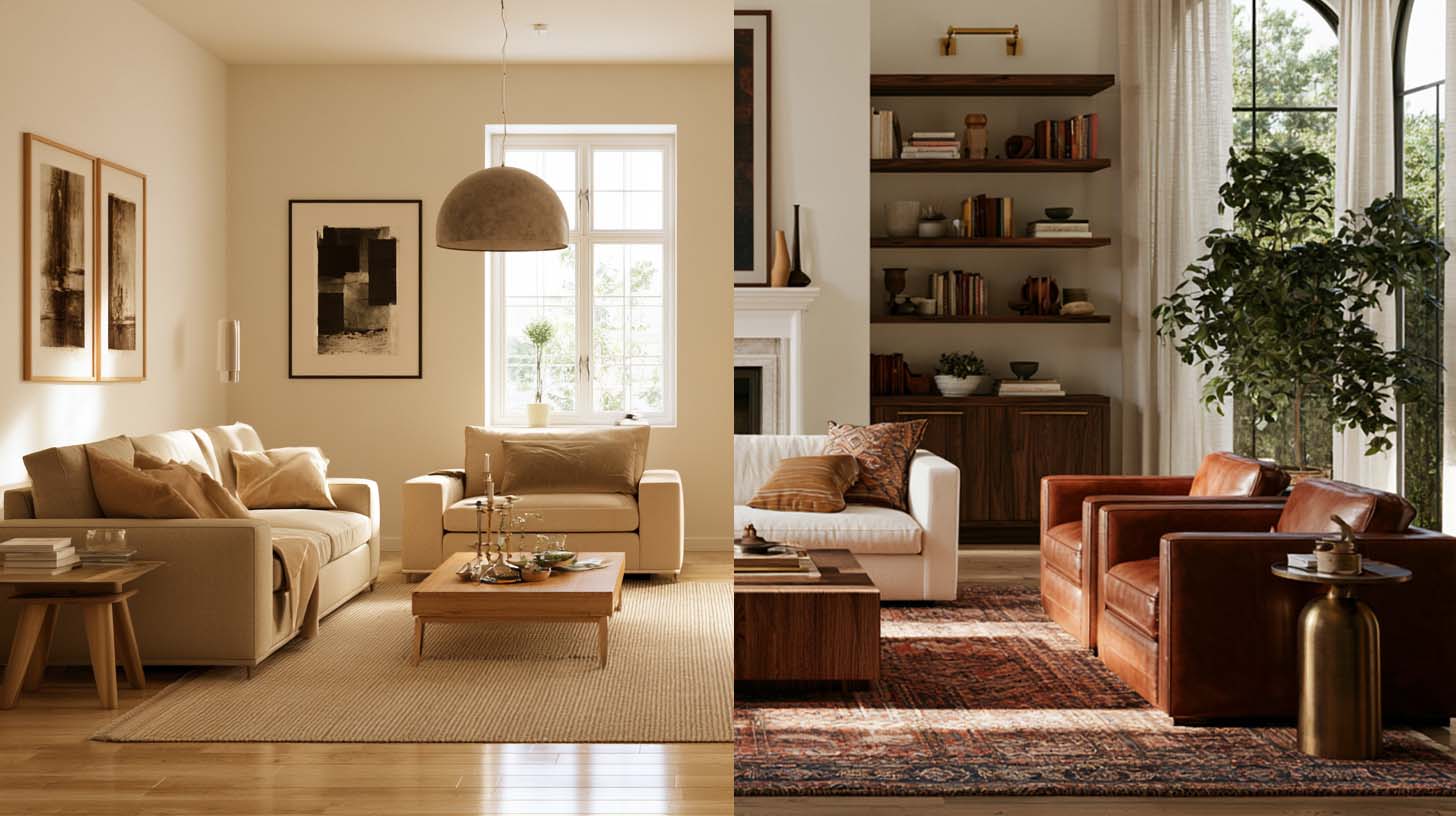
Visitors rarely identify this consciously. Instead they simply say, "This room feels peaceful." That's what cohesion feels like.
What Designers Actually Look For
Professional designers rarely enter a room asking, "What's missing?" They ask different questions:
What visual language already exists?
Which materials deserve repeating?
Which shapes should become recurring themes?
Where does the architecture want to lead?
What objects interrupt the conversation?
Where can rhythm become stronger?
These questions naturally produce cohesive interiors because they focus on relationships instead of possessions. It is the same process our founder, Chaudry Ghafoor, walks every client through.
A Simple Cohesion Exercise
Walk into your favorite room. Choose one object you love. Now look around the room. Does anything else quietly relate to it? Perhaps another piece shares its wood tone, its shape, its proportions, its metal finish, its texture.
If not, that object may be isolated. If several subtle relationships already exist, you've discovered cohesion. Not because the room matches. Because it converses.
Final Thoughts
Learning how to make a room feel cohesive isn't about finding the perfect furniture set. It's about learning to recognize visual language.
Materials begin repeating. Shapes quietly echo one another. Colors belong to the same family. Proportions reinforce the architecture. The architecture establishes direction. Rhythm carries your eye naturally through the room.
None of these decisions attract attention individually. Together, they create one unmistakable impression. The room feels complete.
Not because every object matches. Because every object understands the same conversation. That's what cohesion has always been. Not similarity. Shared purpose.
Ready for expert eyes on your space? Explore Full-Service Interior Design
Frequently Asked Questions
What makes a room feel cohesive?
A cohesive room repeats visual language through materials, shapes, colors, proportion, architectural cues, and rhythm. The goal is creating harmony rather than making everything match.
Should all furniture match?
No. Professionally designed interiors rarely use matching furniture sets. Instead, they combine complementary pieces that share a consistent visual language.
Why does my room feel disconnected?
Rooms often feel disconnected when furniture, materials, colors, or proportions fail to relate to one another. Individual pieces may be attractive, but the relationships between them feel unresolved.
What is visual rhythm in interior design?
Visual rhythm is the intentional repetition of forms, materials, proportions, or colors that guides the eye naturally through a space and creates a sense of continuity.
How do designers create cohesion?
Designers study relationships rather than individual objects. They repeat materials, shapes, colors, and proportions while allowing the architecture to guide every design decision.

Facebook
Instagram
Youtube