How to Decorate Bookshelves Without Making Them Look Staged
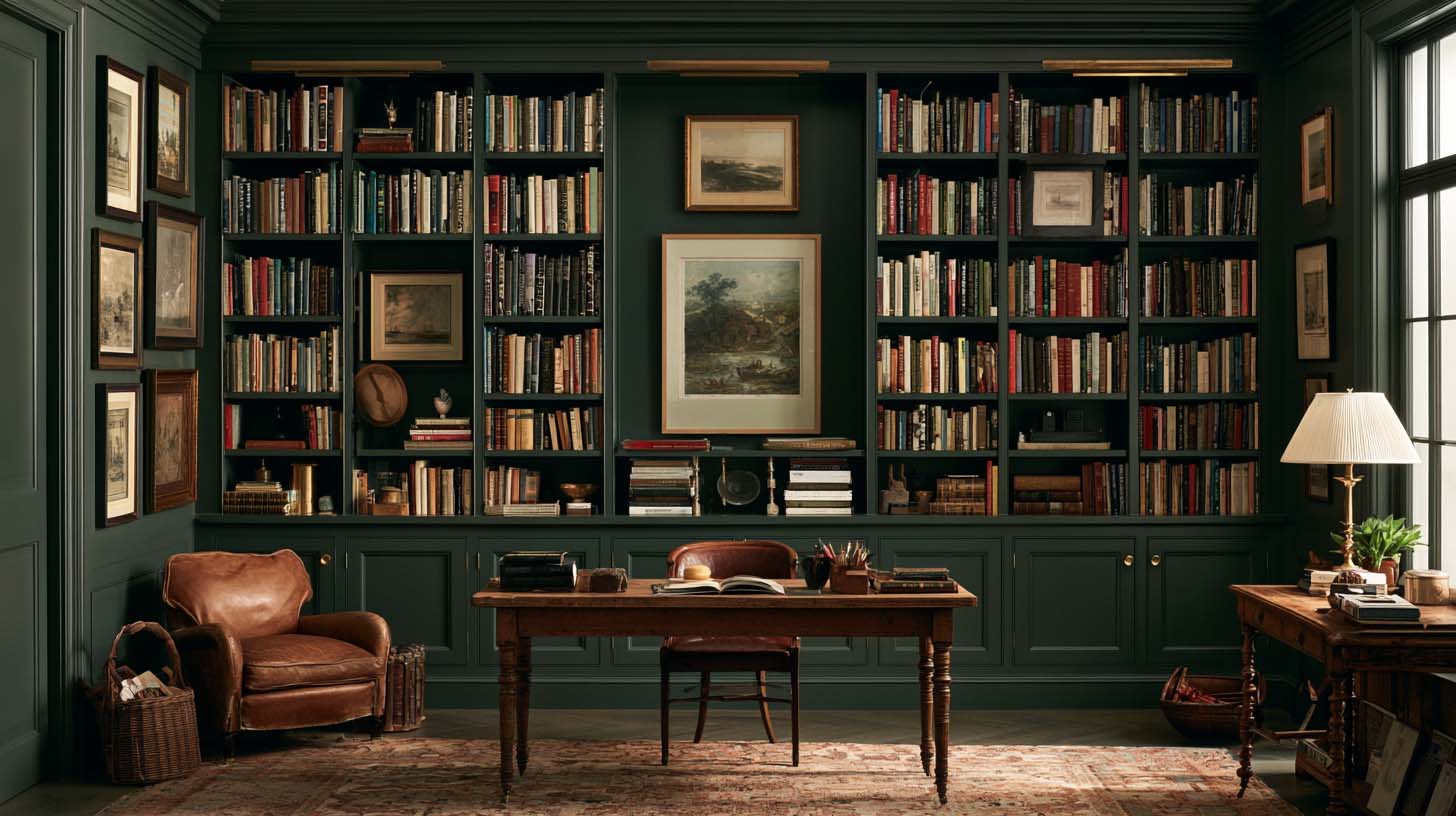
There is a particular kind of bookshelf that looks finished, and yet somehow feels empty. The books are color-coordinated. The decorative objects are evenly spaced. A ceramic bowl sits on one shelf, a small sculpture occupies another, and perhaps a stack of books lies horizontally beneath a brass object that appears to have been purchased specifically for the photograph. Nothing is wrong, but very little feels personal.
This is the central problem with most advice about how to decorate bookshelves. It teaches arrangement, not identity. Bookshelves shouldn't simply fill empty wall space. They should reveal something about the people who live with them. The best shelves contain evidence of interests, habits, travel, memory, taste, and time. That doesn't mean they should become cluttered. It means they should feel collected rather than staged.
Bookshelves Are Not Display Cases
The first mistake is treating every shelf as an independent vignette: one object, one stack, one empty space, repeat. This produces order, but often at the expense of life.
Real bookshelves work differently. They accumulate. Books lean against one another. Objects interrupt rows. Artwork overlaps. A small box sits beside a stack because that is where it belongs. The goal is not chaos. The goal is believable organization. A bookshelf should look as though someone actually returns to it.
Designer Eyes
When shelves feel staged, the problem is often not the objects themselves. It is the predictability of the spacing. Perfectly repeated empty gaps can make a bookshelf feel more like retail display than part of a home.
Start With Books
This sounds obvious, but bookshelves should generally begin with books, not accessories, not decorative filler. They create the visual density, variation, and intellectual texture that shelves need.
You do not need a rare library. You need books that belong to the owner: history, architecture, travel, fiction, art, cars, biographies, design, whatever subjects are genuinely read or collected. This matters because authenticity is visible. A shelf filled with books someone actually cares about possesses a different energy from one filled with decorative bindings purchased by the foot. The difference is difficult to fake.
Use Books Vertically and Horizontally
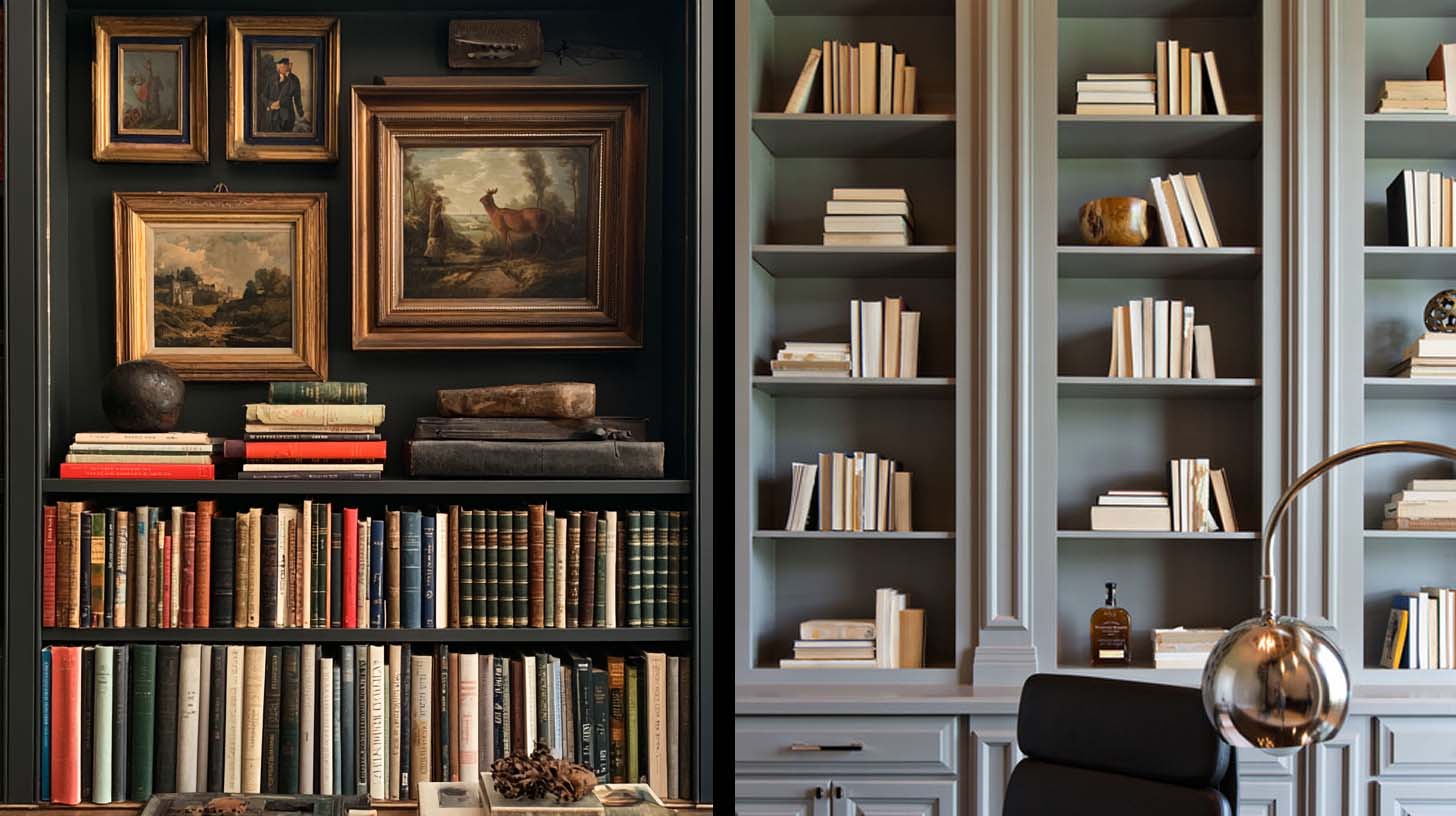
Rows of vertical books create rhythm. Horizontal stacks interrupt it, and that interruption is useful. A horizontal stack can support a small sculpture, frame, or object, and it can also create visual variation between taller and shorter shelves.
But avoid turning every stack into a pedestal. If every decorative object sits on three perfectly arranged books, the effect becomes formulaic. Use variation. Some books stand, some lie flat, some remain slightly uneven. Good shelves should feel composed without appearing choreographed.
Collections Matter More Than Decor
One of the easiest ways to improve shelves is to replace generic decor with actual collections. Collectors create depth naturally because objects share a reason for being together, and that reason is stronger than color coordination. Examples might include antique cameras, small sculptures, military objects, vintage clocks, model cars, travel souvenirs, pipes, ceramic vessels, framed documents, natural specimens, historic books, and small architectural fragments.
A collection does not need to be expensive. It simply needs continuity. Three related objects often create more meaning than ten unrelated decorative accessories.
Let Objects Reveal the Owner
Before you keep reading, see our full room-by-room approach to style direction.
This is where bookshelves become personal. A room may contain expensive furniture and still tell you very little about the person who lives there. Bookshelves can change that.
A framed photograph, an inherited object, a medal, a travel artifact, an old map, a signed book, a watch box, a small sculpture purchased on a trip. These items matter because they turn shelves into biography. The most compelling interiors do not merely communicate taste. They communicate ownership.
Designer Eyes
Ask yourself: could these shelves belong to anyone? If the answer is yes, they may need more of the owner and less decoration.
Artwork Belongs on Shelves Too
Artwork does not always need to hang on walls. Small framed pieces can lean against the back of a shelf. A drawing can sit behind a row of books. An old photograph can interrupt the geometry of cabinetry.
This creates depth because the artwork occupies a different visual plane from the objects in front of it. It also helps built-ins feel less like storage. They begin functioning as layered compositions. Larger artwork can sometimes span behind multiple shelves or occupy a central opening within built-ins. The key is to treat art as part of the architecture rather than simply another accessory.
Use Negative Space Intentionally
Not every inch needs to be filled. In fact, shelves often improve immediately when unnecessary objects are removed. Negative space gives important pieces room to register, and it also prevents the shelving from becoming visually exhausting.
But there is a difference between intentional negative space and shelves that simply look unfinished. The empty area should feel deliberate. If one shelf contains a substantial sculpture and nothing else, that can feel confident. If every shelf contains one tiny object surrounded by emptiness, the entire composition may feel weak. Scale determines whether emptiness reads as restraint or absence.
Scale Is More Important Than Quantity
A common bookshelf problem is too many small objects: tiny frames, tiny sculptures, tiny boxes, tiny plants. Individually, they may be attractive. Together, they create visual noise.
Larger objects create stronger anchors: a substantial ceramic vessel, a framed print, a large antique clock, a sculptural bust, a sizeable stack of books. These objects give the eye somewhere to rest. Smaller items can then support them. Think in terms of hierarchy. The shelf needs leaders, not a committee of equally small objects.
Avoid Perfect Symmetry
Symmetry can be powerful in architecture. It is often less convincing when repeated shelf by shelf: two identical objects on one shelf, two matching frames on the next, two equal stacks below. The result can feel excessively formal and artificial.
Instead, let the overall composition feel balanced without making every shelf mirror its neighbor. One side may carry greater visual weight at the top, and the opposite side can answer it lower down. This creates rhythm, not repetition.
Built-Ins Need a Stronger Strategy
Built-ins are architectural, which means they carry more visual authority than a freestanding bookcase. The styling should respond accordingly. If the cabinetry spans an entire wall, think about the composition from across the room. Do not style one shelf at a time and assume the wall will somehow resolve itself.
Instead, establish larger zones: books, artwork, collections, negative space, repeated materials. A strong built-in wall should read as one composition before the eye begins studying individual objects.
Color Coordination Is Not the Same as Cohesion
One of the most common bookshelf trends is arranging books by color. There is nothing inherently wrong with this, but color alone is a weak organizing principle if it overrides the meaning of the collection. Bookshelves should not become rainbows unless the owner genuinely prefers that visual language.
Cohesion can come from materials instead: dark wood, warm leather, aged brass, black frames, neutral ceramics. These elements can quietly repeat while the books themselves remain varied. The shelf feels unified without becoming decorative theater.
Use Materials That Age Well
Bookshelves benefit from materials that accumulate character: leather-bound books, wood boxes, brass objects, stone, ceramics, old paper. These materials carry texture and age. They often become more convincing over time.
This matters because shelves are naturally associated with accumulation. A shelf filled exclusively with glossy new decor often feels disconnected from that idea. The materials should support the sense that the room has been lived in.
Lighting Changes Everything
Shelves can look flat during the day and remarkable at night. Picture lights, library lights, integrated shelf lighting, or nearby lamps can introduce depth. The goal is not to illuminate every object equally. It is to create hierarchy.
One shelf might glow slightly more than another. A framed piece might receive emphasis. Books may recede into shadow. This gives the shelves atmosphere. Our guide to Picture Lights explores this principle in more detail.
Designer Eyes
Lighting should not reveal every object. It should help the eye decide where to linger. That distinction often separates atmospheric shelving from simple storage.
Do Not Overstyle the Top Shelves
Higher shelves naturally receive less attention. That is useful. They do not need to carry the same density of decorative objects as eye-level shelves. Use them for books, larger vessels, or quieter forms, and save more personal and detailed objects for the zones people actually see up close. This creates a natural hierarchy from top to bottom and helps the entire wall feel less busy.
Hallways, Libraries, and Offices Need Different Shelves
Context matters. A hallway bookshelf might benefit from stronger visual editing because people pass quickly. A library can tolerate greater density because reading and collecting are part of the room's identity. An office may need a balance between personal objects and professional restraint. The same styling formula should not be applied everywhere. Bookshelves are part of the room's function, and their character should reflect that.
The Best Shelves Are Edited, Not Styled
This is an important distinction. Styling implies adding. Editing often means removing. After you arrange the shelves, step back and identify what is unnecessary. Are there too many small objects? Too many repeated shapes? Too many empty decorative bowls? Too many objects chosen only because they match the room? Remove them. What remains usually becomes stronger. Restraint is not about making shelves sparse. It is about allowing meaningful objects to become more visible.
A Simple Bookshelf Framework
If you are unsure where to begin, use this sequence:
Start with books. Establish the foundation before adding decor.
Add personal collections. Use objects that reveal interests, travel, history, or memory.
Introduce one or two larger anchors. Artwork, vessels, sculptures, or substantial objects create visual hierarchy.
Vary orientation. Combine vertical books, horizontal stacks, leaning artwork, and open space.
Repeat materials subtly. Wood, brass, leather, stone, and black frames can create cohesion.
Leave negative space. Do not fill every shelf simply because space exists.
Step back and edit. Remove anything that feels generic or repetitive.
This process creates shelves that feel intentional without looking manufactured.
What Makes Shelves Feel Expensive
It is not the price of the objects. It is confidence. One meaningful sculpture on a shelf can feel more luxurious than ten decorative accessories. A group of old books can carry more presence than perfectly coordinated filler. A framed document with personal history can be more compelling than generic wall art.
Luxury often comes from allowing fewer objects to matter more. This is the same principle we explore in Why Some Homes Feel Expensive. The room becomes stronger when visual decisions are edited rather than multiplied.
The Shelf Should Evolve
Bookshelves should not be treated as finished installations. They should change. New books arrive, collections expand, travel introduces new objects, photographs are added, something inherited enters the room, another object is removed.
This evolution is part of what makes shelves believable. A bookshelf that never changes can begin to feel preserved rather than lived with. The goal is not perfection. It is continuity.
Final Thoughts
Learning how to decorate bookshelves is not really about learning how to arrange objects. It is about deciding what deserves to be visible: books, collections, artwork, memory, travel, interests, objects with history. These things create depth because they already mean something.
The best shelves are not successful because every object is perfectly placed. They succeed because the arrangement feels inevitable, as though the shelves could only belong to this person, in this room, at this point in their life. That is the difference between shelves that are styled and shelves that actually have something to say.
Want shelves designed around your own collection? Explore Full-Service Interior Design
Frequently Asked Questions
How do you decorate bookshelves without making them look cluttered?
Start with books, add a few larger objects, and leave deliberate negative space. Avoid filling every shelf with many small decorative pieces. Visual hierarchy is more important than quantity.
How do you make bookshelves look less staged?
Use personal objects, real collections, books you actually read, artwork, and items with history. Avoid overly symmetrical arrangements and repetitive styling formulas.
Should bookshelves be symmetrical?
Not necessarily. Overall balance matters more than perfect symmetry. Asymmetry often creates a more natural and collected appearance.
What should I put on bookshelves besides books?
Consider artwork, framed photographs, travel objects, antiques, sculptures, ceramics, boxes, natural specimens, and small collections that reveal something about the owner.
How much empty space should bookshelves have?
There is no fixed percentage. Leave enough negative space for important objects to register. Empty space should feel intentional rather than unfinished.
Should you arrange books by color?
You can, but color should not be the only organizing principle. Bookshelves often feel more personal when books are arranged according to use, subject, or natural accumulation.
How do you style built-in shelves?
Think about the entire wall as one composition. Establish larger zones of books, artwork, collections, and negative space rather than styling each shelf independently.

Facebook
Instagram
Youtube