The One Lighting Mistake That Ruins Masculine Interiors
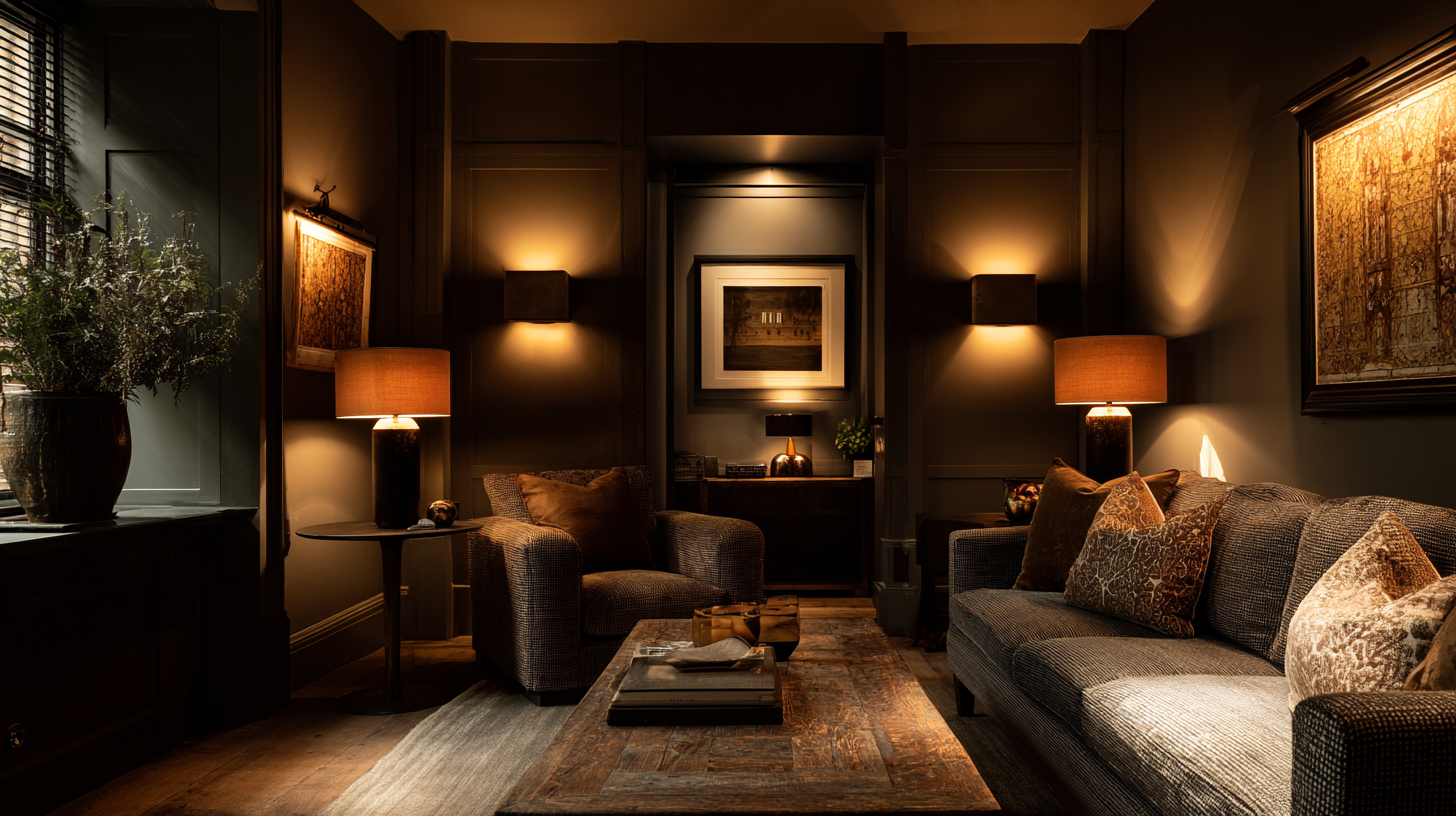
A room can have exceptional furniture, beautiful materials, and an intentional layout, yet still feel strangely lifeless.
The leather doesn't look as rich as it should. The wood lacks warmth. The walls feel flat instead of architectural.
Most people assume the problem lies in the furniture or color palette.
In reality, it's often the lighting.
Not because the room doesn't have enough light, but because all of the light is doing the same job.
The Problem With Relying on One Light Source
Walk into almost any builder-grade home and you'll notice the same pattern.
Flip one switch, and the entire room is illuminated from the ceiling.
Every corner receives roughly the same amount of light. Every surface is equally visible. Nothing stands apart.
It seems practical, but it comes at a cost.
Uniform light removes contrast, and contrast is what gives a room depth.
Without shadow, your eye has nowhere to travel. Instead of discovering layers within the space, everything is presented at once. The room becomes readable in seconds, but forgettable just as quickly.
This is one of the defining differences between a room that simply feels bright and one that feels composed.
Masculine Interiors Depend on Depth
One of the defining characteristics of masculine design is dimension.
Natural leather reveals subtle grain where light catches its surface. Walnut develops visual richness as its texture moves between highlight and shadow. Stone appears sculptural rather than flat. Even darker wall colors feel intentional because light gives them variation instead of turning them into a single dark plane.
When every surface receives the same intensity of light, many of those qualities disappear.
Dark walls begin to feel heavy instead of atmospheric.
Wood loses much of its visual character.
Leather appears ordinary.
The room hasn't changed.
Only the way you're seeing it has.
Designer Eyes
The next time you walk into your living room at night, don't look at the furniture first.
Instead, ask yourself one question:
Where does your eye naturally go?
If the answer is "everywhere at once," your lighting is probably too uniform. Well-designed rooms almost always establish hierarchy through light, allowing one area to quietly lead while the rest supports it.
Think in Layers, Not Fixtures
Most people choose lighting by asking what fixture to install.
Designers usually begin with a different question:
What role should this light play?
Every successful room uses multiple layers of light, each serving a different purpose.
The first layer provides general illumination so the room functions comfortably.
The second supports specific activities, perhaps a reading chair, a desk, or the seating area where conversations naturally happen.
The final layer creates atmosphere. This is where wall sconces, picture lights, library lamps, cabinet lighting, or carefully positioned accent lights introduce depth and visual interest.
Notice that none of these layers are competing.
Each performs a different task, allowing the room to feel both functional and refined.
Accent Lighting Is What Gives a Room Presence
If there's one lighting technique that consistently elevates masculine interiors, it's accent lighting.
Not because it's dramatic.
Because it's selective.
A picture light can transform artwork from decoration into a focal point.
A floor lamp beside a leather club chair quietly establishes a destination for reading.
Light washing across a textured stone fireplace reveals details that disappear under overhead lighting alone.
These moments don't demand attention.
They reward it.
The room begins to reveal itself gradually rather than all at once, creating the quiet sense of discovery found in thoughtfully designed spaces.
Color Temperature Matters More Than Most People Realize
Brightness is only part of the equation.
The color of light changes how every material in the room is perceived.
Lighting that is excessively cool often strips warmth from natural wood, leather, and darker paint colors, leaving the room feeling clinical despite the quality of the furnishings.
On the other hand, using very warm lighting everywhere can soften the room to the point where materials begin blending together.
Balance is usually the better approach.
Warm light naturally complements gathering spaces such as living rooms, lounges, and bedrooms, where comfort is the priority. Slightly more neutral light often works better in kitchens, offices, and workspaces, where clarity matters more than atmosphere.
The goal isn't to notice the bulbs.
It's to notice how naturally the room feels.
The Best Lighting Is Almost Invisible
One of the quiet ironies of interior design is that the best lighting rarely becomes the feature people remember.
Instead, they remember how comfortable the room felt.
How inviting it seemed after sunset.
How the materials appeared richer.
How the space somehow felt more expensive without being able to explain why.
That's because great lighting isn't trying to become the focal point.
It's revealing the focal points you've already created.
When every layer works together, furniture gains presence, architecture gains depth, and the room develops the quiet confidence that defines timeless masculine interiors.
Continue Building Your Eye for Design
Lighting is only one piece of the puzzle. The way a room feels is the result of dozens of design decisions working together, from furniture proportions and material selection to paint colors, layout, and visual hierarchy.
The Masculine Interior Style Guide brings those principles together in one comprehensive resource. Inside, you'll learn how to design with the same frameworks we use when creating client homes, including ten timeless masculine interior styles, room layouts, furniture selection, lighting strategies, paint colors, materials, and styling techniques that create depth, character, and lasting appeal.
Whether you're refining a single room or planning an entire home, it provides the confidence to make thoughtful design decisions instead of relying on guesswork.

Facebook
Instagram
Youtube