Leather Furniture: Full-Grain vs. Top-Grain vs. Genuine Leather
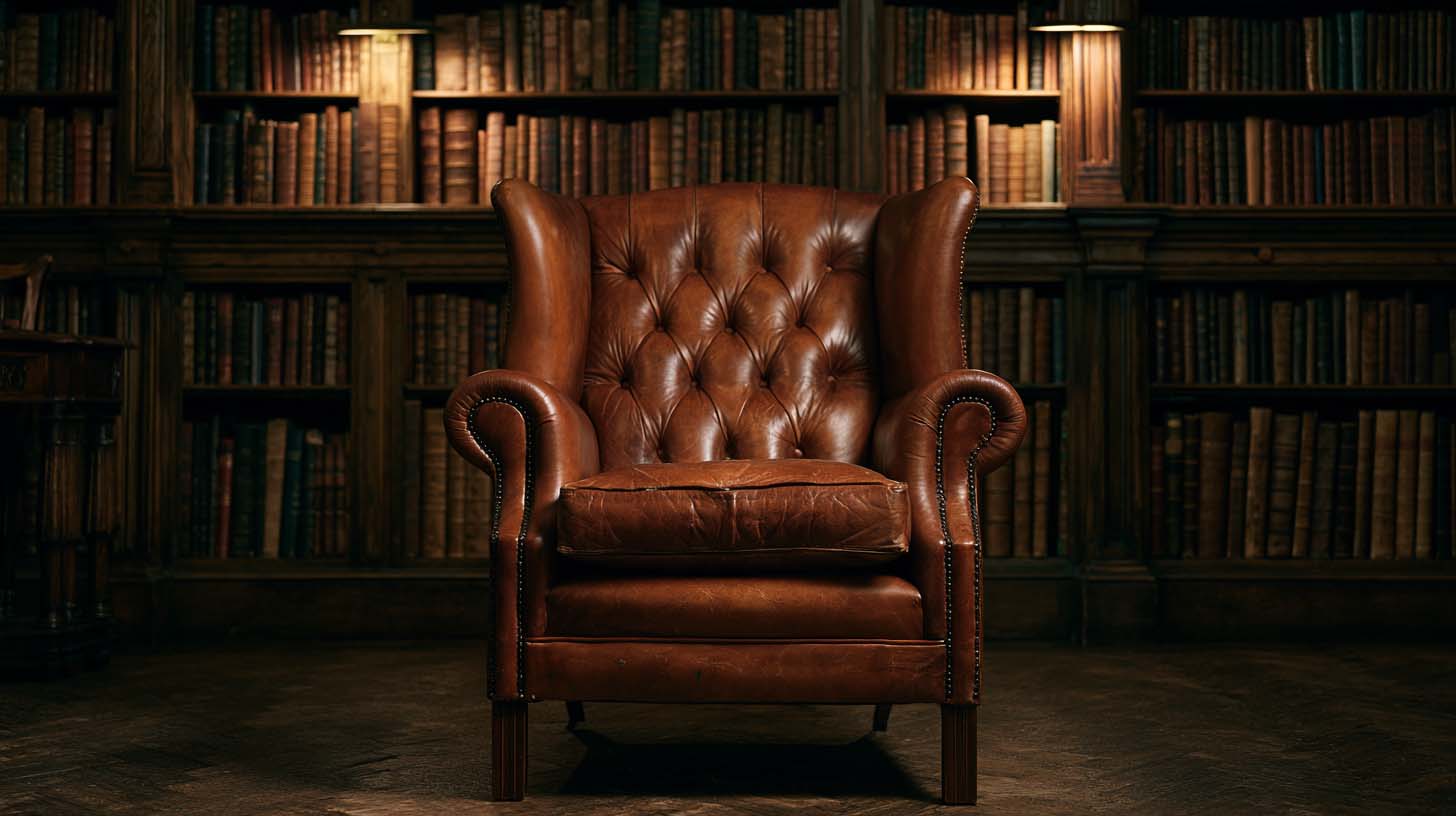
Leather furniture creates an unusual buying problem. Two sofas can look remarkably similar when they're new. One may become more handsome with every passing year. The other may simply become worn. That distinction is easy to overlook in a showroom.
Fresh upholstery is clean, the color is even, the cushions are perfectly arranged, and almost everything looks its best. But leather shouldn't be judged only by how it looks on the day you buy it. It should be judged by what it has the potential to become. This is why understanding full grain vs top grain leather matters when you're buying a sofa, club chair, desk chair, or other piece intended to remain in your home for years.
The terminology can be confusing. "Genuine leather" sounds reassuring. "Top-grain" sounds superior. "Full-grain" is frequently used as shorthand for quality. But these terms describe meaningful differences in how the hide has been processed, and those differences affect how the furniture feels, ages, develops character, and responds to actual life. For the right piece of furniture, the question isn't simply "is this real leather?" The better question is: what kind of leather is this, and what will it look like after I've lived with it?
Why Leather Has Such a Strong Presence in Interiors
Leather occupies a particular place among interior materials. It isn't simply upholstery. It carries visual weight. A linen chair can feel light and relaxed. Velvet can feel rich and decorative. Wool can feel tailored and quiet. Leather tends to introduce age, substance, warmth, and permanence.
This is especially true in masculine interiors, where leather works naturally alongside walnut, oak, brass, stone, wool, books, and darker architectural finishes. But much of leather's appeal comes from something more interesting than color or texture: it can record use. The seat softens, the arms deepen in color, small variations appear, and creases form where people repeatedly sit. Instead of remaining frozen in the condition in which it was purchased, good leather can gradually become specific to the home that owns it. That quality is known as patina, and not all leather develops it equally.
Start With the Hide
Before comparing leather grades, it helps to understand what you're actually buying. Animal hide is naturally composed of layers. The outermost portion contains the strongest, densest fiber structure and retains the natural characteristics of the animal's skin. Deeper layers become progressively less dense.
Leather terminology largely describes which portion of that hide remains and how aggressively its surface has been altered. That distinction matters because leather quality isn't simply a matter of thickness. It's also about what has been removed.
Full-Grain Leather: The Least Corrected Surface
Full-grain leather retains the natural grain layer of the hide. The surface hasn't been sanded or buffed away to remove natural markings. As a result, you may see subtle scars, wrinkles, pores, and variations in grain, color, and texture.
To someone expecting perfect uniformity, these may initially appear to be flaws. They're often evidence of the opposite. They reveal that the natural surface remains intact. This gives full-grain leather much of the character collectors appreciate. Rather than hiding the history of the material, it allows that history to remain visible.
What Full-Grain Leather Feels Like in a Room
Full-grain leather tends to feel substantial without necessarily appearing formal. Its natural variation prevents large pieces from becoming visually flat. A cognac full-grain club chair, for example, may contain subtle changes in color across the arms, back, and seat. Those variations become more pronounced with use.
The chair develops depth. It begins to look inhabited rather than merely purchased. This is one reason full-grain leather works so naturally in libraries, studies, lounges, and collected living rooms. It doesn't require perfection from its surroundings. It rewards age.
Designer Eyes
Look closely at beautiful old leather furniture. The quality we admire is often precisely what a new furniture showroom attempts to eliminate: variation. Perfectly uniform leather may photograph cleanly. Natural variation is what gives leather a life of its own.
How Full-Grain Leather Ages
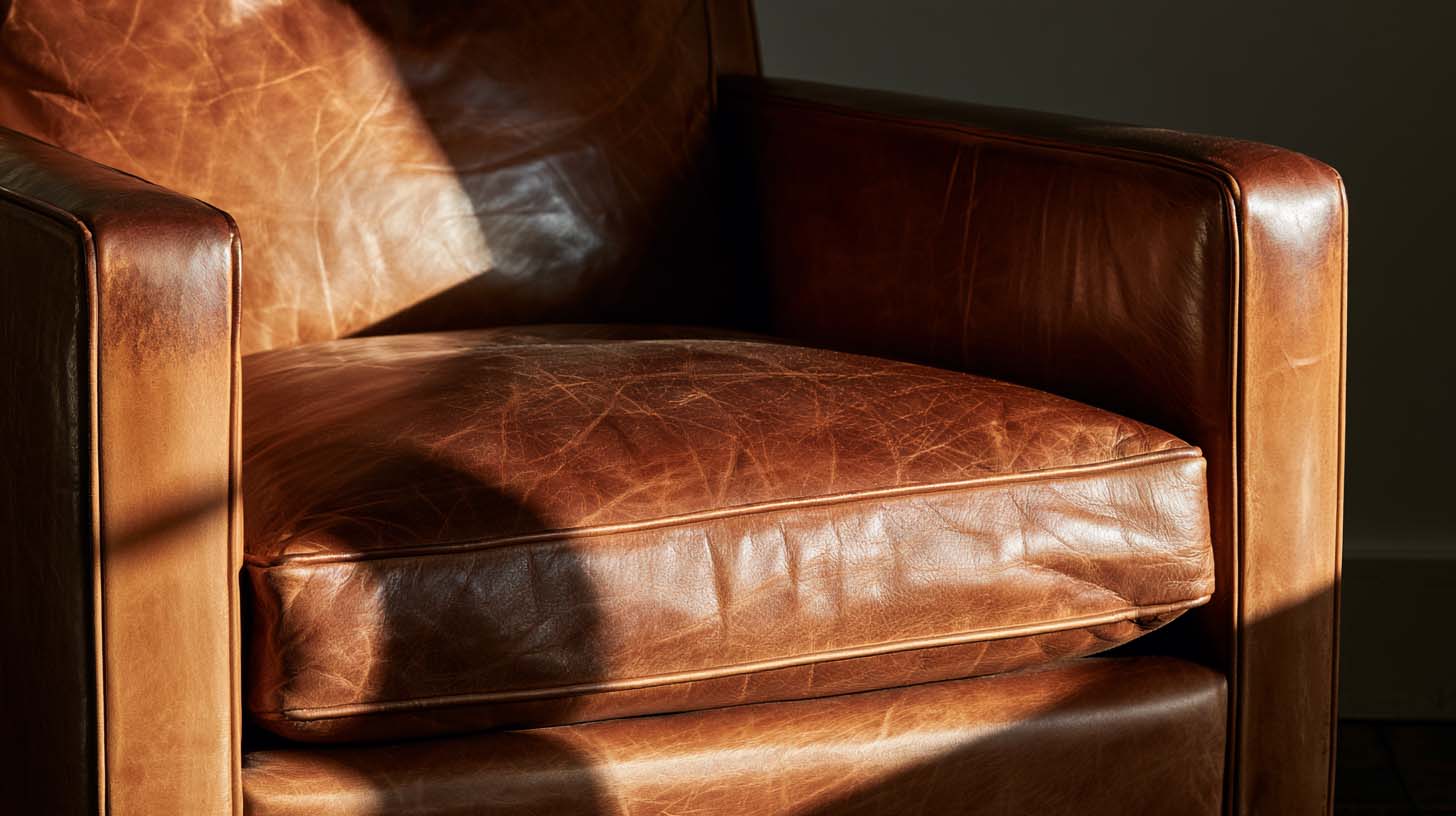
This is where full-grain leather earns much of its reputation. Rather than simply deteriorating, quality full-grain leather can develop patina. Areas frequently touched may darken, the surface may become smoother in places, creases emerge, and color becomes richer. Small scratches may blend into the larger story of the material rather than appearing as isolated damage.
This doesn't mean full-grain leather is indestructible. It can stain, it can scratch, sunlight can alter it, and neglect can damage it. But when properly cared for, the changes associated with ordinary use often add character rather than simply subtracting condition. That's an important distinction for furniture meant to remain in a home for decades.
Top-Grain Leather: Refined and More Uniform
Top-grain leather also comes from the upper portion of the hide. The major difference is that the surface has typically been corrected to some degree, lightly sanded or buffed to remove imperfections before receiving additional finishing.
This creates greater consistency. The leather can appear smoother, more uniform, cleaner, more predictable in color, and less marked by natural imperfections. That doesn't make top-grain leather "bad." Far from it. High-quality top-grain leather can make excellent furniture. The question is simply what kind of experience you want from the material.
Full Grain vs Top Grain Leather
The distinction becomes easiest to understand when you stop thinking in terms of "good" and "bad." Think instead about natural character versus controlled consistency. Full-grain leather preserves more of the hide's original surface. Top-grain leather has been refined to create a more uniform appearance.
For a heavily collected library where age and patina are desirable, full-grain may be particularly appealing. For a polished living room where you want leather's warmth but prefer greater visual consistency, quality top-grain can be an excellent choice. Neither decision should be made from the terminology alone. You need to understand the finish as well.
Finish Matters More Than Most Buyers Realize
Before you keep reading, consider what our Exclusive Design service could bring to a project like this.
Two pieces labeled "top-grain leather" can behave very differently, and so can two full-grain hides. That's because the finishing process influences how exposed the natural leather remains. Some leathers receive relatively transparent finishes that preserve visible variation and allow the material to age naturally. Others receive stronger pigmentation and protective coatings designed to create greater consistency and resistance to stains.
This creates a tradeoff. More protection generally means greater predictability. Less surface correction and coating generally means more visible natural character. Neither is universally correct. A pristine formal sitting room has different demands than a family room occupied by children, pets, guests, and daily life. Good material selection begins with honesty about how the furniture will actually be used.
Aniline Leather and Patina
If you're shopping for higher-quality leather furniture, you'll often encounter the term aniline. Aniline leather is colored with dyes that allow much of the natural grain and variation of the hide to remain visible rather than covering the surface with heavy opaque pigment. This produces some of the richest and most natural-looking leather available.
It also tends to be more sensitive. Spills, sunlight, oils, and ordinary use can leave their mark more readily. For some owners, that's a disadvantage. For others, it's exactly the point. Aniline leather can develop extraordinary character because the surface isn't heavily insulated from life. If you're purchasing furniture specifically because you want patina, understanding the finish can be just as important as asking whether the hide is full-grain.
Semi-Aniline Leather
Semi-aniline leather occupies a useful middle ground. It maintains much of the natural character associated with aniline leather while receiving additional protection. The result can be more practical for furniture that sees regular use while still preserving visible grain and variation.
For many homeowners, this balance makes tremendous sense. You receive a material that still feels like leather rather than a perfectly uniform manufactured surface, but with somewhat greater resistance to everyday wear. This is why leather purchasing should rarely stop at "is it full-grain?" Ask about the finish.
What Does "Genuine Leather" Actually Mean?
This is where marketing language becomes particularly confusing. To an ordinary buyer, genuine leather sounds like a quality designation. It sounds reassuring, real, authentic. But the phrase generally tells you far less about quality than most people assume.
"Genuine leather" essentially indicates that the material contains real leather. It does not, by itself, tell you that you're receiving the highest-quality portion of the hide. Lower layers of the hide can be processed, finished, embossed, and sold as genuine leather. The resulting material may look convincing when new, but it shouldn't automatically be treated as equivalent to high-quality full-grain or top-grain upholstery. The lesson isn't that anything labeled genuine leather should be rejected. It's that the label isn't enough information to justify confidence. Ask more questions.
Split Leather and Lower Layers
Once the upper grain layer is separated, the remaining lower portion of the hide is commonly referred to as a split. Split leather can still be useful, but its fiber structure differs from the denser outer portion of the hide. Manufacturers may coat or emboss split leather to create a more uniform finished surface.
Again, this can produce an attractive material. But if your goal is purchasing a chair or sofa specifically because you want leather that ages beautifully over many years, you should understand exactly which part of the hide you're receiving. The words "real leather" don't answer that question.
What About Bonded Leather?
Bonded leather deserves separate consideration. Rather than being a continuous section of hide, bonded leather is manufactured using leather fibers or scraps combined with binding materials and formed into a surface. The percentage and construction can vary.
It can offer the appearance of leather at a lower price, but it shouldn't be confused with full-grain or top-grain leather when evaluating furniture intended to age gracefully. If longevity and patina are primary goals, we'd generally look elsewhere.
Why Patina Is Different From Wear
This distinction matters enormously. Wear is simply evidence that something has been used. Patina is evidence of use that makes the material more interesting. A peeling synthetic coating is wear. A deeply burnished leather armrest can be patina. A failing surface finish is wear. Subtle darkening and natural creasing can be patina.
The difference is why some twenty-year-old furniture looks tired while other pieces look more distinguished than when they were new. Good natural materials often possess the ability to absorb time. They don't remain perfect. They become better at being imperfect.
Designer Eyes
When buying something meant to last, don't only ask "how well will this resist aging?" Also ask "how beautifully will this material age?" Those are not the same question.
Leather Color Changes the Way Patina Appears
Color deserves consideration too. Medium browns, cognacs, tans, and other naturally warm tones often reveal patina particularly well because subtle darkening and variation remain visible. Very dark leather can still age beautifully, but some changes may be less obvious.
Extremely uniform heavily pigmented colors may preserve consistency longer but reveal less of the tonal evolution associated with more natural finishes. This is one reason cognac leather has become such an enduring presence in traditional and masculine interiors. It already possesses warmth. Age simply gives that warmth greater depth.
Full-Grain Leather Isn't Automatically the Right Choice
It's easy to turn material knowledge into absolutism. Full-grain becomes "good." Everything else becomes "bad." Interior design is rarely that simple.
Suppose you have young children, pets, frequent guests, and a light-colored sofa in your primary family room. A highly sensitive natural aniline leather may create more anxiety than enjoyment. A well-made, appropriately protected top-grain leather may serve your life far better. Likewise, a leather chair in a quiet study may receive very different treatment from a sectional used every evening. Material quality isn't only about purity. It's about suitability. The best material is the one capable of aging appropriately within the life you actually lead.
What to Look for When Buying a Leather Sofa
A sofa represents a substantial investment, and the upholstery is only one component. Start by asking the seller specific questions: Is the leather full-grain or top-grain? Is it aniline, semi-aniline, or pigmented? Has the grain been corrected or embossed? Are all upholstered surfaces the same leather? Are the sides and back leather or a matching synthetic material? How should the leather be maintained? How does this particular finish respond to spills and sunlight?
A knowledgeable manufacturer or retailer should be able to answer these questions clearly. Vague answers deserve caution. "Premium leather" isn't a technical explanation, and neither is "luxury leather."
Look Beyond the Upholstery
Exceptional leather can't rescue poorly constructed furniture. If you're buying a sofa or chair meant to last, also investigate frame construction, joinery, suspension, cushion materials, stitching, seam placement, replaceability of cushions, and overall craftsmanship.
A beautifully aging hide wrapped around a disposable frame defeats the purpose. This is particularly important with large leather sofas. The goal isn't simply to own good leather. It's to own good furniture.
What to Look for in a Leather Club Chair
Club chairs deserve special attention because leather suits their character so naturally. A good club chair should feel substantial. The arms should invite use. The seat should allow you to settle into it rather than perch on top of it. The upholstery should work with the chair's form rather than appearing stretched over it without character.
Natural creasing is not necessarily a defect. Neither is subtle color variation. In the right leather, these qualities are exactly what allow the chair to become more handsome over time. This is one reason vintage club chairs remain so compelling. Their history is visible. For a deeper discussion of the form itself, see our guide to Club Chairs vs. Wingback Chairs.
Leather and the Personality of a Room
Material decisions aren't purely technical. Full-grain leather introduces a different atmosphere than perfectly uniform protected leather. One feels more natural, more collected, more willing to age. The other may feel cleaner and more controlled.
Neither exists independently from the room. Consider what surrounds the furniture: walnut, mahogany, white oak, brass, wool, stone, painted millwork. Leather should participate in that material language. Our guide to The Best Wood Species for Luxury Interiors explores the same principle from the perspective of timber. The most convincing interiors rarely depend on one impressive material. They depend on several materials aging well together.
Leather Shouldn't Look New Forever
There is a broader lesson here. Modern consumer culture often treats newness as the highest possible condition: no scratches, no creases, no discoloration, no evidence of use. But many of the materials we associate with distinguished interiors become compelling precisely because they refuse to remain new.
Leather softens. Wood darkens. Brass tarnishes. Stone wears. Linen wrinkles. Objects accumulate history. This doesn't mean neglecting them. It means choosing materials capable of participating in the life of the home rather than constantly fighting against it.
A Simple Leather Buying Framework
When evaluating leather furniture, work through these questions:
What part of the hide am I buying? Determine whether it's full-grain, top-grain, split, or another construction.
How has the surface been finished? Understand whether it's aniline, semi-aniline, heavily pigmented, corrected, or protected.
Do I want patina or consistency? Be honest about which appearance you actually prefer.
How will the furniture be used? A formal study and a busy family room have different requirements.
Is the rest of the furniture built to last? Quality upholstery only makes sense when the frame, cushions, suspension, and construction deserve it.
Can the seller explain exactly what they're selling? Clear terminology is usually a better sign than vague phrases such as "premium Italian leather."
What will this look like in ten years? This may be the most important question of all.
Full Grain vs Top Grain Leather: Which Should You Buy?
If natural character, visible grain, and the potential for rich patina are your priorities, high-quality full-grain leather deserves serious consideration. If you want genuine leather with greater consistency and potentially more protection for everyday use, high-quality top-grain leather may be the more practical choice.
If a piece is simply labeled "genuine leather," investigate further before assuming the phrase indicates quality. And if longevity is important, understand exactly what you're buying before being persuaded by appearance alone. The best decision isn't necessarily the most expensive leather. It's the leather whose aging characteristics match the furniture, the room, and the life surrounding it.
Final Thoughts
The debate over full grain vs top grain leather isn't really about identifying one universally superior material. It's about understanding what each leather has been asked to become. Full-grain preserves more of the hide's natural story. Top-grain introduces refinement and consistency. More heavily processed leathers prioritize uniformity and protection. Each choice changes not only how furniture looks today, but how it will participate in the room years from now.
And that is the larger principle worth remembering. When buying furniture meant to last, don't judge materials only at their most perfect moment. Imagine them used, softened, creased, touched, aged. Imagine the chair after a thousand evenings, the sofa after years of conversation, the armrest after countless hands have rested upon it. Some materials merely survive that life. The best ones record it.
Considering a full custom build? Explore Exclusive Design
Frequently Asked Questions
What is the difference between full grain and top grain leather?
Full-grain leather retains the natural grain surface of the hide with minimal correction. Top-grain leather also comes from the upper portion of the hide, but its surface is typically sanded or corrected to create greater uniformity.
Is full-grain leather better than top-grain leather for furniture?
Not always. Full-grain leather is excellent when natural character and patina are priorities. Quality top-grain leather can offer a more uniform appearance and greater practicality depending on its finish and how the furniture will be used.
What does genuine leather mean?
"Genuine leather" indicates that real leather is present, but it isn't by itself a guarantee of premium quality. Buyers should ask which portion of the hide is used and how the leather has been processed and finished.
Does full-grain leather develop patina?
Yes. Quality full-grain leather, particularly with more natural finishes, can develop richer color, subtle creasing, burnishing, and other characteristics associated with patina as it ages.
What type of leather is best for a sofa?
The best choice depends on use. Full-grain and high-quality top-grain leathers are both strong candidates for long-lasting furniture. The finish is equally important: highly natural aniline leather offers character, while semi-aniline or protected finishes may be more practical for heavily used rooms.
Is top-grain leather real leather?
Yes. Top-grain leather is real leather made from the upper portion of the hide. Its natural surface has typically been corrected or refined to some degree.
What leather develops the best patina?
Natural full-grain leathers with minimally protective finishes, particularly aniline leathers, tend to display patina most visibly. The exact result depends on the hide, dyes, finish, color, use, care, and exposure to light.
Is bonded leather the same as genuine leather?
No. Bonded leather is manufactured using leather fibers or scraps combined with binding materials. It should not be treated as equivalent to a continuous full-grain or top-grain hide when evaluating long-term furniture quality.

Facebook
Instagram
Youtube