How to Choose the Right Size Chandelier for Any Room
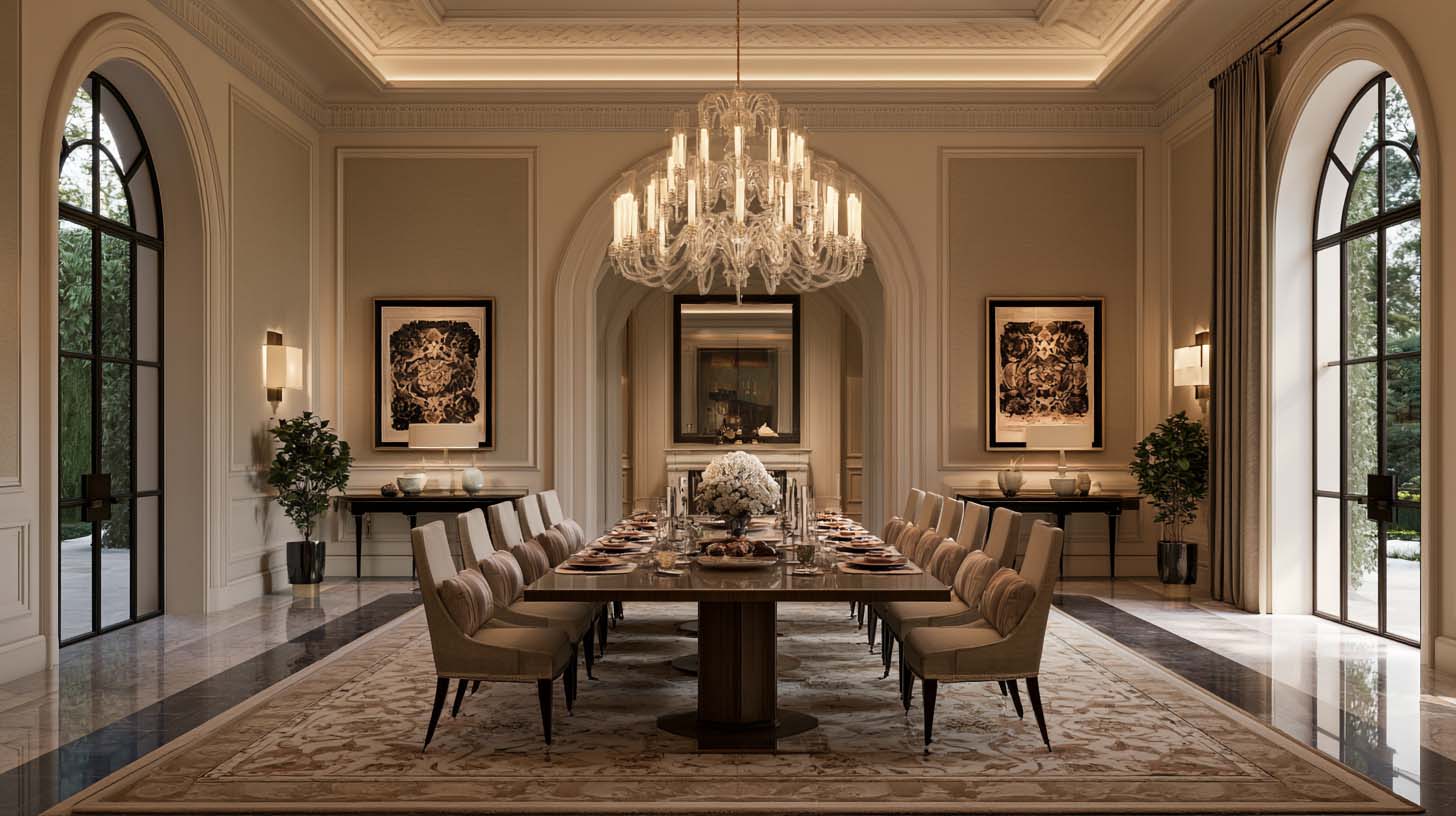
There is a particular mistake that can make an otherwise beautiful room feel strangely unfinished. The chandelier is too small. The furniture may be properly proportioned, the architecture may be impressive, the materials may be exceptional, yet overhead hangs a fixture that seems to disappear into the ceiling.
This happens constantly because people tend to choose lighting as though they're selecting an accessory. Designers don't. A chandelier occupies the architecture. It hangs within the volume of the room, establishes a focal point overhead, and often becomes one of the few objects visible from nearly every position in the space. That gives it tremendous visual responsibility.
A useful chandelier size guide should therefore do more than provide a formula. Measurements are helpful, but they cannot tell you whether a fixture possesses enough presence for a vaulted foyer, whether a delicate chandelier will disappear above a substantial dining table, or why two fixtures with identical dimensions can feel completely different once installed. To choose chandeliers well, you need to understand scale, and scale begins with the room, not the fixture.
Why Chandelier Size Changes the Entire Room
Most furniture sits relatively close to the floor. Chandeliers don't. They occupy the upper portion of the room, which means they influence how we perceive the space between the furniture and ceiling. A substantial fixture can visually connect those two zones. An undersized fixture often leaves them disconnected.
This becomes particularly noticeable in rooms with tall ceilings. Imagine a dining room with a long oak table, substantial upholstered chairs, 10-foot ceilings, and a small pendant floating overhead. The table feels grounded, but the ceiling feels distant, and nothing bridges the space between them. Replace that fixture with a properly scaled chandelier and the architecture suddenly feels more complete. The ceiling hasn't moved, and the room hasn't become smaller, but the vertical volume has been given structure. That is one of lighting's least appreciated responsibilities.
Designer Eyes
When judging chandelier size, don't stare only at the fixture. Look at the empty air surrounding it. If the chandelier appears lost inside that volume, the problem may not be its style. It may simply lack sufficient scale.
The Basic Chandelier Size Formula
There is a useful starting formula for determining chandelier diameter in an open room. Add the room's length and width in feet, then convert that total to inches. For example, a room measuring 12 feet by 16 feet gives you 12 plus 16, which equals 28. A chandelier around 28 inches in diameter becomes a reasonable starting point. For a 15-by-18-foot room, 15 plus 18 equals 33, so begin looking around 33 inches in diameter.
This formula is useful because it establishes a relationship between the fixture and the room, but don't mistake the result for an instruction. A visually delicate 33-inch fixture and a dense 33-inch chandelier can behave very differently. The calculation narrows the field. Your eye still makes the final decision.
Visual Weight Matters as Much as Diameter
Imagine two chandeliers. Both measure 36 inches across. One consists of thin brass arms with considerable open space between them. The other is constructed from heavy iron with substantial shades and dense ornamentation. They share the same dimensions. They do not share the same scale.
The heavier chandelier occupies considerably more visual space. This is visual weight. Material, color, shape, density, and construction all influence how large a fixture appears. Dark iron tends to feel heavier than delicate polished metal, large opaque shades add mass, clear glass can reduce it, and numerous arms create greater complexity, while open-frame fixtures allow the architecture behind them to remain visible. This is why dimensions alone sometimes lead homeowners astray. You aren't merely filling inches. You're balancing visual mass.
Ceiling Height Changes the Equation
Ceiling height is one of the most important factors in chandelier selection. An 8-foot ceiling creates an entirely different environment from a 12-foot ceiling. As ceilings rise, the room contains more vertical volume, and the chandelier must respond.
This doesn't always mean making the fixture dramatically wider. Sometimes additional height matters more. A chandelier with a long body, tiered construction, or substantial chain can occupy tall architecture more successfully than a wide but shallow fixture. In rooms with lower ceilings, the opposite becomes important: a large chandelier may still work, but it needs a shallower profile so it doesn't intrude uncomfortably into the room. The objective is not simply preventing people from hitting their heads. The fixture should appear proportionate to the volume it inhabits.
How High Should a Chandelier Hang?
Before you keep reading, see what our Premier Design service includes.
In open areas where people walk beneath the chandelier, maintaining approximately 7 feet of clearance from the floor to the bottom of the fixture is a useful starting point. Taller ceilings naturally provide more flexibility.
Dining rooms are different because the table protects the fixture from foot traffic. There, the chandelier can, and generally should, hang much lower. This creates intimacy. It visually connects the fixture to the furniture beneath it rather than leaving it stranded near the ceiling. As with artwork, height determines relationship. Too high, and the chandelier becomes ceiling decoration. At the right height, it becomes part of the room.
Dining Room Chandelier Size
Dining rooms require a different sizing approach because the chandelier relates more directly to the table than to the room itself. A useful guideline is to choose a chandelier approximately one-half to two-thirds the width of the dining table. For a 42-inch-wide dining table, a fixture somewhere around 21 to 28 inches wide provides a reasonable starting range. For a substantial 48-inch-wide table, you might begin around 24 to 32 inches.
But again, consider visual weight. A delicate chandelier may comfortably stretch beyond these proportions, while a visually dense fixture may need to remain smaller. The goal is for the table and chandelier to read as one vertical composition.
How High Should a Chandelier Hang Above a Dining Table?
A common starting point is approximately 30 to 36 inches between the tabletop and the bottom of the chandelier for a room with an 8-foot ceiling. With taller ceilings, the fixture can often rise slightly while maintaining a strong relationship with the table.
But don't automatically keep raising the chandelier simply because the ceiling is taller. That's a common mistake. The fixture still belongs to the dining composition. If it rises too far, the connection breaks. Stand back and look at the table, chairs, and chandelier together. They should feel like one arrangement rather than furniture below and lighting above.
Designer Eyes
A dining chandelier shouldn't appear to be hanging from the ceiling. It should appear to be belonging to the table. That small shift in perception often tells you whether the height is correct.
Long Dining Tables May Need Linear Fixtures
A round chandelier can look beautiful above a rectangular table, but as dining tables become longer, the geometry deserves consideration. An eight- or ten-foot table creates a powerful horizontal line, and a small round chandelier may illuminate its center while leaving the composition visually weak at both ends.
This is where linear chandeliers become particularly effective. Alternatively, two complementary fixtures can establish rhythm across a very long table. The important principle is coverage. The chandelier should acknowledge the table's overall footprint rather than simply marking its midpoint.
Chandelier Size for a Foyer
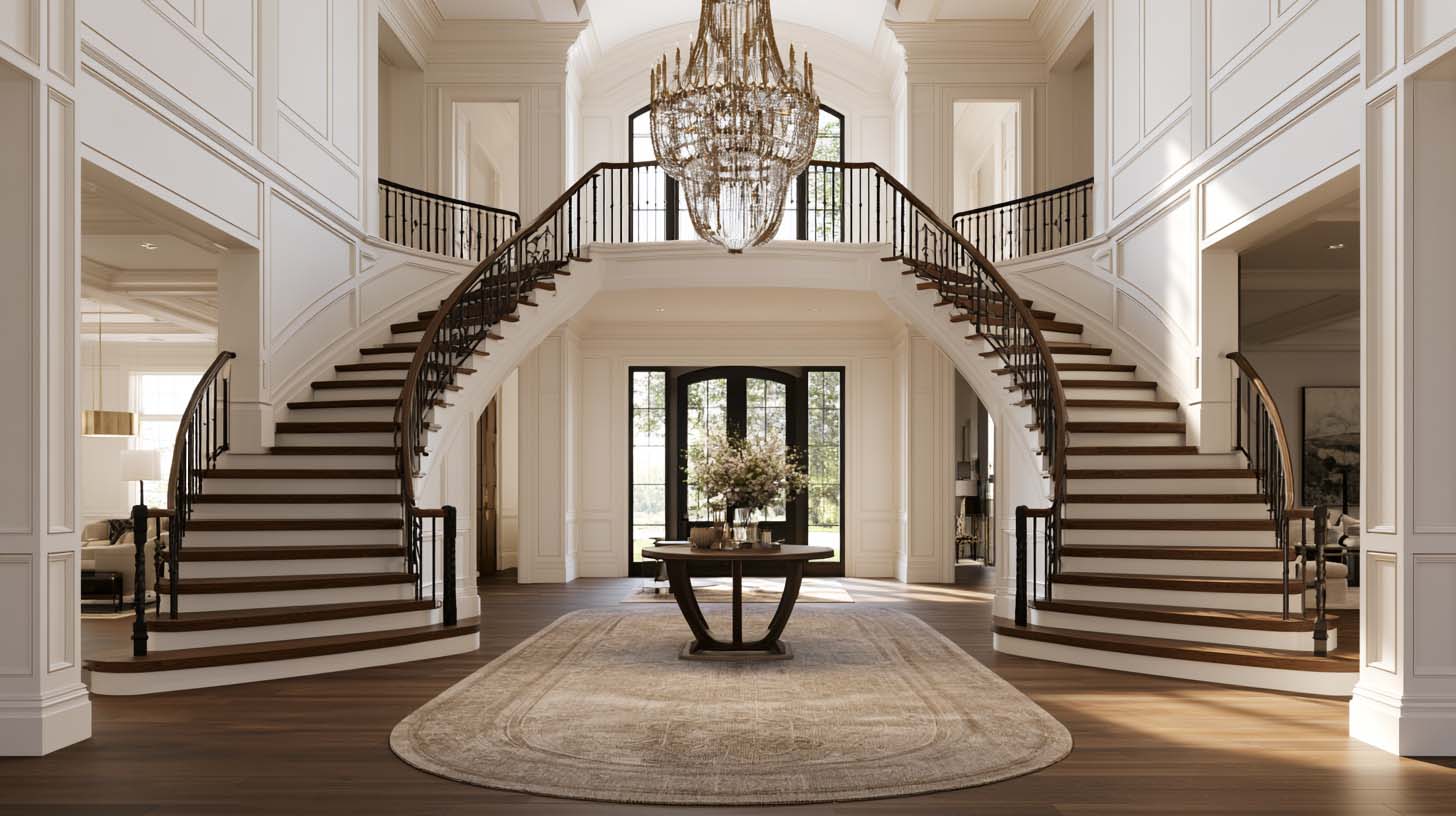
Foyers present one of the greatest opportunities for dramatic lighting. They're often taller than surrounding rooms, they're experienced immediately upon entering, and they may be viewed from multiple floors or through large windows. That means a foyer chandelier needs enough presence to coexist with the architecture.
The room-dimension formula remains a useful starting point, but ceiling height and sightlines become especially important. In a two-story foyer, ask how the chandelier looks from the entrance, how it looks from the staircase, how it appears from the second-floor landing, and whether it can be seen through an exterior window. The fixture may need to occupy considerably more vertical space than you initially expect. A chandelier that looks enormous in a showroom can become surprisingly modest once suspended inside a 20-foot-high foyer. Architecture changes scale.
Where Should a Two-Story Foyer Chandelier Hang?
There isn't one universal height because foyer architecture varies dramatically. Instead, look for architectural reference points: windows, landings, balustrades, doorways, and ceiling transitions. The chandelier should appear integrated with those features rather than floating at an arbitrary measurement.
If the foyer contains a prominent second-story window, for example, positioning the chandelier where it participates in that composition may be more important than following a generic height formula. Architecture should always have the final word.
Bedroom Chandelier Size
Bedroom chandeliers require greater restraint. The goal usually isn't grandeur. It's atmosphere. A chandelier can introduce softness, character, and a sense of occasion without making the bedroom feel like a ballroom.
Begin with the room-dimension formula, then consider the bed. The bed is usually the largest visual object in the room, and a chandelier centered over or near it needs enough scale to acknowledge that mass. A tiny fixture above a king-size upholstered bed often disappears. Likewise, an enormous crystal chandelier can overpower a modest bedroom. The relationship should feel calm, not theatrical.
Should a Bedroom Chandelier Be Centered Over the Bed?
Not necessarily. It depends on the architecture. In some bedrooms, the bed sits directly beneath the room's architectural center. In others, centering the chandelier within the room produces a more balanced result even if the bed is slightly offset.
Vaulted ceilings, fireplaces, sitting areas, and unusual floor plans can all influence the correct placement. This is another example of why design can't be reduced entirely to formulas. The fixture must respond to the composition that actually exists.
Living Room Chandeliers
Living rooms are often more complicated because there may be several competing centers: the architectural center of the room, the seating arrangement, the fireplace, and the coffee table. A chandelier doesn't automatically belong in the geometric center. It may make more sense centered over the primary seating group.
In a large room containing multiple furniture zones, one chandelier may not be sufficient at all. The goal is to determine which part of the room the fixture is meant to organize. Lighting should reinforce the spatial hierarchy that already exists, not create a competing one.
Chandeliers and Vaulted Ceilings
Vaulted ceilings amplify the problem of undersized fixtures. The architecture rises dramatically while the furniture remains near the floor. A chandelier becomes one of the few opportunities to occupy the volume between them.
This is where vertical scale becomes extremely important. Tiered chandeliers, lanterns, long suspension rods, and multiple fixture groupings can help bridge the distance between ceiling and furniture. A fixture that hugs the highest point of a vaulted ceiling may technically illuminate the room while doing almost nothing for its proportions. Sometimes the chandelier's greatest contribution isn't light. It's filling the right amount of air.
Why Oversized Chandeliers Often Work
People are understandably nervous about choosing a chandelier that's too large. Interestingly, the opposite mistake is considerably more common. Homeowners often select fixtures based on how large they appear online or in a showroom, and then the chandelier enters a furnished room and shrinks.
Furniture provides context. Architecture provides context. Distance provides context. A fixture that seemed enormous from six feet away may look perfectly appropriate from twenty feet across a living room. This doesn't mean bigger is always better. It means scale should be judged from the room's normal viewing positions, not from directly beneath the fixture.
When a Chandelier Is Too Large
There are limits. A chandelier may be oversized if it:
Obstructs important sightlines
Makes circulation uncomfortable
Overwhelms the furniture beneath it
Dominates the architecture rather than participating in it
Feels visually heavy from every viewing position
Leaves insufficient negative space around itself
The objective isn't drama for drama's sake. It's balance. A successful chandelier can command attention without making the rest of the room disappear.
Match the Chandelier's Scale to the Furniture
Lighting doesn't exist independently of furniture. A delicate dining set may call for a visually lighter chandelier, while a massive walnut dining table with substantial leather chairs can support considerably more visual weight overhead.
The same principle applies in bedrooms. An iron canopy bed can coexist with a stronger fixture, while a delicate upholstered bed may require something quieter. Think of furniture and lighting as counterweights. Each influences how substantial the other appears.
Chandeliers Can Change Perceived Architecture
This is where chandelier selection becomes far more interesting than measurements. Lighting can alter the way architecture feels. A low-hanging chandelier over a dining table creates intimacy beneath a tall ceiling. A long foyer chandelier emphasizes verticality. A broad fixture can make a large room feel more grounded, and a tiny fixture can unintentionally exaggerate empty ceiling volume.
In other words, a chandelier doesn't simply fit within architecture. It changes how we perceive it. This is why fixture scale deserves the same attention as furniture scale.
Designer Eyes
Look at photographs of beautifully designed rooms and temporarily ignore the chandelier's style. Study only the amount of space it occupies. You'll often discover that the fixture is considerably larger than you would have expected if you saw it alone.
Consider the Chandelier When It's Turned Off
A chandelier is unusual because it must succeed in two different states: illuminated and unilluminated. During the day, it becomes sculpture. Its silhouette contributes to the room even when it produces no light. This is especially important in dining rooms and foyers where chandeliers occupy prominent sightlines.
Ask yourself whether the fixture still earns its position when switched off. If the answer is yes, you've moved beyond simply choosing lighting. You're choosing architecture.
The Chandelier Is Only One Lighting Layer
Even a spectacular chandelier shouldn't be responsible for illuminating the entire room. Doing so often produces harsh, flat light. Chandeliers work best as part of a broader lighting system that may include table lamps, floor lamps, wall sconces, picture lights, recessed lighting, cabinet lighting, and architectural lighting.
This is the foundation of layered lighting. The chandelier establishes presence. Other fixtures create depth. Together, they allow the room to function differently throughout the day.
A Simple Chandelier Size Guide
Use these numbers to establish a starting point:
General room diameter: Add the room's length and width in feet. Use that number in inches as an approximate chandelier diameter.
Dining table width: Begin around one-half to two-thirds the width of the table.
Dining table height: Approximately 30 to 36 inches above the tabletop is a useful starting point for an 8-foot ceiling.
Open-room clearance: Maintain roughly 7 feet beneath the fixture where people regularly walk.
Tall and vaulted ceilings: Consider additional vertical length and visual mass rather than simply increasing diameter.
Foyers: Evaluate the fixture from every important sightline, especially in two-story spaces.
Bedrooms: Balance the chandelier against the scale of the bed and the desired atmosphere.
Then step away from the measurements. Stand in the room. Look at the architecture. That's where sizing becomes design.
Final Thoughts
A good chandelier size guide can help you avoid obvious mistakes, but formulas alone won't create a beautiful room. The chandelier must respond to ceiling height, furniture, architecture, sightlines, visual weight, negative space, and the way people actually experience the room.
A properly scaled chandelier does something remarkable. It connects the upper and lower halves of the space. The furniture feels more grounded. The ceiling feels more intentional. The architecture becomes easier to understand. The room gains presence, and often, the fixture itself seems almost inevitable, as though no other size could possibly have belonged there.
That's the difference between choosing a chandelier that technically fits and choosing one that completes the room.
Ready for a professional lighting plan? Explore Premier Design
Frequently Asked Questions
How do I determine the right chandelier size for a room?
A common starting point is to add the room's length and width in feet and convert the total to inches. A 12-by-16-foot room, for example, suggests a chandelier around 28 inches in diameter. Adjust for ceiling height, visual weight, furniture, and architecture.
How big should a chandelier be over a dining table?
A chandelier approximately one-half to two-thirds the width of the dining table is a useful starting point. Long tables may benefit from linear chandeliers or multiple fixtures.
How high should a chandelier hang over a dining table?
Approximately 30 to 36 inches between the tabletop and bottom of the chandelier works well as a starting point with an 8-foot ceiling. Taller ceilings may allow additional height, but the chandelier should remain visually connected to the table.
How high should a chandelier hang in an open room?
Where people walk beneath the fixture, approximately 7 feet of clearance from the floor to the bottom of the chandelier is a useful general guideline.
What size chandelier works with a vaulted ceiling?
Vaulted ceilings often require fixtures with greater vertical scale. Rather than increasing diameter alone, consider tiered chandeliers, lanterns, longer suspensions, or fixtures designed to occupy tall architectural volumes.
How big should a foyer chandelier be?
Start with the room-dimension formula, then adjust for ceiling height and sightlines. Two-story foyers often require substantially larger and taller fixtures than homeowners initially expect.
Can a chandelier be too big?
Yes. A chandelier becomes too large when it obstructs sightlines, overwhelms surrounding furniture or architecture, interferes with circulation, or leaves insufficient negative space around itself.

Facebook
Instagram
Youtube