How to Arrange Furniture Around a Fireplace
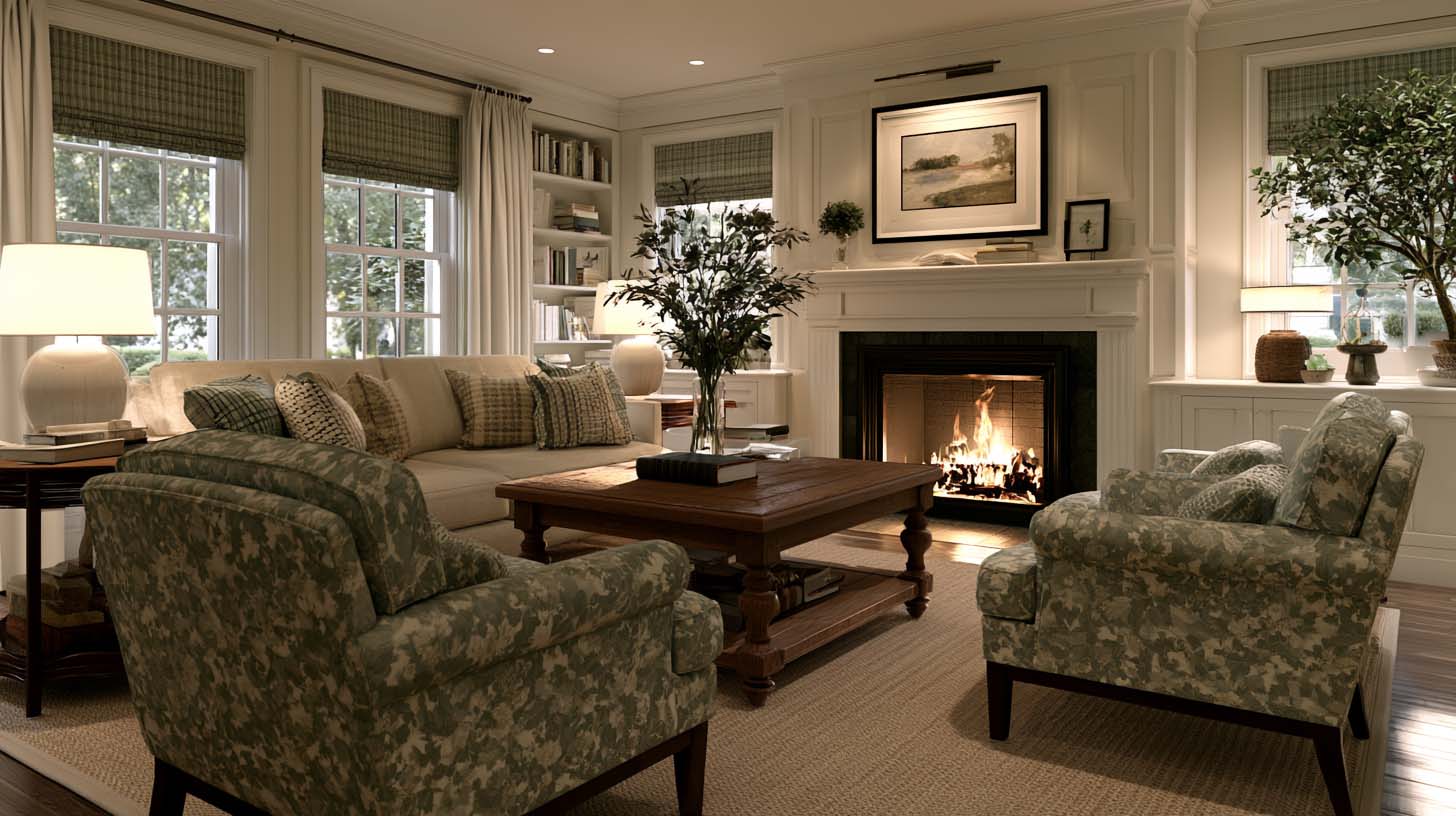
A fireplace seems like it should make a living room easier to arrange. It gives the room a focal point, establishes architectural character, and offers an obvious place for furniture to gather around. And yet fireplaces create some of the most frustrating living room layouts we encounter.
The problem usually begins with one assumption: everything needs to face the fireplace. It doesn't. A fireplace deserves acknowledgment, but acknowledging architecture and surrendering the entire room to it are two different things.
A Fireplace Is a Focal Point, Not Necessarily the Only Focal Point
Design advice often tells homeowners to identify the room's focal point and arrange everything around it. That sounds sensible, but real rooms are rarely that simple. A living room might contain a fireplace, a television, large windows, a significant view, artwork, a piano, built-in cabinetry, and architectural openings into adjoining rooms. Several of these can demand attention simultaneously.
The design problem is therefore not choosing one focal point and pretending the others do not exist. It is establishing hierarchy. Which feature should dominate? Which should support it? Which should remain visible without controlling the furniture plan? A fireplace can be the strongest architectural feature in the room without requiring the sofa to stare directly into it.
Designer Eyes
Stand at the entrance to the room before moving any furniture. What does the architecture ask you to notice first? Now stand where people will actually sit. The answer may change. Good layouts account for both experiences.
Begin With How the Room Will Be Used
Before deciding where the sofa goes, ask what people will actually do in the room. Will this primarily be a conversation room, a family television room, a formal sitting room, a reading space, an entertaining room, or a combination of several functions? This matters because furniture exists to support behavior.
A formal sitting room may comfortably organize itself around the fireplace. A family room used nightly for television probably cannot ignore the screen. A library with a fireplace may prioritize two reading chairs and a small table rather than a conventional sofa arrangement. There is no universally correct fireplace layout, only a layout appropriate to the room's purpose.
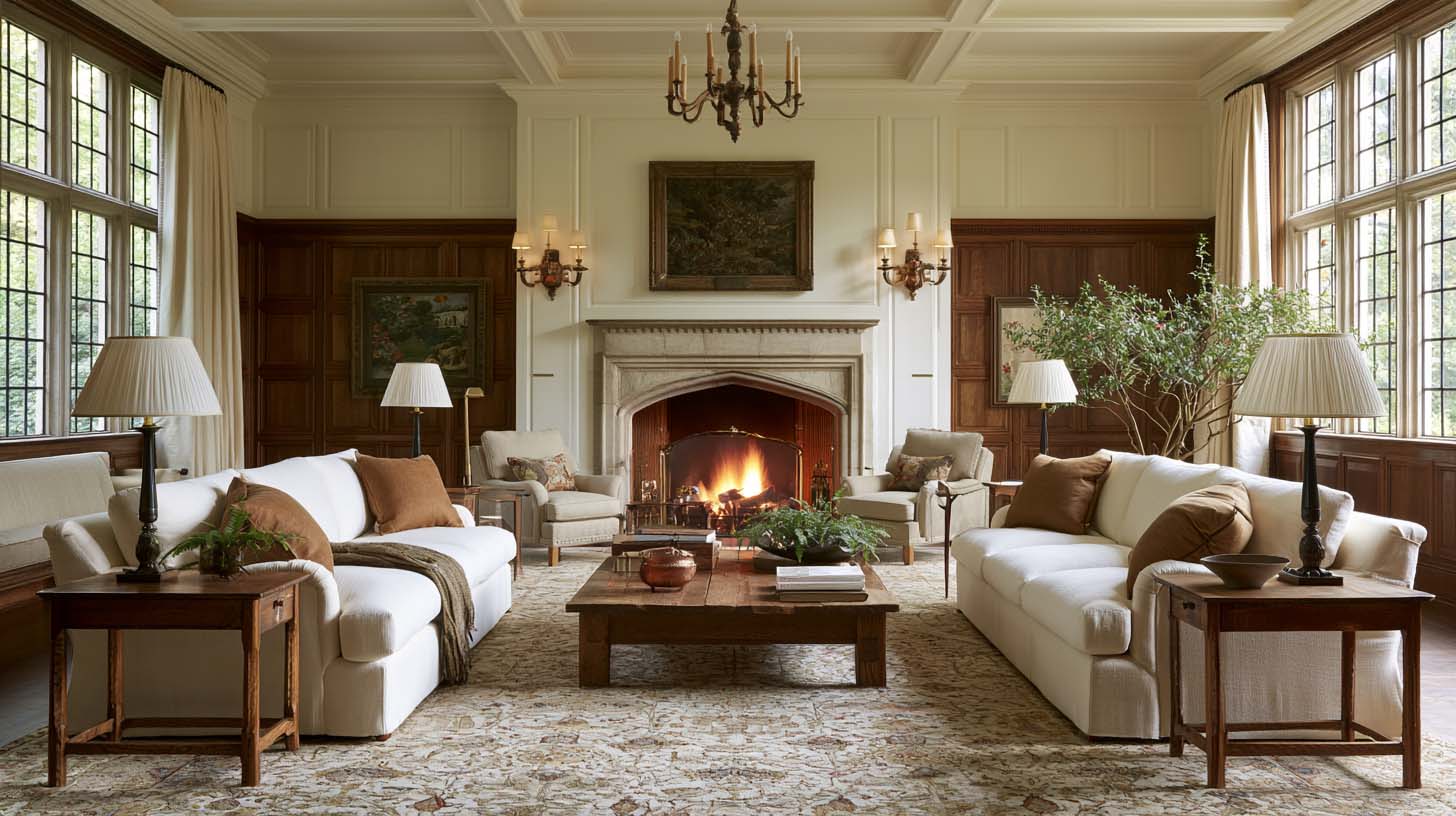
The Fireplace Does Not Need Every Seat Pointing Toward It
This is perhaps the most important principle. Furniture should relate to the fireplace, but that does not mean every back must be perpendicular to it and every face aimed directly toward the flames.
Consider a sofa positioned perpendicular to the fireplace, with two chairs opposite. The fireplace remains clearly visible from the entire seating group, and its architecture anchors one end of the composition, yet the people in the room face each other. That is often a far better arrangement for conversation. The fireplace becomes part of the experience rather than the sole reason for the furniture to exist.
Conversation Should Usually Win
People gather in living rooms to interact. That sounds obvious, but furniture layouts frequently ignore it. A sofa directly facing a fireplace with chairs lined up beside it may produce a beautiful photograph, but can the people seated there comfortably speak to one another? If everyone must turn their head ninety degrees to have a conversation, the layout has prioritized the room over its occupants.
This is why facing sofas, perpendicular sofas, and inward-facing chairs can be so effective around fireplaces. They create a social center. The fireplace supports that center. It does not replace it.
Arrangement One: Sofa Facing the Fireplace
Before you keep reading, a Room Audit can show you exactly what to fix.
The most traditional configuration is straightforward. A sofa sits directly opposite the fireplace, chairs flank one or both sides, and a coffee table anchors the center. This works particularly well when the fireplace sits centrally on a primary wall, the room is relatively symmetrical, no television competes for attention, the room is used primarily for conversation or formal sitting, and traffic can move behind rather than through the seating arrangement.
The arrangement reinforces the architecture. It can feel calm, balanced, and inevitable. Its weakness appears when another function, particularly television viewing, becomes equally important.
Arrangement Two: Sofa Perpendicular to the Fireplace
This is one of the most useful arrangements in real homes. Place the sofa at a right angle to the fireplace, then position one or two chairs opposite. The fireplace sits at one end of the conversation group, which allows occupants to see both the fire and one another.
It can also free the opposite wall for a television, cabinetry, or artwork. The resulting layout often feels more natural than forcing both fireplace and television onto the same wall. It is especially effective in rectangular rooms.
Designer Eyes
A focal point does not need to sit directly in front of you to feel important. Architecture can anchor the side of a composition just as effectively as the center.
Arrangement Three: Two Sofas Facing Each Other
For larger rooms, two facing sofas can create an exceptionally strong conversation area. The fireplace occupies one end, and a large coffee table or pair of tables sits between the sofas. This creates a clear axis through the room: the people face one another, the fireplace remains visible from both sides, and the furniture creates enough visual weight to coexist with substantial architecture.
This arrangement works particularly well in large traditional living rooms, libraries, formal lounges, rooms with fireplaces centered on a short wall, and spaces designed for entertaining. The key is having enough room. If the sofas are forced too close to walls or circulation becomes awkward, the symmetry loses its elegance.
Arrangement Four: Four Chairs Around the Fireplace
Not every living room needs a sofa. A group of four substantial chairs around a central table can create an unusually intimate conversation room, particularly where the fireplace and conversation are more important than television.
Club chairs work beautifully here because their lower profiles and generous proportions encourage lingering. The arrangement feels social, flexible, almost club-like, with everyone in an equal position within the conversation. For rooms designed primarily for entertaining adults rather than lounging around a television, this can be one of the strongest options available.
Symmetry Works Best When the Architecture Is Symmetrical
Fireplaces naturally encourage symmetry: sconces on both sides, matching built-ins, a pair of chairs, matching lamps. There is nothing wrong with this. Symmetry creates order quickly, but it works best when the architecture supports it.
A fireplace centered perfectly between identical windows almost asks for a balanced arrangement. A fireplace pushed toward one end of an irregular room does not. Trying to impose strict symmetry on asymmetrical architecture can create strange furniture positions and wasted space. Let the room tell you how much symmetry it can support.
Asymmetry Can Make a Fireplace Room Feel More Natural
Asymmetric furniture arrangements often feel less formal and more lived in. A sofa may sit to one side while two different chairs occupy the opposite side. A floor lamp balances a tall cabinet, or a large piece of artwork provides weight where there is no architectural opening. The composition remains balanced. It simply does not mirror itself.
This is an important distinction: balance does not require symmetry. One large object can visually balance several smaller ones, and one dark piece can counterweight a larger light one. This allows difficult fireplace rooms to become far more flexible.
The Fireplace and Television Problem
Nothing complicates fireplace furniture layouts more consistently than the television. The fireplace says "look here," and the television says the same thing. Placing the television above the fireplace appears to solve the problem by combining both focal points. Sometimes it does. Sometimes it creates another.
A television mounted high above a mantel can be uncomfortable to watch. The screen may dominate architecture that would otherwise be attractive, and the mantel may dictate a viewing height that is far from ideal. This does not mean a TV should never go above a fireplace. It means convenience alone should not make the decision.
Should the TV Go Above the Fireplace?
Consider the fireplace proportions first. If the mantel is relatively low and the television can sit at a comfortable viewing height, the arrangement may work. If the fireplace is tall, elaborate, or architecturally significant, mounting a large black screen above it may diminish the composition.
Also consider how often the television is used. A formal sitting room used occasionally for television has different priorities from the family's primary media room. If the television dominates daily life, the furniture should acknowledge that reality. Pretending otherwise usually creates an inconvenient room.
Place the TV Beside the Fireplace When Architecture Allows
A television positioned on cabinetry beside the fireplace can create a more comfortable viewing angle. This works particularly well with built-ins. The key is visual balance: the screen need not exactly match the fireplace in size, but the cabinetry and objects around it should help integrate the black rectangle into the larger wall.
A frame-style television, darker cabinet interiors, artwork, books, or appropriately scaled millwork can all help. Avoid treating the television like an object someone forgot to hide. Integrate it.
Or Put the TV on Another Wall
In many rooms, the best answer is separating the focal points entirely: fireplace on one wall, television on another. Then arrange the seating so both remain usable. A sofa perpendicular to both can be especially helpful, and swivel chairs can provide additional flexibility.
This arrangement acknowledges reality: rooms can have more than one important orientation. The furniture becomes the mediator between them.
Use Swivel Chairs in Rooms With Competing Views
Swivel chairs are extraordinarily useful when occupants need to engage with several directions: fireplace, television, conversation, windows. A pair of swivel chairs can rotate between all of them, allowing the room to remain visually composed without locking every seat into one permanent orientation. For multifunctional living rooms, flexibility can be more valuable than perfect photographic symmetry.
Sightlines Matter From Outside the Seating Group
Do not design the room only from the sofa. Consider how it looks from the entrance, adjacent hallways, the kitchen, the dining area, a staircase, and the exterior doorway. Furniture backs become particularly important here.
An enormous sectional back greeting someone immediately upon entering can make the room feel closed. A pair of lower chairs may preserve the fireplace sightline instead. This is why furniture height matters as much as placement. The room is experienced while moving through it, not only while seated.
Do Not Block the Fireplace With Furniture
This seems obvious, but "blocking" is not limited to placing a sofa directly in front of the firebox. Furniture can also block the fireplace visually. A very tall chair positioned close to the hearth may obscure the architecture from the entrance. A large lamp can compete with the mantel. An oversized coffee table may crowd the hearth and eliminate the open space the fireplace needs. Give important architectural features breathing room. A fireplace should remain visually legible.
Leave Enough Space Around the Hearth
Fireplaces create another practical requirement. People need access. Wood-burning fireplaces may require tending, gas fireplaces need safe clearances, and screens, doors, and hearths require unobstructed space. Manufacturer instructions and applicable local building and fire-safety requirements should always take priority when determining how close combustible furniture can sit to the firebox.
From a design perspective, extra space also helps. The hearth should feel intentional rather than buried inside furniture.
Rugs Should Support the Seating Group, Not the Fireplace
A rug's job is primarily to connect furniture. Do not shrink or shift the rug simply to align it perfectly with the fireplace if doing so breaks the seating arrangement. The fireplace is architecture. The rug belongs to the furniture.
Ideally, the two compositions relate, but when compromises are necessary, prioritize the seating group. A properly scaled rug will usually make the entire room feel more coherent than one centered on the hearth but disconnected from the sofa and chairs. Our Rug Size Guide explores this principle more fully.
Coffee Table Placement Around a Fireplace
The coffee table should anchor the conversation group, not the fireplace. This distinction becomes important in asymmetrical layouts. If the sofa and chairs create a conversational center slightly off the fireplace axis, the coffee table should usually follow the furniture. Forcing it to align with the fireplace can make the seating feel crooked. Furniture relationships take priority.
This is also why choosing the right coffee table size matters. An undersized table can weaken an otherwise strong fireplace arrangement by leaving too much unresolved space at the center.
Built-Ins Can Help Establish the Furniture Plan
Fireplace walls frequently include built-in cabinetry, creating a broader architectural composition. Instead of treating the firebox as the only focal point, consider the entire wall: fireplace, shelving, cabinetry, artwork, lighting, television. Together, these elements establish a visual anchor substantial enough to influence the room. Furniture can respond to the whole composition rather than aiming itself at the center of the firebox. This often produces a more sophisticated layout.
What If the Fireplace Is in a Corner?
Corner fireplaces are notorious because they create a diagonal focal point inside an otherwise rectangular room. The natural temptation is turning every piece of furniture diagonally. That often wastes enormous amounts of space.
Instead, allow the room's main furniture to maintain a clearer rectangular composition, then angle one or two pieces subtly toward the fireplace. A chair may rotate toward it while the coffee table remains aligned with the sofa. The fireplace participates without forcing the entire room onto a diagonal. This is usually calmer.
What If the Fireplace Is Off-Center?
Do not try to visually drag an off-center fireplace into the middle of the room. Embrace the asymmetry. Use furniture, artwork, cabinetry, curtains, or lighting to create balance elsewhere. Perhaps a substantial chair and floor lamp occupy the heavier empty side, or artwork creates a second vertical anchor. The objective is not pretending the fireplace is centered. It is making its position feel intentional.
Fireplaces Between Windows
A fireplace centered between two windows creates a particularly strong architectural wall. Avoid covering those windows with furniture if possible. Instead, use the symmetry. A sofa opposite the fireplace can work beautifully, and so can two facing sofas perpendicular to the fireplace. Window treatments should reinforce the composition, ideally giving both openings equal visual weight. This is a situation where symmetry often feels natural rather than imposed.
Fireplaces in Open-Concept Rooms
Open plans create an additional challenge because the living room lacks complete walls. A fireplace can help define the seating area, but the furniture still needs to establish boundaries. A sofa can form one edge, a large rug another, and a console behind the sofa can create a transition toward the dining area. The fireplace establishes the architectural anchor while furniture establishes the territory.
This is closely related to the principles in How to Make a Living Room Feel More Intimate. Large open spaces become comfortable when smaller zones become understandable.
Lighting Should Reinforce the Layout
Once the furniture arrangement is established, lighting can strengthen it. Table lamps belong beside seats. Floor lamps can define corners. Picture lights can emphasize artwork or built-ins. Sconces may reinforce fireplace symmetry.
The important thing is that lighting supports the furniture plan rather than merely outlining the walls. A lamp beside an armchair creates a place. A sconce somewhere across the room simply creates light. That difference matters.
Artwork Above the Fireplace Needs the Same Relationship
If artwork sits above the mantel, consider the fireplace and artwork as one composition. The art should not float far above the mantel, nor should it be so small that the fireplace visually overwhelms it. This vertical composition influences the furniture below because it determines how substantial the focal wall feels. Our guide to How High Should You Hang Artwork? explores this relationship in greater depth.
Common Fireplace Furniture Arrangement Mistakes
Several problems appear repeatedly:
Pointing every seat directly at the fireplace
Ignoring how people will converse
Forcing symmetry into an asymmetric room
Mounting a television above the fireplace without considering viewing height
Blocking important sightlines with tall furniture
Placing seating too far apart
Centering the rug or coffee table on the fireplace instead of the furniture
Creating traffic paths directly through the conversation group
Using furniture too small for a substantial fireplace
Treating the firebox as the focal point instead of the entire architectural wall
These mistakes share one common cause. The fireplace has been allowed to make every decision.
Designer Eyes
When evaluating a fireplace room, temporarily ignore the fireplace. Does the furniture arrangement work as a place for people? Now put the fireplace back into the composition. If both answers are yes, you probably have a strong layout.
A Simple Framework for Arranging Furniture Around a Fireplace
Identify how the room will actually be used. Conversation, television, entertaining, reading, or a mixture.
Identify all major focal points. Do not pretend the fireplace is the only important feature if it is not.
Establish the conversation group. Make sure people can comfortably see and speak to one another.
Decide how directly the fireplace needs to be faced. Sometimes directly. Sometimes from the side.
Resolve the television separately. Above, beside, or on another wall depending on viewing comfort and architecture.
Protect sightlines and traffic. Evaluate the room while entering and moving through it.
Decide whether symmetry suits the architecture. Use it when natural. Avoid forcing it.
Size the rug and coffee table around the furniture. Not around the hearth.
Add lighting that reinforces the seating zones.
Step back and evaluate the entire room. The fireplace should feel important without making the furniture arrangement feel obedient.
Final Thoughts
A good furniture arrangement around a fireplace does not require every object to point toward the flames. The fireplace is architecture. Furniture is for people. Exceptional rooms allow the two to support one another.
Sometimes the sofa faces the fireplace directly. Sometimes it sits perpendicular. Sometimes two sofas face each other, or four chairs gather around a table. Sometimes the television shares the fireplace wall, and sometimes it belongs somewhere else entirely. The answer depends on the room.
What matters is hierarchy. The fireplace should remain visually respected. Conversation should remain comfortable. Sightlines should remain open. Traffic should make sense. And the furniture should create a place people actually want to occupy, because a fireplace can give a room character, but it is the furniture around it that determines whether that character becomes a living room.
Not sure what your room needs? Book a Room Audit
Frequently Asked Questions
Should a sofa face the fireplace?
Not necessarily. A sofa can face the fireplace, sit perpendicular to it, or participate in another arrangement as long as the fireplace remains visually connected to the seating group and the room functions comfortably.
How should I arrange furniture with both a fireplace and TV?
First determine how frequently the TV is used. It may be placed above the fireplace, beside it, or on a separate wall. Perpendicular sofas and swivel chairs can help accommodate multiple focal points.
Does the TV have to go above the fireplace?
No. In many rooms, placing the television beside the fireplace or on another wall provides a more comfortable viewing height and allows the fireplace to retain its architectural character.
How do you arrange furniture around an off-center fireplace?
Avoid forcing artificial symmetry. Create visual balance with furniture, artwork, lighting, cabinetry, or window treatments elsewhere in the room.
What is the best furniture arrangement for a corner fireplace?
Keep the primary seating arrangement aligned with the room where possible, then angle selected chairs or seating toward the fireplace. Turning the entire room diagonally often wastes space.
Should a rug be centered on the fireplace?
Usually the rug should be centered on and sized for the primary seating arrangement. If the furniture composition is slightly offset from the fireplace, the rug should generally follow the furniture.
Can I put two sofas around a fireplace?
Yes. Facing sofas positioned perpendicular to a fireplace can create an excellent conversation area in larger rooms while keeping the fireplace visible from both sides.
How far should furniture be from a fireplace?
Maintain all clearances required by the fireplace manufacturer and applicable local codes, particularly for combustible furniture near active fireboxes. Beyond safety requirements, leave enough open space for comfortable access to the hearth and for the fireplace to remain visually unobstructed.

Facebook
Instagram
Youtube