How to Make a Living Room Feel More Intimate
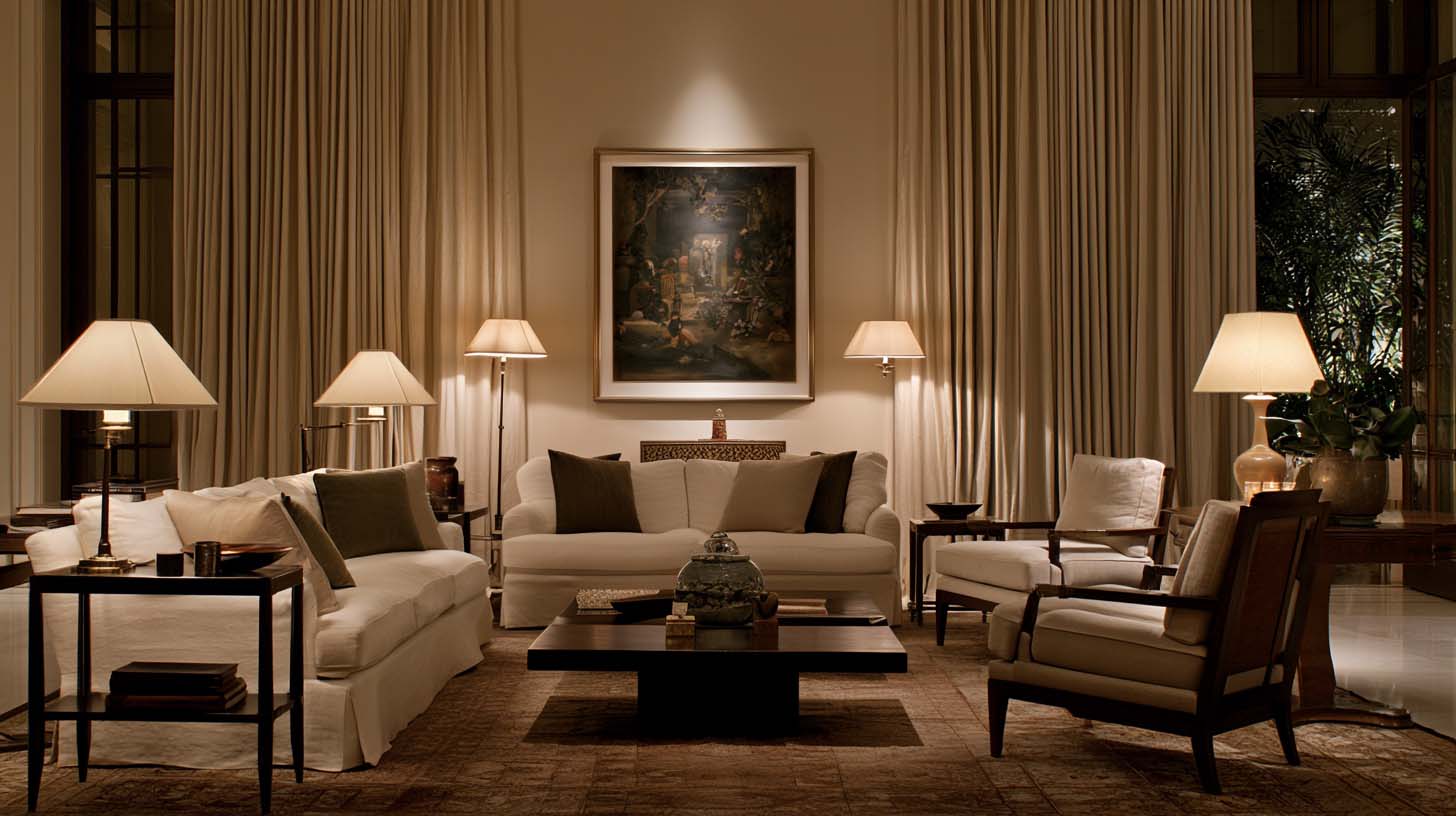
A living room can be beautifully furnished and still feel oddly impersonal. The sofa may be comfortable, the rug may be expensive, and the artwork may be well chosen, yet the room somehow feels too open, too exposed, or too formal to truly settle into.
When people search how to make a living room cozy, most advice begins with blankets, candles, throw pillows, and warm colors. Those things can help, but they are rarely the real reason one room feels intimate while another does not. Cozy rooms are usually shaped by something deeper: enclosure. They create a subtle sense of protection around the people using them. Furniture sits close enough for conversation, lighting is positioned near human eye level, rugs define a territory, ceilings feel connected to the room below, and sightlines are controlled. The space feels contained without feeling cramped. That is what creates intimacy.
Cozy Is a Spatial Quality Before It Is a Decorative One
Imagine two living rooms with identical furniture. In the first, the sofa sits against one wall, two chairs sit against another, and a coffee table floats somewhere in the middle. The room may technically contain everything it needs, but the furniture does not create a place.
Now move those same pieces closer together. Pull the chairs toward the sofa, place a substantial rug beneath the arrangement, and lower the lighting. Suddenly, the room feels more inviting. Nothing decorative changed. The relationships did. This is why intimacy begins with space planning. A room becomes cozy when its boundaries feel understandable.
Designer Eyes
Before adding another pillow, look at how far apart people are expected to sit. If conversation requires raising your voice across the room, the problem is not decoration. It is distance.
Bring Furniture Away From the Walls
One of the most common living room mistakes is pushing every piece of furniture against the perimeter. This usually happens because homeowners want to preserve open floor space. Ironically, the result often makes the room feel less comfortable.
Furniture against the walls emphasizes the room's outer boundaries. Your eye notices the empty space in the center, and the people sitting in the room feel farther apart. Pulling furniture inward creates a smaller, more intentional zone within the larger architecture. Even moving a sofa forward by several inches can change the perception, and a pair of chairs angled toward the sofa can strengthen it further. The goal is not to make the room tight. It is to make the seating feel connected.
Create a Conversation Area
A truly inviting living room should make conversation feel natural, which means the primary seats should visually acknowledge one another. A sofa facing a television with every other chair aligned in the same direction creates a viewing room. That may be appropriate, but it does not automatically create intimacy.
For a stronger conversation area, turn chairs inward, use side tables to support multiple seats, and make sure the coffee table is accessible. Create a composition where people can see one another without physically repositioning themselves. This principle becomes especially important in large living rooms. Instead of trying to make the entire space feel cozy, create one well-defined zone where people gather. A large room can contain intimacy. It simply needs boundaries.
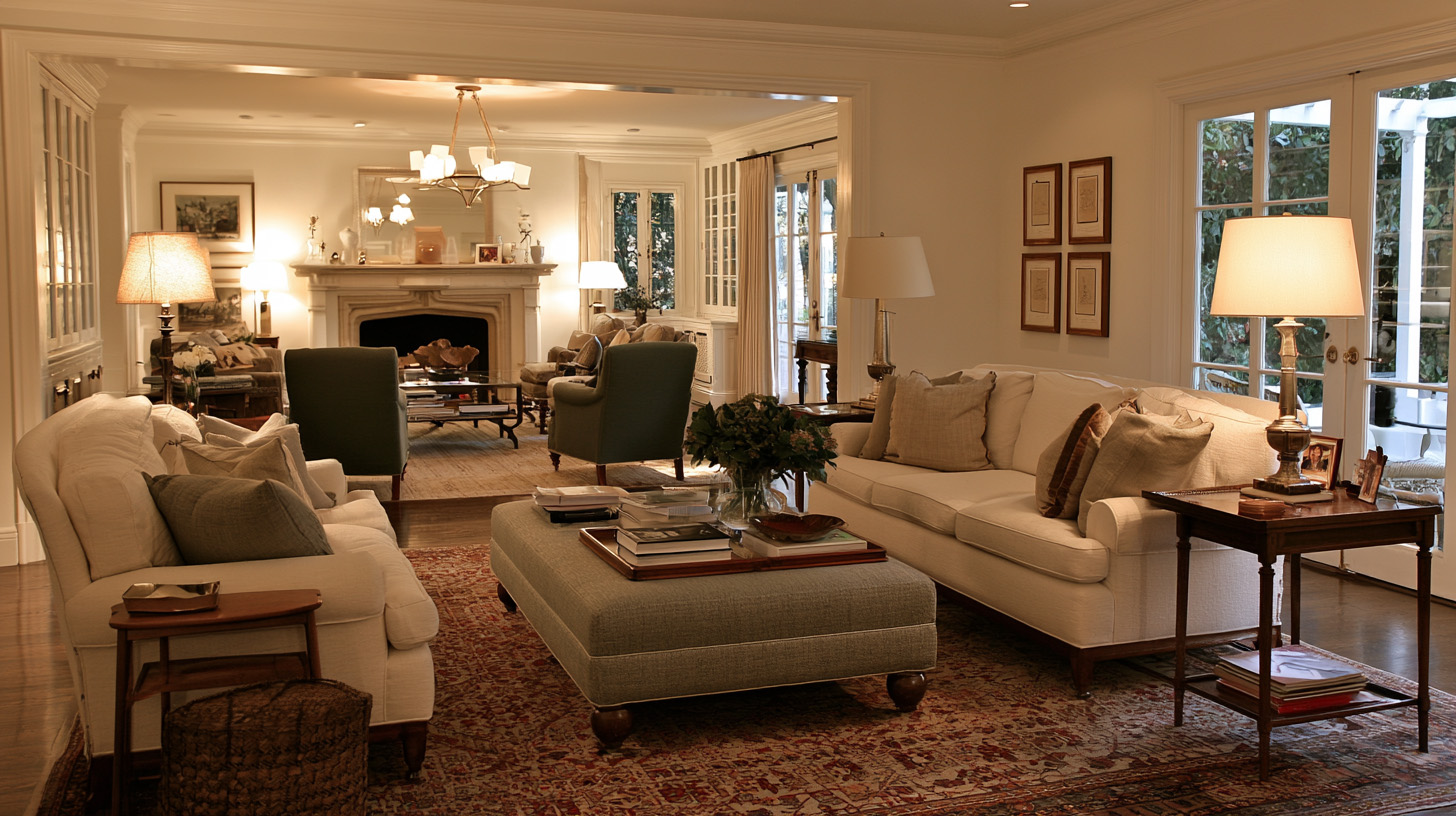
Furniture Distance Matters More Than Furniture Style
People often assume certain furniture styles are inherently cozier: a rolled-arm sofa, a leather club chair, a deep sectional. These pieces can certainly contribute, but distance matters more. A modern sofa and two clean-lined chairs placed properly can feel more intimate than traditional furniture scattered across a large room.
Think about seating distance in terms of conversation. People should feel close enough that speaking feels effortless. Too much space creates social distance, and too little becomes uncomfortable. You are looking for the point where the arrangement feels generous but connected. This is one reason oversized living rooms often require multiple seating groups. One enormous arrangement stretched across the entire room may never feel intimate. Two smaller compositions often will.
Use a Rug to Define the Territory
Rugs are one of the most powerful tools for creating visual enclosure. They establish an invisible boundary, and everything sitting on or around the rug begins to feel related. The rug tells the eye: this is the room within the room.
This becomes especially important in open floor plans where the living area shares space with a kitchen or dining room. Without a visual boundary, the seating can feel exposed. A properly sized rug gives the furniture a territory. It creates a perimeter without adding walls. An undersized rug weakens this effect because it fails to connect the seating. If the sofa sits outside it, the chairs sit outside it, and only the coffee table touches the rug, the composition remains fragmented. For more on this, see our Rug Size Guide.
Lighting Height Changes the Emotional Scale of the Room
Before you keep reading, a Room Audit can show you exactly what to fix.
Overhead lighting illuminates architecture. Low lighting illuminates life. This distinction matters. A ceiling full of recessed lights draws attention upward, and the room feels open, bright, visible.
Table lamps, floor lamps, sconces, and picture lights bring illumination downward toward the level where people actually live. This creates intimacy because the brightest part of the room begins to surround the occupants rather than float above them. A table lamp beside a chair does more than provide light. It creates a small illuminated territory. Two lamps across a room establish balance, and a picture light over artwork creates another pool of focus. The space begins to break into warm, understandable zones.
Designer Eyes
Notice where the brightest part of your living room sits after sunset. If all the light comes from the ceiling, the room may be illuminated but still feel emotionally distant.
Use Layered Lighting Instead of Maximum Brightness
Cozy does not mean dark. It means controlled contrast. A well-designed living room often contains several levels of brightness: a lamp beside the sofa, a floor lamp near a chair, a picture light above artwork, and soft ambient light in the background.
The result creates depth. Some areas become active, others recede, and the room no longer feels like one large evenly illuminated box. This is the foundation of layered lighting. Uniform brightness is useful for cleaning. It is less effective for conversation. Intimacy comes from allowing parts of the room to remain quieter.
Use the Ceiling to Create Enclosure
Ceiling perception is one of the most overlooked parts of cozy design. High ceilings can be beautiful, but they can also make a living room feel cavernous. The solution is not necessarily lowering them physically. Instead, create visual elements that bring the ceiling into the composition.
A substantial chandelier can help, as can beams, dark ceiling paint, crown molding, tall curtains, and pendant lighting suspended lower into the room. These elements bridge the distance between furniture and architecture. A very tall room feels less exposed when something occupies the volume overhead. This is why chandelier scale matters so much. A tiny fixture on a high ceiling often exaggerates the emptiness, while a properly scaled fixture helps the room feel contained.
Darker Ceilings Can Make Large Rooms Feel More Intimate
Painting a ceiling darker than the walls can visually lower it. This is particularly effective in rooms designed for evening use, such as libraries, lounge spaces, media rooms, and large living rooms. The ceiling begins to feel less distant. It becomes part of the room rather than merely a blank plane above it.
This does not mean every living room should have a dark ceiling, but it illustrates the principle. Cozy rooms often reduce perceived vertical distance. They bring the architecture closer to the occupants.
Use Visual Boundaries Without Building Walls
Intimate rooms usually have boundaries, but those boundaries do not need to be architectural. A console table behind a sofa can define the back edge of a seating area. A pair of floor lamps can frame a conversation zone. A bookcase can establish one side of the room, and curtains can create a softer perimeter around windows. Even a change in ceiling treatment can define one area within an open plan.
These subtle signals help the brain understand where one experience begins and another ends. Without them, open spaces can feel vague. With them, even a very large room can feel organized.
Window Treatments Matter More Than Most People Expect
Bare windows can make a room feel exposed. This is especially true at night. During the day, windows provide light and views. After sunset, they become dark reflective openings.
Curtains or drapery soften those edges. They add texture, absorb sound, visually frame the room, and create a stronger sense of privacy. This is one reason well-dressed windows often make a room feel more finished even when the curtains themselves are relatively simple. They help complete the enclosure.
Sound Is Part of Coziness
Large open rooms often feel uncomfortable because they sound empty. Hard floors, large windows, high ceilings, and minimal textiles let sound bounce between surfaces. The room may look beautiful and still feel cold.
Rugs, curtains, upholstered furniture, books, and fabric all absorb sound. This subtly changes the emotional experience. Conversation becomes quieter, footsteps soften, and the room feels less public. Acoustic comfort rarely gets mentioned in decorating advice, but it plays a significant role in whether a living room feels intimate.
Use Large Furniture to Create Smaller Spaces
This sounds contradictory, but large furniture can actually make a large room feel more intimate. A substantial sectional establishes a strong boundary, a large coffee table fills the center of the seating group, a pair of club chairs adds visual weight, and a correctly scaled rug connects everything.
Small furniture spread throughout a large room often exaggerates emptiness. Large furniture appropriately grouped can reduce it. The important word is appropriately. This is not about cramming oversized furniture into a modest room. It is about making sure the scale of the furniture acknowledges the scale of the architecture.
Avoid Too Many Open Sightlines
Open plans are attractive partly because they create long views, but too many uninterrupted sightlines can weaken intimacy. If you can stand in the living room and visually absorb the kitchen, dining room, entry, hallway, staircase, and exterior all at once, the space may feel impressive but exposed.
Furniture can help edit those views, as can plants, bookshelves, screens, console tables, and architectural elements. The goal is not to block the room. It is to create enough visual interruption that the living area feels like a place rather than a crossroads.
Artwork Can Strengthen the Boundary
Large artwork has another useful function beyond decoration. It gives walls visual weight. A blank wall can feel distant, while a substantial painting brings attention forward and makes the wall participate in the room.
This is especially effective behind sofas and above fireplaces. Artwork should feel connected to the furniture beneath it. If it is too high or too small, the wall remains disconnected. Avoid Decorating Your Way Around a Spatial Problem
This is where many living rooms go wrong. The room feels cold, so more pillows are added, then a blanket, then candles, then baskets, then decorative objects. Eventually the room contains more things, but it still does not feel intimate.
The reason is simple. Decoration cannot fully compensate for poor spatial relationships. If the seating is too far apart, move it. If the room feels exposed, create boundaries. If the ceiling feels distant, address vertical scale. If the lighting feels flat, lower and layer it. Solve the architectural problem first. Then decorate.
A Simple Framework for Making a Living Room Cozy
If your living room feels too open or impersonal, work through these questions:
Are the seats close enough for easy conversation? If not, move them inward.
Does the seating area have a clear boundary? Use a rug, console, lighting, or furniture arrangement to define it.
Is most of the light coming from above? Introduce lamps, sconces, and lower lighting.
Does the ceiling feel disconnected? Use lighting scale, paint, molding, curtains, or architectural elements to bridge the vertical space.
Are the windows visually exposed? Consider drapery or another appropriate treatment.
Is the room acoustically hard? Add textiles and upholstered surfaces.
Is the furniture substantial enough for the architecture? Undersized pieces often make large rooms feel emptier.
These changes influence intimacy far more than another decorative accessory ever will.
Final Thoughts
Learning how to make a living room cozy is not really about adding softness. It is about creating enclosure. Furniture should gather people. Rugs should define territory. Lighting should descend toward human scale. Ceilings should feel connected to the room below. Windows should feel framed. Sightlines should be controlled. Materials should soften sound.
When those elements work together, intimacy begins to appear almost automatically. Then the blanket matters. Then the candle matters. Then the books and objects and personal details can finish the experience. But they are not the foundation. A truly cozy living room does not simply look warm. It makes people instinctively want to stay.
Not sure what your room needs? Book a Room Audit
Frequently Asked Questions
How do I make a large living room feel cozy?
Create smaller conversation areas, pull furniture away from the walls, use large rugs to define zones, lower the lighting, and introduce visual boundaries. Large rooms often feel more intimate when they contain several clearly defined areas rather than one oversized furniture arrangement.
How close should living room furniture be for conversation?
There is no single perfect distance, but people should be able to speak comfortably without raising their voices. Chairs and sofas should feel visually connected rather than pushed to opposite sides of the room.
Does a rug make a living room feel cozier?
Yes. A properly scaled rug creates a visual boundary around the seating group, softens acoustics, and helps the furniture feel more connected.
Why does my living room feel cold even though I have warm colors?
The issue may be spatial rather than decorative. Furniture that is too far apart, overly bright overhead lighting, bare windows, hard surfaces, and weak visual boundaries can make a room feel cold regardless of color.
How can lighting make a living room feel more intimate?
Use multiple lower light sources such as table lamps, floor lamps, sconces, and picture lights. These create pools of illumination around people and objects rather than lighting the entire room uniformly.
Do high ceilings make a room less cozy?
They can. High ceilings increase perceived volume and can make furniture feel distant from the architecture. Properly scaled chandeliers, darker ceiling treatments, beams, tall curtains, and other vertical elements can help create greater enclosure.

Facebook
Instagram
Youtube