Why Some Homes Feel Expensive (Even When They Aren't)
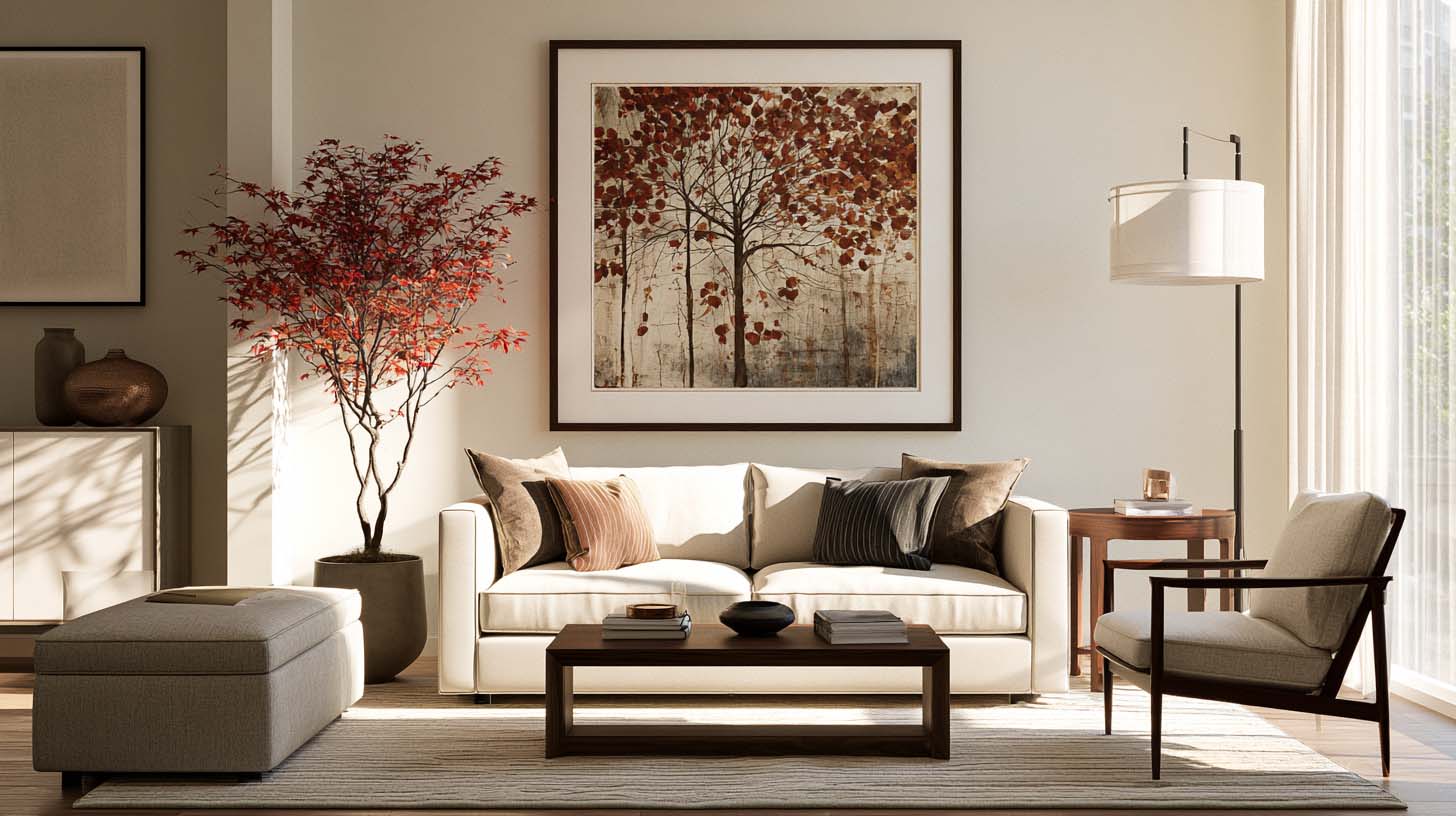
Walk into two homes. Both may contain furniture that costs roughly the same amount. One immediately feels refined. The other feels ordinary.
Most people assume the difference is money. Designers know it's usually something else. Luxury isn't created by expensive objects. It's created by the relationships between them.
That's why you'll occasionally walk into a modest home that feels remarkably sophisticated, while a much larger, more expensive house somehow feels unfinished. The difference isn't spending. It's stewardship. It's proportion. It's restraint. Most importantly, it's understanding the invisible design principles that quietly shape how we experience a room.
If you've ever wondered how to make a home look expensive, the answer has surprisingly little to do with buying more. It has everything to do with learning to see differently. If you are not sure what separates your own rooms from the ones that feel expensive, TMH's Full-Service Interior Design can plan the room with you.
Luxury Is an Experience, Not a Price Tag
One of the biggest misconceptions in interior design is that luxury can be purchased. It can't. Objects can be purchased. Luxury emerges from how those objects work together.
Think about the world's finest hotels. You rarely leave remembering one specific chair, one lamp, or one rug. You remember the atmosphere. The room felt composed, intentional, calm. That feeling wasn't accidental. It was designed. And those same principles work just as well in an ordinary home.
Designer Eyes Observation #1
People often believe expensive rooms contain better furniture. More often, they simply contain fewer competing decisions. Luxury is remarkably quiet.
Principle One: Scale
Most rooms don't feel inexpensive because the furniture is cheap. They feel inexpensive because nothing relates to anything else. A tiny coffee table sits between oversized sofas. Artwork disappears on a large wall. A small rug floats beneath the furniture. Everything exists, but nothing belongs together.
Designers constantly evaluate scale, not just the size of individual objects, but the relationships between them. Furniture should acknowledge the architecture. Lighting should acknowledge the furniture. Artwork should acknowledge the wall.
Good scale creates confidence. Poor scale creates hesitation. When every object feels appropriately proportioned, the room immediately appears more intentional.
Principle Two: Layering
Before you keep reading, see what our Premier Design service includes.
Luxury interiors rarely reveal themselves all at once. They unfold. Perhaps you first notice the architecture, then the lighting, then the leather, then the wood grain, then the subtle brass details. Each observation reinforces the previous one. That's layering.
Layering isn't decorating. It's creating multiple reasons for the eye to continue exploring. Many inexpensive-looking rooms rely on one dramatic feature to carry the entire experience: one oversized television, one accent wall, one colorful sofa. Luxury rooms distribute attention instead. No single object is responsible for everything.
Designer Eyes Observation #2
When visitors say, "This room has so much depth," they're usually describing layers they haven't consciously identified. Depth is experienced before it's analyzed.
Principle Three: Materials
One of the fastest ways to elevate an interior isn't buying more furniture. It's choosing fewer, better materials: natural wood, leather, stone, linen, wool, brass. These materials possess something synthetic materials often struggle to imitate. They age gracefully. Over time, they develop character rather than simply showing wear.
Luxury interiors don't always contain the most expensive materials. They contain materials that continue becoming more beautiful with use. That's a very different philosophy.
Principle Four: Lighting
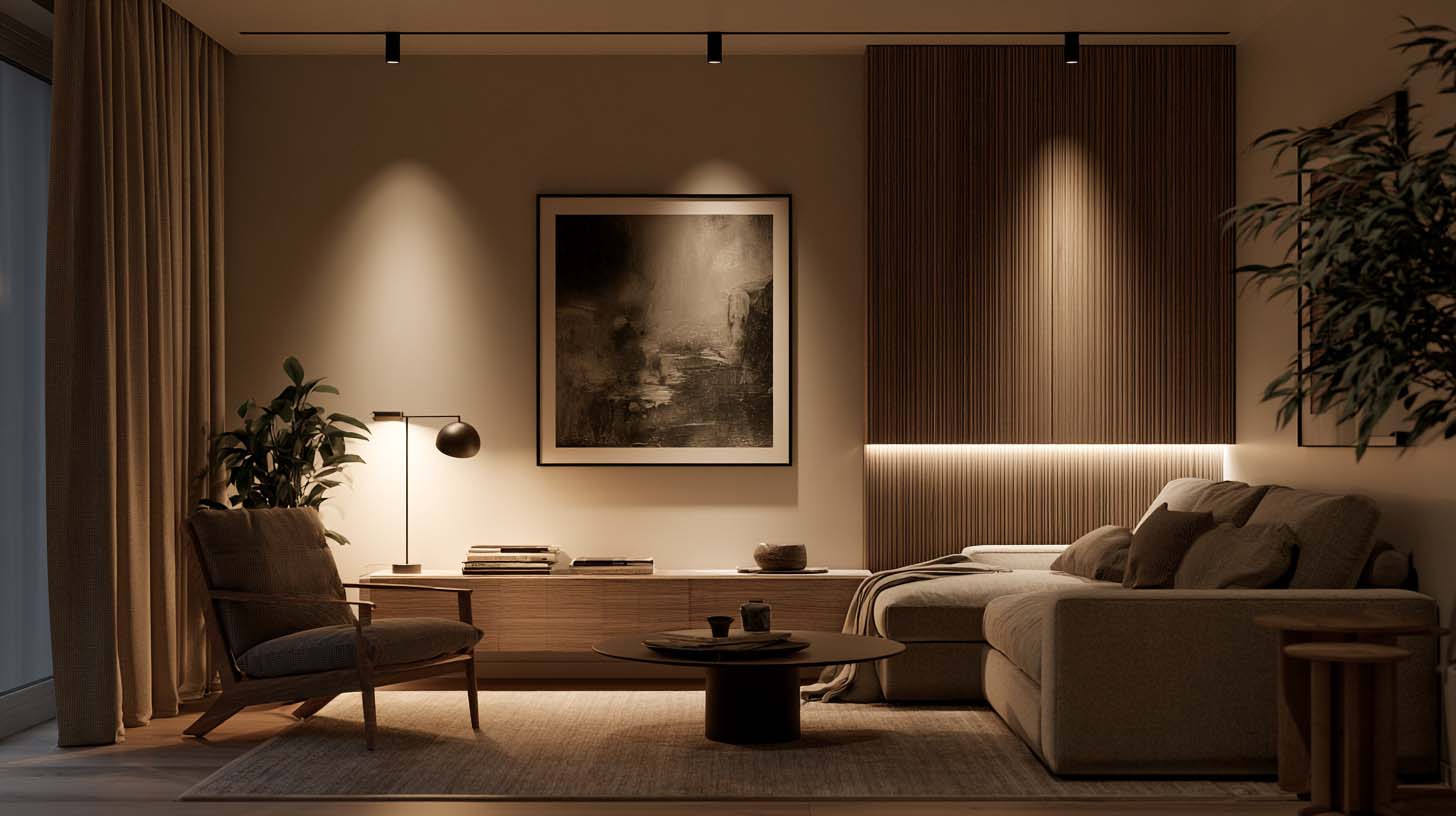
Lighting may be the single most underestimated luxury feature in a home. Most inexpensive rooms rely almost entirely on ceiling fixtures. Luxury interiors almost never do. Instead, they layer illumination: table lamps, floor lamps, wall sconces, picture lights, accent lighting, natural daylight.
The goal isn't simply making the room brighter. It's deciding what deserves attention. Good lighting guides the eye. Poor lighting merely illuminates the room. Those are completely different experiences.
Designer Eyes Observation #3
If a room feels expensive at night, it's probably because someone designed the lighting, not because someone purchased expensive furniture.
Principle Five: Visual Restraint
One of luxury's most overlooked characteristics is what it chooses not to do. It doesn't fill every shelf. It doesn't decorate every wall. It doesn't use every trend. It leaves space.
Negative space allows important objects to become more important. Think of a museum: masterpieces aren't displayed edge-to-edge. They're given room to breathe. Homes work the same way. Every object deserves enough visual space to be appreciated.
Luxury isn't afraid of emptiness, because emptiness isn't absence. It's emphasis.
Principle Six: Architectural Rhythm
Look closely at exceptional interiors and you'll begin noticing repetition. The same wood appears in several places. The same metal finish quietly reappears. Furniture heights feel related. Lighting repeats similar forms. Window treatments establish cadence. Nothing is identical, but everything belongs to the same family.
Designers call this rhythm. Just as music depends on repeated patterns, interiors rely on recurring visual language. Without rhythm, every purchase feels independent. With rhythm, the room begins speaking with one coherent voice.
The Psychology of Expensive-Looking Homes
Environmental psychologists have long observed that the human brain prefers environments that are both organized and interesting. Too much sameness becomes boring. Too much variation becomes chaotic. Luxury interiors occupy the space between those extremes: orderly enough to feel calming, layered enough to remain fascinating.
Visitors rarely recognize this consciously. They simply describe the room as feeling finished, comfortable, elegant. Those reactions aren't responses to wealth. They're responses to coherence.
Why Buying More Rarely Solves the Problem
When homeowners feel dissatisfied with a room, the instinct is understandable: buy another chair, another lamp, another accessory, another decorative object. Yet each purchase often introduces another visual decision instead of resolving the existing ones.
Professional designers frequently improve rooms by removing objects before adding them. Not because minimalism is the goal. Because clarity is. Luxury isn't measured by quantity. It's measured by intention. You can read how this has changed real homes in our client reviews.
A Simple Test
Walk into your living room. Instead of asking, "What should I buy next?" ask yourself six different questions:
Does the scale of the furniture feel intentional?
Does the room reveal itself through layers?
Are the materials becoming more beautiful with age?
Is the lighting creating atmosphere or simply visibility?
Has every object earned its place?
Do repeated materials and forms create rhythm throughout the room?
Those questions lead to very different decisions than shopping catalogs ever will.
The TMH Perspective
Learning how to make a home look expensive isn't really about making it look expensive. It's about making it feel intentional.
Luxury has always been less concerned with possessions than with proportion. Less interested in abundance than in restraint. Less impressed by novelty than by thoughtful stewardship.
When scale feels resolved, when layers quietly reveal themselves, when materials age with dignity, when lighting guides the eye, when unnecessary objects disappear, and when architecture establishes rhythm, the room begins communicating something visitors immediately recognize. Not extravagance. Confidence.
Because the most luxurious homes rarely announce how much they cost. They simply reveal how thoughtfully they were designed.
If your home contains good things but still does not feel as refined as you want, TMH's Full-Service Interior Design can develop the scale, layers, materials, and lighting so the room feels intentional.
Prefer to design it yourself? Homefeld, our guided room design tool, lets you upload photos of your room, explore a new look, and get a practical plan to put it together.
Frequently Asked Questions
How can I make my home look more expensive without spending a lot?
Focus on improving proportion, lighting, material quality, and reducing visual clutter. Luxury comes more from thoughtful composition than expensive purchases.
What makes a house feel luxurious?
Homes feel luxurious when scale, lighting, materials, and architectural rhythm work together to create a calm, cohesive experience rather than competing for attention.
Does expensive furniture automatically make a room look luxurious?
No. Even premium furniture can feel out of place if the room lacks proper scale, layering, lighting, and visual cohesion.
Why do luxury homes feel calmer?
Luxury interiors reduce unnecessary visual decisions. They balance repetition with variety, allowing the brain to process the environment more comfortably.
What is architectural rhythm?
Architectural rhythm is the intentional repetition of forms, materials, proportions, or finishes throughout a space, creating a sense of continuity and visual harmony.


Facebook
Instagram
Youtube