Why Most Masculine Rooms Feel Flat (And How to Fix It Without Buying More Furniture)
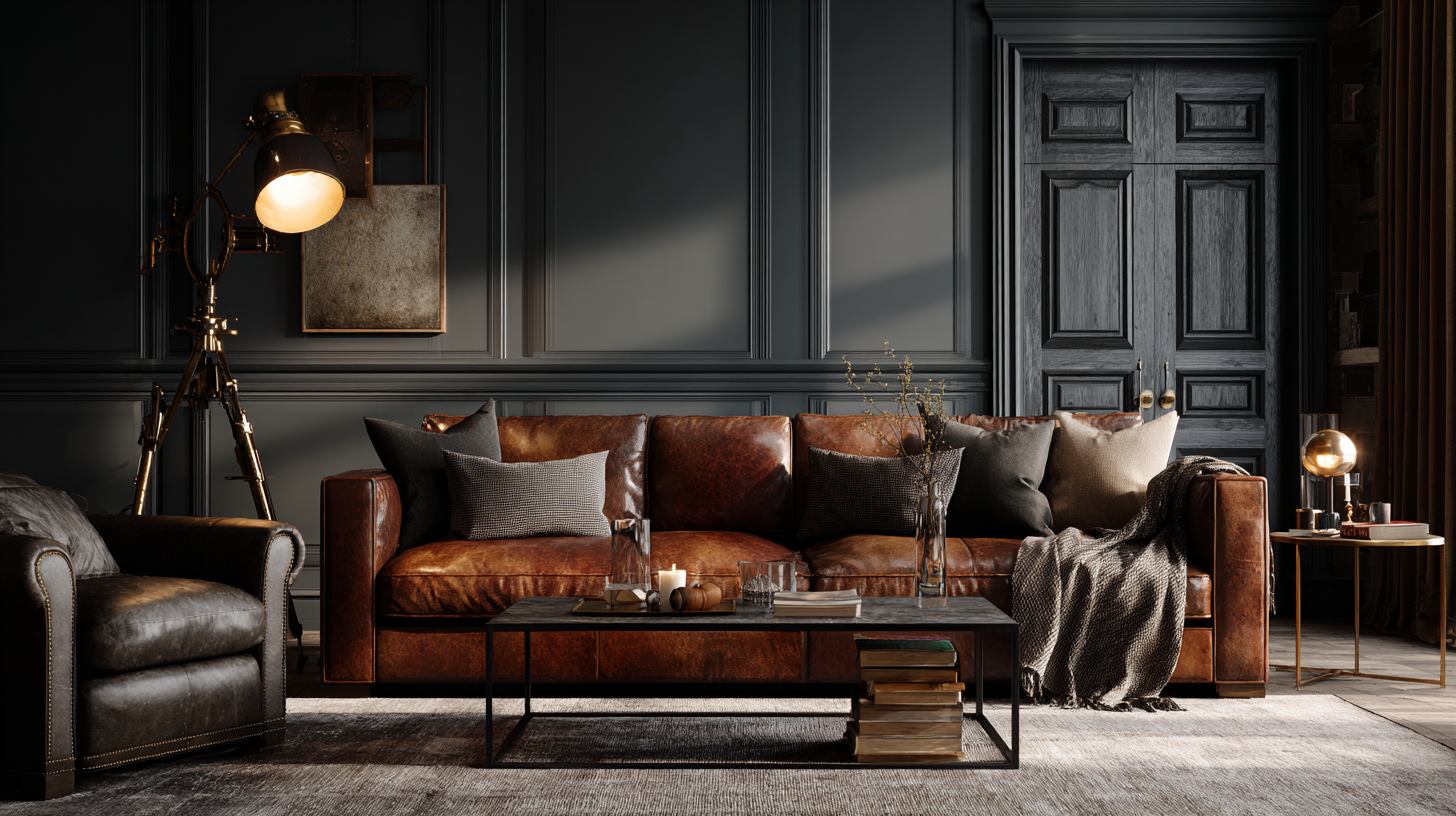
One of the most frustrating moments in interior design happens after you've done almost everything right.
You found the leather sofa.
The paint color works.
The rug fits.
The furniture is arranged correctly.
And yet...
The room still feels ordinary.
Nothing is technically wrong.
But nothing feels memorable either.
If this sounds familiar, the problem probably isn't your furniture.
It's the structure supporting it.
Great Rooms Have Depth
Walk into an extraordinary room and you'll notice something almost immediately.
Your eyes don't stop in one place.
They travel.
A darker wall pulls you inward.
Warm lighting creates pockets of intimacy.
Natural materials reveal themselves gradually.
Some surfaces absorb light while others quietly reflect it.
The room feels layered.
Flat rooms do the opposite.
Everything exists on the same visual plane.
Nothing recedes.
Nothing advances.
Your eyes lose interest because there's nowhere for them to go.
Designer Eyes
The question isn't,
"Do I have enough furniture?"
It's,
"What is my eye discovering as it moves through the room?"
Contrast Creates Presence
Depth begins with contrast.
Light beside dark.
Smooth beside textured.
Warm beside cool.
Leather beside linen.
Stone beside wood.
When every material behaves the same way, the room loses visual energy.
Masculine interiors rely on thoughtful contrast because it introduces richness without introducing clutter.
The goal isn't creating drama.
It's creating dimension.
Every Room Needs Visual Weight
Many interiors feel flat because everything carries the same visual importance.
Medium-sized sofa.
Medium artwork.
Medium lighting.
Medium accessories.
Nothing anchors the composition.
Strong rooms establish hierarchy.
A substantial fireplace.
An oversized piece of artwork.
A beautifully crafted dining table.
A dramatic bookshelf.
These heavier visual elements stabilize everything surrounding them.
That doesn't necessarily mean buying larger furniture.
It means allowing certain pieces to carry more responsibility than others.
Designer Eyes
Imagine removing the largest visual element from your room.
Would the room lose its identity?
If not, you may not actually have an anchor.
Lighting Reveals the Room
Few things flatten a room faster than relying entirely on overhead lighting.
One ceiling fixture distributes light evenly.
The result is visibility.
Not atmosphere.
Layered lighting tells a different story.
Table lamps create warmth.
Wall sconces reveal texture.
Picture lights emphasize artwork.
Accent lighting allows shadows to exist.
And shadows are where depth lives.
Without them, every surface appears equally important.
Objects Should Form Conversations
Many rooms feel flat because furniture has been distributed rather than composed.
Every chair sits independently.
Every accessory occupies equal space.
Nothing relates to anything else.
Instead, think in groups.
A reading chair beside a floor lamp.
Books gathered on a coffee table.
Artwork aligned above a console.
Objects should support one another rather than existing as isolated pieces.
Composition creates intention.
Spacing creates atmosphere.
Designer Eyes
If every object in your room feels equally spaced, try bringing related pieces closer together.
Rooms often become stronger when they become slightly more concentrated.
Remove Before You Add
One of the biggest misconceptions in design is believing flat rooms need more decoration.
Most need less.
Additional accessories rarely create depth.
They usually create distraction.
Instead, strengthen what already exists.
Darken one wall.
Replace one lamp.
Move the artwork.
Edit unnecessary accessories.
Improve one material.
Often, one thoughtful change creates more impact than ten new purchases.
Structure Creates Character
People often believe beautiful interiors are built through expensive furniture.
They aren't.
They're built through relationships.
Between light and shadow.
Furniture and architecture.
Materials and texture.
Scale and proportion.
Once those relationships become intentional, the room develops something far more valuable than decoration.
It develops presence.
And presence is what makes people remember a room long after they've forgotten what furniture was inside it.
Continue Building Your Eye for Design
Rooms don't become memorable because they contain beautiful furniture. They become memorable because furniture, lighting, materials, color, architecture, and proportion all work together to create depth and visual hierarchy.
The Masculine Interior Style Guide teaches the ten timeless masculine interior styles we believe every man should understand, complete with exact paint colors, material palettes, furniture direction, styling guidance, and the principles that define each style. It also includes a 30-minute video walkthrough to help you confidently choose the style that best fits your home and bring it to life.
Whether you're refining a room that feels flat or designing an entire home, the guide will help you make thoughtful design decisions with confidence and create spaces that feel cohesive, timeless, and unmistakably yours.
Explore The Masculine Interior Style Guide →


Facebook
Instagram
Youtube