What to Fix First in a Masculine Room (When You Can't Redesign Everything)
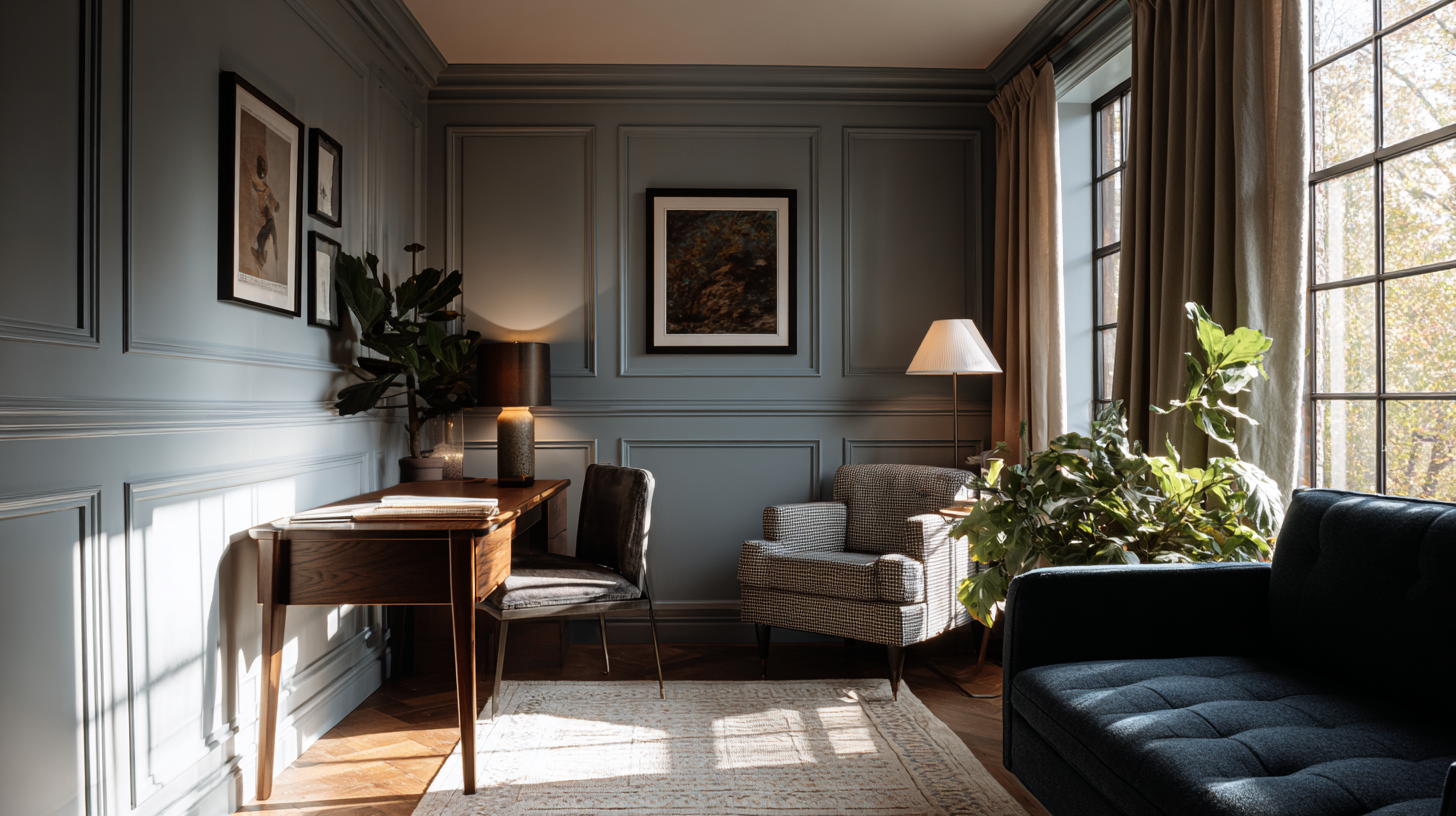
One of the biggest mistakes people make is assuming a room has to be redesigned all at once.
New furniture.
New paint.
New lighting.
New artwork.
New accessories.
It feels overwhelming, so nothing changes.
The truth is, most masculine rooms don't need a complete redesign.
They need a better order of operations.
Some decisions carry far more visual weight than others.
Fix those first, and the rest of the room often becomes much easier to understand.
Step 1: Fix the Lighting
If you only change one thing, change the lighting.
Lighting influences every material in the room.
Every paint color.
Every texture.
Every piece of furniture.
Poor lighting can make an exceptional room feel flat.
Good lighting can make an ordinary room feel intentional.
Start by eliminating dependence on a single overhead fixture.
Introduce table lamps.
Floor lamps.
Accent lighting.
Allow light to create depth instead of simply creating brightness.
Designer Eyes
Turn off your ceiling light tonight and use only lamps.
If the room immediately feels calmer, you've found your starting point.
Step 2: Reconsider the Walls
Walls occupy more visual space than anything else in the room.
Yet they're often treated as background.
A better wall color doesn't just improve the walls.
It improves everything placed against them.
Artwork gains contrast.
Wood becomes richer.
Leather develops warmth.
Lighting becomes softer.
You don't always need a dramatic color.
Sometimes moving from a cool gray to a warmer charcoal changes the entire personality of the room.
Step 3: Rearrange Before You Replace
People often assume they need new furniture.
Frequently, they simply need better placement.
Center the sofa on the room's strongest architectural feature.
Pull seating into conversation distance.
Strengthen the focal point.
Protect natural walkways.
The furniture hasn't changed.
But the room suddenly feels more intentional because the relationships between the pieces have improved.
Designer Eyes
Imagine removing every piece of furniture and bringing it back in one at a time.
Would you place everything exactly where it sits now?
If not, the layout probably deserves attention before your wallet does.
Step 4: Strengthen the Largest Elements
Before buying decorative accessories, evaluate the biggest visual components.
The rug.
The sofa.
The bed.
The dining table.
The artwork.
These define the room's character.
Accessories simply reinforce it.
If the foundation feels weak, no collection of candles or decorative objects will fix it.
Step 5: Edit Before You Add
When people feel a room is incomplete, they instinctively buy more.
More pillows.
More artwork.
More plants.
More decorative objects.
But stronger rooms are often the result of subtraction.
Clear the shelves.
Simplify the coffee table.
Remove decorative pieces that don't contribute.
Give the room space to breathe.
Restraint often creates more impact than accumulation.
Step 6: Finish With Accessories
Accessories should always be the final conversation.
Not the first one.
Once the lighting works...
The layout feels intentional...
The materials relate to one another...
Then decoration becomes surprisingly easy.
Because you're no longer trying to rescue the room.
You're simply completing it.
Every object now has a stronger foundation to support it.
The Order Matters More Than the Budget
Many people spend thousands of dollars improving the wrong things first.
A new chair before better lighting.
Artwork before wall color.
Accessories before layout.
The result feels disappointing because the room's biggest opportunities remain untouched.
Great masculine interiors are rarely built by making dozens of changes.
They're built by making the right changes in the right order.
That's why thoughtful design often feels effortless.
Each decision quietly makes the next one easier.
Continue Building Your Eye for Design
The strongest rooms aren't created by replacing everything at once. They're built by understanding which design decisions carry the most visual weight and how lighting, layout, materials, color, furniture, and architecture work together to shape the entire room.
The Masculine Interior Style Guide teaches the ten timeless masculine interior styles we believe every man should understand, complete with exact paint colors, material palettes, furniture direction, styling guidance, and the principles that define each style. It also includes a 30-minute video walkthrough to help you confidently choose the style that best fits your home and bring it to life.
Whether you're improving one room over time or designing an entire home from the ground up, the guide will help you make thoughtful design decisions with confidence and create spaces that feel cohesive, timeless, and unmistakably yours.
Explore The Masculine Interior Style Guide →


Facebook
Instagram
Youtube