Masculine Interior Design Mistakes That Quietly Undermine a Room
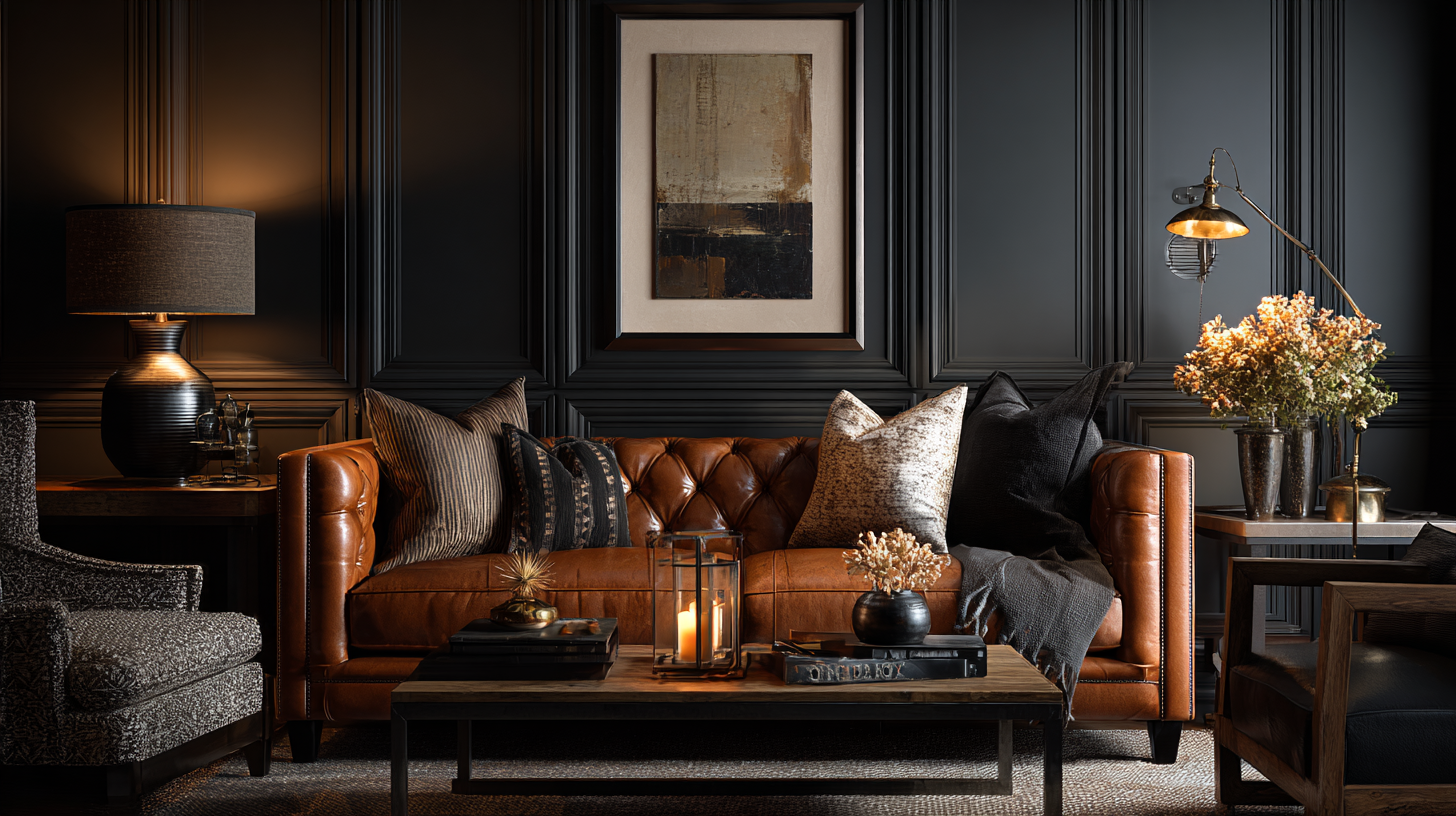
Most design mistakes aren't dramatic.
You don't walk into a room and immediately think,
"This is terrible."
Instead, you find yourself strangely unmoved.
The furniture is attractive.
The colors seem appropriate.
Everything appears expensive enough.
Yet the room never develops any real presence.
It feels forgettable.
That's because the mistakes that weaken masculine interiors are usually quiet.
Individually, they're easy to overlook.
Together, they slowly dilute the entire composition.
Mistake #1: Mistaking Symmetry for Good Design
Symmetry creates order.
But too much of it creates predictability.
Matching lamps.
Matching tables.
Matching accessories.
Matching artwork.
Eventually the room begins feeling staged instead of lived in.
Great masculine interiors understand balance.
Not duplication.
Introduce one unexpected chair.
Stack books unevenly.
Allow artwork to break the rhythm.
Small moments of variation make a room feel collected rather than purchased all at once.
Designer Eyes
Perfect symmetry often photographs beautifully.
Rooms designed for living usually contain just enough imperfection to feel human.
Mistake #2: Nothing Feels Anchored
Some rooms feel like every object could simply drift away.
The rug is too small.
The coffee table feels delicate.
The artwork lacks enough scale.
Furniture appears to float rather than settle into the architecture.
Masculine interiors benefit from visual gravity.
That doesn't necessarily mean heavier furniture.
It means giving important pieces enough presence to stabilize the room.
Every composition needs something substantial enough to hold everything else together.
Mistake #3: Treating Lighting as an Afterthought
Lighting is often the final purchase.
It should be one of the first considerations.
A single overhead fixture creates visibility.
It doesn't create atmosphere.
Without layered lighting, shadows disappear.
Texture disappears.
Materials lose depth.
Everything begins existing on the same visual plane.
The room may be bright enough.
It simply isn't interesting enough.
Designer Eyes
Tonight, switch off your ceiling light and use only lamps.
If the room immediately feels better, you've just identified one of its biggest weaknesses.
Mistake #4: Too Many Competing Materials
Variety isn't the same as richness.
Walnut.
Oak.
Marble.
Travertine.
Black steel.
Brass.
Chrome.
Concrete.
Glass.
Each beautiful individually.
Together, they often compete.
Strong masculine interiors establish one dominant material and allow supporting materials to reinforce it.
The room feels calmer because it speaks one visual language instead of several.
Mistake #5: Playing It Too Safe With Color
Many rooms don't fail because they're too bold.
They fail because they're too cautious.
Everything stays comfortably in the middle.
Medium gray walls.
Medium brown furniture.
Medium beige rug.
Nothing creates emphasis.
Masculine interiors reward conviction.
A darker wall.
A richer wood.
A stronger contrast.
Even restrained palettes benefit from decisive choices.
Designer Eyes
The strongest rooms usually contain one bold decision surrounded by many restrained ones.
Not ten medium decisions.
Mistake #6: Ignoring Scale Relationships
Furniture shouldn't be selected individually.
It should be selected relationally.
A substantial sofa beside tiny side tables immediately feels disconnected.
Tall bookcases beside low-profile seating create imbalance.
Large artwork above a narrow console can feel awkward.
The room isn't judging each object separately.
It's evaluating how every object relates to the next.
Scale is a conversation.
Not an individual measurement.
Mistake #7: Trying to Finish Every Surface
When people feel something is missing, they usually buy more accessories.
Another vase.
Another candle.
Another decorative object.
More artwork.
More pillows.
More plants.
The result is rarely a stronger room.
Usually it's a busier one.
Negative space is one of the most valuable design tools available.
It allows the important pieces to breathe.
Confidence often reveals itself through restraint.
Strong Rooms Prioritize Clarity
The difference between an ordinary room and a memorable one rarely comes down to budget.
It comes down to clarity.
Clear hierarchy.
Clear materials.
Clear lighting.
Clear alignment.
Clear purpose.
Every decision reinforces the next.
Nothing competes unnecessarily.
That's why the room feels composed.
Not because every decision was perfect.
Because every decision was intentional.
Continue Building Your Eye for Design
Most design mistakes aren't caused by buying the wrong furniture. They're caused by missing the relationships between layout, lighting, materials, proportion, color, and architecture that make a room feel complete.
The Masculine Interior Style Guide teaches the ten timeless masculine interior styles we believe every man should understand, complete with exact paint colors, material palettes, furniture direction, styling guidance, and the principles that define each style. It also includes a 30-minute video walkthrough to help you confidently choose the style that best fits your home and bring it to life.
Whether you're correcting an existing room or designing a new one from the ground up, the guide will help you make thoughtful design decisions with confidence and create spaces that feel cohesive, timeless, and unmistakably yours.
Explore The Masculine Interior Style Guide →


Facebook
Instagram
Youtube