How to Make a Masculine Interior Feel Warm Instead of Dark and Cold
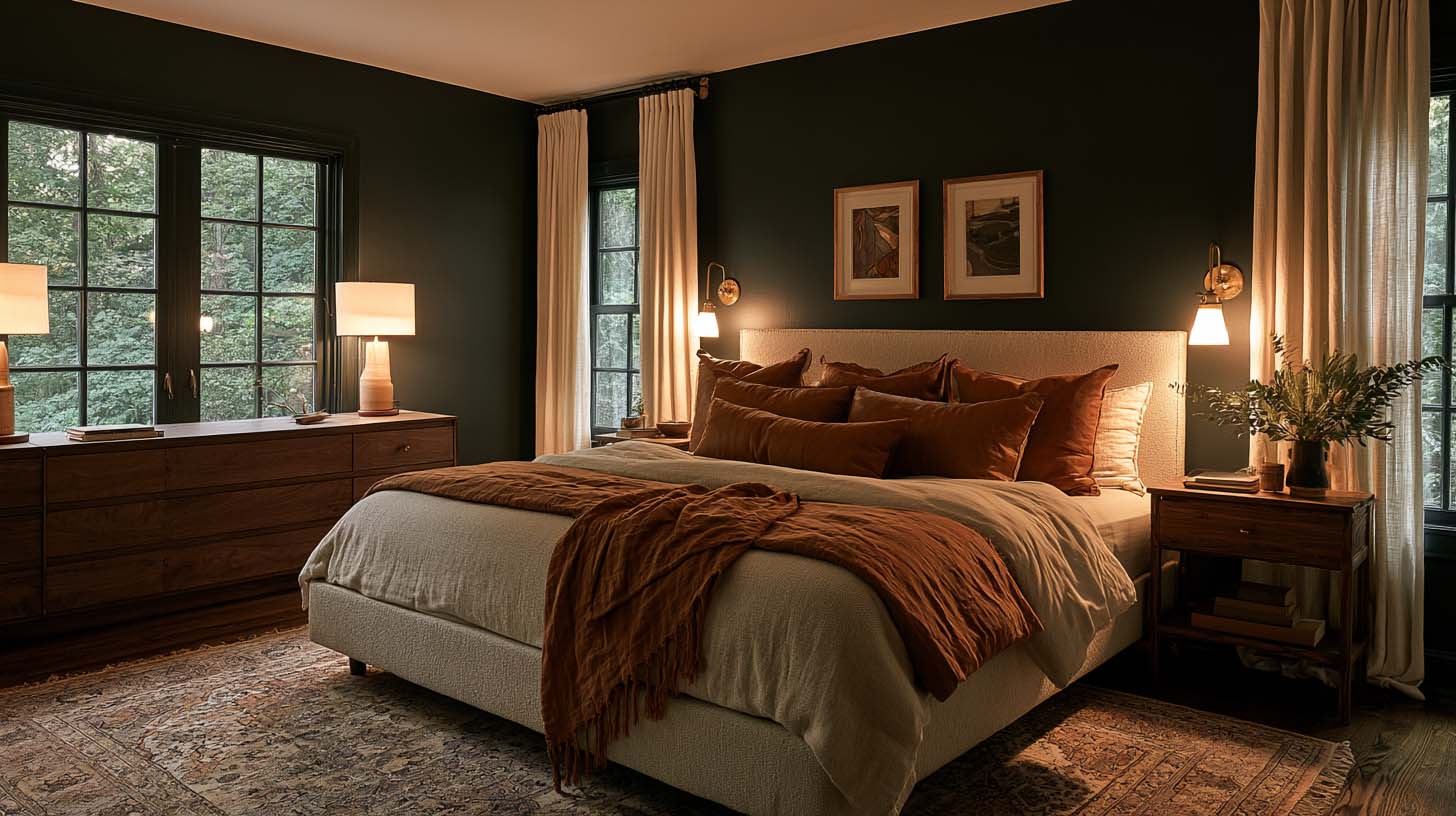
Masculine rooms have a recurring problem. They are easy to make dramatic. They are harder to make inviting. Dark paint, black metal, leather, stone, heavy furniture, and restrained decoration can establish visual strength quickly. Push those elements too far, however, and the same room begins to feel severe.
A successful warm masculine interior design solves that tension without weakening the character that made the room appealing in the first place. If you are not sure whether your own room has crossed that line, TMH's Full-Service Interior Design can plan the warmth back into it.
You do not need to replace the walnut with pale oak. You do not need to paint everything cream. You do not need decorative pillows covering every chair. Warmth comes from the relationship between hard and soft, light and dark, polished and worn, substantial and comfortable. The goal is not making the room less masculine. It is making masculinity pleasant to inhabit.
Darkness and Warmth Are Different Things
A dark room can feel warm. A light room can feel cold. This becomes obvious once you stop thinking about brightness and begin thinking about color temperature, material, texture, and light.
Consider two rooms. The first has charcoal walls, walnut furniture, cognac leather, a faded red rug, cream lampshades, wool curtains, and aged brass. The second has white walls, polished concrete, cool gray upholstery, chrome, bare windows, and bright overhead lighting. Which one feels warmer? Probably the darker room. Darkness refers primarily to value. Warmth is a sensory impression created by several things at once. That distinction should govern the entire design.
Wood Is One of the Fastest Ways to Introduce Warmth
Wood carries color, grain, irregularity, and tactile association in a way painted surfaces cannot. Walnut brings depth. Medium oak can feel earthy and architectural. Mahogany introduces red. Reclaimed wood adds variation. Even pale oak can warm a contemporary masculine room when the surrounding palette is cool. The National Park Service’s guidance on historic building materials notes just how deeply wood has been integrated into American interiors, as flooring, paneling, stairs, trim, structural elements, and decorative features across periods and styles. (National Park Service)
Wood works structurally, but it also prevents rooms from becoming materially sterile. If your masculine room contains extensive black, gray, glass, metal, or stone, wood may be the missing counterweight.
Stop Making Every Piece of Furniture Leather
Leather adds warmth. Too much leather does not necessarily add more. A brown leather sofa, matching leather chairs, leather ottoman, and leather accessories can create a room full of surfaces that all behave similarly. The eye needs contrast.
Pair leather with wool, linen, mohair, velvet, cotton, wood, or stone. A cognac club chair looks richer beside a wool sofa than beside two more cognac chairs. A leather headboard becomes softer in appearance when surrounded by linen bedding and wool underfoot. Material contrast gives leather somewhere to be leather.
Put Something Soft Underfoot
Hard floors can make masculine rooms feel colder than their color palette suggests. Wood is warmer than tile or concrete visually, but even wood benefits from textiles. A rug creates an immediate transition. It absorbs some of the visual hardness of furniture legs and floors. It adds pattern. It creates a defined territory. It gives bare feet a different experience.
Traditional rugs are particularly effective because they often bring several warm and cool tones together simultaneously: muted red, brown, olive, cream, blue, black, and rust. A single rug can become the palette bridge the entire room needed. In a more contemporary space, a heavy wool rug can accomplish the same thing with less pattern. The important part is scale. A tiny rug will not meaningfully soften a substantial room.
Curtains Are More Than Window Decoration
Bare windows introduce several hard things at once: glass, straight edges, reflective surfaces, hard daylight, and at night, black reflective panes. Curtains change that relationship immediately.
Linen adds relaxed texture. Wool introduces density and visual warmth. Velvet can deepen a more formal room. Even a simple cotton curtain gives the architecture softness it did not have before. NPS conservation guidance specifically identifies wool, linen, cotton, upholstery, carpeting, and window coverings among the natural material components commonly found in historic furnished interiors. (National Park Service) The lesson is not that your home should resemble a historic room. It is that textiles have always been part of how hard architecture becomes inhabitable.
Lower the Light Before You Change the Paint
Sometimes a cold room does not have a color problem. It has a lighting problem. Bright overhead illumination makes every surface equally visible. Shadows disappear. Texture flattens. Dark colors may turn harsh. Warm wood can look dull.
At night, try turning off the ceiling lights and using lamps instead: a floor lamp near the sofa, table lamps on case furniture, a lamp beside a chair, sconces, picture lights, or a small accent light directed toward shelving or architecture. GSA’s current lighting guidance emphasizes precisely this distinction between general, task, accent, and daylight sources and recommends layering rather than relying exclusively on uniform overhead illumination. (U.S. General Services Administration) Residential interiors benefit aesthetically for the same reason. Light should create hierarchy. Some parts of the room glow. Others recede. The room becomes deeper.
Designer Eyes: Judge the Room at the Hour You Actually Use It
A living room may look magnificent at 2:00 p.m. and miserable at 9:00 p.m. If you spend most evenings there, judge the design after sunset. Turn on the lights you actually use. Sit where you actually sit. Look at what is illuminated. Many supposedly cold rooms simply have no evening lighting strategy.
Use Warm Neutrals Instead of Automatically Reaching for Gray
Gray can be useful. It can also compound coldness when paired with gray flooring, black metal, white LEDs, glass, and cool daylight. Warm masculinity often benefits from neutrals with brown, yellow, red, or complex earthy undertones: mushroom, putty, taupe, camel, warm stone, cream, tobacco, and soft brown.
These colors need not dominate the room. Even introducing one can shift the temperature of everything around it. Cream upholstery against blackened green walls feels warmer than cool gray upholstery against the same color. A camel chair can change a room that is otherwise navy and walnut. Warmth often arrives through relationships, not wholesale recoloring.
Use Dark Color Where It Creates Enclosure
Dark paint is not the enemy. Used well, it is one of the best ways to create intimacy in libraries, studies, dining rooms, bedrooms, and small sitting rooms. These spaces can become exceptional when walls are deep enough to visually enclose the room.
The problem appears when dark walls are combined with every other cold signal: black furniture, bare floor, metal shelving, cool lighting, no curtains, little upholstery, and minimal artwork. The darkness is then left to do all the emotional work. Instead, surround it with warmth. Forest green with walnut and camel. Deep navy with cognac and brass. Tobacco with cream linen and oak. Charcoal with burgundy, brown wool, and old wood. A dark color becomes richer when it has something warm to reflect.
Let Aged Metal Replace Some Black Metal
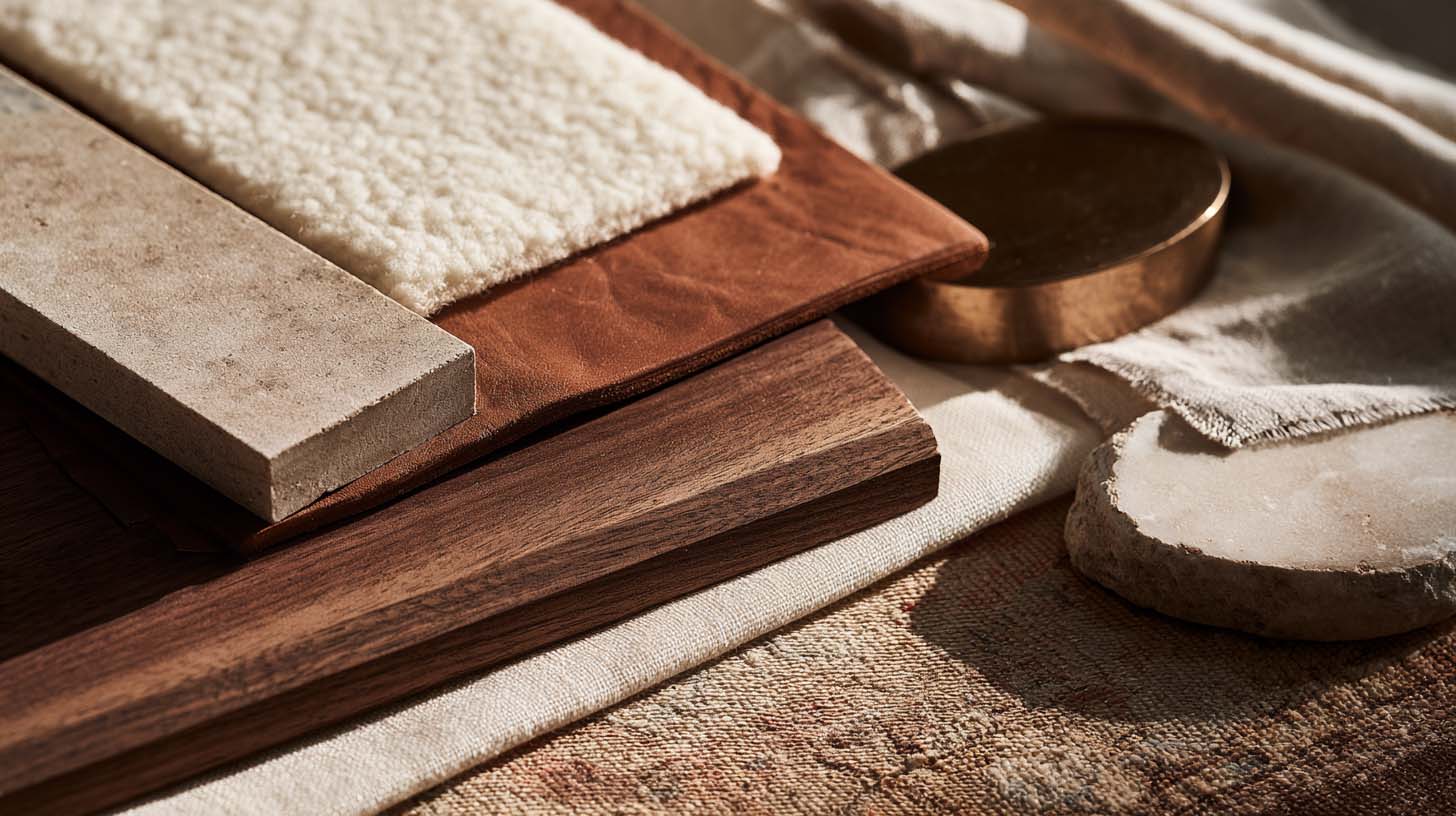
Matte black hardware is useful because it creates definition. But a room containing only black metal can become visually hard. Aged brass, bronze, antique brass, pewter, and iron with a genuine patina introduce variation and warmth. They also respond to light differently. A brass lamp catches a warm highlight. Bronze has depth. Aged metal is rarely visually uniform.
This irregularity makes a room feel less manufactured. You do not need to remove every black element. Mixing blackened metal with warmer finishes often produces more sophisticated contrast than insisting every fixture match.
Bring in Pattern
Minimal masculine rooms can become cold because every surface is solid: solid sofa, solid rug, solid curtains, solid walls, solid chair. The solution may not be more color. It may be pattern.
A Persian rug introduces movement and history. Herringbone wool gives quiet structure. Plaid can work in restrained amounts. A subtle stripe can add rhythm. Paisley, botanical motifs, checks, geometrics, and traditional motifs can all belong in masculine rooms when scale and color are controlled. Pattern keeps the eye engaged. It also helps connect colors that might otherwise appear isolated.
Add Something That Has Aged
New furniture tends to have clean, uniform surfaces. That can make an entire room feel cold even when the colors are technically warm. An antique changes the equation: old walnut, worn leather, a faded rug, a darkened brass lamp, old books, a vintage frame, a scratched side table.
These things introduce evidence of time. The effect is psychological as much as visual. A room where everything remains factory-perfect feels controlled. A room containing something that has already lived feels more permissive. It suggests the home can absorb life without being ruined by it. That quality matters enormously when trying to create a cozy masculine room.
Do Not Confuse Cozy With Cluttered
Warmth does not require filling every surface. Books, textiles, art, objects, and collections can create extraordinary atmosphere. They can also suffocate a room when quantity substitutes for judgment.
The strongest masculine rooms maintain negative space. A console might hold a lamp, several books, and one interesting object, not twelve accessories. A chair may have one wool throw, not four pillows and two blankets. A wall might contain a large painting, not necessarily a gallery. Warmth should make the room feel inhabited. Clutter makes the room feel occupied. Those are different conditions.
Seating Arrangement Affects Warmth
A room can be materially warm and socially cold. Imagine four beautiful chairs positioned so far apart that conversation feels like a conference call. Furniture placement affects intimacy.
Pull seating closer. Give each person somewhere to place a drink. Angle chairs toward the sofa rather than toward the television. Use a rug to establish the territory. Place lamps near people. The room becomes warmer because the furniture now acknowledges human presence. This matters especially in masculine homes, where substantial furniture can accidentally become monumental. Furniture should have presence. People should still feel more important.
Personal Objects Make Warmth Specific
There is another kind of warmth that no textile can provide: recognition. A photograph from somewhere meaningful. Books you have actually read. A family object. A travel piece. An old watch box. A painting you searched months for. A model related to a longstanding interest. A collection that has grown slowly.
These things transform a designed room into someone's room. Without them, even a beautifully layered interior can remain emotionally neutral. Warmth is not only softness. It is evidence that somebody belongs there.
Warmth Comes From Contrast
This is the central idea. Masculine rooms become inviting when their strongest qualities are given opposites. Dark walls need warm light. Leather needs linen. Stone needs wool. Black metal benefits from wood. A large sofa needs a lighter table. New furniture benefits from something old. Architectural lines benefit from an organic shape. Minimalism benefits from biography. You do not need to remove strength. You need to give strength something to work against.
The TMH Perspective
When a masculine room feels cold, the first instinct is often to lighten the paint. We frequently find that this solves the wrong problem. The room may actually need a rug large enough to matter, curtains, warmer lamps, another wood surface, a softer upholstered chair, or something old enough to interrupt all the newness.
Before repainting, ask which sensory category is missing: softness, warm light, material variation, age, pattern, or personal history. Fix that first. The dark walls may turn out to be one of the best things in the room. If your room has the masculine character you wanted but still feels harder, darker, or less inviting than you imagined, TMH's Full-Service Interior Design can rebalance the existing direction through material, textiles, lighting, color, furniture, and atmosphere without stripping away its identity.
Prefer to design it yourself? Homefeld, our guided room design tool, lets you upload photos of your room, explore a new look, and get a practical plan to put it together.
Frequently Asked Questions
What is the fastest way to make a dark masculine room feel warmer?
Switch from overhead lighting to lamps in the evening. Layered, lower light does more to change the emotional temperature of a dark room than almost any single material or color change.
Do I need to add color to warm up a neutral room?
Not necessarily. Warmth can come from material and texture alone, wood, wool, leather, and aged brass can warm a room that stays entirely within a neutral palette.
Can a room be too warm and lose its masculine edge?
Yes, if every hard material gets softened at once. The goal is contrast, not replacement. Keep some hard, architectural elements in place and let warmth arrive through relationships rather than by softening everything.
Is a rug really necessary, or can warmth come from elsewhere?
A rug is one of the most effective single additions, but it is not the only path. Curtains, layered lighting, and an aged object can each meaningfully warm a room even without a rug.


Facebook
Instagram
Youtube