Solid Wood vs. Veneer: Which Is Actually Better?
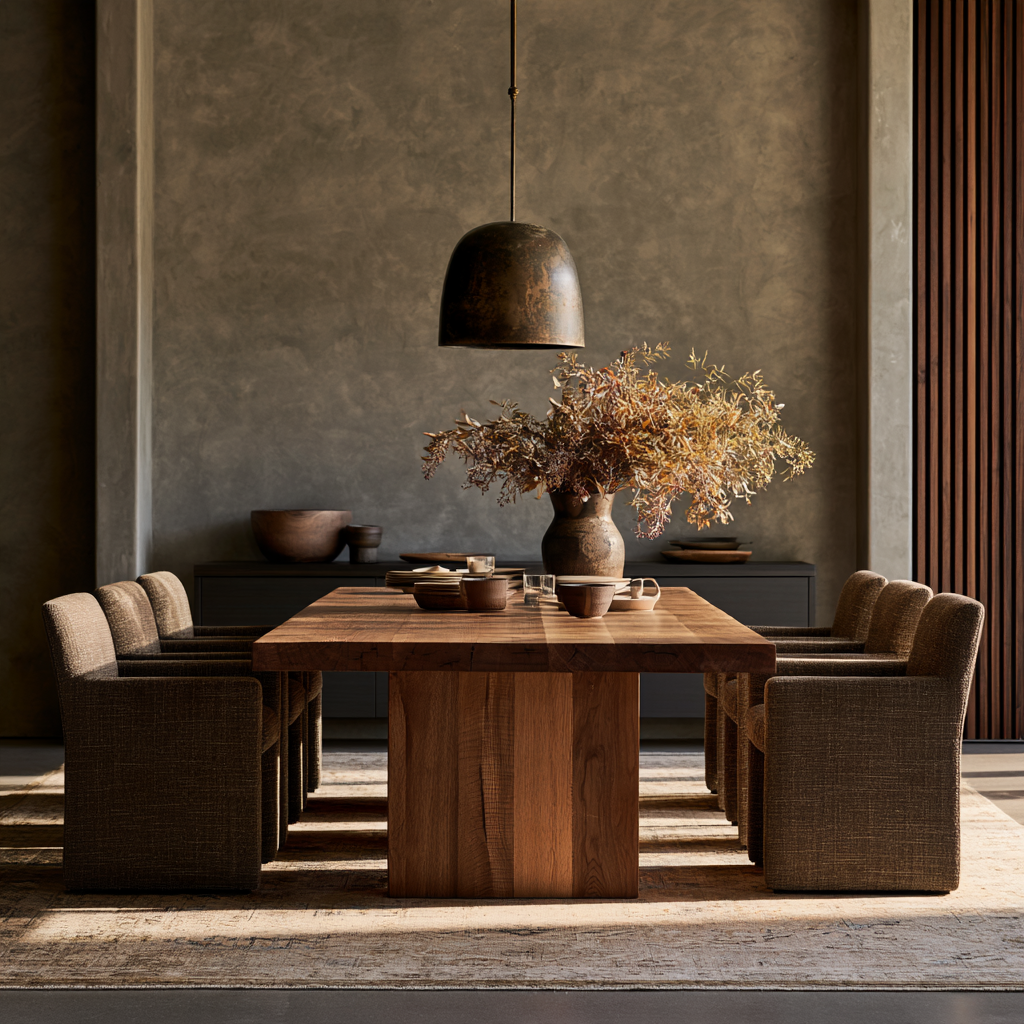
At some point, anyone who begins buying better furniture encounters a very confident piece of advice: "Always buy solid wood. Veneer means cheap furniture. Solid wood means quality." It sounds logical. It is also historically and technically wrong.
Some cheap furniture uses poor veneer over weak substrates. Some excellent furniture uses veneer beautifully. Some solid-wood furniture is extraordinary. Some is badly constructed, unstable, poorly dried, and clumsily finished. The question of solid wood vs veneer therefore cannot be answered by declaring one material superior.
You need to understand what each is doing. Why veneer exists. What lies beneath it. How wood moves. Why cabinetmakers have used veneer for centuries. How edges are constructed. What can be repaired. And, most importantly, whether the furniture was engineered honestly around the material.
That is where quality lives. If you are weighing a piece for a specific room, TMH's Full-Service Interior Design can plan what the room actually needs before you buy.
What Is Solid Wood Furniture?
Solid wood means the component is made from wood through its thickness rather than using a thin decorative wood layer over another core. That may include walnut, oak, maple, cherry, mahogany, ash, pine, beech, and many other species. But "solid wood" is still incomplete information.
A piece may use solid hardwood, solid softwood, finger-jointed solid wood, glued-up panels, or several species in one object. Primary wood on visible areas and cheaper secondary wood internally. All of these can be legitimate. The material label tells you what it is. Not whether it was used well.
What Is Wood Veneer?
Wood veneer is a thin layer of real wood applied over another material. That substrate might be solid wood, plywood, MDF, particleboard, or another engineered panel. This distinction matters enormously. "Veneer furniture" can describe everything from cheap disposable casegoods to museum-quality cabinetmaking.
The face material may be genuinely beautiful walnut, oak, ebony, rosewood, or another species. The core provides structure and stability. The veneer supplies surface and grain. That combination can be intelligent. Or cheap. You have to look deeper.
Veneer Is Real Wood
This is worth stating plainly. Wood veneer is not the same thing as printed faux wood. A genuine walnut veneer is walnut. Thin walnut, yes. But still actual wood. By contrast, laminate or foil may reproduce a photographic image of wood grain without containing that species as the surface itself.
Those categories are often confused in everyday furniture shopping. Ask what you are actually looking at.
Fine Furniture Has Used Veneer for Centuries
The assumption that veneer is inherently cheap becomes difficult to maintain after looking at historic cabinetmaking. The Metropolitan Museum of Art describes late-seventeenth- and early-eighteenth-century cabinetmakers using thin sheets of highly figured woods across furniture surfaces to create pattern and color effects. (The Metropolitan Museum of Art)
Museum collections contain furniture using walnut veneer, burr walnut, mahogany veneer, tulipwood, kingwood, satinwood, ebony, rosewood, and marquetry incorporating multiple species.
A British desk from around 1780 to 90 in The Met's collection uses a mahogany-and-oak carcass with veneers including satinwood, mahogany, yewwood, tulipwood, rosewood, walnut, and other species. (The Metropolitan Museum of Art) Cheap furniture did not invent veneer.
Cheap furniture learned how to use a respected technique cheaply. Those are different statements.
Why Use Veneer at All?
There are several good reasons.
To use highly figured wood efficiently
Burl. Crotch figure. Curly grain. Rare species. These can be visually spectacular and difficult or wasteful to use as thick solid lumber across broad surfaces. Veneer allows the material to be used where it matters visually.
To create patterns
Bookmatching. Radial matching. Marquetry. Banding. Inlays. These techniques rely naturally on thin sections of wood.
To stabilize large flat surfaces
A well-designed veneered panel over a stable substrate may experience less problematic seasonal movement across its width than a broad solid board.
To control weight and structure
Large case pieces may benefit from engineered panel construction while still presenting real wood surfaces.
To make efficient use of valuable timber
A thin face of a rare or beautiful species can cover more area than thick solid stock. That is not inherently dishonest. The important question is whether the construction is revealed and executed well.
Solid Wood Moves
Wood is hygroscopic. It exchanges moisture with the surrounding environment. As moisture content changes, wood changes dimension. Movement is different along the grain, across the grain, radially, and tangentially. Across-grain movement is particularly important in furniture construction.
The USDA Forest Products Laboratory's Wood Handbook documents species-specific dimensional-change coefficients and explains how wood shrinks and swells as moisture content changes within ordinary service ranges. (Forest Products Laboratory)
This is not a defect in solid wood. It is simply what wood does. Good furniture design anticipates it.
Wide Solid-Wood Panels Require Intelligent Construction
Imagine a large solid-wood tabletop. As humidity changes through the seasons, the top wants to change dimension across its width. If the base prevents this completely, stress can build. Possible consequences include splitting, warping, joint failure, and fastener problems.
Traditional furniture construction developed ways to accommodate this reality. Frame-and-panel doors. Tabletop fasteners that allow movement. Breadboard ends when designed correctly. Floating panels. Seasoned stock. Appropriate grain orientation. Good solid-wood furniture respects wood movement rather than pretending it does not exist.
Engineered Panels Behave Differently
Plywood, MDF, particleboard, and other wood-based panels are manufactured materials with properties different from a single solid board. The USDA Forest Products Laboratory treats plywood, particleboard, fiberboard, and related composites as distinct engineered categories with their own performance standards, construction methods, and appropriate applications. (Forest Products Laboratory)
This matters because a stable sheet material can make an excellent substrate for veneer when used appropriately. The idea that every engineered core is automatically inferior misunderstands why those materials exist.
Plywood Can Be an Excellent Substrate
Quality plywood consists of multiple wood layers arranged to improve dimensional stability and structural performance. It can work very well for cabinet sides, shelves, furniture carcasses, panels, and curved work depending on construction.
A fine wood veneer over high-quality plywood can create durable, stable furniture. The words "veneer over plywood" therefore should not frighten you automatically. Ask what grade and construction you are getting.
MDF Can Be an Excellent Veneer Substrate in the Right Application
MDF has an extremely flat, homogeneous surface. That can be useful beneath veneer because the substrate has no natural grain telegraphing through and no voids like poor plywood may contain. Excellent machining characteristics for certain applications.
But MDF also has limitations. Edges. Moisture exposure. Screw holding depending on design. Weight. Damage behavior. Use matters. A beautifully made veneered cabinet can use MDF intelligently. A cheap cabinet can also use low-quality MDF badly. Again, material name does not settle quality.
Particleboard Is Not Automatically the Same as MDF
These terms are often thrown together. Particleboard generally uses larger wood particles bonded into panels. MDF uses finer wood fibers. Their properties differ. Low-cost particleboard is common in inexpensive furniture, particularly where weight, cost, and flat panel construction are prioritized.
That does not make every use unacceptable. But exposed cheap particleboard edges, weak fastener connections, swelling, and poor edge banding are familiar signs of low-end furniture. Know what the piece is asking the material to do.
The Surface Is Only Half the Veneer Question
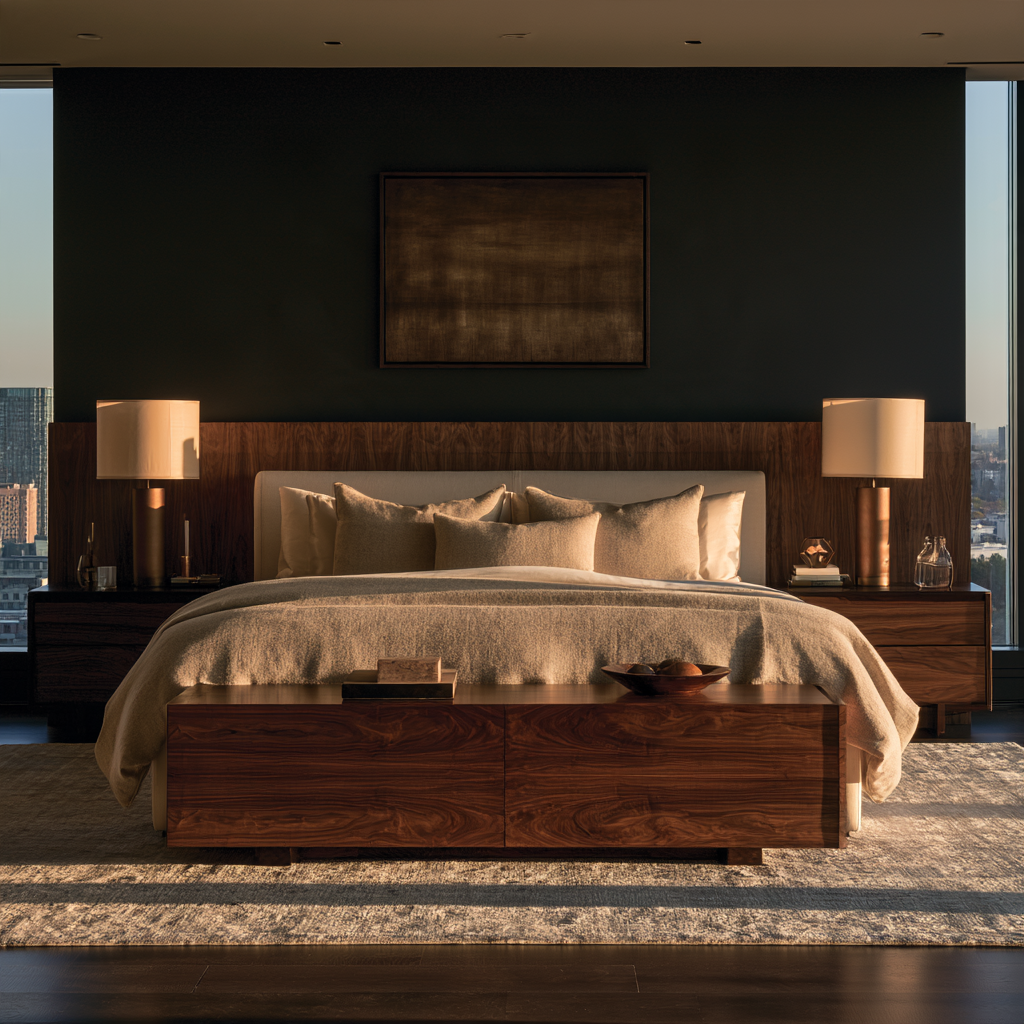
When evaluating veneer, ask two things. What is the face? And what is underneath it? A beautiful walnut veneer over a strong, stable core may be excellent. A thin generic veneer over weak particleboard with poor edges may be disposable. The word "veneer" does not distinguish between them. The construction does.
Bookmatching Is a Sign Veneer Can Be an Art Form
Bookmatching occurs when adjacent veneer leaves are opened like the pages of a book so their grain patterns mirror one another. This can create extraordinary symmetrical effects. Doors. Tabletops. Headboards. Cabinet fronts. The Met's Duncan Phyfe bedstead includes bookmatched veneers on the footboard, demonstrating the use of veneer as deliberate decorative composition in high-level American furniture. (The Metropolitan Museum of Art)
This is not an imitation of solid wood. It is a visual technique solid wood alone may not produce in the same way.
Marquetry Takes the Idea Further
Marquetry uses pieces of veneer to form decorative patterns or imagery. Different species can provide different colors, grains, figure, and contrast.
The Metropolitan Museum's eighteenth-century French work table by Bernard II van Risenburgh uses carefully coordinated floral marquetry of tulipwood and kingwood, with metal mounts that also help protect vulnerable veneer at edges and corners. (The Metropolitan Museum of Art)
That is sophisticated furniture precisely because of veneer. Not despite it.
Edges Reveal Cheap Veneer Quickly
Flat surfaces are easy. Edges are where construction becomes honest. Look closely at table edges, door edges, drawer fronts, and cabinet corners. A low-cost product may show thin banding, poor alignment, a visible core, plastic edge tape, color mismatch, or chipping.
High-quality veneered furniture may use solid wood lipping, carefully veneered edges, protective metal details, and well-resolved transitions. This is one of the best shopping tests. Do not inspect only the broad top. Look where the surface has to turn the corner.
Veneer Thickness Varies
Historic hand-cut veneers were often thicker than some modern sliced veneers. Modern industrial veneers can become very thin. Thickness affects repair possibilities, sanding tolerance, and the risk of sanding through during refinishing. That does not mean thicker is always better.
But if you expect to refinish a piece repeatedly over generations, knowing how much real surface material exists matters. Ask when the furniture is expensive enough for the question to matter.
Solid Wood Has Refinishing Advantages
One major benefit of solid wood is material depth. A scratched solid wood top can often be sanded, scraped, repaired, or refinished, depending on the finish and damage. There is more wood beneath the surface. This is especially valuable for dining tables, desks, benches, work surfaces, and furniture expected to develop wear. A solid wood object can often tolerate intervention that thin veneer cannot.
Veneer Can Also Be Repaired
Veneer is not automatically unrepairable. Furniture conservators repair historic veneered furniture constantly. Loose veneer can sometimes be re-adhered. Missing areas can be patched. Damage can be retouched. But the skill required may be greater, particularly when the veneer is thin, the pattern is complex, the substrate is damaged, or matching material is difficult. Repairability therefore depends on construction, damage, value, and available craftsmanship.
Solid Wood Can Crack
This is the counterpoint. Solid wood's repairability does not mean it is invulnerable. Poor drying, bad design, extreme environmental change, and restrained seasonal movement can produce splits, warp, cupping, and joint problems. A wide solid wood tabletop badly engineered can age worse than a properly built veneered panel. Material purity does not replace design intelligence.
Veneer Can Chip
Veneer has its own characteristic vulnerabilities. Edges and corners may chip. Water can cause adhesive or substrate problems. Excessive sanding can breach the face. Cheap edge banding can fail. Damage may reveal an unattractive core abruptly.
This is why material credibility matters. The furniture should still look reasonable after ordinary life reaches it.
Ask What Happens After the First Scratch
This is a useful ownership question. On solid walnut, perhaps the scratch can be repaired or becomes part of the surface. On a thin stained veneer, maybe repair is still possible. On printed laminate imitating walnut, a scratch may reveal an unrelated core.
The object can lose its illusion immediately. That is often the more important distinction. Not solid versus veneer. Real material versus a surface dependent on remaining visually perfect.
Veneer Can Use Better-Looking Wood Than Affordable Solid Construction
Suppose you have two cabinets at the same price. Cabinet A is solid wood throughout, but with plain grain, lower-grade boards, and a mediocre finish. Cabinet B has a stable core with beautifully selected bookmatched walnut veneer and excellent edge work.
Which is better? There is no automatic answer. But the fact that Cabinet A is solid wood does not make it the obvious winner. Surface selection matters because furniture is visual. Excellent veneer can place beautiful grain precisely where the eye sees it.
Solid Wood Communicates Construction More Directly
Solid wood has its own appeal. Edge grain. End grain. Thickness. Joinery. Physical depth. A solid oak table can feel extraordinarily direct. Board becomes object. This material honesty is one reason solid wood remains persuasive in masculine interiors.
Especially in tables, benches, chairs, beds, desks, and furniture where the structure itself is visible. There is no need to downgrade that appeal simply because veneer also has legitimate uses.
Some Furniture Naturally Makes More Sense in Solid Wood
Consider a chair. The legs and rails experience mechanical stress. Solid wood is often the natural material. A table base. Bench. Bed posts. Turned legs. Structural frames. These rely on members whose shape and load favor solid stock. Veneer is usually more relevant to broad surfaces than slender structural parts. The best furniture often combines techniques according to function.
Some Furniture Naturally Makes More Sense as Veneered Panels
Large cabinet door. Broad credenza side. Large top where visual grain matching is desired. Casework. Built-ins. Headboard panels. These are situations where stable substrates and veneers may provide considerable advantages. The construction system should follow the geometry. Not ideology.
Fine Furniture Often Mixes Both
This may be the most important point in the entire article. The solid-versus-veneer debate assumes furniture must belong to one category. Historically, excellent furniture often combines solid structural wood, secondary solid woods, veneered panels, inlay, marquetry, metal, and other materials.
A circa 1820 to 30 Austrian side chair in The Met combines solid beech, solid pine, solid walnut, walnut and burr-walnut veneer, alongside upholstery materials. (The Metropolitan Museum of Art) That is a much smarter model for understanding furniture. Different materials doing different jobs.
Secondary Woods Are Not Cheating
A walnut or mahogany chest does not need every invisible interior component made from walnut or mahogany. Traditional cabinetmakers commonly used less costly local woods for drawer sides, drawer backs, interior framing, back panels, and structural components.
This can be excellent practice. You are paying expensive primary wood where it creates functional or visual benefit. Not where nobody sees it and another species performs just as well. Material hierarchy can be evidence of intelligence rather than corner cutting.
When Veneer Is a Warning Sign
Veneer becomes concerning when it appears alongside several other compromises. For example, a very thin surface, a low-grade particleboard core, poor edge banding, peeling edges, visible swelling, printed grain marketed vaguely as veneer, weak hardware, and poor drawer construction.
The problem is not veneer alone. It is the cumulative construction strategy.
When Solid Wood Is a Warning Sign
Solid wood can also be used badly. Look for wide boards badly warped, cracks around restrained panels, and poor glue joints. Furniture assembled from low-grade stock without regard to grain. Unstable tops. Soft species used where wear will be severe without acknowledging that tradeoff.
Excessively thick construction added simply to create perceived value. "Solid" is a description. Not a craftsmanship certificate.
Ask Whether the Manufacturer Identifies the Substrate
Transparent specifications are helpful. "Walnut veneer over MDF." "White oak veneer over plywood." "Solid oak frame with veneered panel." This tells you something useful. Vague terms like "wood product," "engineered wood," "walnut finish," and "wood composite" may require further questions.
Not because those materials are automatically bad. Because you need enough information to judge the construction.
Learn the Difference Between Veneer and Laminate
This will prevent a great deal of confusion. Wood veneer: thin actual wood. Laminate: manufactured surface layer, often resin-based, which may imitate wood or use another decorative pattern. Foil or paper wrap: printed surface material applied over a substrate.
These categories have different appearance, repairability, durability, and cost. There are excellent laminates for certain applications. The issue is knowing what you are purchasing.
Cheap Imitation Often Has Repeating Grain
Printed wood patterns may repeat. Natural wood does not repeat in the same photographic loop. Look across a large surface. Do you see identical knots or grain formations repeating? That is evidence the surface may be printed rather than real wood. Real veneer can have carefully repeated symmetry through bookmatching, but the repetition has a logical mirrored relationship rather than a copied digital tile.
Look at the End Grain
On solid wood, end grain can reveal how a board continues through the piece. On veneered furniture, the edge treatment may reveal the core or a separate edge. Again, high-quality veneering can conceal this beautifully. You are not trying to catch furniture in a lie.
You are learning how it is built. That knowledge helps you evaluate price and expected ownership.
Humidity Matters to Both
Solid wood responds directly to environmental moisture. Veneered furniture can experience problems too if the substrate moves, the adhesive fails, water reaches the edges, or environmental conditions become extreme. No wood furniture benefits from wild swings in humidity or repeated direct moisture.
Material choice reduces some risks. It does not eliminate the need for a reasonable indoor environment.
The USDA Wood Handbook Is Useful Here
The Forest Products Laboratory's research provides the technical foundation behind something cabinetmakers have understood practically for centuries: wood's dimensions change with moisture, and the amount varies by species and grain direction. (Forest Products Laboratory)
This is one reason thoughtful furniture construction often uses combinations of solid wood, plywood, veneer, floating panels, and joinery designed to accommodate movement. Good furniture respects the material's behavior.
Designer Eyes: Inspect the Corner
If you want one fast test for a veneered piece, look at a corner where three surfaces meet. Top. Side. Front. What happens there? Does grain wrap impossibly? Is there obvious cheap banding? Does a solid edge protect the veneer? Are seams clean? Do materials meet deliberately? Corners expose whether the furniture was designed in three dimensions or decorated on the front.
Which Is Better for a Dining Table?
Often, solid wood is appealing for a frequently used dining table because it can offer material depth, repairability, direct grain, and a surface capable of being refinished. But a properly constructed veneered dining table can also be excellent.
Particularly if it achieves a large stable surface, beautiful grain matching, a complex pattern, and high-quality edge construction. Judge the complete table. Not the label.
Which Is Better for a Credenza?
Veneer may make tremendous sense. Large flat planes. Cabinet doors. Drawer fronts. Opportunity for bookmatching. Stable substrates. A beautiful veneered credenza can be more sophisticated than a mediocre solid-wood one. This is precisely the kind of furniture where the anti-veneer rule fails quickly.
Which Is Better for a Chair?
Structural members such as legs and rails commonly favor solid wood. The chair may still use veneer on decorative panels or other surfaces. Again: Function determines construction.
Which Is Better for a Desk?
Either. Solid wood desk if you value visible structure, repairability, and material depth. Veneered desk if you value a stable broad top, bookmatched grain, and elegant case construction. Look at the actual working surface, edges, frame, drawers, and expected use.
Repairability Should Influence the Choice
If you expect a piece to experience hard use, such as a dining table, desk, or bench, a solid wood surface may provide peace of mind. If the piece is a protected casegood, such as a credenza, cabinet, or nightstand, a veneered surface may live beautifully for decades. The material should correspond to damage likelihood.
Price Should Reflect Construction, Not Marketing
A very expensive piece described simply as "engineered wood with wood veneer" should invite questions. What engineered wood? What veneer? Where made? How are edges treated? What hardware? What joinery? Likewise, a seller charging heavily because the piece is "100% solid wood" should still be able to explain species, construction, drying, finish, and joinery.
The label is the beginning of the conversation. Not the justification for the price.
The TMH Perspective
Solid wood and veneer are not enemies. They are tools. Solid wood gives you depth, structure, repairability, and the direct physical presence of the tree. Veneer gives a cabinetmaker control over grain, pattern, scarce materials, large surfaces, and stable substrates.
Both can be used honestly. Both can be used cheaply. The distinction worth learning is not "solid good, veneer bad." It is what material is being used, what is beneath it, why it was chosen, and how well the furniture was designed around it.
Once you understand that, you begin shopping like someone who knows furniture rather than someone who knows furniture marketing.
If you are making major furniture purchases and want to understand which materials genuinely justify their price, TMH Full-Service Interior Design evaluates not just the visible finish, but construction, material behavior, expected use, repairability, scale, and how each piece fits the larger room.
Prefer to design it yourself? Homefeld, our guided room design tool, lets you upload photos of your room, explore a new look, and get a practical plan to put it together.
Frequently Asked Questions
Is solid wood better than veneer furniture?
Not automatically. Solid wood offers material depth and strong repair potential, while high-quality veneer can provide greater surface stability, rare wood figure, bookmatching, and sophisticated cabinet construction.
Is wood veneer real wood?
Yes. Genuine wood veneer is a thin layer of actual wood applied over a substrate. It is different from laminate or printed faux-wood surfaces.
Why would expensive furniture use veneer?
Veneer allows cabinetmakers to use highly figured or rare wood efficiently, create mirrored grain and marquetry patterns, and apply beautiful wood surfaces over stable broad panels.
Can veneer furniture be refinished?
Sometimes, but the amount of sanding possible depends on veneer thickness. Repairs and refinishing require more care to avoid sanding through the wood surface.
Does solid wood crack?
It can. Solid wood naturally expands and contracts with changes in moisture, and poorly designed construction that restricts that movement can lead to splitting, warping, or joint problems.
What is the best veneer substrate?
There is no universal best substrate. High-quality plywood can be excellent, MDF can provide an extremely flat stable surface for certain casework, and other engineered panels can be appropriate depending on the design. Construction quality matters more than the label alone.


Facebook
Instagram
Youtube