Mastering Dark & Moody Interiors: A Guide to Masculine Sophistication
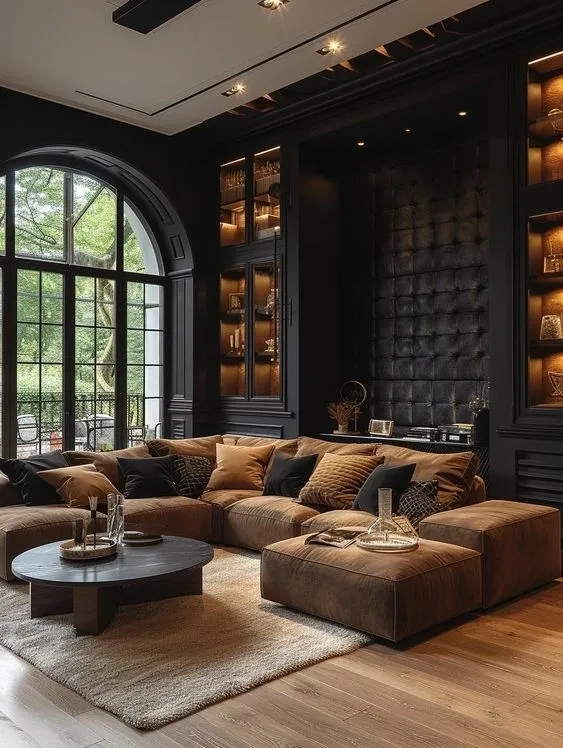
Dark interiors are widely misunderstood.
Many people assume they're gloomy.
Overwhelming.
Too risky.
Too difficult to live with.
In reality, the problem is rarely the dark color itself.
It's everything surrounding it.
A room painted deep charcoal without thoughtful lighting feels oppressive.
The same room, layered with warm wood, natural stone, brass, leather, and carefully controlled light, feels sophisticated, intimate, and unforgettable.
Dark interiors aren't about making a room darker.
They're about giving light something meaningful to interact with.
Darkness Creates Atmosphere
The popularity of light, bright interiors makes sense.
They feel open.
Clean.
Easy to decorate.
But brightness isn't the only path to beautiful design.
Dark interiors create something entirely different.
They encourage conversation.
Slow the pace of a room.
Emphasize texture.
Reward careful observation.
Rather than asking every surface to reflect light, they allow certain elements to disappear while inviting others to quietly stand forward.
That's where much of their emotional power comes from.
Choose the Right Rooms
Not every room needs to embrace a dark palette.
Some spaces naturally benefit from it more than others.
Studies become more focused.
Dining rooms feel more intimate.
Libraries gain warmth and depth.
Lounges encourage relaxation.
Powder rooms become memorable experiences rather than overlooked necessities.
These are spaces where atmosphere often matters more than brightness.
Designer Eyes
Ask yourself:
"Should this room energize me or slow me down?"
The answer often determines whether a darker palette makes sense.
Stop Thinking in Terms of Black
One of the biggest misconceptions about moody interiors is that everything must be painted black.
Some of the richest interiors use very little black at all.
Instead, consider colors like:
Deep navy
Forest green
Warm charcoal
Espresso brown
Aubergine
Dark olive
Rich slate blue
These colors feel complex because they reveal different qualities as natural light changes throughout the day.
The room never feels static.
It evolves.
Materials Become Even More Important
Dark paint alone doesn't create a sophisticated room.
Material contrast does.
Leather develops richness against charcoal walls.
Walnut appears warmer.
Brass catches available light.
Natural stone gains depth.
Linen softens heavy architecture.
When the color palette becomes restrained, materials begin carrying much more of the visual interest.
That's why luxury dark interiors rarely feel empty despite containing relatively few decorative objects.
Layer Your Lighting
Lighting determines whether a dark room feels welcoming or oppressive.
One bright ceiling fixture often destroys the atmosphere you're trying to create.
Instead, think in layers.
Wall sconces.
Table lamps.
Floor lamps.
Picture lights.
Candles.
Accent lighting.
Allow light to exist in smaller pools throughout the room rather than flooding every surface equally.
Darkness becomes the backdrop.
Light becomes the feature.
Designer Eyes
Turn off your overhead light tonight.
Switch on only your lamps.
Notice how the room immediately develops more depth and atmosphere.
That's the power of layered lighting.
Let Shadows Become Part of the Design
Most people spend enormous effort trying to eliminate shadows.
Dark interiors embrace them.
Shadow creates mystery.
It hides visual clutter.
It introduces depth.
It allows important objects to emerge gradually rather than revealing everything at once.
This is one reason luxury restaurants, boutique hotels, and private clubs often rely on restrained lighting rather than maximum brightness.
They understand that atmosphere lives in the transition between light and shadow.
Appeal to More Than the Eyes
Dark interiors succeed because they engage multiple senses at once.
Soft wool beneath your feet.
The texture of full-grain leather.
The warmth of walnut.
A subtle cedarwood or tobacco fragrance.
Quiet background music.
The gentle glow of a brass lamp.
Every layer contributes to the overall experience.
The room becomes immersive rather than simply attractive.
Dark Doesn't Mean Heavy
One of the biggest fears people have is making a small room feel even smaller.
Ironically, dark colors often make walls visually recede.
Instead of immediately seeing the boundaries of the room, your attention shifts toward furniture, artwork, lighting, and architectural details.
The space feels deeper because the edges become less defined.
The effect isn't magic.
It's perception.
That's why many of the world's most memorable libraries, restaurants, and cocktail lounges embrace darker palettes regardless of their size.
A Dark Interior Is About Emotion, Not Color
People often think dark interiors succeed because of the paint.
The paint is only the beginning.
The real goal is creating a feeling.
Calm.
Warmth.
Focus.
Sophistication.
A sense of quiet confidence.
When lighting, materials, proportion, and color all support one another, the room becomes something much greater than simply "dark."
It becomes unforgettable.
Continue Building Your Eye for Design
Creating a dark, sophisticated interior isn't about choosing a deeper paint color. It's about understanding how color, lighting, materials, furniture, and texture work together to create atmosphere.
The Masculine Interior Style Guide teaches the ten timeless masculine interior styles we believe every man should understand, complete with exact paint colors, material palettes, furniture direction, styling guidance, and the principles that define each style. It also includes a 30-minute video walkthrough to help you confidently apply those ideas in your own home.
Whether you're creating a dramatic study, a moody dining room, or an entire home with richer character, the guide will help you make thoughtful design decisions with confidence and create spaces that feel cohesive, timeless, and unmistakably yours.
Explore The Masculine Interior Style Guide →

Facebook
Instagram
Youtube