Dark and Moody Interiors: A Guide to Bold Masculine Spaces
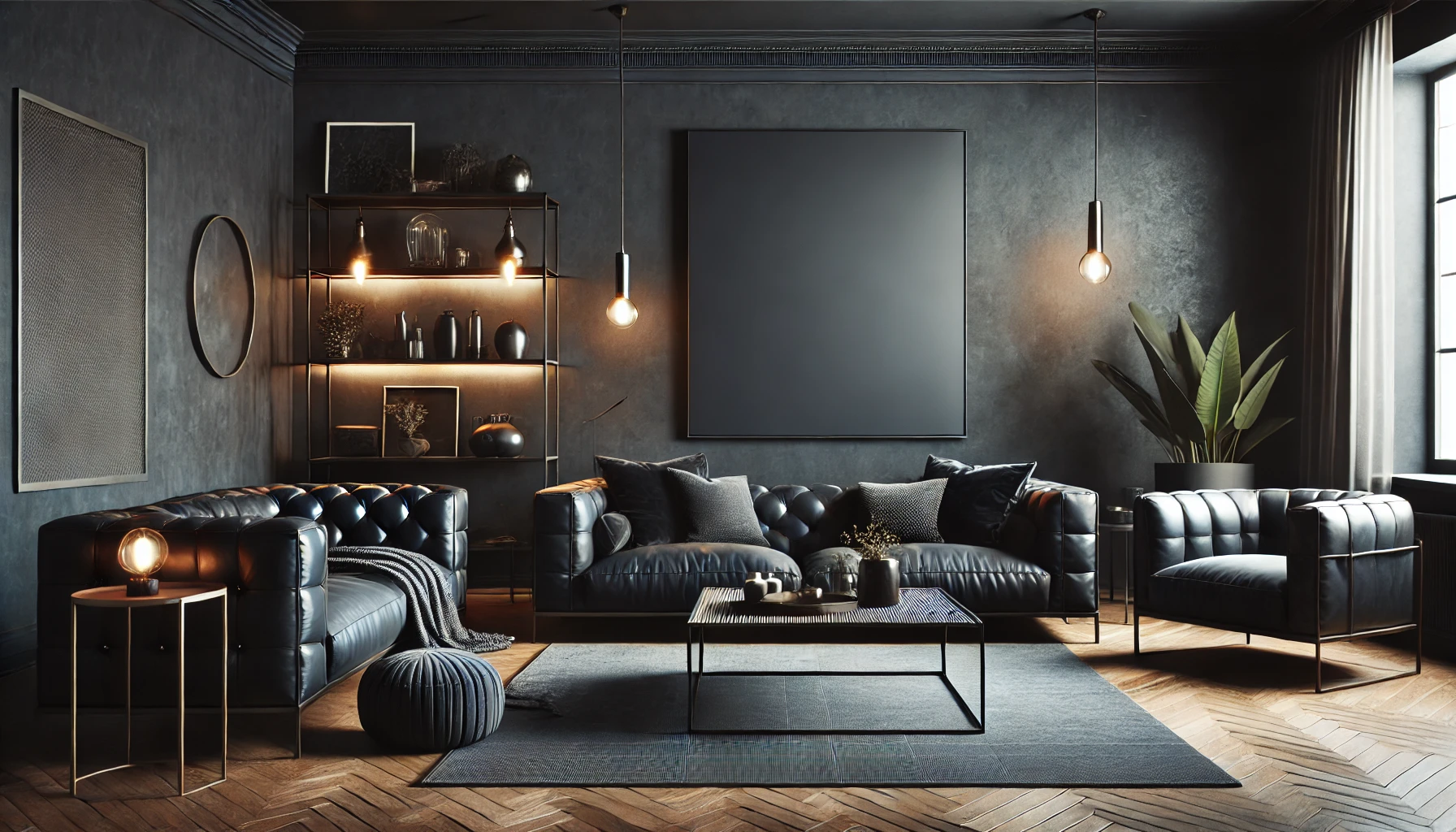
Dark interiors don't succeed because they're dark.
They succeed because they understand light.
That's an important distinction.
Many people paint a room charcoal or black expecting it to instantly feel sophisticated. Instead, the room ends up feeling flat, heavy, or lifeless.
The color wasn't the problem.
The composition was.
The best dark interiors treat darkness as a backdrop, allowing light, texture, and carefully chosen materials to become the stars of the room.
That's what creates atmosphere.
Start With Emotion, Not Paint
Before choosing a color, decide what you want the room to feel like.
A study should encourage focus.
A lounge should encourage conversation.
A dining room should feel intimate.
A bedroom should feel restorative.
Dark colors are simply one tool for creating those experiences.
When you understand the emotional goal, selecting the right palette becomes much easier.
Designer Eyes
Ask yourself:
"Would this room benefit from feeling brighter, or would it benefit from feeling calmer?"
The answer often determines whether a darker palette makes sense.
Choose Rich Colors Instead of Simply Choosing Black
Black receives most of the attention, but many of the world's most beautiful dark interiors barely use it.
Instead, they rely on colors with depth and complexity.
Deep navy.
Forest green.
Espresso brown.
Warm charcoal.
Dark olive.
Slate blue.
These colors reveal different qualities throughout the day as natural light changes.
The room feels alive rather than static.
Texture Prevents Dark Rooms From Feeling Flat
When colors become restrained, materials become dramatically more important.
Leather catches light differently than linen.
Walnut reflects warmth differently than painted wood.
Stone introduces subtle variation.
Wool softens the harder architectural surfaces.
Without these material contrasts, dark rooms can begin feeling one-dimensional.
With them, they become remarkably rich.
Designer Eyes
Imagine your room without any texture.
No wood grain.
No leather.
No woven fabrics.
No stone.
The room would immediately lose much of its atmosphere.
Texture is what gives dark interiors their depth.
Choose Furniture With Presence
Dark interiors reward substantial furniture.
A leather sofa.
A walnut dining table.
A deep lounge chair.
A steel bookshelf.
Furniture should feel grounded rather than delicate.
That doesn't mean every piece needs to be oversized.
It simply means the visual weight should feel appropriate for the room.
Strong materials naturally reinforce the confidence of the darker palette.
Layer the Lighting
This is where most dark interiors either succeed or fail.
One overhead light cannot create atmosphere.
Instead, build layers.
Table lamps.
Floor lamps.
Wall sconces.
Accent lighting.
Picture lights.
Candles.
Each creates a different pocket of light, allowing shadows to remain part of the composition.
The room becomes dramatic because light is carefully controlled rather than evenly distributed.
Designer Eyes
Turn off every overhead fixture.
Now switch on only your lamps.
If the room immediately feels more inviting, you've discovered the lighting strategy dark interiors rely on.
Let Artwork Become More Powerful
Dark walls naturally draw attention toward lighter objects.
This makes artwork especially important.
Black-and-white photography.
Landscape paintings.
Architectural sketches.
Vintage maps.
Abstract works.
Rather than filling every wall, choose fewer, larger pieces that become deliberate focal points.
The surrounding darkness allows them to command attention without competing against visual clutter.
Decorate With Restraint
One of the greatest strengths of dark interiors is their ability to create atmosphere with surprisingly few objects.
A beautiful ceramic vase.
A stack of well-chosen books.
A brass candle holder.
Collected sculptures.
Vintage objects.
Every accessory should feel intentional.
When every surface becomes crowded, the atmosphere disappears.
A Dark Interior Should Feel Warm
This is perhaps the most important principle of all.
Dark does not mean cold.
Warm wood.
Leather.
Soft wool.
Natural linen.
Brass.
Firelight.
Layered lighting.
These are the elements that transform dramatic interiors into welcoming ones.
Without warmth, the room feels severe.
With warmth, it becomes deeply comfortable.
Great Dark Interiors Feel Timeless
People often think moody interiors are dramatic because of the paint.
In reality, they're memorable because every design decision supports the same emotional experience.
Color.
Lighting.
Materials.
Furniture.
Texture.
Even scent.
Nothing feels accidental.
The room doesn't simply look darker.
It feels calmer.
More intimate.
More architectural.
And once you experience a dark interior that's been designed well, it's surprisingly difficult to go back.
Continue Building Your Eye for Design
Dark interiors aren't created by choosing darker paint. They're created by understanding how color, lighting, materials, furniture, and texture work together to create atmosphere.
The Masculine Interior Style Guide teaches the ten timeless masculine interior styles we believe every man should understand, complete with exact paint colors, material palettes, furniture direction, styling guidance, and the principles that define each style. It also includes a 30-minute video walkthrough to help you confidently apply those ideas in your own home.
Whether you're creating a dramatic study, a moody bedroom, or an entire home with richer character, the guide will help you make thoughtful design decisions with confidence and create spaces that feel cohesive, timeless, and unmistakably yours.
Explore The Masculine Interior Style Guide →

Facebook
Instagram
Youtube