How to Decorate a Dark Painted Room: Color, Texture, and Styling That Creates Depth
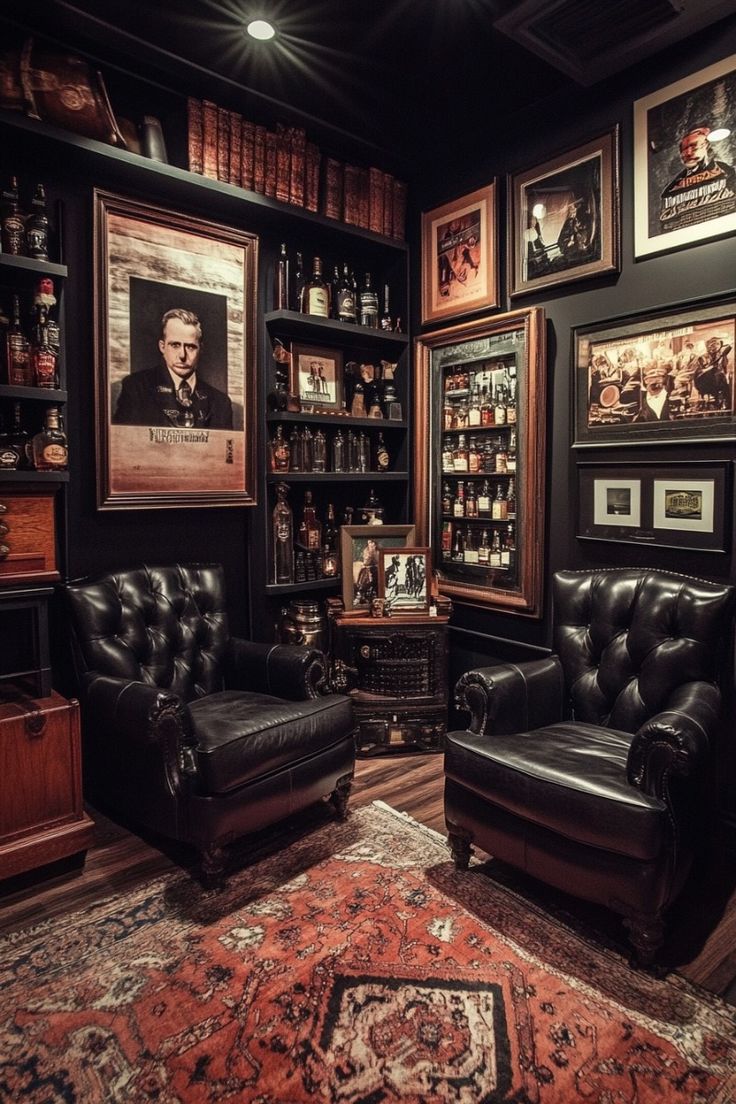
Dark paint doesn't make a room feel sophisticated.
It simply creates the opportunity.
What happens next determines whether the space feels rich and atmospheric...
...or flat and oppressive.
Many people assume dark interiors succeed because of the paint color.
In reality, the paint is only the backdrop.
The furniture.
The lighting.
The materials.
The contrast.
Those are what bring the room to life.
Here's how to build a masculine interior that fully embraces darker walls.
Let the Paint Become the Background
One of the biggest mistakes people make is expecting dark walls to become the feature.
They shouldn't.
Instead, allow the walls to quietly support everything placed in front of them.
Furniture becomes more sculptural.
Artwork gains presence.
Natural materials become richer.
The room begins feeling layered rather than loud.
Designer Eyes
Dark paint works much like the black velvet inside a jewelry display.
Its purpose isn't to be admired.
Its purpose is to make everything else look better.
Build a Supporting Color Palette
Dark walls need contrast.
Not bright contrast.
Thoughtful contrast.
Warm neutrals like cream, oatmeal, and soft taupe prevent the room from becoming visually heavy.
Earth tones such as olive, rust, and terracotta introduce warmth while maintaining the room's grounded character.
Deep jewel tones like emerald, oxblood, and navy reinforce the atmosphere without competing against it.
Rather than filling the room with many colors, choose a restrained palette and repeat it intentionally.
Consistency creates sophistication.
Introduce Warmth Through Wood
Wood becomes dramatically more important in darker interiors.
Walnut.
White oak.
Ash.
Reclaimed timber.
Their natural grain catches light in subtle ways that painted surfaces cannot.
Against charcoal, navy, or forest green walls, wood immediately introduces warmth and prevents the room from feeling cold.
Designer Eyes
If your room feels too dark, resist the temptation to repaint it.
Instead, ask whether it simply needs more natural wood.
Very often, that's the real solution.
Let Texture Replace Decoration
Dark paint naturally absorbs light.
Texture gives it something to reveal.
Leather develops beautiful highlights.
Linen softens hard edges.
Wool introduces quiet comfort.
Natural stone reflects subtle variations.
Velvet changes appearance throughout the day as light moves across its surface.
These materials create richness without requiring more accessories.
Texture is one of the defining characteristics of luxury interiors because it rewards close observation.
Use Metal to Capture Light
Metal serves an important purpose in darker rooms.
It reflects light back into the space.
Brass.
Bronze.
Aged iron.
Blackened steel.
These finishes create small moments of contrast that prevent the room from feeling visually stagnant.
Rather than covering every surface, use metal selectively.
Lighting.
Cabinet hardware.
Furniture details.
Picture frames.
Small amounts often have the greatest impact.
Layer Your Lighting
Dark rooms demand better lighting than light-colored ones.
One ceiling fixture rarely produces enough dimension.
Instead, create layers.
Wall sconces.
Table lamps.
Floor lamps.
Accent lighting.
Picture lights.
Each introduces another pocket of warmth while allowing shadows to remain where they belong.
Great dark interiors aren't brightly illuminated.
They're carefully illuminated.
Designer Eyes
A successful dark room should still feel inviting after sunset.
If it only looks good during the day, the lighting needs more attention.
Add Living Elements
Dark interiors benefit enormously from something alive.
Large indoor plants.
Fresh branches.
Natural greenery.
These organic forms introduce movement and subtle color variation without disrupting the restrained palette.
They're particularly effective beside stone, leather, and wood because they create contrast through shape rather than color alone.
Resist the Urge to Fill Every Surface
Dark rooms already possess visual richness.
They don't need excessive decoration.
Allow shelves to breathe.
Leave sections of wall empty.
Limit decorative objects to those that genuinely contribute something meaningful.
Confidence often appears through restraint.
Negative space allows the materials, lighting, and architecture to become the focus.
Dark Rooms Are Built Through Relationships
The paint isn't what makes a room memorable.
The relationships do.
Warm wood against charcoal walls.
Brass catching candlelight.
Leather beside linen.
Stone beside wool.
Each material strengthens the next.
That's why remarkable dark interiors feel layered rather than heavy.
They're never relying on one dramatic decision.
They're built through dozens of thoughtful ones.
Continue Building Your Eye for Design
Dark paint is only one layer of a successful masculine interior. The real transformation happens when color, lighting, furniture, materials, texture, and architecture begin working together as one complete composition.
The Masculine Interior Style Guide teaches the ten timeless masculine interior styles we believe every man should understand, complete with exact paint colors, material palettes, furniture direction, styling guidance, and the principles that define each style. It also includes a 30-minute video walkthrough to help you confidently choose the style that best fits your home and bring it to life.
Whether you're designing one dark room or an entire home, the guide will help you make thoughtful design decisions with confidence and create spaces that feel cohesive, timeless, and unmistakably yours.
Explore The Masculine Interior Style Guide →

Facebook
Instagram
Youtube