How to Choose a Masculine Sofa
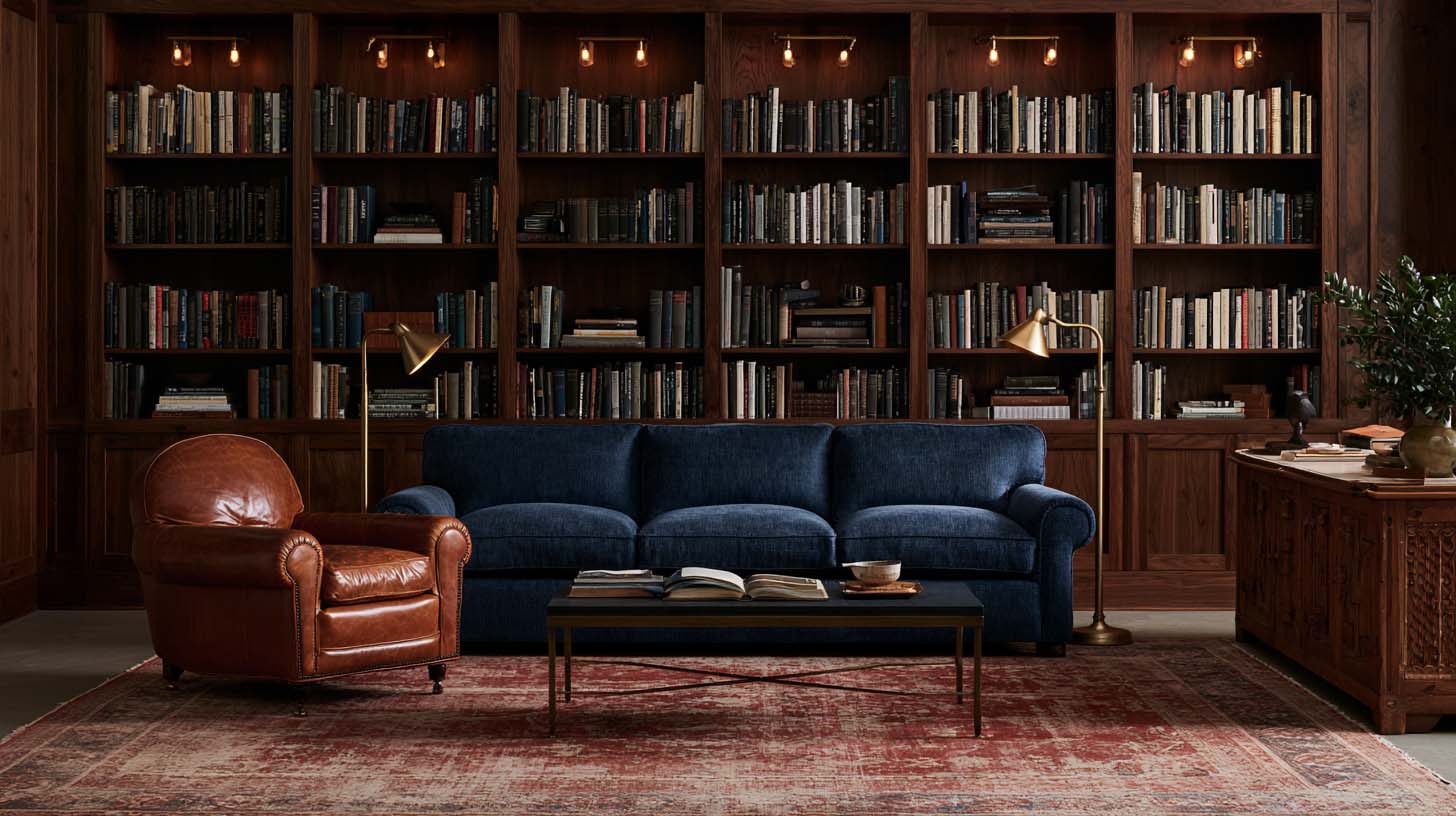
The sofa usually carries more visual responsibility than any other piece of furniture in the living room.
It is wide. Often deep. Usually upholstered in one large field of material. Everything else is forced to establish a relationship with it.
Yet the search for a masculine sofa often begins and ends with one question: leather or fabric? That is several decisions too late.
Before upholstery, there is scale. Silhouette. Arm style. Seat depth. Back height. Leg profile. Cushion construction. Visual weight. Only then should material and color enter the conversation.
A good sofa does not merely look masculine. It gives the room a center of gravity. If you are not sure whether your current sofa is doing that job, a Room Audit is a fast way to get an outside opinion.
Start With Scale Before Style
A sofa can be beautiful and still be wrong because it is the wrong size.
Measure overall width, overall depth, seat depth, seat height, back height, arm width, clearance around the sofa, and its relationship to chairs and tables.
A long living room may need an 88- or 96-inch sofa to feel properly anchored. A small room may work better with something around 76 to 82 inches.
But width alone does not tell the whole story. A 90-inch Chesterfield with deep rolled arms may provide far less usable seating than a 90-inch track-arm sofa. Those arms are occupying real square footage. That may be worth it stylistically. It simply needs to be intentional.
Seat Depth Changes How the Sofa Lives
A sofa designed for upright conversation behaves differently from one intended for lounging.
Shallower seats tend to support more upright posture. Deeper seats encourage reclining and often work better for taller users or television rooms.
Very deep sofas can become uncomfortable for shorter guests unless loose back cushions or pillows compensate.
This is one of those details that cannot be judged properly from a photograph. Sit in the sofa. Where do your knees fall? Can your feet reach the floor comfortably? Do you need a pillow behind your back? Can you stand up easily? Would you want to spend two hours there?
The answer matters more than the catalog styling.
Designer Eyes: Measure the Seat, Not Just the Sofa
We often find that homeowners know the overall sofa width but have never checked the usable seat dimensions. Measure from the inside front edge of the seat to the back cushion. Then measure between the arms. This tells you far more about how the sofa will actually function than the outside dimensions alone.
Visual Weight Determines How Masculine the Sofa Feels
Masculine living room furniture often feels substantial because its mass appears believable. Thicker arms. Deeper frame. Grounded base. Dense upholstery. Strong legs. Generous proportions.
But visual weight does not require bulk. A clean contemporary sofa can feel masculine through a low horizontal silhouette and broad seat cushions. A mid-century sofa can feel substantial through dark wood framing and strong geometry. A tuxedo sofa can feel architectural because its arms and back create one unified line.
The question is whether the sofa looks capable of anchoring the room. Not whether it looks heavy for the sake of heaviness.
Track-Arm Sofas Are Extremely Flexible
Track arms are straight and relatively narrow. This makes them useful when you want more usable seat width, cleaner lines, contemporary or transitional styling, or a sofa that does not visually dominate smaller rooms.
They work particularly well in wool, linen, velvet, mohair, and some leathers. A track-arm sofa can lean modern or traditional depending on the legs, cushion configuration, upholstery, and surrounding furniture.
This flexibility is one reason we use the silhouette so often. It contributes structure without bringing a strong historical costume with it.
Rolled Arms Add Traditional Weight
Rolled-arm sofas carry more historical association. English rolled arms. Lawson-style variations. Deep traditional arms. These can bring warmth and permanence.
They also occupy more visual and physical space. This makes them especially effective in traditional living rooms, libraries, country interiors, larger rooms, and collected spaces.
A rolled-arm sofa in cream wool or olive linen can feel more sophisticated than the predictable brown leather version. Do not assume traditional silhouette requires dark upholstery. Sometimes a lighter textile allows the frame to remain substantial without the room becoming heavy.
Chesterfields Have Tremendous Character and Baggage
The Chesterfield is one of the most recognizable sofas associated with masculine interiors. Deep button tufting. Rolled arms. Low back. Leather.
The silhouette can be excellent. It can also instantly push the room toward the gentleman's-club cliche when surrounded by every other expected ingredient. Dark paneling. Whiskey display. Leather chairs. Plaid. Brass. Old books.
The solution is not avoiding Chesterfields. It is allowing the sofa to be the historical reference while other pieces become quieter. A deep brown Chesterfield beside contemporary wool chairs can look excellent. A linen or velvet Chesterfield can also soften the stereotype.
Tuxedo Sofas Feel Architectural
A tuxedo sofa typically has arms and back at approximately the same height. The result is a strong rectangular envelope.
This makes the silhouette particularly effective in more formal contemporary, Art Deco-influenced, or luxury interiors. It is less visually casual than many track-arm sofas.
Because the frame already has strong geometry, upholstery can remain restrained. Taupe wool. Deep blue velvet. Oxblood mohair. Warm gray linen blend. The shape does much of the work.
Cleaner Contemporary Sofas Can Still Feel Masculine
Modern furniture sometimes loses visual weight because designers chase thinness. Tiny legs. Extremely narrow arms. Light gray upholstery. Very low cushions. The sofa begins disappearing.
But contemporary design does not require delicacy. Look for broad horizontal lines, substantial seat cushions, low but confident backs, strong plinths, dark wood or bronze details, dense upholstery, and one coherent silhouette.
Modern masculinity often comes from reducing unnecessary detail while preserving mass.
Leg Profile Changes the Entire Piece
Look below the sofa. Exposed turned legs create traditional character. Tapered wood legs can shift mid-century. Block feet make the piece feel heavier. A plinth base makes the sofa feel grounded and architectural. Thin metal legs can make a large sofa appear lighter.
None is inherently better. The correct choice depends on what the room needs. If every other piece of furniture is elevated on narrow legs, a grounded sofa may stabilize the room. If the room already feels heavy, exposed legs can reveal more floor and provide relief.
Loose Cushions Feel More Relaxed
Cushion construction changes character. One long bench cushion looks cleaner and more architectural. Two or three separate seat cushions create more traditional rhythm. Loose back cushions feel relaxed. A tight back looks more formal. Tufting introduces historical detail.
Again, these choices are not merely decorative. They affect maintenance and comfort. One bench cushion avoids cracks between seats but may show wear differently. Loose cushions can be rotated or adjusted. Tight upholstery stays visually controlled but provides a different sitting experience.
Leather Is Not Automatically the Best Answer
Leather works beautifully on sofas. But the room needs to benefit from it.
Choose leather when you want visible aging, a smooth counterpoint to wool or linen, strong warm color, tactile character, or a sofa that can bridge traditional and contemporary furniture.
Do not choose leather simply because the room belongs to a man. A brown leather sofa surrounded by walnut furniture and brown flooring may add less than a cream wool sofa would. Sometimes the masculine move is contrast.
Wool May Be the More Sophisticated Choice
Wool can give a sofa exceptional material presence without the visual dominance of leather. Charcoal. Olive. Brown. Taupe. Cream. Deep blue. Herringbone. Heathered textures.
The fabric feels substantial while remaining softer visually. This is especially useful when the room already contains leather chairs, a leather ottoman, or other smooth materials.
Wool is well suited to upholstery because of its resilience, comfort, durability, and aesthetic performance indoors.
Velvet and Mohair Can Add Richness
Velvet sofas do not need to become formal. A clean-lined sofa upholstered in olive, tobacco, deep blue, rust, or brown can feel deeply masculine.
The pile changes appearance as light crosses the surface, giving even restrained colors more depth. Mohair can create a similarly rich surface with its own distinctive resilience and sheen.
These materials are particularly useful when the sofa shape is simple. The textile becomes the character.
Linen Works When the Room Needs Relief
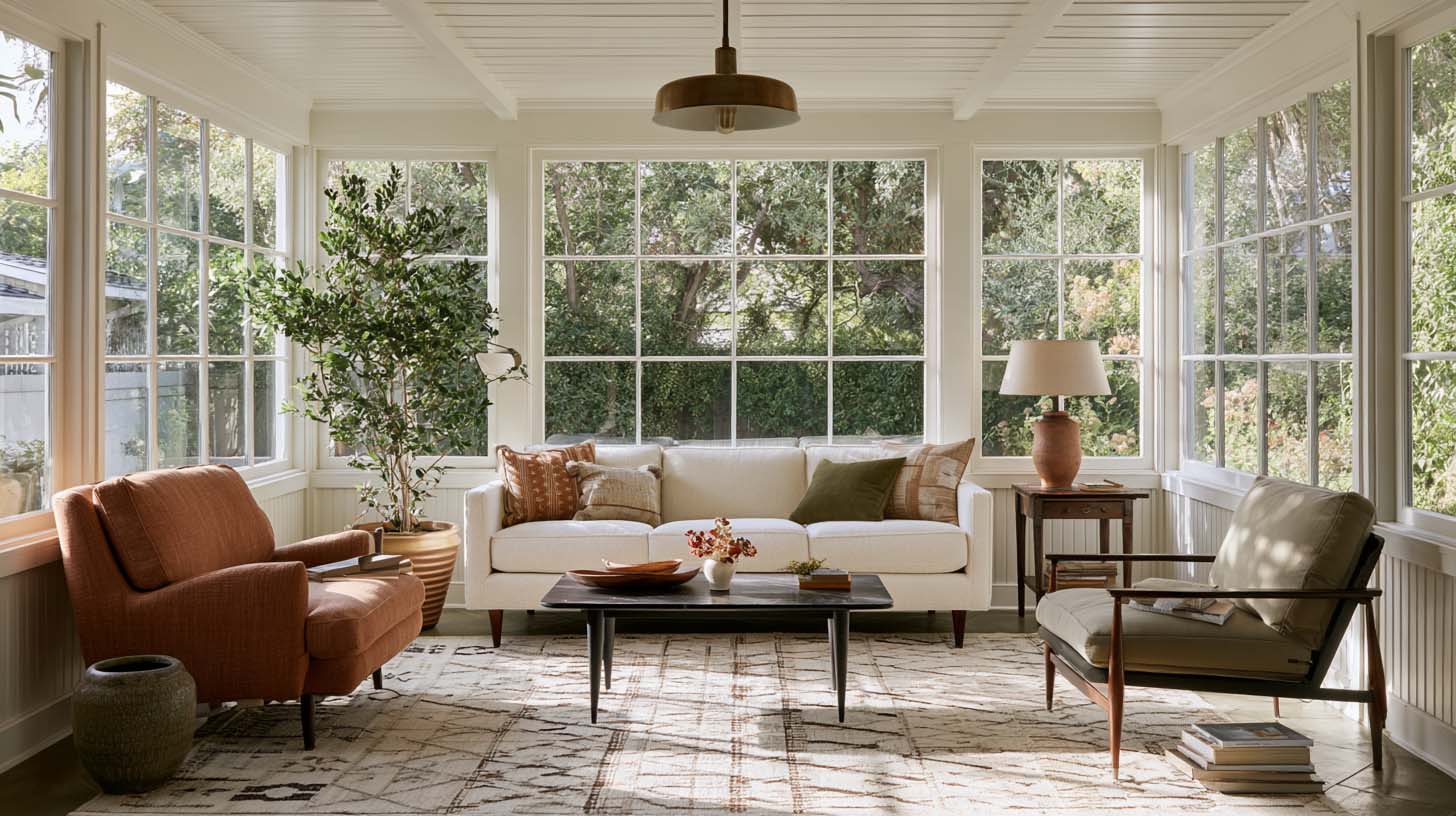
A linen sofa can be exactly right in a masculine room filled with dark wood, antique rugs, brass, books, and art. The lighter textile prevents the composition from becoming dense.
Warm ivory. Natural flax. Taupe. Muted stone. These can all feel masculine when the surrounding furniture provides enough structure. The sofa does not need to carry the entire identity of the room.
Color Should Be Chosen After the Largest Relationships
Before choosing upholstery, put these together: flooring sample, rug, wood furniture, paint, and chair fabric. Then evaluate the sofa.
The sofa is so large that getting its color wrong can force every other decision into correction mode. If the room already contains a dramatic Persian rug, perhaps the sofa becomes quiet. If the walls are mushroom and everything else is restrained, perhaps olive wool gives the room needed color. If the room contains dark paneling, a cream sofa can provide the strongest possible relief.
Sofas for Men Should Still Be Comfortable for Guests
A sofa can be optimized entirely around one owner's body. But living rooms are social spaces.
If every guest disappears into an extremely deep seat or struggles to get out of a very low sofa, the furniture is no longer functioning well. This is one reason hospitality matters when choosing masculine living room furniture.
The room belongs to you. But if you invite people into it, they should be comfortable too.
One Sofa Is Often Better Than a Matching Set
Matching sofa and loveseat packages solve one problem: they coordinate. They also remove an opportunity for contrast.
A stronger room often uses one sofa, two different chairs, and perhaps an ottoman. Now the seating group contains several silhouettes and materials. That creates a collected appearance.
Matching upholstery sets tend to make rooms feel purchased in one transaction. A masculine interior often benefits from furniture that seems to have arrived through judgment rather than packaging.
The Sofa Should Relate to the Rug
A large sofa on a tiny rug looks disconnected. A deep sofa on a very lightweight rug may also create an odd imbalance. The rug should establish enough territory to support the sofa visually.
Pattern matters too. A heavily patterned Persian rug may favor simpler upholstery. A quiet solid wool rug may allow the sofa to carry more color or texture.
These two elements occupy so much surface area that they should be selected in conversation with each other.
The Sofa Should Not Automatically Face the Television
Sometimes that is correct. But ask what the living room is for. Conversation? Reading? Entertaining? Television? Music?
The sofa orientation should respond. A room where the television is used occasionally may benefit from a sofa arranged primarily toward the fireplace or seating group. A media-heavy living room may legitimately center the screen.
The issue is not television. It is default planning.
Construction Matters More Than the Upholstery Label
A sofa should not be evaluated solely by style. Look into frame construction, suspension, cushion composition, joinery, upholstery quality, warranty, replacement cushion availability, and manufacturer reputation.
A beautiful fabric does not rescue poor construction. Likewise, a well-built sofa can often be reupholstered later if the textile eventually wears or your taste changes.
Historic museum furniture demonstrates just how long a strong frame can outlive its surface material, with early American sofas and upholstered parlor pieces showing how durable frames paired with replaceable upholstery has a very long history.
Designer Eyes: View the Sofa From the Side
Catalog photographs nearly always favor the front. But sofas are frequently seen from the side when entering a room. Look at back thickness, arm profile, legs, depth, and how the cushions sit. If the sofa floats in the room, inspect the back too. A sofa that looks excellent only straight-on is not necessarily the right object for an open floor plan.
The TMH Perspective
The best masculine sofa is not the darkest one. Or the deepest. Or the most heavily tufted.
It is the sofa whose proportions give the room authority, whose comfort matches how you live, whose material adds something the room does not already have, and whose silhouette works with the architecture.
That might be a cognac Chesterfield. It might also be an ivory wool track-arm sofa. The distinction matters.
Masculine design improves when furniture stops trying so hard to identify itself as masculine.
If you are deciding between several sofas and cannot tell which scale, silhouette, depth, or material actually belongs in your room, TMH's Full-Service Interior Design can choose the sofa together with the rug, tables, lighting, and art, so the right piece is decided before you spend thousands on the wrong one.
Frequently Asked Questions
What makes a sofa look masculine?
Scale, visual weight, arm shape, upholstery, color, leg profile, and silhouette all contribute. Leather can help, but it is not required.
What sofa color is best for a masculine living room?
Brown, olive, charcoal, deep blue, cream, tobacco, taupe, rust, and even muted red can work. Choose according to the walls, rug, flooring, and other furniture.
Is a leather sofa better than fabric for men?
Not automatically. Leather adds smoothness, visible aging, and warmth. Wool, linen, mohair, and velvet may be better when the room already contains substantial wood or leather.
What sofa style works best in a masculine room?
Track-arm, English rolled-arm, Chesterfield, tuxedo, and clean contemporary sofas can all work. The correct choice depends on the room's architecture, scale, and desired level of formality.

Facebook
Instagram
Youtube