How to Choose Furniture That Actually Fits a Masculine Space
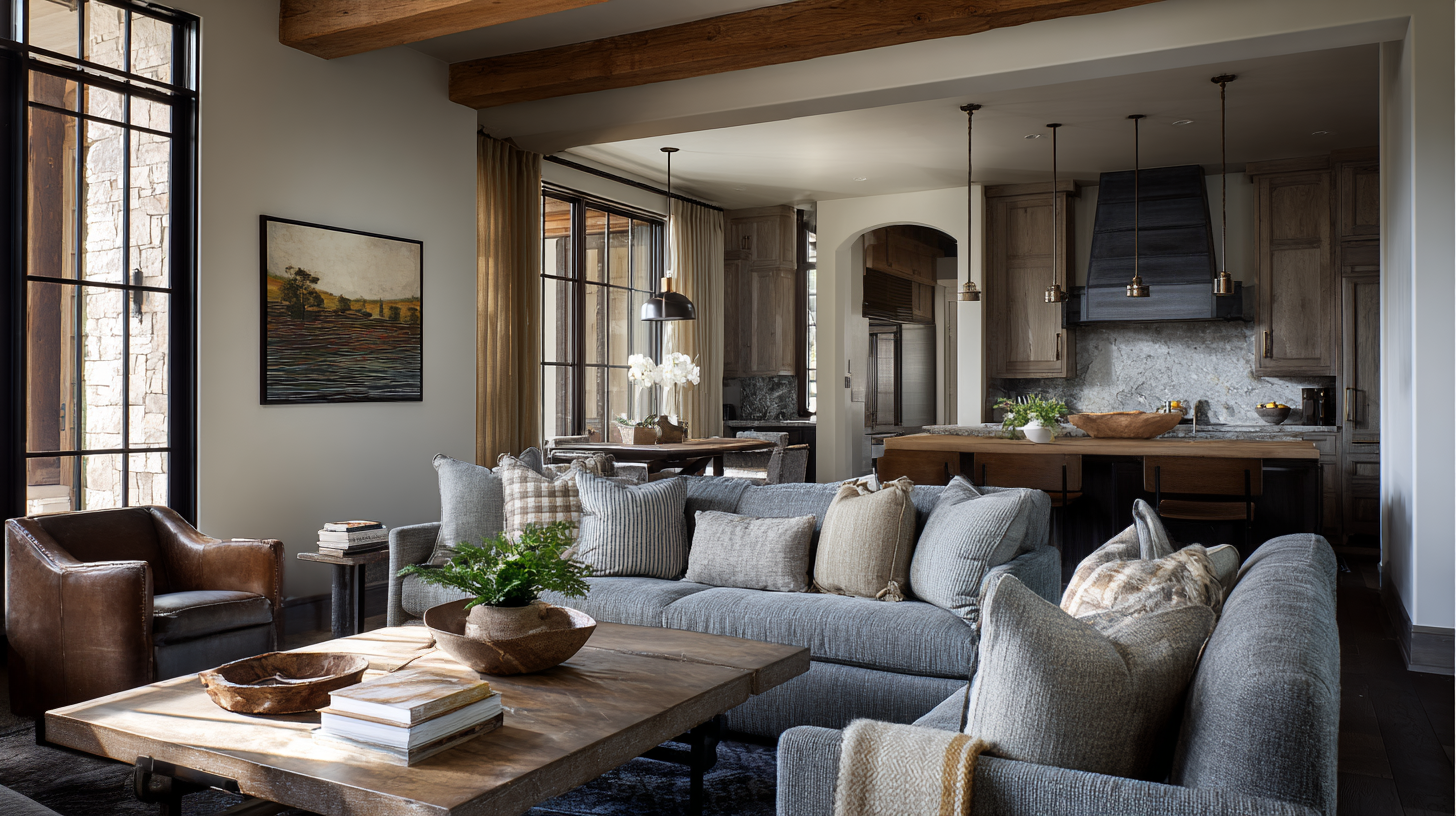
One of the most common misconceptions in interior design is that great rooms are built by collecting great furniture.
Find a beautiful sofa.
Add a pair of impressive chairs.
Choose a coffee table you admire.
Repeat until the room is full.
It sounds logical, yet it's the reason so many masculine interiors feel disconnected.
The problem isn't that the furniture is unattractive.
It's that every piece was chosen as an individual object instead of as part of a larger composition.
A room isn't experienced one piece at a time.
It's experienced all at once.
Stop Buying Furniture. Start Building Relationships.
When designers evaluate furniture, they rarely ask,
"Is this a nice chair?"
Instead, they ask,
"What relationship will this chair have with everything around it?"
That shift changes almost every purchasing decision.
A leather sofa doesn't exist by itself. It relates to the coffee table beside it, the artwork above it, the fireplace across from it, the scale of the windows, and even the ceiling height.
This is why furniture that looked perfect in a showroom can suddenly feel out of place once it's inside your home.
It was never designed for that room.
It was designed for another composition.
Designer Eyes
The next time you're considering a new piece of furniture, don't imagine it sitting alone against a white showroom wall.
Picture it inside your room.
Does it reinforce what's already there, or does it demand that everything else adjust to accommodate it?
The best furniture usually strengthens the room you already have rather than asking the room to revolve around it.
Pay Attention to Visual Weight
Visual weight is one of the fastest ways to tell whether furniture belongs in a space.
Imagine placing an ultra-thin, delicate coffee table inside a room with dark paneled walls, exposed beams, and a substantial leather sectional.
Nothing is technically wrong with the table.
Yet it immediately feels overwhelmed.
The opposite happens just as often.
Heavy, oversized furniture can make an otherwise light and elegant room feel compressed.
Neither problem is about size alone.
It's about presence.
Masculine interiors often benefit from furniture that feels grounded. Pieces with substantial frames, generous proportions, natural materials, and visible craftsmanship create a sense of permanence without necessarily becoming oversized.
The goal isn't bulk.
It's confidence.
Let the Architecture Set the Scale
One of the easiest mistakes to make is choosing furniture based solely on floor dimensions.
The room, however, is much more than its square footage.
Ceiling height changes how substantial furniture should feel.
Wide walls can comfortably support larger artwork, longer consoles, and more generous seating arrangements.
Narrow architectural openings often call for restraint.
A room's proportions should influence your furniture just as much as the tape measure does.
When furniture responds to the architecture instead of simply fitting inside it, the entire space feels more resolved.
Choose Materials That Tell the Truth
Masculine interiors tend to age beautifully because they celebrate materials that become more interesting over time.
Solid walnut develops character.
Full-grain leather gains patina.
Natural stone acquires subtle variation through use.
These materials don't hide their age.
They embrace it.
Furniture that imitates these qualities rarely produces the same feeling.
When something appears substantial but feels hollow, or imitates wood while revealing itself as printed laminate, there's a quiet disconnect between appearance and reality.
People may not consciously identify why the room feels less convincing.
They simply sense it.
Authenticity has a way of communicating itself without explanation.
Every Piece Doesn't Need to Be the Hero
Many rooms become visually exhausting because every purchase was intended to make a statement.
The bold chair.
The sculptural coffee table.
The dramatic lighting.
The oversized artwork.
Individually, they're attractive.
Together, they compete for attention.
The strongest masculine interiors understand hierarchy.
A room usually benefits from one or two defining pieces that establish its identity, while everything else quietly reinforces them.
Think of a well-composed piece of music.
There's a melody that leads.
The remaining instruments exist to support it.
Furniture works much the same way.
When every piece tries to become the focal point, the room loses clarity.
Furniture Should Hold the Room, Not Fill It
Many people think furnishing a room is simply a matter of occupying empty space.
Design is asking a different question.
What allows this room to feel settled?
Sometimes that's a larger sofa that anchors the seating area.
Sometimes it's replacing three small accent tables with one substantial coffee table.
Sometimes it's choosing one exceptional chair instead of two forgettable ones.
The goal isn't to own more furniture.
It's to create a room where every piece feels like it belongs exactly where it is.
When furniture is selected through relationships, proportion, material, and restraint, the room stops feeling assembled.
It begins to feel inevitable.
Continue Building Your Eye for Design
Choosing the right furniture is less about finding impressive individual pieces and more about understanding how every element works together to create a cohesive room. Once you begin seeing those relationships, every design decision becomes clearer.
The Masculine Interior Style Guide expands on these ideas with detailed guidance on room layouts, furniture selection, proportion, lighting, paint colors, materials, styling techniques, and the defining characteristics of ten timeless masculine interior styles. It's the same design philosophy we use to transform client homes into spaces that feel intentional, balanced, and built to last.
Whether you're furnishing your first room or refining an entire home, the guide provides a practical framework for making confident decisions at every stage of the process.
Explore The Masculine Interior Style Guide →

Facebook
Instagram
Youtube