How to Choose a Masculine Leather Chair
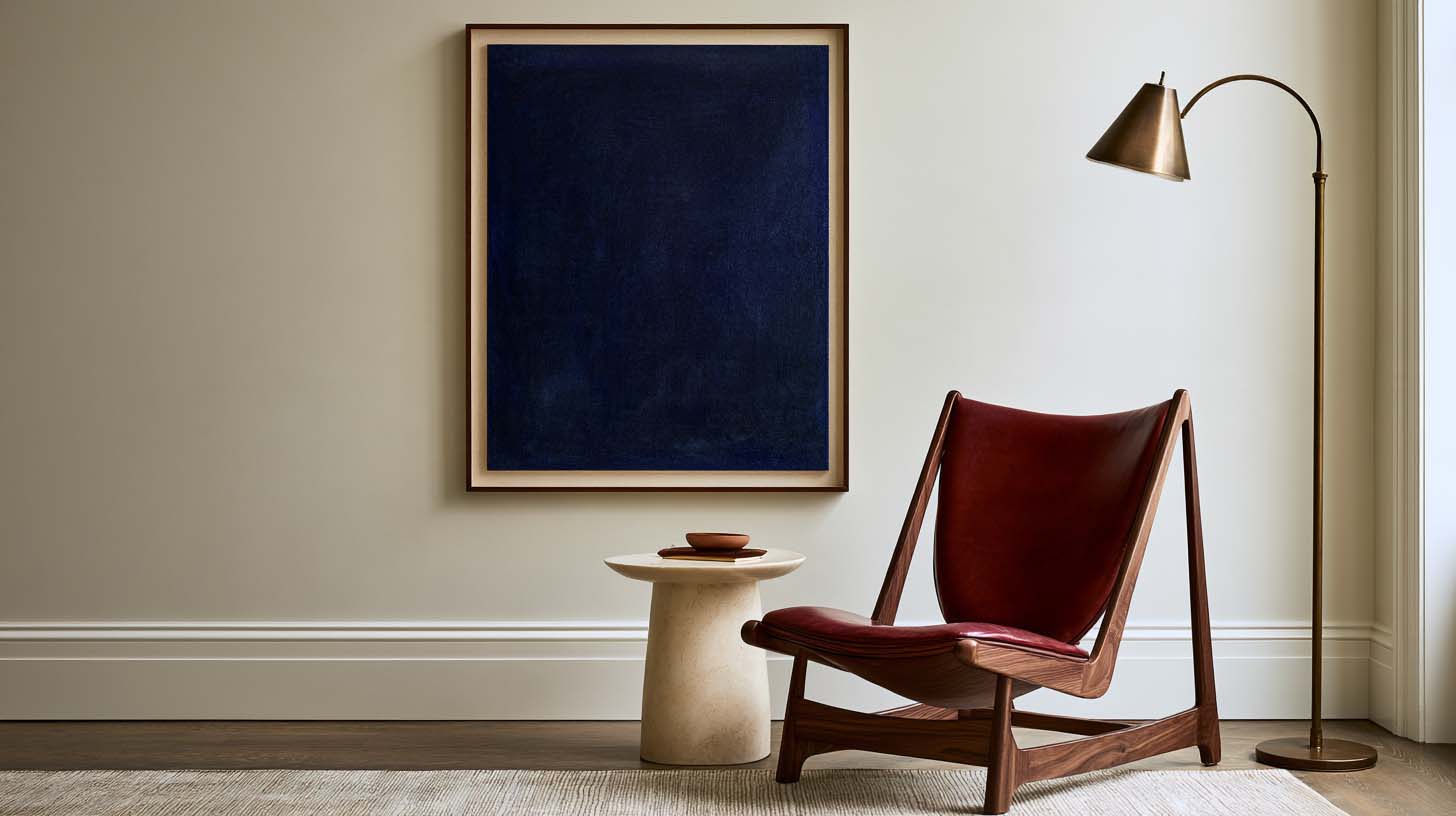
Few pieces of furniture have been marketed to men as aggressively as the leather chair.
The formula is familiar.
Dark brown hide.
Deep tufting.
Oversized arms.
Perhaps brass nailheads.
Place it beside a whiskey cart and the room has apparently become masculine.
But a good masculine leather chair deserves more thought than that.
The best examples are not simply dark, heavy, or old-looking. They are comfortable enough to use regularly, appropriately scaled for the room, made from leather suited to the way you want it to age, and shaped strongly enough that the chair would still be interesting even if the upholstery changed.
Leather is one of the few furniture materials that can become more personal through use.
That is why choosing the right chair matters. If you are not sure whether your current chair suits the room it sits in, a Room Audit is a fast way to get an outside opinion.
Start With the Chair Type
Before leather grade, color, or patina, decide what the chair is supposed to do.
A club chair and a desk chair are solving completely different problems.
Leather club chair
The club chair is low, deep, and visually grounded.
It works especially well in:
living rooms
libraries
studies
lounges
reading corners
Its strength comes from mass.
Broad arms, deep cushions, and a low center of gravity make it feel settled into the room.
The danger is bulk. A giant club chair in a small room can consume far more visual territory than expected.
Wingback chair
A wingback introduces height.
That can be useful when most surrounding furniture sits low.
Traditional versions can feel formal, but cleaner silhouettes work surprisingly well in transitional and contemporary rooms.
Leather intensifies the form because the upholstery emphasizes the chair's vertical planes.
Lounge chair
Modern leather lounge chairs can be much lighter visually.
Think lower backs, exposed wood, sculptural frames, and less upholstery.
These are excellent when you want leather without bringing in the visual weight of a traditional club chair.
Cigar chair
"Cigar chair" is used loosely in the furniture market, but the general idea is usually a substantial lounge or club chair associated with relaxed seating.
Do not buy the category.
Buy the chair.
If it is comfortable, well scaled, and beautifully built, the label is irrelevant.
Desk chair
A leather desk chair has different requirements again.
Arm height.
Seat height.
Swivel.
Tilt.
Lumbar support.
Clearance beneath the desk.
A beautiful vintage-looking chair is useless if you work eight hours a day and cannot maintain a comfortable posture.
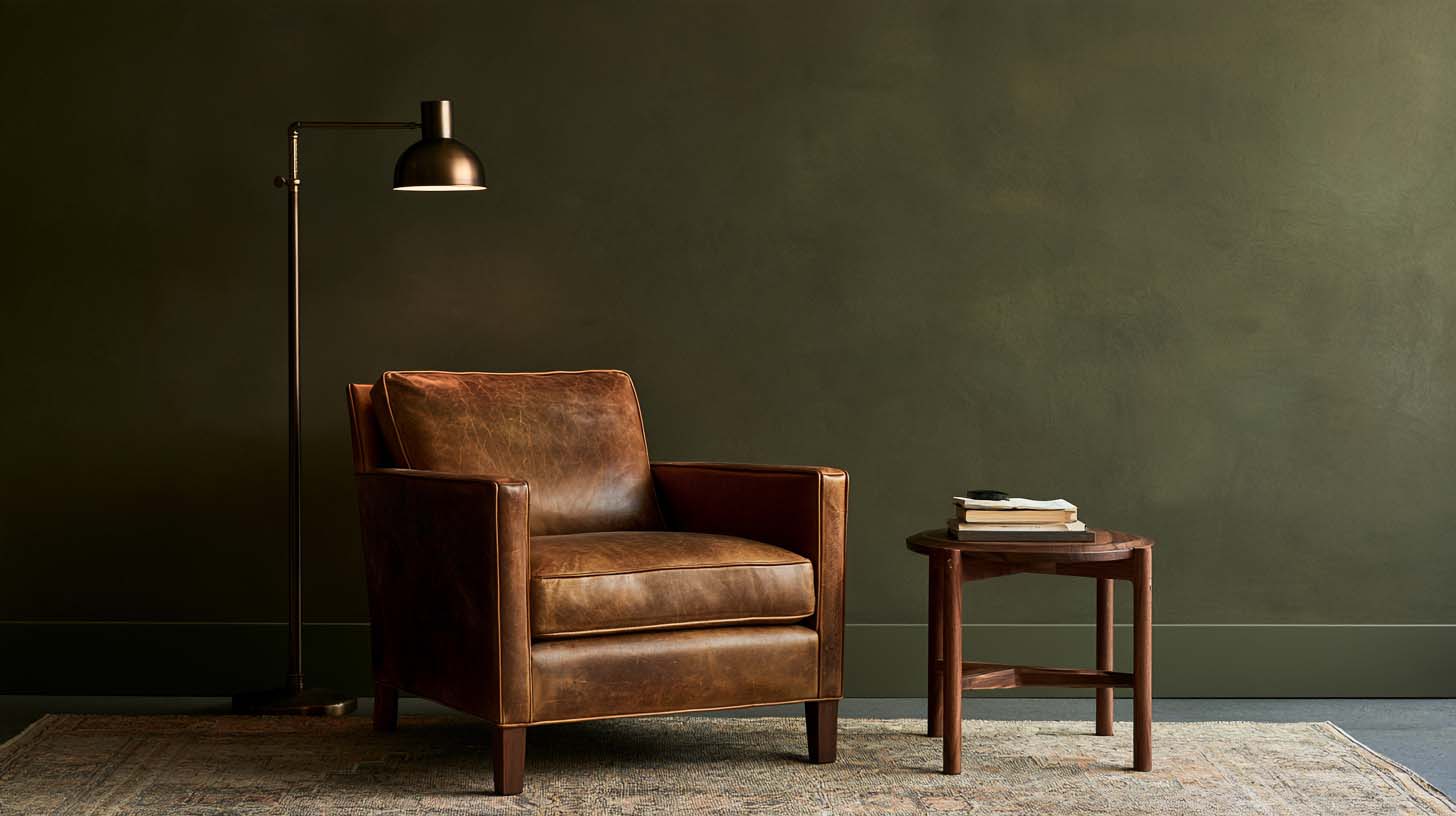
The Leather Finish Determines How It Will Age
This is where shopping terminology becomes useful.
Aniline leather has little or no pigmented surface coating, leaving the natural grain more visible. Aniline leather is more absorbent, so it develops a distinctive patina over time as it responds to wear, oils, and use. Pigmented leather receives a more protective surface finish and generally remains more visually uniform.
Neither is automatically better.
The correct question is:
What do you want the chair to look like in ten years?
If you want the surface to record use visibly, aniline leather may be appealing.
If you prefer greater resistance to staining and a more consistent appearance, a more protected finish may make more sense.
A chair used occasionally in a private study has a different life from one used daily by children, pets, guests, and coffee-drinking adults.
Patina and Damage Are Not the Same Thing
Patina is one of the most overused words in furniture marketing.
It can describe genuine surface evolution.
It can also become a polite word for damage.
Good aging might include:
Softening.
Creasing.
Subtle color variation.
Darkened contact points.
A surface becoming more individual through use.
Damage may include:
Cracking from neglect.
Peeling coatings.
Severe dryness.
Deep stains.
Broken seams.
Collapsed cushions.
Patina should make the chair more interesting without making it less functional.
This distinction matters enormously when buying vintage leather furniture.
Distressed Leather Is Not the Same as Naturally Aging Leather
Some new chairs are distressed at the factory.
Edges are darkened.
Surfaces are rubbed.
Color variation is applied.
Artificial marks imitate wear.
That can look convincing.
It can also look theatrical.
Real wear tends to have logic.
The front edge of the seat changes where legs repeatedly contact it.
Chair arms age where hands rest.
The back remains relatively untouched.
Sunlight may affect one side more than another.
Naturally aging leather becomes irregular because human use is irregular.
Artificial distressing can sometimes appear too evenly distributed.
If what you value is the idea that the chair becomes yours over time, start with leather capable of aging rather than leather designed to look as though someone else already used it for forty years.
Do Not Buy Leather by Grade Language Alone
Terms like full grain and top grain are useful, but they do not tell you everything about the chair.
Furniture quality also depends on:
Frame construction.
Suspension.
Foam or cushion fill.
Stitching.
Panel selection.
Hide matching.
Leather thickness.
Finish.
Joinery.
Overall upholstery craftsmanship.
A beautiful hide stretched over a poorly constructed frame remains poor furniture.
This is one reason we prefer evaluating the entire object instead of treating "full grain" as a magic phrase.
Hide Character Should Look Natural
Leather is animal hide.
Natural grain variation should not surprise you.
Small wrinkles.
Subtle tonal shifts.
Minor natural marks.
These can make leather more convincing.
The degree of visible variation depends strongly on processing and finishing.
Highly pigmented leather will usually appear more uniform.
Less corrected surfaces reveal more of the original hide.
That does not mean every visible mark is desirable.
You are still evaluating a furniture surface.
But perfectly identical panels can sometimes make leather feel more manufactured than luxurious.
Brown Is Not the Only Leather Color
Brown remains popular because it ages well visually and coordinates easily with wood.
But brown includes many different personalities.
Cognac
Warm, orange-brown, visually active.
Excellent with:
Olive.
Deep blue.
Cream.
Walnut.
Blackened metal.
Faded red rugs.
Tobacco
Slightly quieter and earthier.
Works beautifully in traditional, rustic, and Modern Heritage rooms.
Chocolate
Deep and stable.
Useful where the chair should carry substantial weight.
Be cautious in rooms already dominated by dark brown furniture.
Espresso
Almost black-brown.
Excellent when you want a darker chair without the sharpness of pure black.
Oxblood
One of the most distinctive choices.
Oxblood leather can become almost a neutral in a room containing walnut, brass, olive, cream, and traditional rugs.
Black
Black leather can feel extremely modern.
Use warmer materials around it if the room begins feeling cold.
Cushion Construction Matters More Than Tufting
A tufted chair can look impressive.
That does not tell you whether the seat is comfortable.
Look at what supports you.
Foam density.
Down or feather wrap.
Spring construction.
Webbing.
Loose cushion versus fixed seat.
Seat angle.
Back pitch.
A deep club chair may look inviting but feel strangely stiff.
Another may swallow you so completely that getting out becomes work.
Sit for several minutes.
Do not test the chair for fifteen seconds in a showroom.
You are trying to discover what happens after the novelty wears off.
Designer Eyes: Look at the Chair Without Its Leather
This is one of the best ways to judge the form.
Imagine the exact chair upholstered in cream wool.
Would you still like the silhouette?
If the answer is no, the design may be relying too heavily on the symbolism of leather.
A strong chair should have good proportions before the hide is added.
Scale Is More Important Than Masculine Styling
Leather chairs for men are often oversized because "substantial" gets confused with "large."
But a chair should relate to:
The sofa.
Side table.
Rug.
Room dimensions.
Ceiling height.
Nearby cabinetry.
A large traditional club chair may be perfect in a library with tall shelves.
The same chair can suffocate a small apartment lounge.
Likewise, a very slim leather lounge chair may disappear beside an enormous sectional.
Scale creates authority more reliably than bulk.
A Leather Chair Needs a Surface Within Reach
This seems minor.
It is not.
A chair used for reading or drinking needs somewhere for:
A book.
Glass.
Coffee.
Phone.
Glasses.
That side table should be close enough to use without leaning halfway out of the chair.
Once you start thinking this way, the chair becomes part of an activity rather than an isolated decorative object.
That is where interiors begin feeling lived in.
Pair Leather With Materials That Contrast
Leather becomes more interesting beside materials unlike itself.
Wool.
Linen.
Stone.
Wood.
Ceramic.
Plaster.
Metal.
A cognac leather chair beside another cognac leather chair, a brown leather sofa, and a leather ottoman loses much of what makes it distinctive.
One leather chair beside a wool sofa immediately becomes a material accent.
That is usually stronger.
Old Leather Can Bridge New Furniture
A vintage leather chair may be particularly valuable in a newly furnished room.
New sofa.
New table.
New lamp.
New rug.
One old chair introduces chronology.
It tells the eye that not everything arrived on Tuesday.
This is part of what makes leather so useful in collected interiors.
Its surface can visibly communicate age.
The Chair Should Look Better Because It Is Used
This is the real test.
If you are terrified to sit in it because the leather might crease, you have bought the wrong object.
Furniture should be used.
A good leather chair becomes more convincing when the surface records that use gracefully.
That is a form of luxury very different from keeping something pristine.
It is an object designed to remain with you.
The TMH Perspective
We would rather see one excellent leather chair in a room full of wool, wood, books, stone, and art than an entire matching leather furniture set.
The chair becomes stronger because it is not repeated.
Its color matters more.
Its aging becomes more visible.
Its history becomes part of the room.
A masculine leather chair should not simply look established when it arrives.
It should be capable of becoming established because you kept using it.
If you are choosing between several expensive chairs and cannot tell which silhouette, leather, scale, or color actually works in your room, TMH's Full-Service Interior Design can select the chair as part of the whole room before you buy.
Frequently Asked Questions
What type of leather chair ages best?
Leather capable of developing visible patina, particularly less heavily pigmented aniline leather, can become more visually individual through use. Maintenance requirements and lifestyle should still guide the decision.
What color leather chair is most masculine?
Cognac, tobacco, chocolate, espresso, oxblood, and black can all work. The right color depends on the surrounding wood, wall color, rug, and upholstery.
Is a leather club chair good for a small room?
It can be, but check overall width, depth, arm size, and circulation. Some club chairs are much bulkier than they appear in photographs.
Is distressed leather real patina?
Not necessarily. Distressing may be applied during manufacturing, while patina develops naturally through use and time.

Facebook
Instagram
Youtube