Masculine Guest Room Ideas That Feel Considered
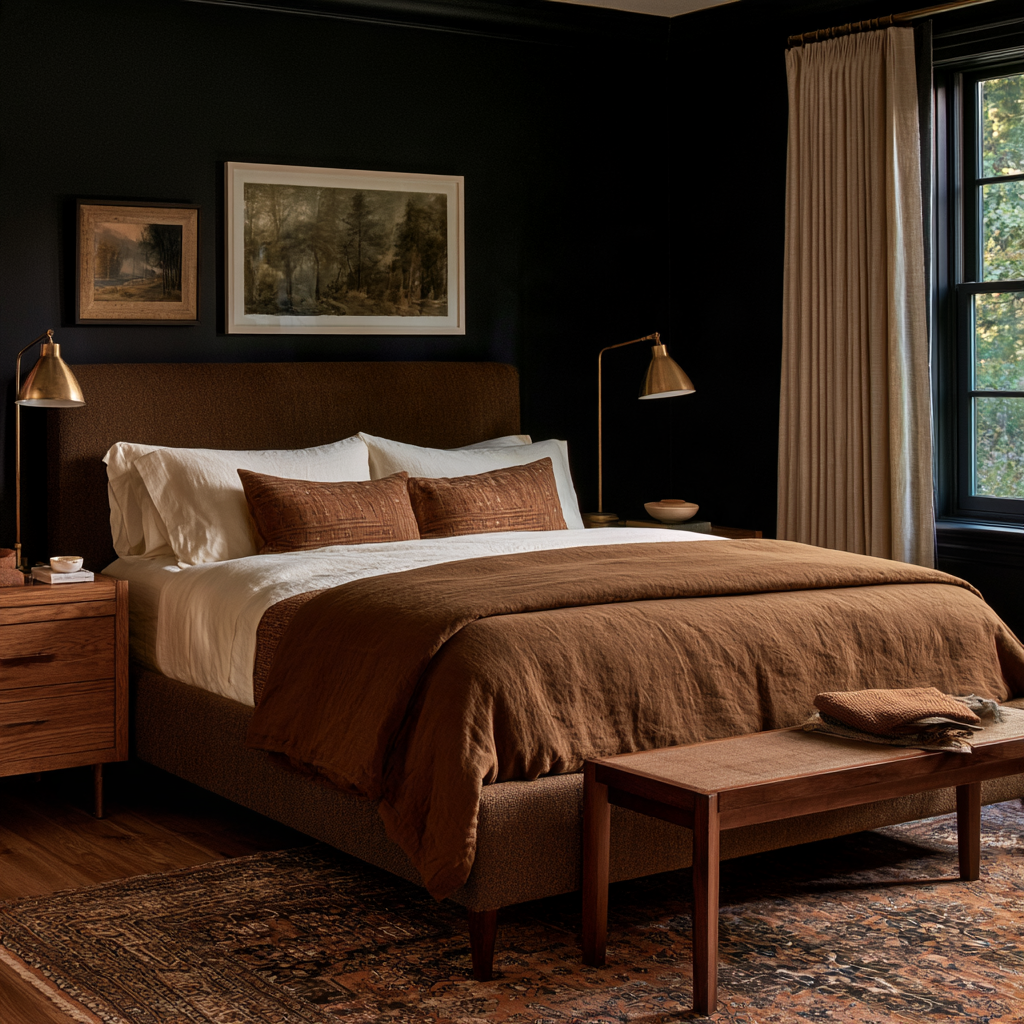
Guest rooms often become the final destination for furniture nobody knew what to do with. Old bed. Previous nightstands. Lamp from the old apartment. Extra dresser. Artwork that no longer works downstairs. Perhaps a chair if one survived. Technically, the room is furnished. But it feels unmistakably secondary.
A good guest room should communicate something different. We expected you. That is the central idea behind the best masculine guest room ideas. The room does not need to imitate a hotel. It does not need a basket containing twelve individually wrapped amenities.
It needs a proper bed. Good bedding. Useful lighting. Somewhere for luggage. Accessible power. Enough closet space. Water. Privacy. A few thoughtful objects. And enough masculine character that it still belongs to the rest of the home. Hospitality is not decoration.
It is preparation. If you are not sure what your own guest room still lacks, TMH's Full-Service Interior Design can plan the room so guests feel expected.
Start With the Experience of Arriving
Imagine entering the room carrying a suitcase, phone, laptop, coat, and perhaps a toiletry bag. Where does everything go? This is where guest-room design should begin. The guest should not have to place a suitcase on the bed and leave it there.
Or discover that every horizontal surface is covered in decor. Or crawl behind a nightstand to find an outlet. A good guest room quietly answers the practical questions before they arise.
Give the Suitcase Somewhere to Land
This is one of the clearest signs of a considered guest room. Bench. Luggage rack. Sturdy low table. A clear section of furniture. The surface should be large and strong enough to hold an actual suitcase. A bench at the foot of the bed can work beautifully if circulation permits.
In a smaller room, a folding luggage rack is often more useful than an unnecessary chair. Do not force the guest to choose between the floor, the bed, and the dresser. The luggage deserves a place.
Leave Some Storage Empty
A guest room closet filled entirely with your overflow storage is not really a guest closet. Leave several hangers, a section of hanging space, and perhaps one or two empty drawers for longer stays. The room can still store household items. Just do not use every available inch. Hospitality requires a little capacity.
Hangers Should Actually Match the Clothes a Guest May Bring
A few proper hangers are better than fifteen random wire hangers. Include enough for shirts, jackets, dresses if guests vary, and perhaps one trouser hanger. This sounds excessively specific until someone arrives with clothes that should not spend three days folded in a suitcase. The guest room should anticipate ordinary travel.
The Bed Should Be Good Enough for Someone You Like
The guest room is often where old mattresses go. This is not always unreasonable. A lightly used mattress may be perfectly suitable. But if the bed is uncomfortable enough that you would not willingly sleep there, reconsider it. Hospitality does not require your most expensive mattress.
It does require reasonable comfort. The National Heart, Lung, and Blood Institute recommends keeping the sleep environment quiet, cool, dark, and comfortable as part of healthy sleep habits. (NHLBI, NIH) That is a useful design standard. Comfort matters more than styling.
Bedding Should Feel Fresh, Not Over-Styled
Guest bedding should communicate cleanliness first. Good sheets. Proper duvet or blanket. Enough pillows. Perhaps one additional quilt or throw. You do not need ten decorative cushions that the guest has to relocate before sleeping. A restrained bed looks more inviting precisely because it appears usable.
Use Bedding That Is Easy to Maintain
Guest bedding gets washed, stored, remade, and sometimes used by different people in succession. Choose materials that fit your willingness to maintain them. Cotton is straightforward. Linen can create a more relaxed character. A washable quilt can add texture.
Wool blanket can provide warmth in cooler months. The room should not depend on a fragile textile system that makes preparing for guests difficult.
Give the Guest More Than One Pillow Type if Practical
People sleep differently. One very thin pillow and one enormous decorative pillow are not much of a choice. If space allows, keeping a slightly softer and firmer sleeping pillow available can make the room more accommodating. You do not need a hotel pillow menu. You are simply acknowledging that comfort is personal.
Darken the Room Properly
A beautiful guest bedroom can become unpleasant at 6 a.m. when sunlight pours through decorative sheer curtains. If the room receives strong outdoor light, give the guest a way to control it. Room-darkening shade. Lined curtain. Blinds paired with drapery.
NIH guidance recommends a quiet, cool, dark sleeping environment, while CDC guidance similarly suggests opaque window coverings where exterior light interferes with sleep. (NHLBI, NIH) The window treatment should be attractive. It should also work.
Privacy Should Be Obvious
Do not make guests wonder whether the door locks. Or whether the bathroom window is visible from outside. Or whether curtains actually close. Privacy is one of those design elements that matters most when absent. Check the bedroom lock, window covering, bathroom door, bathroom glazing, and sightlines. A guest should not need instructions for how to make the room private.
Bedside Lighting Should Be Reachable From Bed
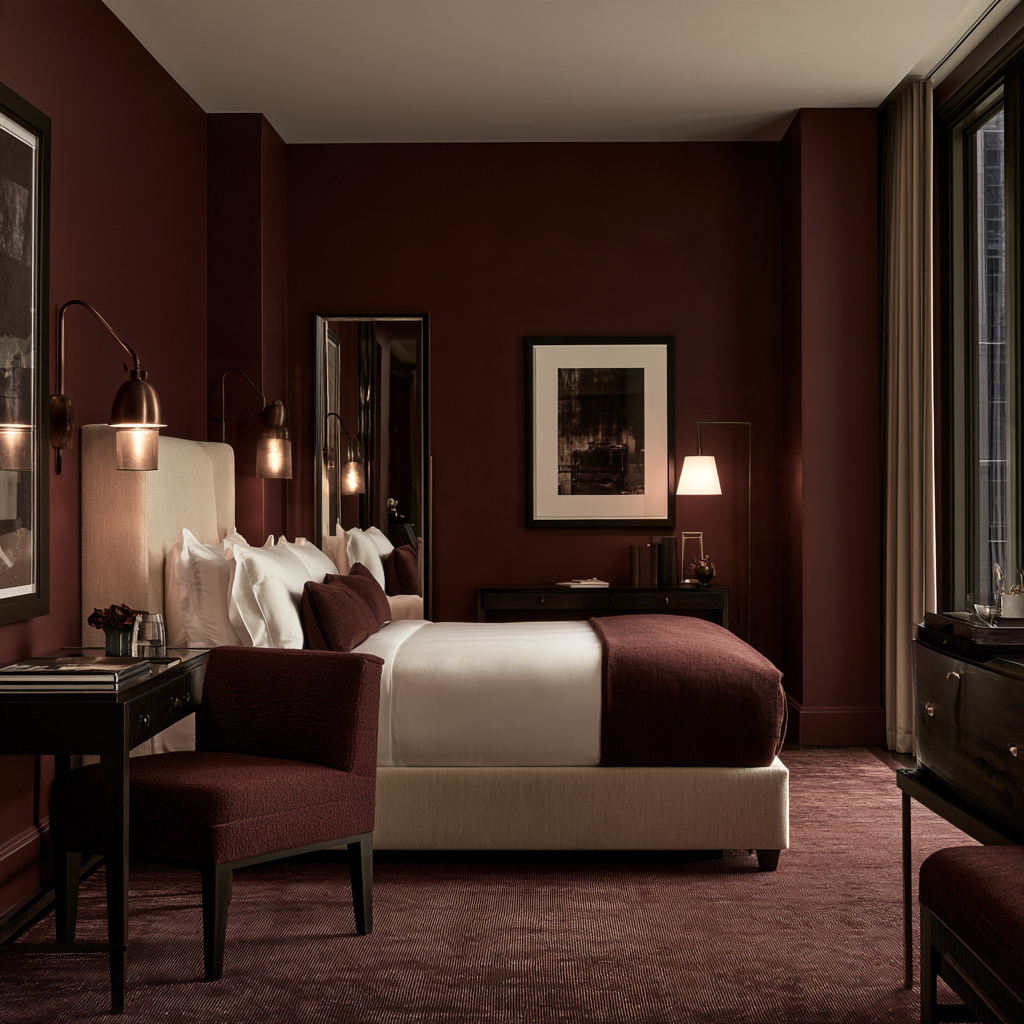
This sounds obvious. Yet many guest rooms require standing up to turn off the light. Give each side of a shared bed a reachable source where practical. Table lamp. Wall sconce. Pendant in the right application. A single central ceiling fixture is not enough. A guest should be able to read briefly, set down a book, switch off the light, and go to sleep without navigating a dark unfamiliar room.
Lamps Should Be Simple to Operate
Guest rooms are not the place for an invisible smart-lighting puzzle. If the lamp has an unusual switch, the guest will discover it when tired. Simple controls are a form of hospitality. That applies to lamps, shades, the ceiling fan, the thermostat where independently controlled, and the television. Make the room legible.
Provide a Low Light for Night Movement
Guests may wake in an unfamiliar room needing the bathroom. NIOSH guidance recommends keeping the sleep environment dark while still maintaining a clear path for nighttime movement; dim low-level lighting can be useful where needed. (CDC)
In design terms, this might be a very dim night light, a low hallway light, or a bathroom light that does not flood the bedroom. The goal is not decorating with technology. It is making nighttime navigation easier.
Accessible Outlets Matter More Than USB Gadgets
A guest should not move furniture to charge a phone. Check both sides of the bed. Can a standard charger reach an outlet? Is there a usable outlet near a desk or dresser for a laptop? Integrated USB ports can be convenient, but connector standards change.
A well-positioned electrical outlet remains the more durable solution. If electrical work is required, use a qualified professional and applicable code requirements.
Give the Nightstand Free Surface
Guest-room nightstands are often styled heavily because they are photographed heavily. Lamp. Books. Plant. Candle. Decorative box. Picture frame. Clock. Now there is nowhere to put a phone, glasses, or water. A guest nightstand needs available territory. Perhaps a lamp, one small object, and space. That is enough.
Water Is a Small Gesture With Outsized Value
A carafe and glass. Or simply a sealed bottle placed before arrival. This keeps a guest from wandering through an unfamiliar house late at night looking for the kitchen. You do not need a minibar. The gesture is useful because it anticipates a likely need.
The Guest Room Should Explain the House Quietly
Does the guest know: Where towels are? Which bathroom to use? Where the light switch is? How to connect to Wi-Fi if they need it? You do not need signs everywhere. In a frequently used guest room, a discreet card in a drawer can be useful for practical information. The best hospitality removes uncertainty without turning the bedroom into an Airbnb.
Towels Should Be Easy to Identify
If the guest uses a dedicated bathroom, the answer is simple. Fresh towels are already there. If the bathroom is shared, provide a clearly designated set. Bath towel. Hand towel. Washcloth if you use them. The guest should not need to decide which household towel they are allowed to touch.
The Guest Bathroom Is Part of the Guest Room
The bedroom may be perfect. If the nearby bathroom has no clean towel, empty soap, poor lighting, visible grooming clutter, or no toilet paper, the experience is incomplete. Hospitality travels beyond the room itself.
A Guest Room Does Not Need a Dresser Automatically
For short stays, luggage surface and hanging storage may matter more than six large drawers. In smaller rooms, a dresser can consume valuable floor area without solving the most important guest needs. Ask how long people usually stay. One or two nights? A week? Longer? Furniture should follow use.
A Desk Can Be Valuable
Guests increasingly travel with laptops. If the room permits, a modest writing desk can be useful. It also provides a second surface, a chair, a mirror location, a lamp, and a place to write. But do not squeeze a desk into a small room at the expense of bed circulation and luggage. Guest rooms benefit from capability. Not furniture density.
The Chair Should Have a Reason
A chair can provide somewhere to put shoes on, a place to read, and a seat away from the bed. That is useful. But if a bench already solves dressing and luggage, perhaps the chair is redundant. Guest rooms are often small. Use the available square footage for the most likely activities first.
Do Not Use the Guest Room as a Furniture Graveyard
This is the philosophical problem. The room should not contain every rejected object from the rest of the house. Old bed. Old lamp. Old dresser. Old art. Old rug. That creates a room with no independent identity. Some inherited pieces can absolutely work. But choose them again. Ask: Does this belong here? If yes, keep it. If not, the guest room deserves a better answer than exile.
Masculine Character Should Be Neutral Enough to Receive Different People
A masculine guest bedroom can still belong unmistakably to the home. Perhaps walnut, olive, deep blue, warm ivory, bronze, a traditional rug, and good art. The room does not need to become aggressively masculine. Avoid turning it into a cigar room with a bed, an automotive theme, a sports room, or an industrial black box.
The guest room is shared territory. Its character should be specific without asking the guest to occupy someone else's fantasy.
Warm Ivory Is Excellent in Guest Rooms
Guest rooms often benefit from lighter walls because they help unfamiliar spaces feel approachable. Warm ivory. Mushroom. Muted blue. Taupe. Soft olive. These can create enough character without making the room feel heavy. Then masculinity comes through wood, lighting, art, the rug, and furniture silhouette. The entire room does not need a dark paint color.
Deep Color Can Still Work
A small guest room can be forest green, deep blue, tobacco, or oxblood if the atmosphere supports it. Balance with lighter bedding, warm lamps, art, a good window treatment, and natural wood. The room should feel enveloping, not claustrophobic.
Artwork Gives the Guest Room Identity
Guest-room art is often generic because the room is seen as neutral territory. It does not have to be. Landscape. Photography. Original work. Historical print. Maps. A good piece of art gives the room an actual point of view. Avoid art so personal that it becomes uncomfortable.
But do not remove personality entirely. A guest room should still feel like part of your home.
Books Can Be Useful in Small Numbers
A guest may enjoy a few short stories, local history, a photography book, a travel book, or something tied to the area. You do not need to create a fake decorative stack. A handful of books that can actually be read is enough.
The Room Should Not Smell Strongly
A clean room needs little fragrance. Fresh bedding. Ventilation. Clean carpet or rug. No stale closet odor. If you use fragrance, keep it subtle. Guests have different sensitivities. The room should not confront them with an aggressive candle or diffuser they cannot escape while sleeping.
Temperature Matters
People differ dramatically in sleep temperature preference. Make the bed adaptable. A lighter main layer. Extra blanket nearby. Perhaps a ceiling fan where appropriate. Do not bury the guest beneath one enormous fixed bedding system with no option. Again, preparation beats decoration.
Give the Guest a Mirror
A full-length mirror is particularly useful. If that is not possible, at least provide a sufficiently sized mirror somewhere outside the bathroom if the layout allows. This reduces traffic and makes dressing easier. The mirror can also add vertical scale and reflect light. Function and design align nicely here.
Leave a Hook Somewhere Useful
A simple hook behind the door or inside the closet can hold a robe, jacket, bag, or tomorrow's clothes. A tiny detail. Very useful. Good guest rooms contain many of these small quiet decisions.
Protect Guests From Furniture Hazards Too
Guest rooms frequently contain dressers or storage furniture that may not be used every day. They still need to be safe. The CPSC continues to warn that unstable clothing-storage units can pose serious tip-over and entrapment hazards, particularly for children, and federal requirements now govern stability performance for these products. (U.S. Consumer Product Safety Commission)
If children may ever use the guest room, furniture anchoring deserves particular attention. Safety does not become optional because a room is used occasionally.
Designer Eyes: Sleep in the Guest Room Once
This may be the most valuable guest-room test. Spend one night there. Do not pretend to be a designer. Pretend to be the guest. Can you charge your phone? Turn off the lamp from bed? Find the bathroom? Does exterior light enter at dawn? Where does your suitcase go? Is there anywhere to hang clothes? Does the room get too hot? Is the mattress comfortable? What do you discover at 11:30 p.m. that was invisible at noon? Use that information.
The Guest Room Should Reset Easily
After someone leaves, the room should be straightforward to prepare again. Laundry. Fresh towels. Trash. Water. Bed. Surface cleaning. This argues for restraint. Fewer unnecessary decorative objects means easier cleaning and resetting. Hospitality becomes more sustainable because preparing for someone is not a decorating project every time.
The TMH Perspective
The best guest rooms are not impressive because they contain more amenities. They feel good because the owner anticipated the ordinary experience of staying there. Where the luggage goes. How the lights turn off. Where the phone charges. What happens when someone wakes at night. Whether the room becomes dark. Where the towel is. Whether there is enough closet space.
That is hospitality expressed through design. A masculine guest room can still carry walnut, leather, dark paint, traditional rugs, bronze, and substantial furniture. It should simply remember who the room is for. Not you. The person you invited in.
For a whole-home project where guest spaces need to feel connected to the larger character of the house, TMH Full-Service Interior Design can develop the room as part of the complete environment.
Prefer to design it yourself? Homefeld, our guided room design tool, lets you upload photos of your room, explore a new look, and get a practical plan to put it together.
Frequently Asked Questions
What should every guest bedroom have?
A comfortable bed, fresh bedding, bedside lighting, accessible power, luggage space, hangers, privacy, towels, drinking water, and enough open storage for the stay.
How do you make a guest bedroom masculine without making guests uncomfortable?
Use masculine character through wood, substantial furniture, restrained color, art, rugs, and lighting rather than strong themes or stereotypical men's decor.
Does a guest room need a dresser?
Not always. For shorter stays, a luggage rack, hanging space, and one or two empty drawers may be more useful than a large dresser.
What color is good for a masculine guest bedroom?
Muted blue, olive, mushroom, warm ivory, taupe, deep green, tobacco, and deep blue can all work when balanced with appropriate bedding and lighting.


Facebook
Instagram
Youtube