Masculine Bedroom Ideas Without the Bachelor Pad
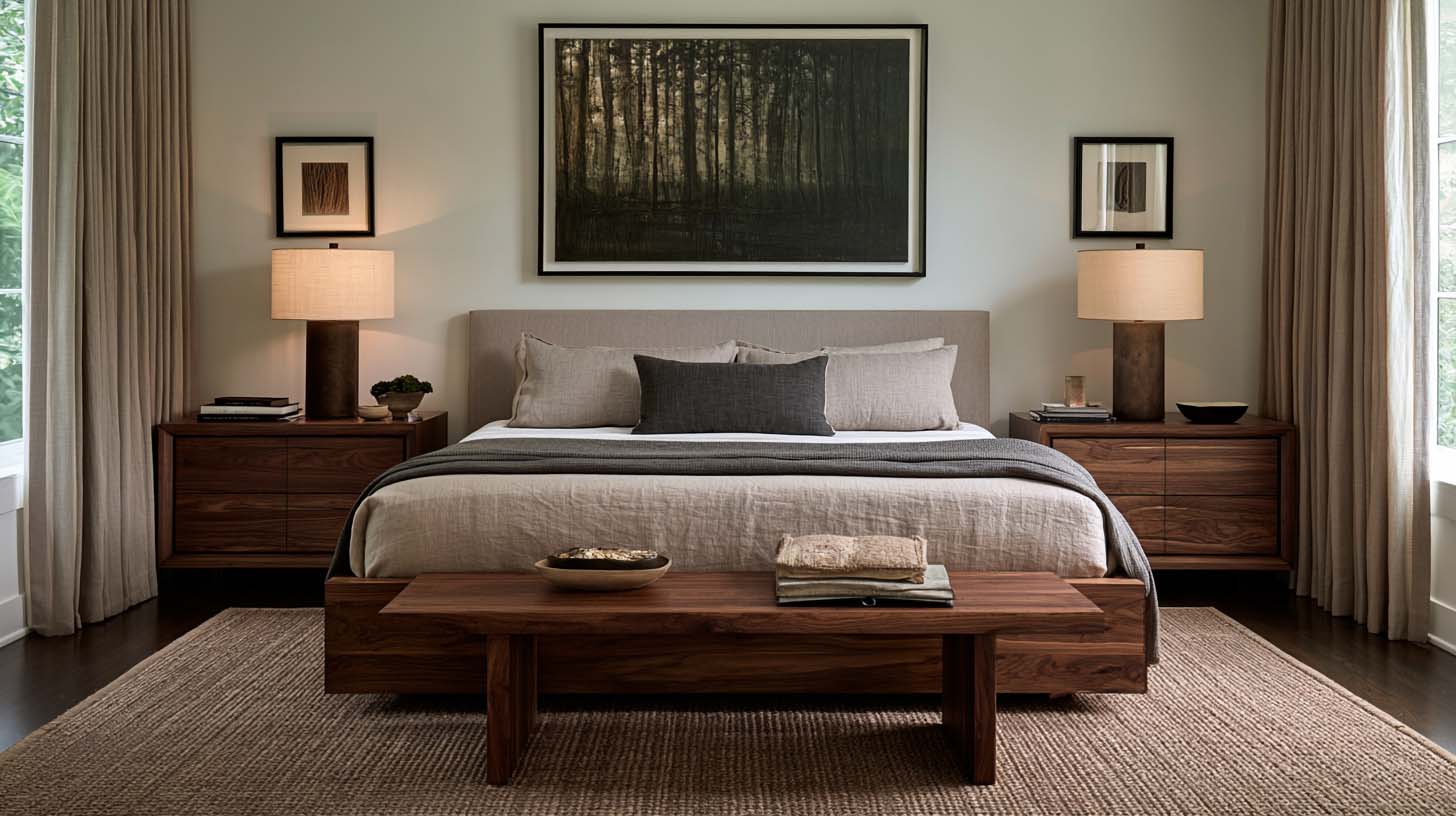
There is an unfortunate version of the masculine bedroom that has become remarkably easy to recognize.
Gray sheets. Black platform bed. Television. Perhaps an LED strip. One nightstand. Very little on the walls.
The room is functional in the narrowest possible sense: a man can sleep there. But a mature masculine bedroom should offer considerably more than somewhere to sleep. It should feel private, calm, and complete.
The difference between a sophisticated masculine bedroom and a stereotypical bachelor pad has relatively little to do with marital status. It has everything to do with whether the room has been developed.
Start With a Proper Bed
The bed is usually the largest object in the room. Treat it accordingly.
An undersized or visually weak bed makes everything surrounding it feel less substantial. Masculine bedrooms tend to benefit from bed frames with presence: upholstered headboards, solid wood frames, substantial platforms, traditional wood beds, leather upholstery, or even four-poster forms where the architecture supports them.
Metal can work as well, although thin frames can easily feel more utilitarian than intentional.
Headboard height matters. A tall room generally needs more vertical presence. A low contemporary room may suit a lower architectural bed. The objective is to make the bed feel like the natural center of the bedroom rather than a mattress that happens to occupy it. TMH's Masculine Interior Style Guide can help you match a bed frame style to the rest of your home's design language.
Give the Bed Enough Space to Breathe
The largest bed that physically fits is not always the correct bed. Circulation matters.
You should be able to move around the room without navigating narrow passages between furniture. This becomes particularly important once nightstands, a dresser, bench, or chair enter the composition.
A king bed can make a moderate bedroom feel luxurious when properly accommodated. It can also consume the room. Proportion outranks status. A well-composed queen bedroom will feel considerably more sophisticated than a king bedroom in which everything else has been squeezed against the walls.
Use Real Nightstands
A bedroom immediately feels more mature when the bed is properly supported on both sides. Ideally, that means two appropriately scaled nightstands where the room permits. They do not have to match perfectly. They do need to relate.
A useful nightstand provides enough surface for a lamp, water, perhaps a book, and a small personal object while offering storage for the things that do not need to remain visible.
The height should relate comfortably to the mattress. Tiny bedside tables beside a large upholstered bed make the bed look disproportionately heavy. This is another example of why furniture must be considered relationally rather than individually.
Masculine Bedding Should Feel Intentional, Not Decorated
There is a useful middle ground between an unmade bed and twelve decorative pillows.
Start with good sheets. Add a duvet, quilt, or coverlet appropriate to the climate and sleeping preferences. Introduce texture through linen, cotton, wool, or another substantial natural-feeling textile. Then stop before the bed begins resembling a showroom display.
Two sleeping pillows per person, perhaps a pair of shams, and one restrained lumbar or accent pillow can be plenty.
Color does not need to default to gray. Cream, flax, tobacco, olive, brown, muted blue, white, charcoal, and subtle patterns can all work. Texture often contributes more masculine character than darkness. A rumpled flax linen duvet can feel far more convincing than shiny black bedding marketed specifically toward men. If you're still working out a whole-room color direction, TMH's free 10 Masculine Color Palettes guide pairs well with this kind of bedding.
Put Lamps Beside the Bed
One ceiling fixture is not bedroom lighting.
Bedside lamps or sconces change both the appearance and usefulness of the room. They provide light where it is actually needed and allow the bedroom to transition from daytime brightness into evening calm.
Scale the lamps to the bed and nightstands. A substantial bed generally needs substantial lamps. Tiny lamps can make a large headboard look enormous. Shade material matters too. Linen and paper shades diffuse light differently from exposed bulbs or hard metal shades.
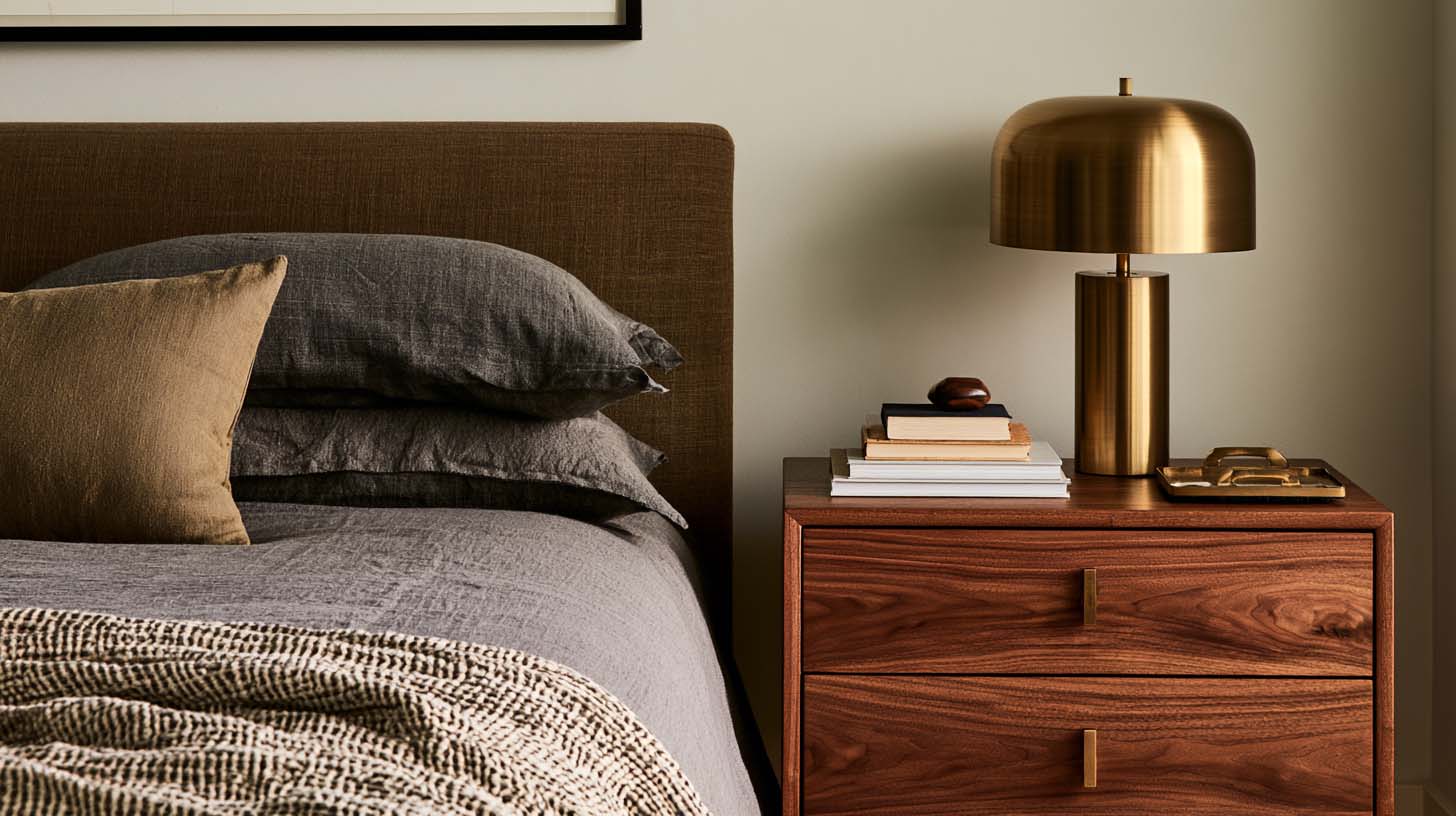
For evening use, softer, warmer, and lower-intensity illumination is generally more appropriate than harsh overhead light.
There is also a practical reason to take nighttime lighting seriously. Light exposure is one of the major environmental cues affecting circadian rhythm, and sleep guidance consistently recommends reducing bright evening illumination and keeping the sleeping environment dark once it is time to sleep, according to the Sleep Foundation. A well-designed bedroom and a sleep-supportive bedroom are not opposing objectives.
Use Window Treatments
Bare bedroom windows often make the room feel unfinished. They can also make controlling light considerably more difficult.
Curtains provide softness, visual height, and privacy while giving you greater control over morning and nighttime light. Where outside light is substantial, lined or blackout treatments can be useful, and current sleep-environment guidance specifically identifies blackout curtains as one way to reduce exterior illumination.
A masculine bedroom might use heavyweight linen, wool, cotton, subtle herringbone, velvet in the right room, or woven shades layered beneath curtains.
Mounting curtains higher and allowing them to reach the floor generally produces a more architectural result than short curtains attached directly above the window frame.
Put a Rug Under the Bed
A rug can transform a bedroom because the bed occupies such a large visual area. Without one, especially on hard flooring, the furniture can feel disconnected.
A rug introduces softness, pattern, and another opportunity to establish color. Persian and Turkish rugs work beautifully because their patterns can bridge wood, bedding, and wall colors. Solid wool, restrained geometric patterns, and natural fibers can work as well.
The rug needs to be large enough to extend meaningfully beyond the bed. A tiny rug disappearing beneath the mattress contributes very little. If budget requires choosing between an excellent smaller rug and a properly scaled simpler rug, scale often deserves priority.
Artwork Belongs in the Bedroom
Bedrooms are often treated as lower-priority spaces because guests see them less frequently. That is precisely why they offer an opportunity to become more personal.
Artwork above the bed is one possibility, but not the only one. Consider the wall opposite the bed, space above a dresser, an architectural corner, or the view visible immediately upon entering.
Landscapes, drawings, photography, abstract work, and meaningful personal pieces can all work. Avoid choosing artwork simply because it matches the bedding. A bedroom is not improved when everything coordinates perfectly. It becomes more interesting when the elements relate while retaining individual character.
Add Furniture Only When It Has a Purpose
Bedrooms accumulate unnecessary furniture easily: a bench nobody uses, an accent chair covered in clothes, a dresser despite an enormous closet, a desk that turns the bedroom into an office.
Do not furnish empty space merely because it is empty. But when the room genuinely supports additional furniture, it can dramatically improve the experience. A bench at the foot of the bed provides a place to sit and set clothing. A comfortable chair can establish a reading corner. A substantial dresser can anchor an otherwise empty wall while providing useful storage.
The question should always be: what happens here? If the answer is nothing, negative space may be better.
Keep Technology From Becoming the Visual Center
There is nothing inherently immature about having a television in a bedroom. The issue is hierarchy.
When the television becomes the dominant object, the room can start feeling like a media room containing a bed. Integrate technology quietly. Wall-mount a television thoughtfully. Conceal cables. Avoid making gaming equipment, charging cables, speakers, and electronics the primary visual composition.
The same principle applies to phones and tablets. Beyond aesthetics, reducing evening screen exposure is commonly recommended because artificial light, particularly cooler and blue-rich light, can affect circadian timing and melatonin production. The bedroom should visually communicate rest before technology.
Give Clothes and Grooming Equipment Somewhere to Go
One of the least glamorous parts of bedroom design is also one of the most important: storage.
Laundry needs somewhere to go. Watches need somewhere to rest. Shoes need organization. Charging cables need control. Grooming products need a home. The room cannot maintain dignity if everyday possessions have nowhere to live.
Drawers, trays, closet organization, a proper hamper, and thoughtful bedside storage are not merely organizational tools. They preserve the visual composition. A beautiful bedroom that requires constant effort to hide normal life has not been designed particularly well.
Masculine Does Not Require Removing Softness
Bedrooms need softness. This is where some masculine rooms go wrong: a hard bed, hard floor, bare windows, minimal bedding, black metal, no textile beyond the sheets. The result may appear masculine in a photograph but feel unpleasant in person.
Use wool, linen, cotton, upholstery, curtains, rugs, a throw, perhaps velvet. Soft materials do not reduce masculinity. They provide the contrast that allows harder materials to look better.
A walnut bed against a wool rug feels richer than walnut against bare flooring. Leather becomes more convincing beside linen. Stone benefits from fabric. Masculinity does not require discomfort.
Avoid Buying "Men's Bedroom Decor"
A mature bedroom becomes personal through things that matter: books you read, artwork you chose, a photograph worth keeping, a watch tray used every night, an inherited object, a small collection, perhaps something connected to travel.
What it generally does not need is an object purchased because a retailer labeled it "decor for men." This distinction is central to the broader TMH philosophy. Masculine identity should emerge from the occupant. It should not be applied to him through merchandise.
The Bachelor Pad Is Not About Being a Bachelor
A single man can have an extraordinary home. A married man can have a bedroom that looks unfinished.
The phrase "bachelor pad" is useful only when describing a particular attitude toward the home: temporary, provisional, and incomplete. I'll buy proper furniture later. I'll frame the artwork later. I'll deal with the blinds later. I'll buy another nightstand later. I'll make the bedroom look finished when someone else cares about it.
That is the mentality worth leaving behind. Your bedroom deserves completion because you live there now. That is what separates a grown man's bedroom from somewhere a man happens to sleep.
What a Mature Masculine Bedroom Should Feel Like
When the room is finished, masculinity should no longer be the first thing demanding attention.
The bed feels substantial. The bedding feels good. There is light exactly where it is needed. Curtains provide privacy and darkness. The rug softens the room. Artwork gives the walls meaning. Clothes and personal items have proper storage. Materials feel good to touch.
Nothing is there merely because someone decided men are supposed to like it. The room feels calm, deliberate, and personal. That is masculine bedroom design at its best. If you'd rather have a second opinion before you commit to a direction, a Room Audit can pinpoint exactly what your bedroom is missing.
Not sure where to start? Book a Room Audit
Frequently Asked Questions
What makes a masculine bedroom feel like a bachelor pad instead of a finished room?
Incompleteness, not marital status. Gray sheets, a single nightstand, bare walls, and an over-emphasized television all signal a room that was never finished rather than one that was designed with intention.
Do masculine bedrooms need dark colors?
No. Cream, flax, tobacco, olive, and muted blue all work well. Texture, such as rumpled linen or a substantial wool rug, tends to contribute more masculine character than color alone.
How many nightstands does a masculine bedroom need?
Two, wherever the room allows it. A bed supported on both sides immediately reads as more mature and intentional than one with a single nightstand.
Should the television be the focal point of a masculine bedroom?
No. The bed should remain the visual center. Wall-mount the television, conceal the cables, and keep electronics from dominating the composition so the room still communicates rest first.

Facebook
Instagram
Youtube