Masculine Cozy Home: How to Make It Feel Welcoming
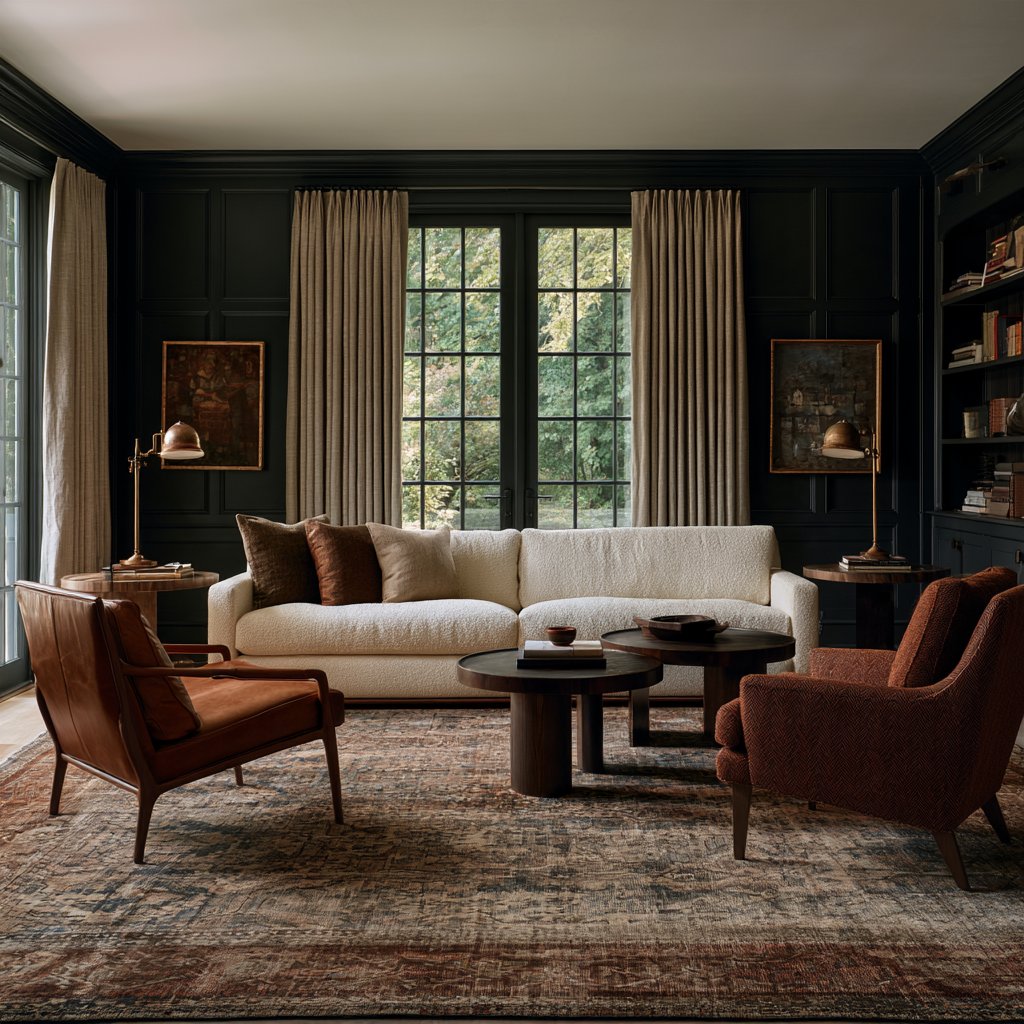
There is a version of masculine interior design that seems built around defense. Heavy door. Dark room. Large furniture. Black finishes. Leather everywhere. Low light. Perhaps a bar. The room may look impressive. It may also feel like visitors have been granted temporary clearance into somebody's private bunker.
This is not the goal. A masculine cozy home should still have structure. Weight. Dark color where appropriate. Strong materials. Furniture with presence. It does not need to become softer in every possible way. But masculinity and hospitality are not opposing ideas.
A home can feel distinctly masculine and still communicate "Come in, sit down, stay awhile."
That feeling usually comes less from decorative "coziness" than from how the room receives another person. If you are not sure how your own living room receives people, TMH's Full-Service Interior Design can plan it to welcome them properly.
Welcoming Begins With Furniture Orientation
You can tell remarkably quickly whether a room expects conversation. Sofa. Two chairs. All facing television. That room is organized around a screen. Now turn the chairs inward. Suddenly the seating acknowledges one another. Nothing has become less masculine. The furniture simply became social.
This is one of the most important principles behind a welcoming masculine interior. People should be able to sit and see one another without turning ninety degrees.
Conversation Distance Matters
Seats should feel connected. Too far apart and conversation becomes effort. Too close and the room feels cramped. Coffee tables and side tables should support the grouping rather than create barriers. This is where layout becomes hospitality.
The sofa does not need to face a fireplace perfectly. The chairs do not need symmetry. They need a social relationship.
Every Seat Should Have Somewhere to Put Something
A guest enters. Sits. Someone hands him a drink. Where does it go? If the answer is the floor, a table four feet away, or the arm of the sofa, then the room is visually furnished but socially incomplete. Side tables matter. Drink tables matter. Coffee-table distance matters. These are tiny practical details that make people comfortable without consciously noticing why.
Do Not Make Every Chair Face the Television
This is worth repeating because it changes the personality of the room. You can still have an excellent television. You can still watch it constantly. But if at least one portion of the seating forms a conversation relationship, the room remains capable of another behavior.
Homes feel welcoming when they offer possibilities. Not when they dictate one activity.
Lighting Is the Fastest Way to Introduce Warmth
A room can be visually warm in daylight and become severe at night. This happens when the lighting plan consists of recessed lights, a ceiling fixture, the television, and nothing else. Add lower sources, such as a table lamp, a floor lamp, a sconce, or a picture light.
The Department of Energy's lighting guidance supports using task lighting alongside lower ambient levels rather than relying entirely on broad overhead illumination. (The Department of Energy's Energy.gov) That principle has an enormous atmospheric benefit at home. People tend to gather where the light gathers.
Warm Does Not Mean Dim
A room can feel welcoming and still provide adequate light. The goal is not darkness. It is hierarchy. Brighter near the reading chair. Softer in the corner. Artwork illuminated. Dining table defined. Enough ambient light for circulation. Good rooms contain several brightness levels at once. That complexity makes them feel residential.
Let Lamps Reveal Materials
A leather chair becomes more interesting when side light shows its creases. Walnut gains depth. Bronze warms. Wool reveals texture. Artwork remains visible. This is one reason the same room can feel dramatically more luxurious and comfortable after sunset once lighting is layered properly. The furniture did not change. Its surfaces became visible.
Use Dark Colors With Warm Materials
A dark room does not need to feel cold. Deep green walls. Walnut. Cognac leather. Cream wool. Rust rug. Bronze lighting. That can feel deeply warm. Compare charcoal walls, a black sofa, a black metal table, a gray rug, and cool white lighting.
Now the darkness has almost no counterbalance. The problem was not dark paint. It was material temperature.
Wood Is One of the Best Sources of Warmth
Walnut. Oak. Mahogany. Cherry. Reclaimed timber where appropriate. Wood introduces grain, color variation, natural irregularity, and a visual relationship to age and craft. This can soften rooms containing black, gray, stone, and metal without making them less masculine.
One substantial wood element can change the room. Dining table. Bookcase. Console. Desk. Coffee table. You do not need a log cabin.
Leather Adds Warmth When It Is Not Repeated Everywhere
Cognac. Tobacco. Oxblood. Chocolate. Leather can make a room feel physically and visually warmer. But the effect weakens when every seat is leather. Mix it with wool, linen, velvet, or mohair. Now the leather becomes one rich surface among several. Contrast creates the coziness. Not quantity.
Wool May Be More Important Than Leather
A warm masculine home often needs softness more than another hard material. Wool works through rugs, curtains, upholstery, blankets, and pillows. Its surface absorbs some of the visual hardness created by wood, stone, glass, and metal. This does not make the room feminine. It makes it habitable.
Curtains Change the Emotional Temperature
Bare windows can make a room feel hard. Particularly after dark, when glass becomes a black reflective surface. Curtains create a soft boundary. Warm ivory linen. Olive wool. Muted stripe. Tobacco fabric. Deep blue. At night, closed curtains reduce the visual emptiness of the window and make the room feel more enclosed. This is one reason fully finished windows contribute so much to comfort.
Rugs Make People Want to Remain
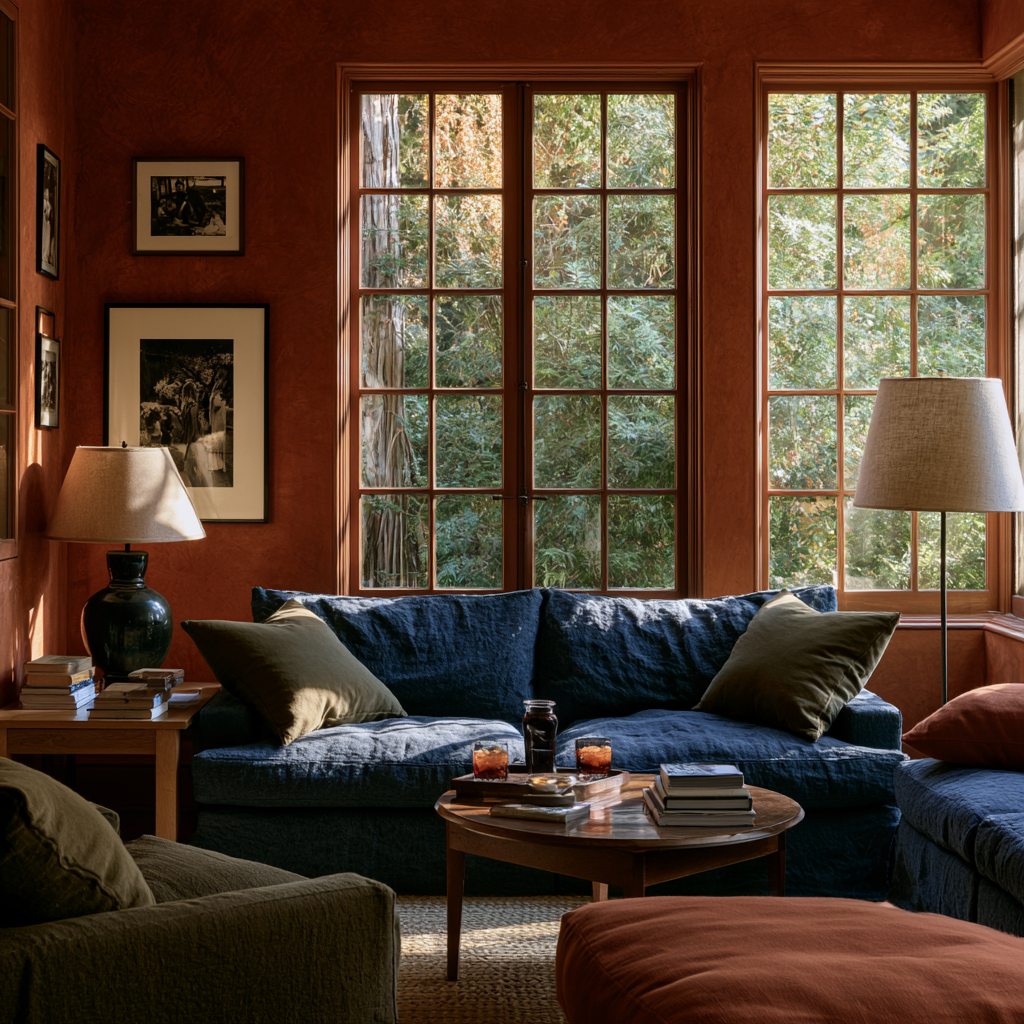
Hard flooring is beautiful. It also reflects sound and can make seating areas feel visually exposed. A rug establishes territory. It says, "This is the place to sit." Traditional rug adds history. Wool rug adds quiet softness. Jute can create natural texture. The furniture becomes one group. That unity makes the room feel psychologically settled.
Warmth Can Come From Pattern
Masculine interiors sometimes rely too heavily on solids because pattern is perceived as decorative. But herringbone, plaid, Persian motifs, stripes, checks, and subtle botanical patterns introduce visual movement and familiarity. A room containing only solid dark surfaces can feel highly controlled. One old rug or patterned chair can loosen it without compromising the overall character.
Use Warm Neutrals Instead of Only Gray
Cream. Mushroom. Taupe. Tobacco. Warm ivory. Stone. These neutrals can bridge darker masculine colors beautifully. Forest green + cream. Charcoal + tobacco. Deep blue + warm ivory. Black + mushroom. Oxblood + taupe. You do not need to choose between an all-dark room and a beige room. Warm neutrals provide the relief that allows darker materials to look intentional.
Color Should Repeat Quietly
If a rust rug is the only warm object in the room, it may feel isolated. Repeat the family subtly. Artwork. Book spine. Ceramic. Pillow. Wood undertone. Now the room begins to feel connected. The same principle works with olive, deep blue, or oxblood. Repetition should be discoverable. Not mechanical.
Hospitality Begins Before Someone Sits Down
Look at the entrance. Can someone enter easily? Where does a coat go? Where do shoes go if your household removes them? Is the path obvious? Are packages blocking the entry? Is there enough light? A welcoming home begins at the transition from outside to inside. The living room cannot repair a confusing entrance entirely.
Make the Entry Clear
A console. Tray. Runner. Lamp or sconce. Perhaps bench. Hooks where appropriate. You do not need a large foyer. You need enough organization that the arrival experience feels deliberate. The visitor should not feel as though he has walked into storage.
The Home Should Smell Like a Clean Home First
There is a growing market for aggressively masculine home fragrance. Leather. Smoke. Whiskey. Tobacco. Cedar. Any of these scents may appeal to you. But start with cleanliness. Laundry. Kitchen. Trash. Bathroom. Ventilation. Upholstery. Rugs. Then add fragrance lightly. A visitor should not feel trapped inside the candle.
Use Fragrance Sparingly Around Guests
People have different sensitivities and associations. What smells rich to one person can be overwhelming to another. A subtle candle or diffuser can add atmosphere. Multiple competing fragrances rarely improve the home. One scent family is usually enough. And some days, clean air is better.
A Dining Table Is Welcoming Architecture
Hospitality becomes far easier when the home contains somewhere to sit across from another person. A dining table creates capacity. Even if one person lives there. Dinner. Coffee. Conversation. Takeout. Friends. The table says that the house is capable of receiving people in a way a kitchen counter alone does not.
The Dining Room Should Not Be Too Precious to Use
A room reserved exclusively for Christmas and important guests is not especially welcoming. Use it. Ordinary dinner. Coffee. Work. Pizza. A dining room becomes warmer through use. A slightly marked table often feels more inviting than a perfect surface everyone is afraid to touch.
Have Enough Seating for the Way You Actually Entertain
You do not need sixteen chairs. But if four friends regularly visit and the living room contains seating for three, the house is making hospitality difficult. Plan for realistic peaks. One sofa. Two chairs. An occasional stool. Dining seating nearby. Rooms can share capacity. The goal is not maximizing seats. It is avoiding predictable shortage.
Guest Rooms Are Hospitality Made Permanent
If you have the space for one, the guest room should feel prepared rather than decorative. Good bed. Fresh bedding. Light. Luggage surface. Power. Privacy. Towels. A few useful details. This tells visitors they are not inconveniencing the home by staying.
Do Not Make the Guest Room the Least Important Room in the House
The room does not need your best furniture. It should not contain the furniture nobody else wanted. Hospitality is undermined when the guest bedroom looks visibly abandoned. A modest room with a clear point of view is better than a larger room filled with leftovers.
Books Make Rooms More Welcoming
Books suggest lingering. They also create visual softness and personal identity. A living room containing books feels different from one containing only technology and decoration. You do not need to create a library. Several shelves. Books on a side table.
Coffee-table volume that genuinely interests you. They create opportunities for conversation too.
Art Gives Guests Something to Discover
A generic room is easy to enter and easy to forget. Art gives the eye somewhere to go. Landscape. Photography. Portrait. Abstract. Historical work. Something personal. A guest may ask about it. Now the object becomes part of conversation. That is one reason meaningful decoration contributes to hospitality. It gives the home stories.
Personal Objects Make the Home Feel Human
Travel ceramics. Photographs. Old objects. Inherited furniture. Collections. Records. Books. These keep a sophisticated masculine interior from feeling like an upscale private club. The room has evidence of life. That vulnerability makes it more welcoming. A completely impersonal room can be impressive and emotionally distant at the same time.
Do Not Over-Curate the Home Before Guests Arrive
Some people prepare for visitors by removing every sign of life. The room becomes cleaner. It may also become sterile. You can leave books, a blanket, several personal photographs, a chess board, records, and meaningful objects out. Order is good. Erasure is unnecessary. Guests should feel they have entered a real home.
Comfort Should Beat Photographic Perfection
A cushion may not sit perfectly after someone uses the sofa. Fine. A blanket may get moved. Chair rotates slightly. Glass sits on table. The home is functioning. A welcoming home tolerates human disturbance. If every object must remain precisely styled, guests can begin feeling as though they are visiting an exhibit.
Temperature Is Hospitality Too
A beautiful room that is freezing or overheated is not comfortable. Ask what happens when several people gather. Does the room warm quickly? Is there enough airflow? Can guests access a throw if needed? Comfort has a physical dimension beyond upholstery.
Music Can Warm a Room Without Becoming a Theme
Low background music can make an evening feel more relaxed. If music matters to you, integrate speakers, a turntable, records, and storage. Do not leave audio equipment looking temporary simply because it is technical. A proper listening setup can become part of the character of the home.
Avoid the Private-Club Costume
This is a particularly relevant warning for masculine design. Dark paneling. Leather Chesterfield. Whiskey. Cigar imagery. Brass. Old books. Hunting art. Used selectively, these can be excellent. Assembled all at once because each signals masculinity, they may create a room that feels performative rather than welcoming.
A home should not require guests to participate in a theme. Use the things you genuinely love. Leave the rest out.
Masculine Does Not Mean Severe
This is the larger misconception. Masculinity can communicate strength, order, material honesty, restraint, permanence, and craftsmanship. None of those requires emotional coldness. Warm light does not weaken the room. Soft wool does not weaken it. A comfortable sofa does not weaken it. Curtains do not weaken it. Hospitality certainly does not.
A Warm Masculine Home Should Still Have Structure
The answer is not covering everything in pillows and blankets. Too much softness can create visual vagueness. Maintain strong furniture forms, a clear room hierarchy, solid materials, controlled color, and meaningful negative space. Then introduce enough warmth around that structure. This is the difference between cozy and cluttered.
Designer Eyes: Imagine a Guest Who Has Never Been There
Walk from the front door to the living room as though you are seeing the house for the first time. What feels uncertain? Where do you sit? Where does your coat go? Can you see a place for a drink? Is the lighting harsh? Does the room feel like you are interrupting a private activity?
Then imagine staying for two hours. What would make that easier? This test shifts the design perspective from ownership to reception.
The Home Should Become Better With People in It
This may be the final standard. Some rooms photograph best when empty. Good homes often look better occupied. Chair turned slightly. Books moved. Glasses on table. Dining chairs pulled back. Lights on. Conversation happening. That is not visual contamination. It is proof that the room was designed for life.
The TMH Perspective
A masculine home should not feel like a fortress. Strength and hospitality are entirely compatible. Perhaps the walls are deep green. The furniture is substantial. There is walnut. Leather. Bronze. A Persian rug. Nothing about that needs to change.
What matters is what happens around those materials. The chairs turn toward one another. There is somewhere to place a drink. The lamps are warm. The windows are softened. The dining table is ready. A guest room works. Books and objects give the place personality.
The house is maintained. People are expected rather than tolerated. That is a warm masculine home. Not softer masculinity. Better hospitality.
For a whole home where hospitality needs to be built into the design from the entrance through the living, dining, and guest spaces, TMH Full-Service Interior Design can develop those relationships as one complete environment.
Prefer to design it yourself? Homefeld, our guided room design tool, lets you upload photos of your room, explore a new look, and get a practical plan to put it together.
Frequently Asked Questions
How do I make a masculine home feel cozy?
Use warmer materials, layered lighting, rugs, curtains, varied textiles, comfortable conversation seating, personal objects, and enough lighter relief around darker colors.
Can a masculine room be warm without becoming feminine?
Yes. Warmth comes from material, light, hospitality, texture, and comfort. None conflicts with strong furniture, restrained color, or masculine character.
Why does my dark masculine room feel cold?
The problem may be too many cool or hard surfaces, insufficient lighting layers, lack of textiles, poor furniture orientation, or too little warm contrast, not the dark wall color itself.
What makes a home feel welcoming to guests?
Clear entry, comfortable seating, surfaces within reach, good lighting, dining readiness, visible personality, clean guest facilities, and enough practical preparation that visitors do not feel like an inconvenience.


Facebook
Instagram
Youtube