Best Masculine Area Rugs: Styles, Materials and Patterns
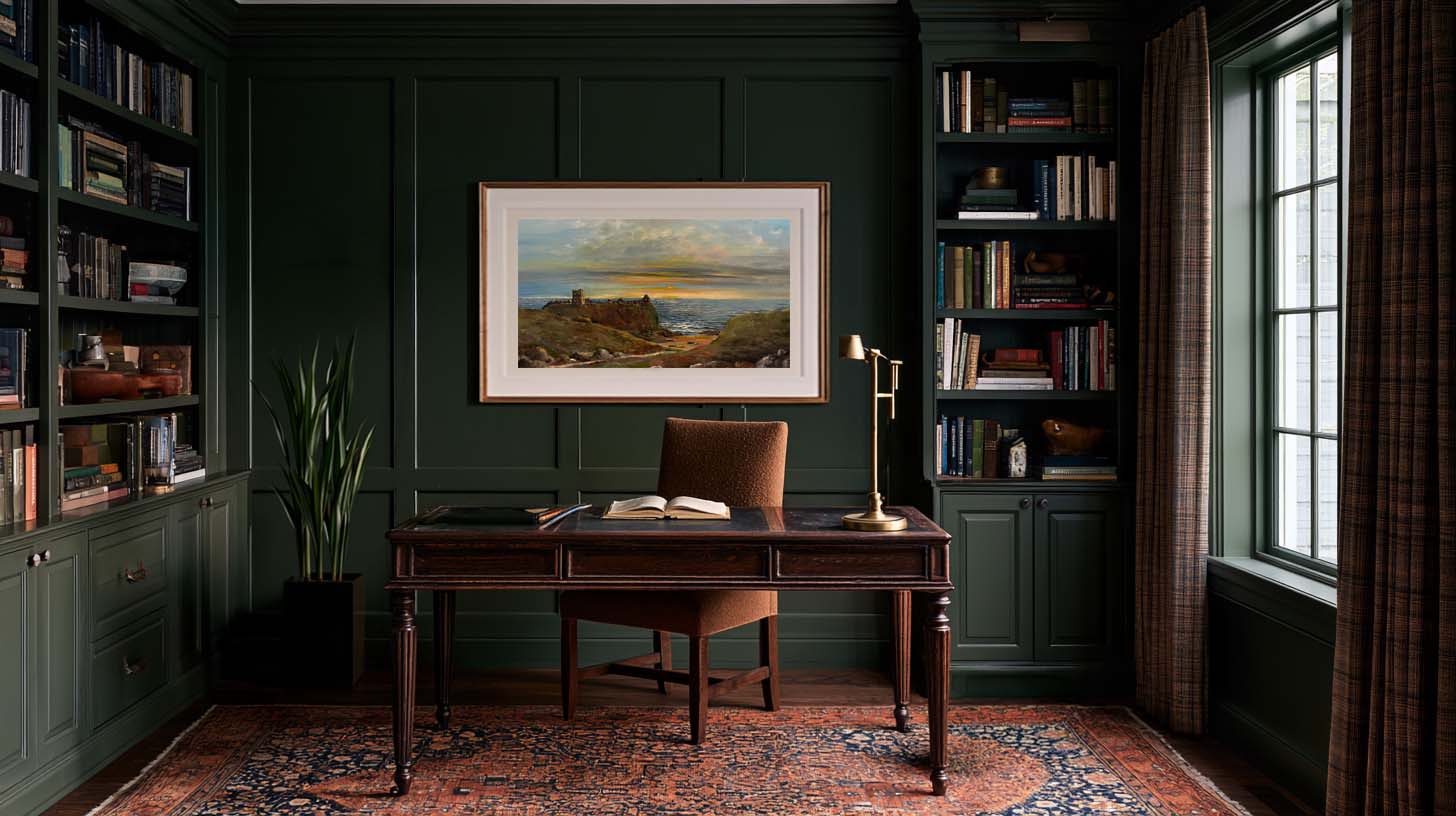
There is a difference between asking which rugs look masculine and asking what kind of room a rug creates.
The first question usually leads to charcoal. Geometric black-and-white patterns. Perhaps distressed gray.
The second question is much more useful.
A Persian rug can introduce history. A Turkish rug can relax a room. A kilim can sharpen it. A Moroccan rug can soften modern furniture. A solid wool rug can quiet a room full of pattern. Jute can make the room more casual and material-driven.
The best masculine area rugs are not interchangeable. Each one communicates something. Learning that language is far more useful than simply collecting recommendations. If you are not sure what your current rug is saying about your room, a Room Audit is a fast way to get an outside opinion.
Persian Rugs: Richness, History and Color Complexity
Persian rugs are among the most useful rugs for masculine interiors because they combine several design functions in one object.
Pattern. Color. Age. Softness. Historical association. Visual density.
A rug may contain navy, oxblood, rust, olive, cream, brown, faded blue, and black. Yet from standing height, the colors merge into one rich field.
This makes Persian rugs especially good in rooms containing plain upholstery. Cream wool sofa. Brown leather chair. Walnut table. Brass lamp.
Add the rug and suddenly all of those straightforward pieces participate in something more layered. The rug supplies chronology without requiring the furniture itself to be old.
Not Every Persian Rug Feels Formal
This is important. The category is enormous.
Some designs are highly intricate. Others are more geometric. Some colors are strong. Others have faded dramatically. Some feel formal enough for a traditional dining room. Others can sit comfortably beneath a modern sofa.
Do not shop only by the label "Persian." Look at the actual composition.
Pattern scale. Border. Color. Wear. Field. Medallion. Overall density.
The rug's visual personality matters more than the category name.
Turkish Rugs Can Bring a Looser Character
Vintage Turkish rugs often work particularly well when you want history without creating a heavily formal atmosphere.
Muted reds. Warm cream. Blue. Rust. Faded brown. Geometric motifs. Visible irregularity.
These can make a new room feel instantly less new. A clean modern sofa on a vintage Turkish rug often becomes more convincing because the two objects no longer come from the same moment.
This is one of the central principles of a collected masculine interior.
"Oriental Rug" Is a Broad Term
Oriental rug is a broad historical market term commonly used for handwoven rugs originating across regions of Asia and the Middle East.
Persian rugs are therefore part of that broader category, but the terms are not interchangeable.
For homeowners, the important thing is understanding enough terminology to avoid treating every traditional patterned rug as the same object.
Country or region of origin. Construction. Materials. Knotting. Age. Condition. Pattern tradition.
All can influence character and value. If you are purchasing a significant antique or collectible rug, dealer expertise and provenance become much more important than style advice.
Kilims: Flat, Graphic and Less Formal
Kilims are flatwoven rather than pile rugs. That gives them a noticeably different visual and tactile character.
They tend to appear lighter and more graphic. Geometry becomes more visible. The rug sits closer to the floor.
This makes kilims especially good for bedrooms, studies, small living rooms, libraries, hallways, and layered rug schemes.
They work particularly well with substantial furniture because the flatter textile prevents the room from becoming too visually heavy. A dark leather chair on a rust-and-cream kilim can feel more relaxed than the same chair on a dense traditional pile rug.
Moroccan Rugs: Softness Against Hard Furniture
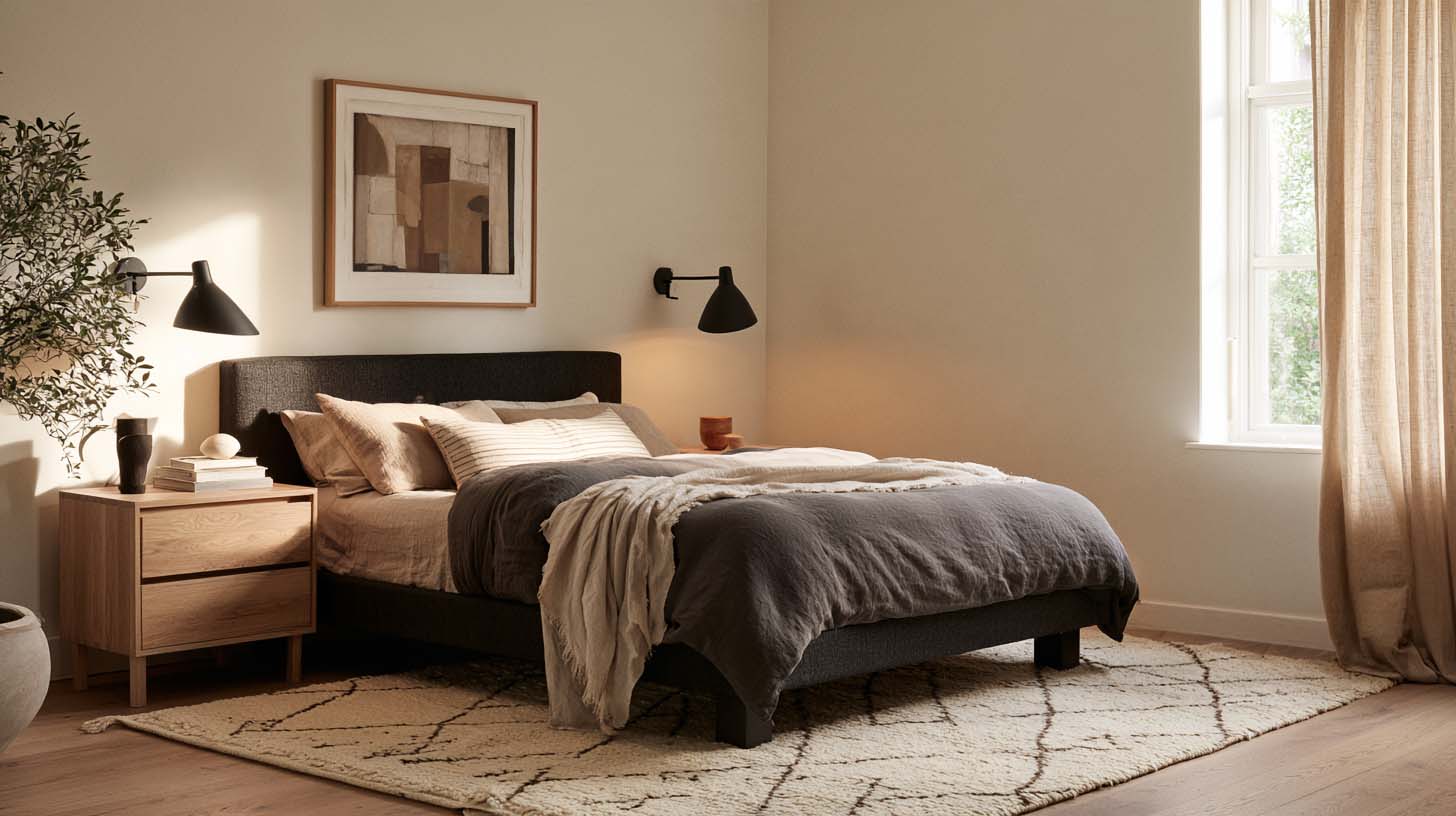
Moroccan rug traditions vary enormously, but in contemporary interiors the category is often associated with high-pile rugs, simpler geometry, ivory grounds, and darker linear patterns.
These rugs can work beautifully in masculine rooms where the architecture and furniture are already very hard. Stone. Glass. Metal. Modern walnut. Leather.
Add a softer, thicker rug and the entire room becomes more comfortable. The contrast is valuable.
A masculine interior does not improve by making every surface visually tough. Softness allows hard materials to remain legible.
Beni Ourain-Style Rugs Suit Modern Rooms Particularly Well
Cream or ivory wool with dark geometric lines has become familiar in modern interiors because it brings pattern without much color complexity.
That can be useful when artwork is already strong, the walls have color, furniture contains several wood tones, the architecture is minimal, or the room needs softness more than another chromatic statement.
Be careful with extremely inexpensive imitations that reproduce the visual idea without convincing material quality. A rug occupies too much floor area for surface texture not to matter.
Geometric Rugs Can Feel Architectural
Modern geometric rugs work when you want the floor to reinforce structure.
Stripes. Grids. Blocks. Diamonds. Abstract linear patterns.
These can support Mid-Century Modern, Industrial, Urban Loft, contemporary, or Dark Scandinavian interiors particularly well.
The risk is visual aggression. High-contrast black-and-white geometry can become the strongest thing in the room. If that is not the intention, reduce contrast.
Charcoal and taupe. Olive and cream. Brown and rust. Slate and warm ivory.
Geometric pattern does not need to shout.
Solid Wool Rugs Provide Quiet Strength
A solid rug is not the absence of design. Material becomes the design.
Heathered wool. Loop pile. Cut pile. Subtle ribbing. Tonal yarn. Visible weave.
These details create movement without conventional pattern. A solid wool rug is particularly useful when the room already contains patterned chairs, wallpaper, bookshelves, dramatic stone, strong artwork, or a patterned sofa.
The floor can become the quieter surface that allows the rest of the room to remain coherent. Wool remains one of the most enduring carpet fibers because of its resilience, durability, comfort, and aesthetic performance indoors.
Jute: Casual, Warm and Material-Driven
Jute introduces a very different kind of masculinity.
Natural. Textural. Informal. Tan and brown tones. Little obvious decoration.
This makes it useful for Modern Rustic, Farmhouse, Coastal, Cottage, and some contemporary masculine interiors.
Jute can also serve as a large neutral base beneath a smaller patterned rug. This is a useful strategy when you own a beautiful vintage rug that is not large enough to anchor the entire seating arrangement.
The jute establishes the territory. The smaller rug adds color and history.
Sisal Feels Slightly More Structured
Sisal tends to look tighter and more architectural than jute.
It can suit home offices, dining rooms where appropriate, entry halls, modern living rooms, and rooms where natural texture is wanted without a soft fuzzy surface.
As with all natural-fiber rugs, practical considerations matter. Foot comfort. Spill exposure. Humidity. Cleaning. Location.
Material should suit the life of the room, not merely the photograph.
Distressed Traditional Rugs Can Work, When the Wear Looks Convincing
There is an enormous market for new rugs manufactured to appear old.
Some are excellent. Some look like a digital fade filter.
Real aging is irregular. Traffic areas wear differently. Colors fade unequally. Edges soften. Certain areas remain stronger.
When artificial distressing appears evenly distributed across the entire rug, the effect can feel less convincing. If what you want is the softness of an aged rug, consider whether an actual vintage piece might provide the chronology more honestly.
Vintage Rugs Immediately Change New Furniture
This may be the single greatest advantage of an older rug.
New sofa. New chairs. New table. New lamps. New home. Everything arrives at once.
The result can feel sterile despite every object being attractive. Put a rug with age underneath and the chronology changes.
Now the room contains at least two moments. That is often enough to stop everything feeling like one furniture delivery.
Rugs for Masculine Living Rooms Should Solve a Specific Problem
Instead of asking which rug style is best, ask what the room lacks.
If the room feels too new, try a vintage Persian, vintage Turkish, distressed traditional, or old kilim.
If the room feels too dark, try cream Moroccan wool, warm ivory wool, a faded traditional rug with a lighter ground, or natural jute.
If the room feels too plain, try Persian, Turkish, kilim, or geometric.
If the room feels too busy, try solid wool, quiet jute, or a low-contrast geometric.
If the room feels too hard, try deep wool pile, a Moroccan rug, or a dense hand-knotted rug.
This approach is much more useful than declaring one rug universally masculine.
Color Determines Whether Pattern Feels Busy
A rug can contain an elaborate pattern and still feel quiet if its colors are close in value.
Brown on tobacco. Olive on muted green. Blue-gray on slate.
The reverse is also true. A very simple geometric can feel aggressive when rendered in pure black and white.
Pattern complexity and visual complexity are not the same thing. Contrast controls how loudly the pattern speaks.
Red Traditional Rugs Work Beautifully With Masculine Furniture
Faded red is one of the strongest rug colors for masculine rooms.
It works naturally with walnut, mahogany, oak, leather, olive, navy, cream, brass, bronze, and deep green.
A red rug often reads warmer than "colorful." This is why it can transform rooms that are otherwise brown and neutral without making them feel bright.
Blue Rugs Cool Brown Rooms
Brown furniture can become visually heavy when everything around it is equally warm. Blue creates relief.
Muted navy. Slate. Faded indigo. Blue-gray.
These work particularly well with cognac leather, medium walnut, rust, cream, and brass. The result still feels masculine but avoids the all-earth-tone composition.
Green Rugs Can Act Almost Like Neutrals
Olive and muted forest green rugs are especially useful where you want color without a large perceptual shift.
Green relates naturally to brown wood, leather, brass, cream, oxblood, black, and stone.
A solid olive wool rug can feel quieter than a patterned gray rug because its surface may contain less visual movement despite the stronger color.
Pattern Scale Should Respond to the Room
Small pattern creates dense information. Large pattern creates broader visual movement.
Neither is inherently better in a small room. A tiny room can sometimes handle a large motif beautifully because the pattern becomes partially abstract once furniture covers it.
Likewise, a very large room can carry intricate pattern because there is enough visible field for the design to read.
Do not rely on simplistic "small room, small pattern" rules. View the actual rug at room scale.
Designer Eyes: Look at the Rug With the Furniture on It
This sounds obvious but is often overlooked. You will never see the entire rug once the room is furnished. The sofa covers part. Coffee table covers part. Chairs overlap.
So evaluate the rug according to the pattern areas that will remain visible. A beautiful central medallion may disappear under a large table. That may be fine. Or it may remove the entire reason you liked the rug.
Rug Size Still Matters More Than Rug Style
A magnificent Persian rug that is too small remains too small. A modest wool rug at the correct scale may improve the room more.
In a living room, the rug should establish a meaningful relationship among the main seating. In a dining room, chairs should remain comfortably on the rug as they move. In a bedroom, enough textile should extend beyond the bed to make the rug visible and useful.
Style comes after scale.
Layering Rugs Can Solve Difficult Dimensions
Large vintage rugs can become expensive. Some rooms are also awkwardly proportioned.
A large natural-fiber rug beneath a smaller traditional rug can solve both problems. The base establishes scale. The upper rug introduces pattern and color.
This works best when the lower rug is visually quieter. Jute. Sisal. Simple wool.
The upper piece should then have a clear reason to exist. Do not layer rugs merely because the technique looks decorated.
A Rug Can Set the Entire Palette
This is one reason designers sometimes select the rug early.
A strong traditional rug may already contain oxblood, muted blue, cream, brown, olive, and black.
Now paint, upholstery, pillows, curtains, and metal finishes can all reference those colors without obvious matching. The room begins with a built-in palette.
This is much easier than selecting five separate materials and later searching for a rug capable of reconciling all of them.
Antique Rugs Deserve More Careful Buying
If you are buying a genuinely antique rug rather than a decorative vintage piece, condition and provenance matter.
Look at repairs, foundation, edges, fringe, pile loss, staining, color consistency, previous restoration, and origin claims.
Ask for documentation when price depends significantly on age or attribution. Museums maintain extensive textile and carpet collections that demonstrate the enormous diversity of rug traditions and techniques across regions and historical periods, which is worth exploring if you want to understand rugs beyond the retail categories applied to them today.
Do Not Buy the Rug Merely Because It Looks Masculine
A black geometric rug can technically signal masculinity. So can a red Persian. Olive wool. Faded Turkish rug. Natural jute. Cream Moroccan wool.
There is no need for the floor to announce gender.
The better question remains: what does the room need from the rug? Age? Softness? Color? Calm? Pattern? Warmth? Definition?
Answer that and the style usually becomes obvious.
The TMH Perspective
Rugs are among the most powerful objects in a room because they sit beneath everything else. That means they can change how furniture is interpreted.
A modern sofa on a modern geometric rug remains clearly modern. Put the same sofa on an old Persian rug and it immediately becomes part of a collected interior.
A dark leather chair on jute feels casual. Put it on a deep red rug and it becomes traditional. Put it on cream Moroccan wool and it becomes more contemporary.
The furniture did not change. The story underneath it did. That is what makes rug selection so useful.
If you know the rug is wrong but cannot tell whether the problem is size, color, pattern, material, or the furniture sitting on it, TMH's Full-Service Interior Design can resolve the rug together with the furniture, color, and lighting around it, so the replacement actually fixes the room.
Frequently Asked Questions
What are the best masculine area rugs?
Persian, Turkish, kilim, Moroccan, geometric, solid wool, jute, sisal, and vintage traditional rugs can all work. The best type depends on the atmosphere and function the room needs.
Are Persian rugs good for masculine interiors?
Yes. Their layered colors, historical character, pattern, and ability to work with wood, leather, brass, and wool make them particularly versatile.
What rug works with a brown leather sofa?
Faded Persian rugs, muted blue rugs, cream Moroccan rugs, olive wool, jute, and rust-toned Turkish rugs can all work depending on the rest of the palette.
Are gray rugs still good for men's rooms?
They can be. But gray should contribute something specific rather than becoming the automatic neutral. A warmer or more patterned rug may add considerably more character.
Is wool the best rug material?
Wool is one of the strongest all-around choices for residential rugs because of its resilience, comfort, and material depth, though construction, location, budget, and maintenance still matter.

Facebook
Instagram
Youtube