Masculine Apartment Ideas That Won't Shrink the Space
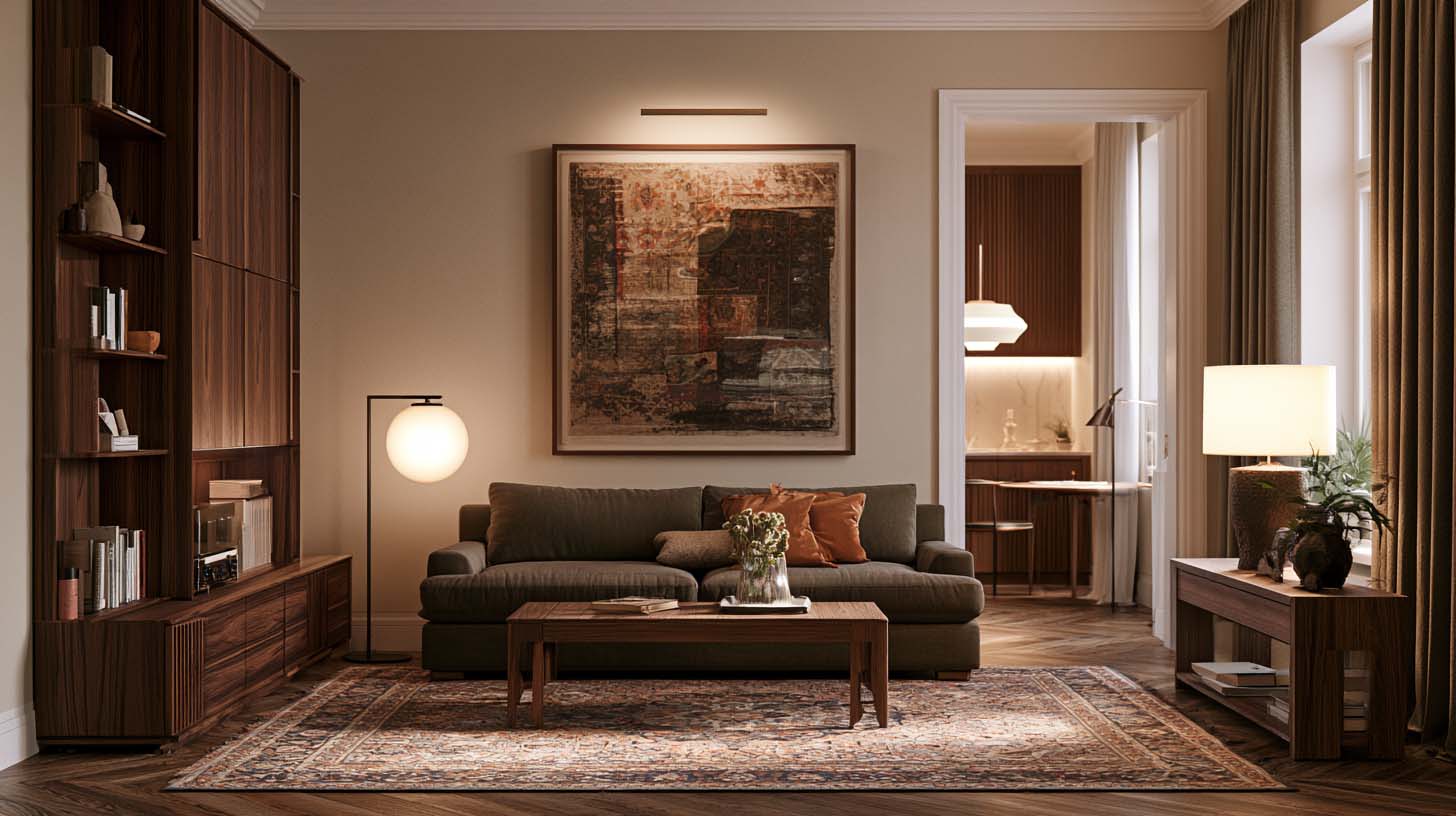
Designing a masculine apartment creates a particular problem. Many of the things associated with masculine interiors, substantial furniture, dark colors, books, collections, leather, wood, and layered objects, also carry visual weight. In a 3,000 square foot house, that weight can give a room permanence. In a 600 square foot apartment, the same choices can make the walls feel as though they are moving inward.
The answer is not to strip away character. It is to become more selective about where the character comes from. A small masculine apartment should not be a smaller imitation of a large gentleman's home. It needs its own logic: fewer pieces, stronger decisions, better use of vertical space, controlled color, useful furniture, and almost no room for meaningless decoration. When square footage is limited, discernment matters more, and thinking through masculine apartment ideas before you buy anything will save you from a room that looks crowded no matter how nice each piece is on its own.
Do Not Fill a Small Apartment With Small Furniture
One of the most persistent rules of small space decorating is also one of the most misleading: small room, small furniture. Follow it too literally and you often create what designers have described as a dollhouse effect, a room full of underscaled sofas, narrow tables, tiny chairs, and miscellaneous objects that collectively create more visual noise than a few substantial pieces would. Recent designers interviewed by Architectural Digest make essentially this argument: fewer pieces with confident proportions often create a stronger, more settled composition in small rooms than a collection of diminutive furniture.
That principle is especially valuable in masculine apartments. A properly proportioned sofa can anchor a room. Two tiny chairs, a tiny loveseat, several small side tables, and a small cabinet may technically occupy similar floor area, but they produce many more visual interruptions. The room begins to look crowded because the eye has to process too much.
Designer Eyes: Count Objects, Not Just Inches
When evaluating a small apartment, count the number of separate furniture silhouettes visible from the entrance. If your eye sees twelve unrelated pieces immediately, reducing that number may improve the room more than making any individual piece smaller. Small space design often benefits from fewer visual events.
Choose One or Two Pieces With Real Presence
A masculine apartment still needs something substantial. Perhaps it is a handsome sofa, a proper bed, a walnut credenza, an old leather chair, a large piece of artwork, a substantial dining table, or a tall bookcase.
Trying to make every piece commanding defeats the point. Instead, establish hierarchy. Let one major piece anchor each zone and make the surrounding pieces quieter. A living room might have a substantial sofa and a visually lighter coffee table. A bedroom might have a strong upholstered headboard but restrained nightstands. A dining area could use a handsome round pedestal table with relatively light chairs. Presence does not require quantity.
Masculine Does Not Mean Painting the Entire Apartment Charcoal
Dark paint can work in a small apartment, sometimes extremely well. The idea that every small room must be white has been increasingly challenged by designers, particularly in spaces where a deep color can turn the small scale into intimacy rather than something that needs to be disguised, according to Architectural Digest.
But there is a difference between using darkness deliberately and making everything dark because the apartment belongs to a man. If you want deep walls, balance them. Blackened green walls might sit beside a cream sofa and medium walnut. Deep tobacco could work with warm linen curtains. Navy might be paired with cognac leather and a faded rug.
Conversely, a light masculine apartment can be extremely effective with cream walls, oak, black accents, brown leather, stone, substantial art, and warm textiles. Masculinity should come from the entire composition, not the paint chip. If you are still narrowing down a direction, our Paint Playbook walks through the color families that actually read as masculine instead of just dark, and our free guide to 10 Masculine Color Palettes is a fast way to see full combinations before you commit to a can of paint.
Keep the Floor Plan Legible
Small apartments become uncomfortable when circulation is ambiguous. There should be an obvious way to walk through the room. You should not have to angle around a chair, squeeze between a sofa and coffee table, or move something whenever another person visits. Clear pathways matter visually as much as physically. When the floor remains readable, the apartment feels calmer.
This is why some apartments actually improve when one piece of furniture is removed entirely. It is also why putting every piece against the wall is not always the solution. Sometimes pulling furniture slightly inward creates clearer zones and better circulation. Think about paths first, furniture second.
Use Rugs to Define Space Rather Than Fragment It
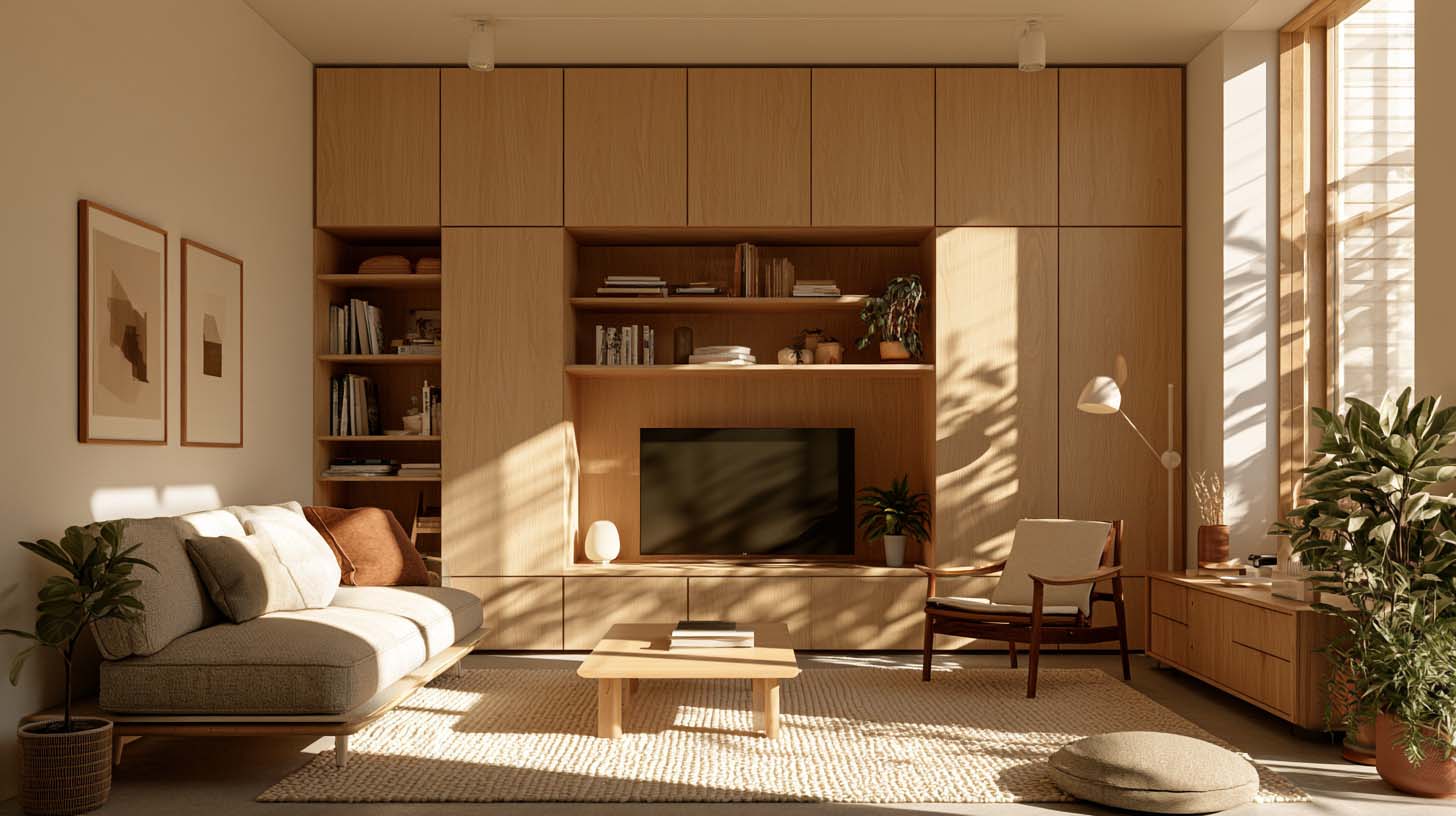
Apartments often ask one room to perform several jobs: living room, dining area, office, and sometimes even bedroom. Rugs can establish zones without erecting barriers. A properly scaled rug beneath the main seating area tells the eye this is one composition.
An undersized rug does the opposite. It places another small rectangle in the middle of an already small room and can visually fragment the furniture around it. Designers working in compact spaces consistently emphasize adequate rug scale for precisely this reason. (Architectural Digest)
In a masculine apartment, consider faded Persian rugs, Turkish rugs, wool solids, restrained geometric patterns, subtle stripes, or natural fibers where appropriate. Do not default to gray simply because the apartment is small. Pattern can actually make a modest room richer because it creates depth without consuming floor area.
Use the Walls for Storage
A small apartment often has more vertical square footage than usable floor area. Use it: tall bookshelves, wall mounted shelves, cabinetry, peg systems where stylistically appropriate, wall mounted lighting, art, hooks in utility areas, and a high shelf over a doorway. Tall storage allows the floor to remain less congested. Designers of very small apartments frequently emphasize moving functions upward and combining uses rather than allowing storage to consume the plan horizontally. (Architectural Digest)
There is, however, an important distinction between vertical storage and vertical clutter. One tall, coherent bookcase may work beautifully. Nine little shelves filled with decorative objects probably will not.
Let Furniture Perform More Than One Job
Multifunctional furniture is useful in apartments when the secondary function feels natural rather than gimmicky. Good examples include a storage ottoman that also serves as occasional seating, a dining table that becomes a desk, a bench with storage inside, a sleeper sofa that genuinely looks like a sofa, a nightstand with drawers instead of a decorative stool, a bed with discreet storage beneath it, and a substantial credenza that stores electronics, dining pieces, documents, and miscellaneous household items. The goal is not filling the apartment with transformer furniture. It is reducing the number of separate objects required to support daily life.
Layer Lighting Instead of Adding More Floor Lamps
Lighting creates another small space problem. You need several light sources, but every floor lamp consumes floor area. This is where wall mounted fixtures become particularly useful. Sconces can flank a bed. Plug in sconces can support reading. Picture lights illuminate artwork without using a table. Pendant lights can replace lamps in certain locations.
You should still use table and floor lamps where they contribute to the room, but the point is to distribute light without cluttering the floor. Avoid allowing one harsh overhead fixture to illuminate the entire apartment. That makes every corner equally visible and often makes a small room feel flatter. Pools of light establish depth. A lamp near the sofa, a sconce over art, and softer light near the dining area can make a modest apartment feel like several environments rather than one exposed box.
Large Art Can Work Better Than Several Small Pieces
It seems counterintuitive, but one substantial artwork can make a small room feel more confident than a collection of tiny pictures. Large scale art simplifies the wall composition, creates a focal point, and can draw attention toward the full height or width of the architecture. Small space designers have long used larger artwork and carefully chosen statement pieces rather than automatically scaling every decorative object downward. (Architectural Digest)
For masculine wall decor, this could mean a landscape painting, large photography, an architectural drawing, a framed map, a textile, one abstract work, or a historical print with genuine relevance. Choose something you care about rather than something that merely fills a wall.
Furniture With Visible Floor Can Help
Not every masculine furniture piece needs to sit heavily on a plinth. In tight rooms, a little visible floor beneath furniture can make the composition feel lighter. Designers sometimes use sofas, cabinets, beds, and chairs raised slightly on legs, because uninterrupted floor sightlines reduce the feeling that the room has been divided into blocks. (Architectural Digest) This is particularly useful if the apartment already contains dark color or substantial furniture. You can still choose masculine silhouettes and simply give some pieces visual breathing room underneath.
Treat Collections Differently in a Small Home
Collections give masculine interiors biography. They can also overwhelm an apartment rapidly. The solution is not abandoning them. Concentrate them. Twenty small objects dispersed across ten surfaces feel like clutter. The same twenty objects displayed thoughtfully within one bookcase can read as a collection. This principle becomes increasingly important as square footage falls. Give objects a defined territory: a shelf, cabinet, tray, wall, or single console. Do not let them colonize every available surface.
Curtains Can Make a Rental Feel Like a Home
Rental apartments frequently retain the blinds installed by the landlord. They work. They rarely make the room feel finished. Full length curtains can introduce height, texture, softness, and visual continuity while requiring relatively little permanent alteration. Linen works beautifully in many masculine apartments. So does cotton. Wool can create greater depth where climate and room scale support it. Mounting curtains higher can emphasize vertical proportion, which is useful when floor area is limited. The objective is not trickery. It is allowing the eye to notice the architecture above furniture level.
Avoid the Bachelor Pad Shortcut
Limited square footage often encourages the most predictable version of men's apartment decor: a large television, black sectional, gaming equipment, liquor bottles, a few automobile photographs, LED lighting, bare windows, and gray everything else. There is nothing wrong with technology, spirits, cars, or contemporary lighting. The problem is when the apartment becomes a display of categories associated with men rather than an expression of the actual man who lives there.
Books are more interesting if you read them. Automotive artwork is more convincing if the particular automobile matters to you. A bar is better when it exists because you actually host people. A record collection deserves display if music is part of your life. Your apartment should reveal identity, not demographics.
Invest in Portable Quality
Renters sometimes make the opposite mistake from homeowners. They refuse to buy anything good because the apartment is temporary, which can mean years of living with provisional furniture. Instead, distinguish between investments that belong to the building and investments that belong to you. Custom millwork may not make sense in a one year lease. A good chair can move with you, and so can original art, lamps, rugs, a proper bed, a well made sofa, books, antiques, portable storage, mirrors, and small tables. This is how a rental begins developing continuity with the homes that follow it.
A Small Masculine Apartment Should Feel Edited, Not Empty
There is a difference. An empty apartment feels unfinished. An edited apartment feels deliberate. The edited version contains what it needs: a real bed, good seating, appropriate lighting, a rug, art, storage, window treatments, and a few meaningful objects, perhaps books, records, or a collection. And then it stops. That last part matters. In a small apartment, knowing what not to add may be one of the most important design skills you develop.
The TMH Perspective
In design work, one recurring mistake is attempting to solve every empty area independently. A blank corner gets a chair. An empty wall gets shelves. A console receives several objects because its surface looks open. Before long, the apartment is technically furnished but visually restless. We evaluate compact rooms differently: what is the minimum number of strong decisions required to make the room complete? That question usually produces a better masculine apartment than asking how much you can fit.
A smaller home gives you less room for buying mistakes. If you want every major piece, material, light source, and storage decision to work together before you start purchasing, TMH's Premier and Exclusive Design Services develop the entire room as one composition, which is especially valuable when every square foot has to earn its place. If you just want a second opinion on what a room actually needs before you buy anything, start with a Room Audit.
Frequently Asked Questions
What is the biggest mistake people make with masculine apartment ideas in a small space?
Filling the room with small furniture instead of a few substantial, well proportioned pieces. Small rooms usually look more crowded with many little items than with fewer larger ones.
Can a small apartment handle dark, masculine paint colors?
Yes, if the darkness is balanced with lighter materials like cream upholstery, warm linen, or natural wood. The mistake is going dark everywhere with no contrast to relieve it.
Should I avoid large art in a small apartment?
No. One well chosen large piece usually reads better than several small ones, because it gives the wall a single focal point instead of visual clutter.
How many furniture pieces should a small masculine living room have?
Fewer than you think. Count the separate silhouettes visible from the doorway. If you count more than eight or nine, look for pieces to combine, remove, or replace with something multifunctional.

Facebook
Instagram
Youtube