Small Space, Big Style: 5 Design Principles for Masculine Condos and Apartments
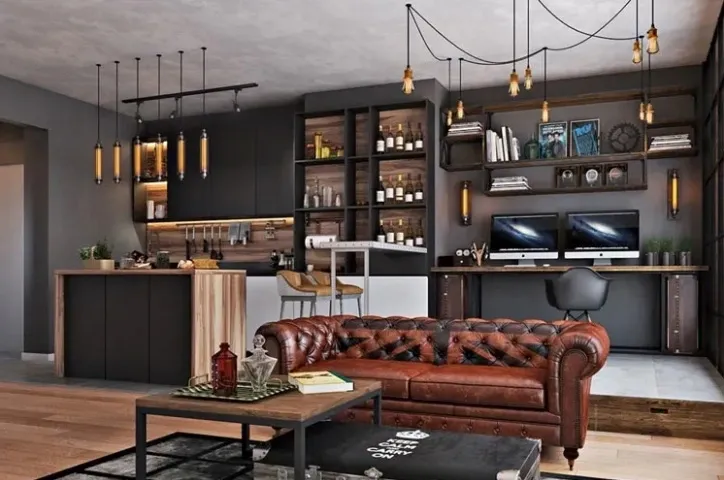
Small spaces expose every design decision.
In a large home, an awkward furniture arrangement might go unnoticed.
A mismatched color palette can hide across multiple rooms.
Clutter has places to disappear.
Apartments and condos don't offer that luxury.
Every piece of furniture matters. Every accessory becomes more noticeable. Every inch of floor space influences how the room feels.
The good news is that thoughtfully designed small spaces often feel more intentional than homes twice their size.
It's not about making a small apartment look larger.
It's about making it feel complete.
Here are five principles that consistently transform compact spaces into homes with character.
1. Let Rugs Define the Architecture
In open-concept apartments, walls rarely separate functions.
Rugs can.
A carefully sized rug beneath the living room seating immediately establishes a social zone.
Another beneath the bed defines the sleeping area.
Even in a one-bedroom apartment, rugs quietly organize the space without adding visual barriers.
Just as importantly, they introduce warmth, texture, and visual weight.
Designer Eyes
If you removed every piece of furniture from the room, could you still understand how the apartment was intended to function?
Well-placed rugs often answer that question before the furniture does.
2. Use Mirrors to Expand Light, Not Just Space
People often say mirrors make rooms look larger.
That's true.
But their greater value is often the way they manipulate light.
A mirror placed opposite a window reflects daylight deeper into the room.
A tall leaning mirror introduces vertical emphasis, making ceilings appear higher.
In darker apartments, mirrors can soften heavy materials and brighten corners that natural light struggles to reach.
The objective isn't tricking people into believing your apartment is larger.
It's making the space feel more open and alive.
3. Choose Furniture That Works Harder
Small apartments reward thoughtful furniture choices.
Rather than filling the room with many small pieces, choose fewer pieces that accomplish multiple tasks.
A coffee table with concealed storage.
A dining table that doubles as a workspace.
A storage bench.
A console that functions as both entry table and bar.
The goal isn't maximizing storage alone.
It's reducing visual clutter while preserving everyday functionality.
The more efficiently each piece works, the calmer the apartment feels.
Designer Eyes
Look around your apartment.
Which pieces of furniture perform only one job?
Those are often the first opportunities to improve both function and layout.
4. Give the Room One Memorable Moment
Many small apartments try to compensate for limited square footage by adding more decoration.
The opposite usually produces better results.
Choose one defining feature.
An oversized piece of artwork.
A dramatic leather chair.
A sculptural light fixture.
A beautifully designed bookshelf.
One memorable focal point creates confidence.
Multiple competing focal points create visual noise.
Small spaces benefit from clarity.
5. Create Cohesion Through Repetition
One of the reasons professionally designed homes feel effortless is because ideas quietly repeat throughout the space.
A walnut coffee table connects to walnut picture frames.
The leather on a dining chair echoes the leather on a lounge chair.
Deep green appears in artwork, throw pillows, and a ceramic vase.
These relationships aren't obvious.
They're simply felt.
The apartment begins reading as one unified composition instead of a series of unrelated purchases.
Designer Eyes
Choose one material in your apartment.
Now count how many times it appears.
If it's introduced only once, the room may feel disconnected.
Repeating materials creates rhythm, and rhythm creates cohesion.
Small Spaces Reward Restraint
One of the greatest advantages of a compact home is that it teaches discipline.
Every purchase must justify itself.
Every object occupies valuable space.
Every design decision becomes more intentional.
Ironically, many of the world's most memorable apartments aren't memorable because they're large.
They're memorable because nothing inside them feels accidental.
Great Design Has Nothing to Do With Square Footage
People often postpone creating a home they love because they believe they'll do it after buying a larger house.
But good design isn't something that begins with more space.
It begins with better decisions.
When layout, proportion, materials, lighting, and visual hierarchy work together, even the smallest apartment can feel calm, sophisticated, and deeply personal.
That's what transforms an apartment into a home.
Not the number of square feet.
The intention behind every one of them.
Continue Building Your Eye for Design
Great apartments aren't created by filling every square foot. They're created by understanding how layout, furniture, lighting, materials, color, and proportion work together to make a home feel intentional, no matter its size.
The Masculine Interior Style Guide teaches the ten timeless masculine interior styles we believe every man should understand, complete with exact paint colors, material palettes, furniture direction, styling guidance, and the principles that define each style. It also includes a 30-minute video walkthrough to help you confidently apply those ideas in your own home.
Whether you're furnishing your first apartment or planning your forever home, the guide will help you make thoughtful design decisions with confidence and create spaces that feel cohesive, sophisticated, and unmistakably yours.
Explore The Masculine Interior Style Guide →

Facebook
Instagram
Youtube