How to Make Your Home Look More Mature as a Man
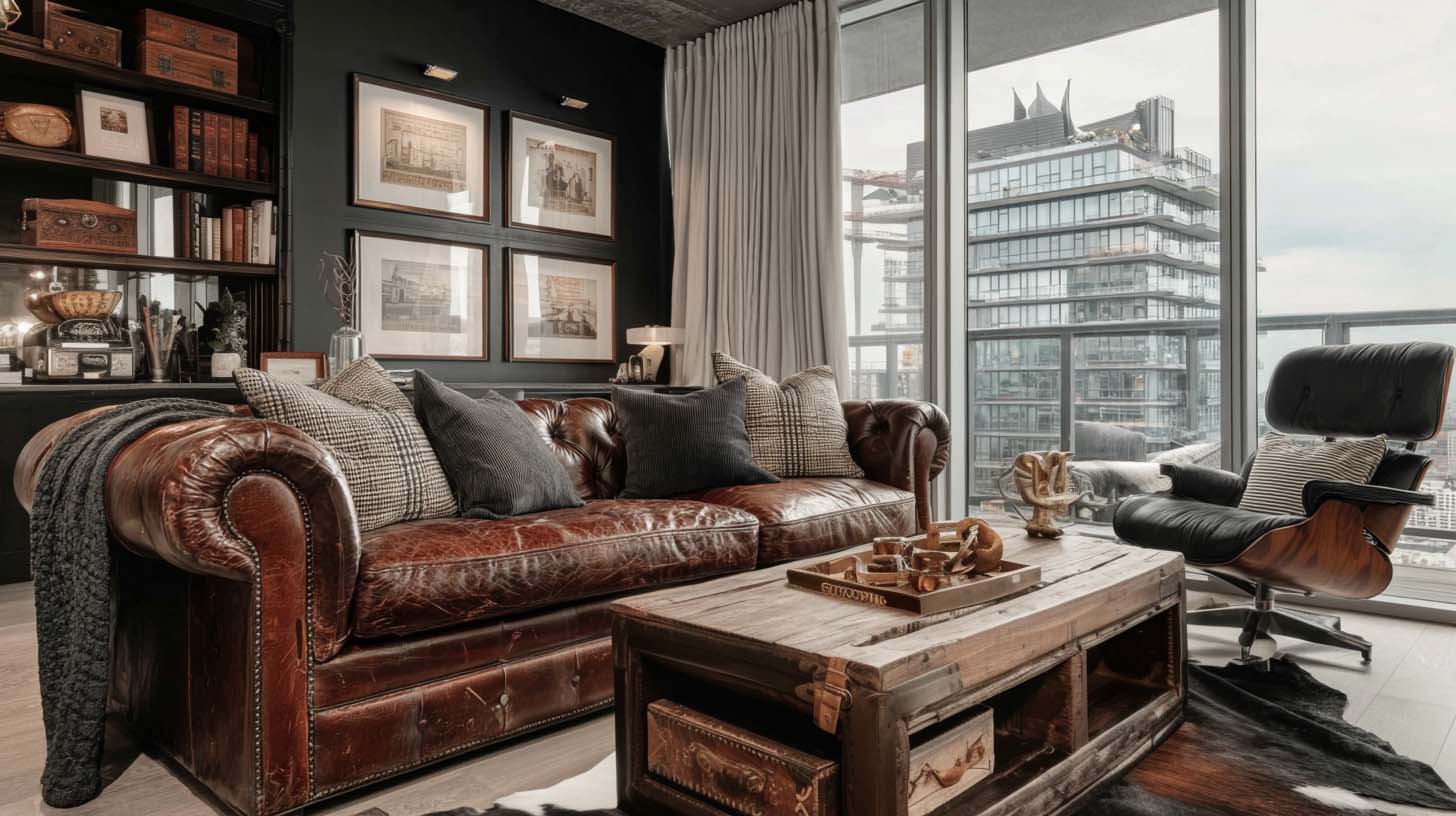
At some point, a man's home should stop looking like a collection of things he acquired because he needed somewhere to sit, sleep, eat, or watch television. It should begin to feel like a home.
If you are wondering how to make an apartment look more mature, the answer is not to buy more expensive versions of everything you already own. Nor does maturity require turning your home into a formal traditional interior, filling it with antiques, or abandoning anything contemporary. If you are not sure where your own rooms currently fall short, TMH's Full-Service Interior Design can plan what to change before you spend on anything new.
The real transition is subtler. Furniture begins relating to other furniture. Artwork receives proper framing. Lighting becomes something you deliberately control rather than whatever came attached to the ceiling. Disposable pieces slowly give way to things worth maintaining. Empty spaces either become useful or are intentionally left alone.
Most importantly, the home stops feeling provisional. That is the difference between simply having a place and beginning to keep one.
Stop Furnishing the Room One Emergency at a Time
Many first homes develop through necessity. You need a sofa, so you buy a sofa. Then you realize you need somewhere to place a drink, so a coffee table arrives. A television needs a stand. The bedroom needs a dresser. Someone comes over for dinner and suddenly you need chairs.
There is nothing unusual about this progression. The problem appears several years later when every object still reflects the isolated problem it originally solved. Individually, the pieces might be perfectly attractive. Collectively, they have no relationship.
A mature home requires a shift from purchasing objects to composing rooms. Before buying the next piece, look at what already exists. Is the room visually too heavy on one side? Are there five different wood tones competing without intention? Does every piece have thin black metal legs? Is the sofa contemporary while the tables are rustic and the rug feels transitional?
This does not mean everything needs to match. It means something should connect.
Graduate From Matching Sets Without Becoming Random
There is a stage of furnishing where matching sets feel reassuring. The nightstands match the dresser. The coffee table matches the console. The sofa came with the chair. Everything agrees.
Unfortunately, agreement and sophistication are not the same thing. Rooms gain depth when pieces relate without appearing to have been sold together. A walnut dresser can sit beside painted nightstands. A linen sofa can work with leather chairs. An antique side table may become more interesting beside a contemporary bed precisely because the two were never intended as a set.
This is where mature interiors begin to feel collected rather than purchased. You are no longer trying to make every piece identical. You are learning to recognize compatibility.
Designer Eyes: Look for Repetition Without Duplication
When we evaluate a room, we often look for something that appears more than once, but not necessarily in the exact same form. Perhaps aged brass appears in a lamp and again in a frame. Walnut appears in a desk and a chair arm. A muted red from the rug reappears quietly in artwork. These small repetitions create cohesion without turning the room into a furniture package.
Replace Posters With Properly Presented Art
There is nothing inherently immature about a poster. A rare concert poster, exhibition poster, original movie poster, or historically meaningful graphic piece can be genuinely collectible. The difference is presentation.
Blu-Tack, pushpins, temporary frames, and a miscellaneous assortment of images placed wherever wall space happens to exist communicate impermanence. Proper framing changes that. So does scale. So does choosing art because you care about it rather than because a large wall looked empty.
A grown man's apartment might contain original art, photography, prints, maps, drawings, family pieces, vintage posters, paintings, or framed documents. None needs to be especially expensive. It needs to deserve its place.
Stop Making the Television the Entire Room
Most people have televisions. There is no reason to pretend otherwise. The problem arises when every design decision radiates outward from the screen: the sofa facing the television, a chair positioned around it, a console selected for it, a blank wall occupied entirely by it, lighting arranged so it does not interfere with it. Soon the room has stopped being a living room and become a viewing apparatus.
A mature living space considers television as one function among several. Conversation should still make sense. There should be light for reading. Artwork needs somewhere to live. A chair can face another chair rather than a screen. Tables should support people, not only electronics. The television can remain. It simply stops receiving ceremonial status.
Use More Than the Ceiling Light
Few changes make a home feel more developed as quickly as lighting. An apartment illuminated entirely from above often feels temporary because that is how temporary places are commonly lit: dormitories, offices, rentals, hotel rooms, garages.
Homes benefit from smaller pools of light: a lamp beside a sofa, another on a console, bedside lighting, perhaps a floor lamp near a chair, a picture light or sconce where appropriate. The U.S. General Services Administration's current lighting guidance makes a similar functional distinction in workplace environments, noting that general lighting serves broad illumination while task and accent lighting support specific activities and visual emphasis. (U.S. General Services Administration)
At home, this layered approach does something beyond visibility. It creates atmosphere. Suddenly the entire room does not need to operate at the brightness required for finding a dropped key. You can light the parts of the room you are actually using.
Buy Some Furniture You Could Imagine Repairing
Disposable furniture serves a purpose. Budgets are real. Moves happen. People change taste. There is no moral superiority in owning an expensive table.
But a home begins to feel more established when at least some of its furniture has enough value, financial, functional, material, or sentimental, that you would consider repairing it rather than automatically replacing it. A solid table can be refinished. Good upholstery can eventually be recovered. A quality lamp can be rewired. An antique chest may already have survived several repairs before reaching you.
This changes your relationship with possessions. The home stops being made entirely of consumables. It begins containing things under your stewardship. That idea, stewardship rather than mere ownership, is one of the clearest markers of domestic maturity.
Give Everyday Objects Somewhere to Live
A beautifully furnished room can still look adolescent if everyday life has nowhere to go. Keys migrate across the kitchen. Mail accumulates on the table. Shoes live beside the front door. Charging cables snake across furniture. Grooming products occupy every bathroom surface. Laundry waits wherever it lands.
The answer is not constant tidying. It is infrastructure. An entry needs somewhere for keys. A bedroom needs a hamper. A bathroom needs grooming storage. A living room needs somewhere to hide remotes and cables. A kitchen needs an actual system for the things used every day. Mature homes often look calmer not because their owners possess less, but because the ordinary contents of life have been anticipated.
Put Real Curtains on the Windows
Window treatments are one of those things people postpone indefinitely. The blinds already work. Why spend money replacing them? Because windows occupy an enormous amount of visual territory.
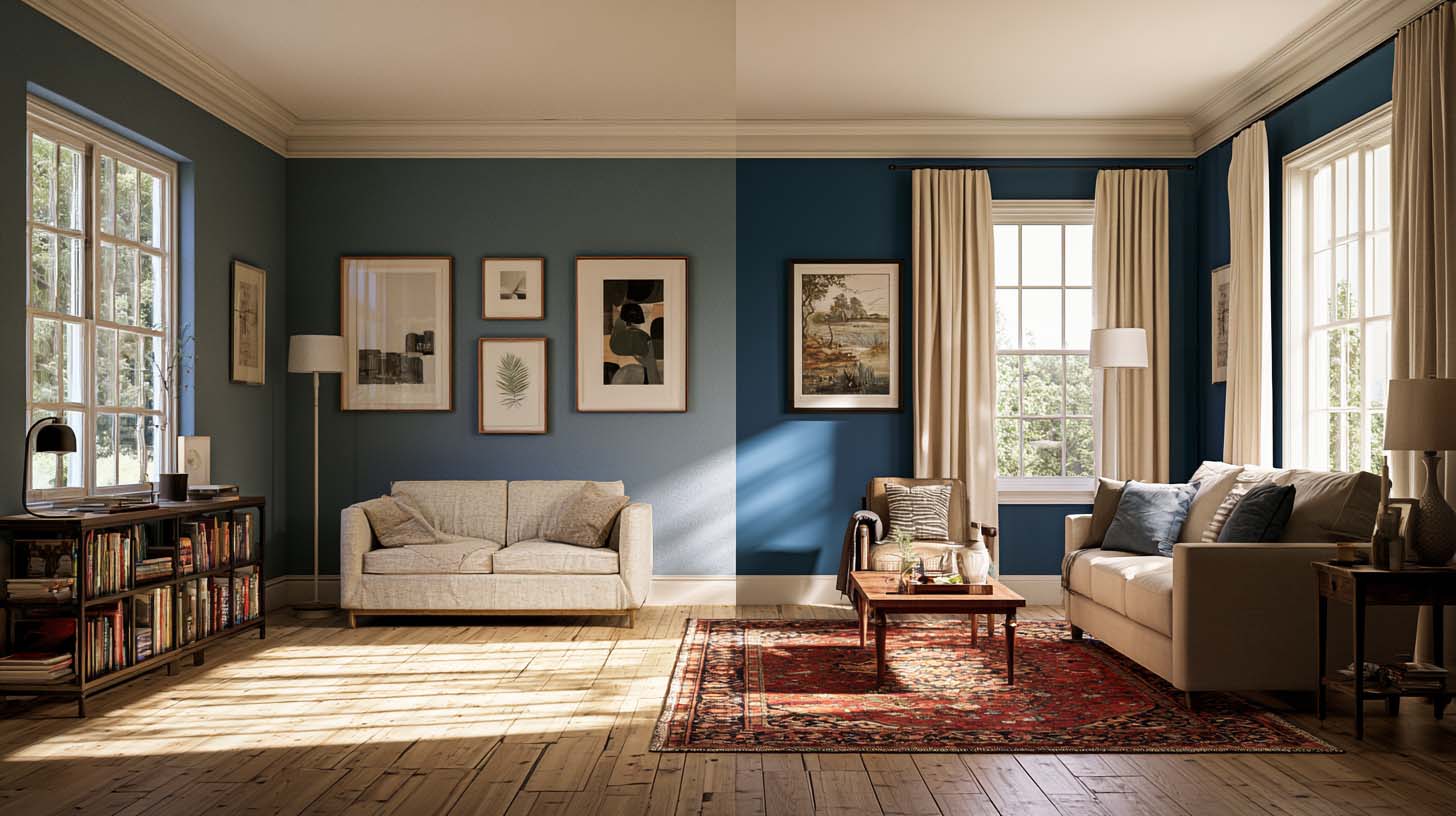
Bare windows or builder blinds can leave even a well-furnished room feeling incomplete. Full-length curtains introduce softness, height, texture, light control, and a sense that the room has moved beyond its default condition. They do not need to be ornate. A straightforward linen or cotton curtain can transform a room simply because it creates an intentional relationship with the architecture. This is particularly useful in a mature apartment for men, where the architecture itself may offer little character.
Own a Dining Surface Even If You Live Alone
A dining table is not reserved for families. Nor is it obsolete because takeout exists. A table gives the home a place for meals, conversation, work, coffee, projects, and receiving another person without asking everyone to balance plates around the living room.
In a very small apartment, that may be a round table for two or four. In a larger home, it may become one of the principal pieces of furniture. The deeper point is hospitality. A home becomes more mature when it is capable of accommodating life beyond the owner's immediate solitary needs. You may live alone. Your home does not need to behave as though nobody else will ever enter it.
Replace "Decor" With Things That Mean Something
A mature home usually contains decoration. The distinction is how it got there. Objects purchased exclusively because a shelf needed styling tend to reveal very little. Objects acquired through living do: books, travel pieces, photography, family possessions, ceramics, art, records, small antiques, models, historical objects, collections.
These things gradually become a visual autobiography. This is why generic home decor for men often produces disappointing interiors. The merchandise may look masculine, but it cannot know anything about you. A shelf should not need a fake personality if you already have a real one.
Take Care of What You Own
Design discussions often ignore maintenance because maintenance is less photogenic than furniture. Yet few things communicate maturity more clearly. A beautiful leather chair covered in dust does not look sophisticated. Neither does an expensive sofa surrounded by clutter, a wood table with unattended water damage, unwashed bedding, burned-out lamps, dirty baseboards, or art hanging crooked because nobody ever bothered to straighten it.
Maintenance is part of the design. Vacuum the rug. Condition materials appropriately. Replace bulbs. Wash textiles. Touch up paint. Repair the loose handle. Organize the cabinet. Clean the windows. A less expensive home that is cared for can feel considerably more distinguished than a more expensive home that is merely occupied.
Let Some Things Develop Over Time
The temptation, once you decide your home should look more mature, is to complete the transformation immediately. That can simply produce a more expensive version of the same problem. One weekend, everything is ordered: new rug, new artwork, new lamps, new objects, new side tables, new bedding, new barware. Now the home is coordinated, but still looks as though it came into existence on Tuesday.
Allow some incompleteness. Search for the right painting. Wait for the antique chest. Bring something home from a trip. Discover a better chair. Move an old piece into a new role. A mature home should not look frozen. It should look as though it has a past and enough flexibility to acquire a future.
A Grown Man's Home Is Not Defined by Style
A contemporary apartment can feel mature. So can an English Country house, a minimalist condominium, a traditional townhouse, a mid-century home, or a rustic cabin. Maturity is not a design style. It is a level of resolution.
The furniture belongs together. The bed is properly made. There is enough light. The walls contain meaningful things. Daily clutter has somewhere to go. The materials are cared for. Guests can sit comfortably. The home reflects the person who lives there. And nothing important feels permanently postponed.
The TMH Perspective
When a man's home still feels young, the problem is rarely that he needs more decoration. Usually, several ordinary decisions were simply never finished. The temporary lamp became permanent. The artwork was never framed. One nightstand remained one nightstand. The rug was always going to be replaced later. The blinds stayed because they worked.
No single omission destroys the room. Together, they create the feeling that the owner has not completely arrived. The solution is not extravagance. It is completion.
If your home contains plenty of furniture but still feels provisional, TMH's Full-Service Interior Design can move you beyond isolated purchases and develop one clear direction for the rooms you already live in.
Frequently Asked Questions
What is the fastest way to make an apartment feel more mature?
Start with lighting and framing. Adding layered lamps instead of relying on a single ceiling fixture, then properly framing whatever art you already own, changes the feel of a room faster and more affordably than replacing furniture.
Do I need to get rid of furniture I bought when I was younger?
Not necessarily. The goal is relationship, not replacement. A piece from an earlier stage of life can stay if it relates well to what surrounds it. Isolate the pieces that clash rather than starting over completely.
Is it possible for a small apartment to look mature?
Yes. Maturity is a level of resolution, not a square footage requirement. A small apartment with proper lighting, framed art, real curtains, and furniture that relates to itself can feel more established than a much larger, poorly resolved home.
How long does it typically take to make a home feel more mature?
It rarely happens in one weekend, and that is by design. Allowing pieces to arrive over months, rather than ordering everything at once, is part of what gives a home the sense that it has a past rather than a single purchase date.


Facebook
Instagram
Youtube