How to Choose Curtains That Make a Room Look Better
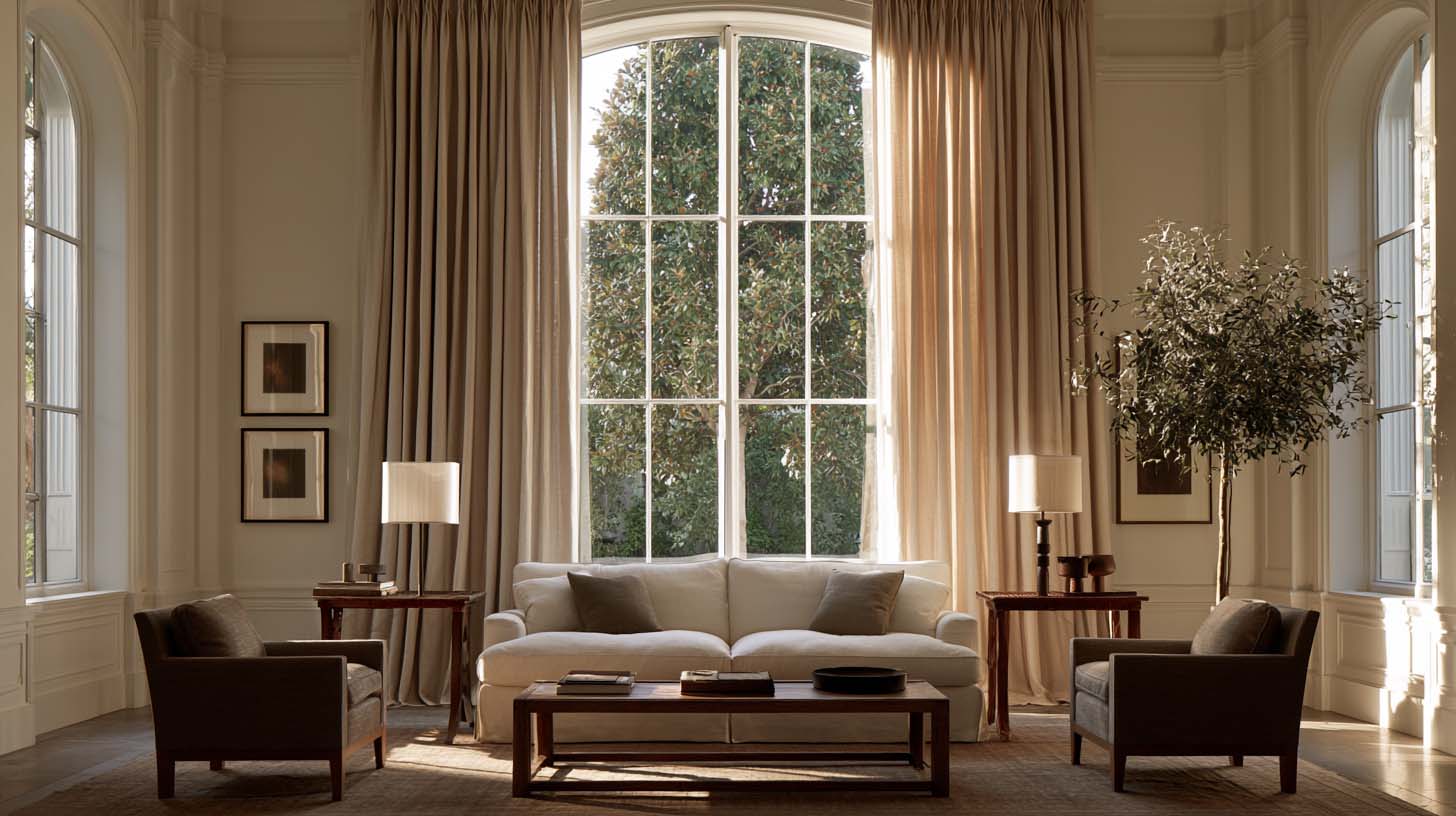
Curtains are often treated as decoration, but they shouldn't be. Few elements can change the perceived architecture of a room as quickly as properly chosen window treatments. The right curtains can make ceilings feel taller, make narrow windows appear wider, soften harsh architecture, add visual weight to a room that feels unfinished, and make an otherwise ordinary space feel far more resolved.
This is why learning how to choose curtains is not simply about selecting a fabric you like. It is about understanding proportion: height, width, fullness, weight, and the relationship between the window and the wall around it. Good curtains do not merely cover glass. They reshape the room.
Start With the Architecture, Not the Fabric
Most people begin with color or pattern. Designers usually begin with the window itself: how tall it is, how wide, how much wall exists above it, how much space sits beside it, where the ceiling falls, and how substantial the baseboards and trim are.
These questions matter because the curtain should respond to the architecture rather than simply hang in front of it. A small window in a tall room may need help feeling more important. A broad window may need a stronger vertical treatment. A low ceiling may benefit from curtains that begin much higher than the actual window frame. The fabric comes later. First, understand the proportions you are trying to correct or reinforce.
Curtain Height: Why Higher Usually Looks Better
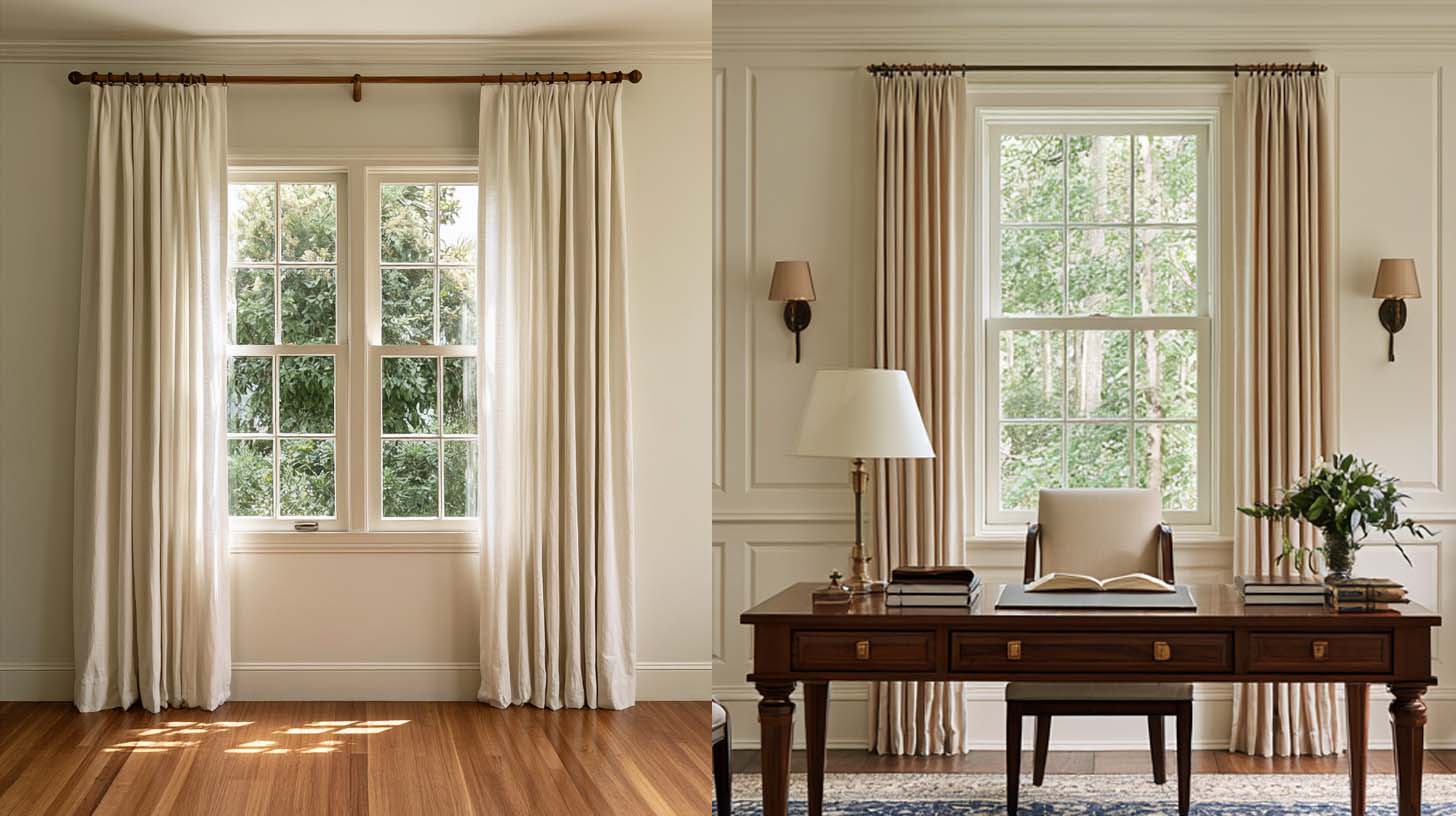
One of the easiest ways to improve a room is to raise the curtain rod. Many homeowners place the rod directly above the window trim. Technically, that works, but visually it often makes the window appear shorter and the ceiling lower.
Mounting the curtain higher creates a longer vertical line that pulls the eye upward. The effect can make the entire room feel taller even though the architecture has not changed. In many rooms, hanging curtains close to the ceiling or well above the window frame creates a more elegant result, especially when the top of the window sits noticeably below the ceiling. The curtain bridges that empty wall space.
Designer Eyes
When curtains feel underwhelming, look at the wall above them. If there is a large strip of empty space between the rod and the ceiling, the treatment may be visually lowering the room.
Curtain Width: Do Not Make the Window Look Smaller
Rod width matters just as much as rod height. A common mistake is placing the curtain rod only slightly wider than the window, so that when the curtains are open, they still cover a significant portion of the glass. The result makes the window appear narrower and reduces natural light.
A wider rod allows the curtain panels to stack largely outside the window frame. This exposes more glass and makes the window appear wider, which can be transformative in a room with small or awkwardly proportioned windows. The goal is not to exaggerate the width unnecessarily. It is to allow the curtain to frame the window rather than consume it.
Fullness Is What Makes Curtains Feel Finished
Curtain panels should not look stretched flat when closed. Fullness gives the fabric body, creating folds, shadows, depth, and movement. This is one of the easiest ways to distinguish a substantial window treatment from one that looks temporary.
As a general principle, the total fabric width should exceed the width of the rod so the curtains retain visible folds when closed. The exact amount depends on the fabric, heading style, and desired appearance. Lighter fabrics often benefit from greater fullness, while heavier fabrics may require less because they already possess more visual weight. The goal is simple: the curtain should still look like fabric when closed, not like a flat sheet pulled across the wall.
Why Fabric Weight Changes the Personality of a Room
Curtain fabric has a surprisingly strong influence on atmosphere. Light linen feels relaxed. Wool feels substantial. Velvet feels richer and more enclosed. Cotton can feel crisp or casual depending on the weave. Silk can feel formal.
The weight of the fabric also changes how the curtain hangs. Heavier materials produce deeper folds, absorb more light, often improve acoustics, and can make a room feel more intimate. Lighter fabrics allow more movement and daylight, softening the architecture without adding visual heaviness. The correct choice depends on the room: not every space needs velvet, and not every space benefits from sheer linen. The curtain should support the atmosphere already being created.
Lining Matters More Than Most People Think
Lining is not merely a technical detail. It changes the way the curtain performs and looks. A lined curtain typically hangs with more body, the folds appear cleaner, the fabric is better protected from sunlight, light control improves, privacy improves, and the back of the curtain looks more finished from outside the home.
Blackout lining adds another layer of function, particularly in bedrooms and media spaces. But even standard lining can make a relatively simple fabric feel more substantial, which is especially important with lighter materials that might otherwise appear thin.
Curtain Length: The Floor Should Feel Intentional
Before you keep reading, see our full room-by-room approach to style direction.
Curtains that stop several inches above the floor often look unfinished. The eye notices the gap. Floor-length curtains usually create a stronger vertical line and a more complete composition.
There are several valid approaches. Just touching the floor creates a clean, tailored appearance. Breaking slightly at the floor introduces a bit more softness. Pooling allows extra fabric to gather on the floor, creating a more romantic or traditional effect. None is universally correct. The room should decide.
Pooling: Elegant or Excessive?
Pooling can be beautiful, but it can also look careless. The difference is usually intention. In a formal room with generous drapery and traditional architecture, a controlled pool can feel luxurious. In a highly practical family room, it may become cumbersome.
Excessive pooling also collects dust and can interrupt the clean vertical line the curtain is meant to create. If you choose to pool, do it deliberately. A small, controlled break is often enough. More fabric is not automatically more luxurious.
Curtain Rods Should Have Enough Presence
Curtain rods are often chosen too lightly. A thin rod spanning a wide window can feel visually weak, especially with heavy curtains. The rod should possess enough scale to support the fabric both physically and visually.
Diameter matters, and so do brackets, finials, and finish. A substantial iron or brass rod can become part of the architecture. A very delicate rod may be appropriate with light fabric in a quiet room. The hardware should belong to the same visual language as the rest of the space.
Curtain Hardware Is Part of the Room
Do not treat rods and rings as afterthoughts. They repeat the materials already present. Aged brass hardware can relate to lighting fixtures. Black iron can reinforce darker architectural details. Warm bronze can bridge wood and leather. The hardware is small, but repeated finishes create cohesion, the same principle discussed in What Makes a Room Feel Cohesive. Small material echoes matter.
Curtains Can Make Windows Look Taller
If the window itself is short, hang the rod higher, then allow the curtain panels to run uninterrupted from that higher point to the floor. The eye reads the full vertical line rather than the dimensions of the glass alone. This is a useful illusion: the curtain creates a taller visual frame than the window actually possesses.
The effect becomes even stronger when the panel color relates closely to the wall. High contrast emphasizes the curtain, while lower contrast emphasizes the height.
Curtains Can Make Windows Look Wider
Width works similarly. Extend the rod beyond the frame and allow the curtain panels to rest mostly on the wall when open. Now the visible glass appears larger, and the treatment reframes the architecture. This is particularly useful with narrow windows that otherwise feel undersized for the room. Again, the curtain is not simply covering the window. It is redrawing its apparent boundaries.
Use Curtains to Soften Hard Architecture
Some rooms feel visually cold because they contain too many hard surfaces: wood floors, glass, stone, drywall, metal, large windows. Curtains introduce softness and vertical movement, and they also soften acoustics. This is one reason rooms with drapery often feel more comfortable even before people consciously notice the fabric. Sound changes, light changes, and the edges of the room feel less severe.
This becomes particularly valuable in large living rooms and open-plan spaces.
Curtain Color Should Support the Room, Not Compete With It
Bold curtains can be beautiful, but they should serve a clear purpose. If the room already contains strong artwork, patterned upholstery, substantial wood grain, and architectural detail, highly expressive curtains may create unnecessary competition.
In many refined interiors, curtains succeed because they support rather than dominate: warm neutrals, muted greens, deep browns, soft grays, and textured natural fabrics add depth without fragmenting the composition. The goal is not invisibility. It is agreement.
Pattern Requires Restraint
Patterned curtains carry more visual weight than solid ones. The larger the pattern, the more architectural attention the curtain demands. This can work beautifully in traditional rooms, but the pattern should relate to the scale of the room and other textiles.
A small busy pattern on very large windows can become restless. An oversized pattern in a modest room can overwhelm. If the fabric is going to be a major statement, let it be one. Do not surround it with numerous competing patterns unless the room is deliberately layered that way.
Curtains and Ceiling Height
Curtains can either reinforce ceiling height or visually interrupt it. High-mounted floor-length panels create continuity, while short curtains and low-mounted rods create a horizontal break. This is why curtain placement can change the perceived proportions of an entire room.
In spaces with modest ceilings, every strong vertical line helps. In very tall rooms, long curtains can help connect the upper architecture to the furniture below. The same treatment can solve opposite problems depending on how it is scaled.
Wide Windows May Need More Than Two Panels
Large windows and walls of glass often require multiple curtain panels, not necessarily because they must close independently, but because the composition needs sufficient fabric. A pair of narrow panels stretched across a very wide opening often looks weak. Additional panels can create more substantial folds and visual rhythm, particularly when the window wall is one of the dominant architectural features in the room. The curtain should have enough presence to belong there.
Do Not Ignore the Stack
The "stack" is the space the curtain occupies when open. This matters because thick fabric takes up real width. If the rod is too short, the stacked curtain blocks the window. If the wall beside the window is narrow, there may not be enough space to move the fabric fully off the glass.
This should be considered before ordering panels. The curtain needs somewhere to go. Good window treatment design considers both open and closed positions.
Floor-to-Ceiling Curtains Can Create Architecture Where Little Exists
Some rooms lack meaningful architectural detail: flat walls, standard windows, simple trim. Curtains can help. A wide, high-mounted treatment creates a strong vertical field that can make a modest window feel like a larger architectural opening.
In some cases, designers even extend curtains across an entire wall rather than framing only the glass. This can create remarkable softness and symmetry. Used well, the treatment becomes almost architectural.
When Curtains Should Disappear
Not every room needs dramatic drapery. Sometimes the architecture, view, or furniture deserves greater attention. In those cases, use quieter fabrics and simple hardware. The curtains can still improve scale and acoustics without becoming a focal point.
This is a useful reminder: good curtains do not always announce themselves. Sometimes their greatest achievement is making the rest of the room look better.
Common Curtain Mistakes
Several problems appear repeatedly:
Rods mounted too low
Rods that are too narrow
Panels without enough fullness
Curtains stopping awkwardly above the floor
Hardware too delicate for the fabric
Fabric that is too thin for the room
Unlined panels where more body is needed
Curtains covering too much glass when open
Excessive pooling in practical rooms
Pattern competing with everything else
Most of these are not really decorating mistakes. They are proportion mistakes.
Designer Eyes
Stand across the room and ignore the fabric color. Look only at the overall shape created by the curtains. Does that shape make the window feel taller, wider, and more substantial? If not, the issue may be placement rather than material.
A Simple Framework for Choosing Curtains
Study the window and wall. Look at height, width, ceiling distance, trim, and available wall space.
Decide what proportion needs improvement. Does the window need to feel taller, wider, or more substantial?
Mount the rod high enough. Use the vertical wall space rather than defaulting to the top of the trim.
Extend the rod wide enough. Allow open curtains to sit mostly outside the glass.
Choose enough fabric. Fullness gives the curtain depth and presence.
Match fabric weight to the room. Light for airiness, heavy for greater enclosure and structure.
Decide on lining. Consider privacy, sunlight, body, acoustics, and light control.
Choose the floor relationship. Tailored, slight break, or deliberate pooling.
Select hardware with enough scale. The rod should support both the fabric and the architecture.
Evaluate the treatment from across the room. The final question is not whether the curtains are beautiful. It is whether the room looks better because they are there.
Final Thoughts
Learning how to choose curtains is really about learning to manipulate proportion. Mount them too low, and the ceiling feels lower. Make them too narrow, and the window feels smaller. Use too little fabric, and the treatment feels weak.
Choose the right height, width, fullness, weight, lining, and hardware, and something very different happens. The window feels larger. The room feels taller. The architecture feels more complete. The furniture feels more grounded. And the space becomes softer, quieter, and more intentional.
That is what good window treatments do. They do not simply decorate the window. They improve the architecture around it.
Get the Masculine Interior Style Guide
Frequently Asked Questions
How high should curtains be hung?
In many rooms, curtains look better when mounted well above the window trim, often closer to the ceiling. This creates a longer vertical line and can make the room feel taller.
How wide should a curtain rod be?
The rod should extend far enough beyond the window frame that the open curtains can stack mostly outside the glass. This helps the window appear wider and allows more natural light into the room.
How full should curtains be?
Curtains should have enough fabric to maintain visible folds when closed. The exact fullness depends on the fabric and heading style, but panels should not appear stretched flat across the window.
Should curtains touch the floor?
Floor-length curtains usually create the strongest visual line. They can just touch the floor, break slightly, or pool depending on the style and function of the room.
Are lined curtains better?
Lining can improve body, privacy, light control, durability, and the overall appearance of the curtain. It is especially useful with lighter fabrics or in rooms requiring greater light control.
Do curtains make ceilings look taller?
Yes. Hanging curtains higher than the window frame and extending them to the floor creates a strong vertical line that can increase the perceived ceiling height.
Can curtains make windows look wider?
Yes. Extending the rod beyond the window frame allows the curtain panels to sit outside the glass when open, making the visible window appear broader.

Facebook
Instagram
Youtube