Furniture Worth Investing In: Where to Spend More
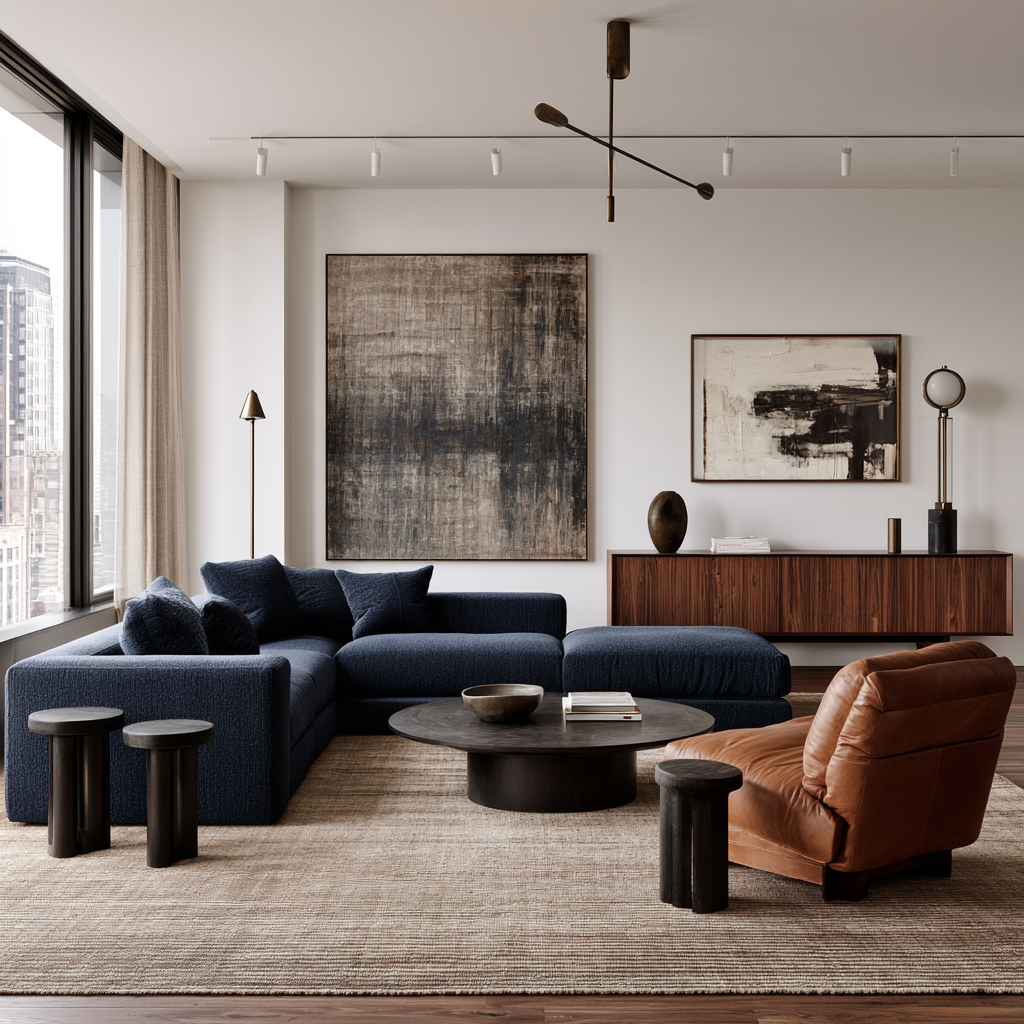
There is an easy mistake to make once you begin caring more about your home. You realize cheap furniture often disappoints. So the conclusion becomes "Buy expensive furniture." That is not much better as a philosophy. A $4,000 side table does not automatically improve a room more than a $700 one.
A $12,000 sofa may be worth every dollar to one homeowner and an absurd use of money for another. Some furniture deserves a meaningful investment because it carries tremendous functional and visual responsibility. Other pieces can remain relatively simple without weakening the room at all.
The useful question is not "Should I buy expensive furniture?" It is "Which furniture is worth investing in, and why?"
The answer usually depends on four things: How often you use it. How much of the room it visually controls. Whether better construction materially changes the experience. And whether you would realistically want to keep it through another chapter of your life. If you are not sure which pieces in your own home deserve that investment first, TMH's Full-Service Interior Design can plan where the money should go first.
Spend According to Influence
Imagine you have $10,000 available to improve a living room. You could distribute that money evenly. $2,000 sofa. $2,000 chairs. $2,000 tables. $2,000 lighting. $2,000 accessories. Or you could establish a hierarchy. Perhaps the sofa receives more because you sit on it every night and it occupies eight feet of the room.
The rug receives enough to get the scale and material right. One excellent chair becomes the room's strongest individual piece. The side tables remain relatively simple. The room does not care whether the budget was distributed evenly. It cares whether the important pieces have enough authority.
The Sofa Is Usually Worth Spending More On
A sofa combines several reasons to invest. It is large. It gets used heavily. Comfort matters. Construction matters. Upholstery matters. Its silhouette affects almost every other piece in the room. A mediocre console can remain perfectly serviceable for years.
A mediocre sofa reminds you of its mediocrity every time you sit down. This does not mean the most expensive sofa is the best one. It means sofa quality deserves serious scrutiny. A better sofa may provide a stronger frame, better suspension, more durable cushions, better upholstery, replaceable components, more thoughtful proportions, greater comfort, and a piece worth reupholstering rather than discarding.
Mattress and Bed Deserve Different Kinds of Investment
Separate the two.
Mattress
The mattress is primarily a comfort and sleep decision. Spend according to what actually supports you well rather than what appears luxurious in a showroom. The most expensive mattress is not universally the best mattress because bodies and sleep preferences differ.
Bed frame
The frame is furniture. Here you are paying for structure, headboard scale, material, joinery, upholstery where applicable, and visual presence. A good bed can remain with you for a very long time because its function changes relatively little.
A king bed is still a king bed ten years from now. If the construction and style are durable, this is a reasonable place to buy something worth keeping.
Frequently Used Chairs Are Worth More Than Occasional Chairs
Not every chair deserves the same budget. The chair you sit in every evening deserves more consideration than the chair occupying the corner of a guest room. A serious reading chair may justify investment in the frame, seat support, upholstery, leather, ergonomics, arm position, and cushion construction.
An occasional chair used five times per year can be simpler. This is a good example of why furniture budgets should follow behavior rather than furniture categories. Two objects both called "chairs" may deserve completely different levels of investment.
The Desk Chair Is a Work Tool
If you work from home for forty hours per week, your desk chair may be one of the most heavily used pieces of furniture you own. Do not select it primarily because it fits the mood board. Adjustability. Seat comfort. Back support. Arm position. Durability. These deserve priority.
If the room needs a more residential feeling, solve that through the desk, rug, art, books, lighting, and cabinetry. Do not sacrifice the piece supporting your body for eight hours each day because a leather executive chair looked better in the rendering.
A Dining Table Can Be Worth Keeping for Decades
Dining tables are compelling places to invest because good examples can survive enormous stylistic change. The chairs may change. The wall color changes. Lighting changes. You move. The table remains. Solid wood can be especially appealing here because ordinary marks can often be repaired or accepted as part of ownership.
Well-made veneered tables can also be excellent when the construction is thoughtful. The important qualities are appropriate size, strong construction, a material you enjoy living with, and a form flexible enough to survive changes around it. A dining table worth moving from house to house begins becoming part of your history rather than simply part of one room.
Dining Chairs Depend on How You Use the Room
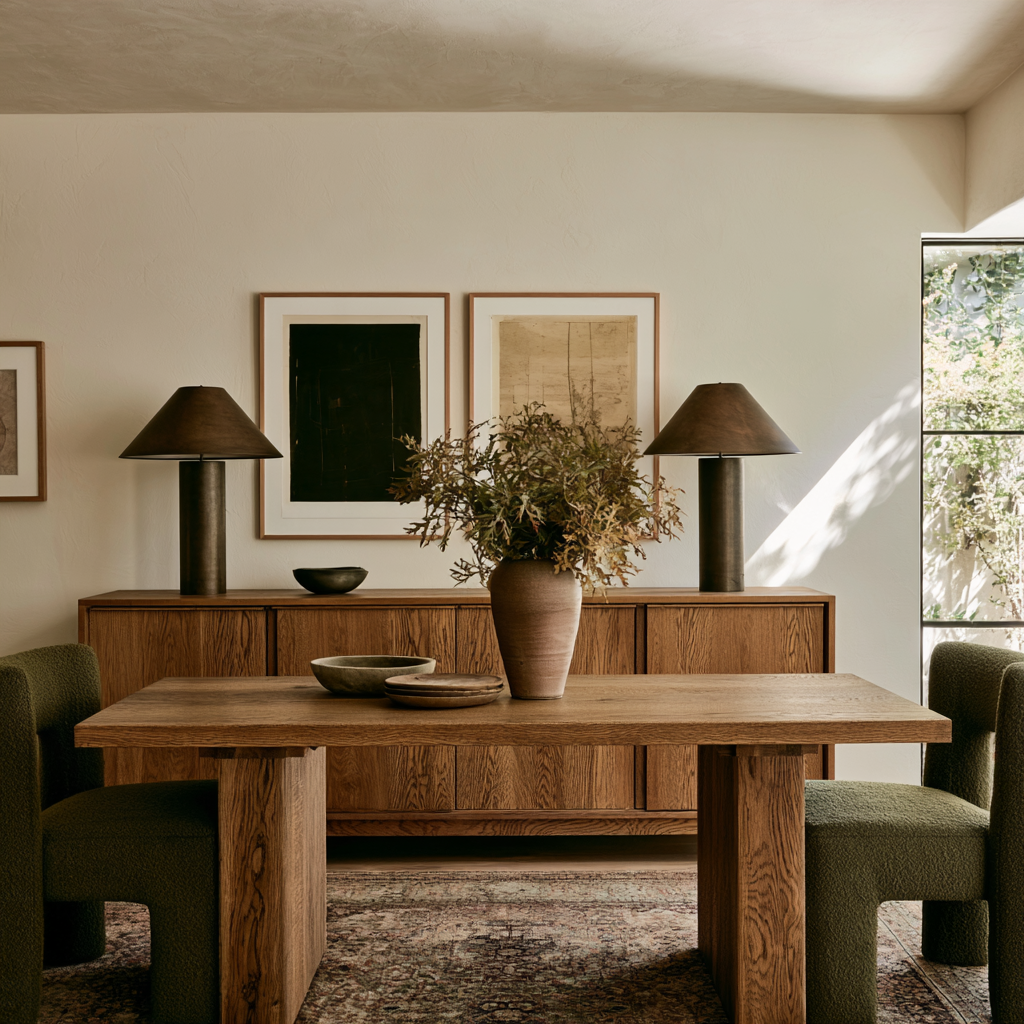
If dinners last three hours, spend more. If the dining table functions mostly as a breakfast and homework surface, perhaps the chairs can remain simpler. Comfort matters far more in a room built around long hospitality. Look closely at seat construction, back pitch, upholstery, frame rigidity, and joinery. You are purchasing the experience of remaining at the table, not merely the silhouette surrounding it.
Rugs Can Be Worth More Than People Expect
A large rug occupies enormous visual territory. That alone makes it influential. The rug determines color, pattern, texture, acoustic softness, and the perceived boundary of the seating group. And frequently how expensive the furniture around it appears.
An under-scaled inexpensive rug can weaken thousands of dollars in furniture. A substantial wool rug with good scale can make relatively simple furniture look much more convincing. This does not mean every room needs an antique Persian rug. It means the rug should receive a budget proportionate to the territory it controls.
Casegoods Are More Complicated
Credenzas. Chests. Dressers. Cabinets. Bookcases. These can range from inexpensive supporting furniture to genuine investment pieces. The difference often depends on visibility and use. A large credenza occupying a primary wall may deserve beautiful wood, good veneer work, strong doors and drawers, proper hardware, and finished surfaces.
A piece tucked into a closet for storage probably does not. Ask what visual responsibility the piece carries.
Spend More Where Craftsmanship Is Visible
One reason some furniture justifies greater expense is that craftsmanship remains visible even when the piece is not being used. A beautifully made cabinet may reveal grain selection, bookmatching, drawer alignment, hardware, joinery, edge treatment, and finish.
An extremely simple side table may offer far fewer opportunities for that craftsmanship to matter. This is why price should not be distributed merely according to physical size. It should also follow where workmanship becomes legible.
The Smithsonian's documentation of master cabinetmaker Thomas Day's nineteenth-century furniture is useful context here. His surviving work is notable not simply because it is old, but because distinctive form, craftsmanship, and construction gave the furniture enough identity to remain worthy of preservation generations later. (Smithsonian American Art Museum)
Upholstery Is Often Worth Paying For
Good upholstery affects appearance, comfort, wear, how fabric follows the furniture's form, how seams behave, and how cushions age. The difference becomes especially visible on large sofas and chairs. You may not need the most expensive textile available.
But the upholstery should fit the expected use. A delicate natural fabric in a room with pets and young children may be a poor investment regardless of price. An expensive material is not valuable if your life destroys it quickly.
Spend More on Furniture You Touch Constantly
This is one of the simplest investment rules. The objects you physically engage with every day deserve greater scrutiny. Sofa. Bed. Desk chair. Dining chair. Desk. Frequently used drawers. The interaction compounds. A drawer that feels slightly cheap becomes more annoying after opening it 2,000 times.
A great chair becomes more valuable after 2,000 evenings. Usage magnifies both quality and deficiency.
Spend More on the Piece Carrying the Room
Every room usually has one or two pieces doing disproportionate visual work. In the bedroom, it is the bed. In the dining room, the table. In the office, the desk. In the living room, the sofa or a major chair. In the entry, perhaps a chest or console.
If the room contains relatively little furniture, these pieces matter even more. A sparse room has less camouflage. One weak object can reduce the authority of the entire composition.
Where Can You Spend Less?
This is just as important. Simple secondary pieces often do not need extraordinary budgets. Drink tables. Basic bedside tables where the design is restrained. Simple benches. Some lamps. Secondary storage. Certain coffee tables. Guest-room furniture receiving little use.
A straightforward object with excellent scale may outperform a far more expensive object trying aggressively to look important. Price is not always visible. Proportion usually is.
Small Tables Are Often a Good Place to Save
A simple wood or metal side table has a modest job. It holds a lamp, a drink, a book, or a phone. If the scale and material are right, it may not need complex construction. This is where affordable furniture can coexist beautifully with more serious pieces. Put the money into the sofa. Let the table support it.
Trend-Driven Pieces Should Receive a Lower Budget
If part of the appeal comes from the fact that you see the piece everywhere right now, be cautious. A very fashionable coffee-table form, chair, finish, color, or lighting fixture may not deserve heirloom pricing if you suspect the attraction is temporary.
There is nothing wrong with enjoying trends. Just match the financial commitment to your confidence.
Spend Less Where Replacement Is Easy
Another useful principle is replacement friction. How difficult would this be to replace? Small table? Easy. Custom-sized sofa? Harder. Eight dining chairs? Expensive and inconvenient. Large rug? Potentially costly. Custom cabinetry? Very difficult. Higher replacement friction can justify greater diligence and, where construction supports it, greater spending.
Expensive Furniture Is Not Worth It When the Expense Is Mostly Branding
Brand can represent design authorship, quality control, service, resale market, heritage, and craftsmanship. Those can have value. But sometimes the price largely buys recognition. Ask whether the object still impresses you without knowing the logo.
Would you choose it from a room containing five unlabeled alternatives? If not, you may be purchasing reputation more than furniture. That is not automatically wrong. It should be conscious.
Expensive Furniture Is Also Not Worth It at the Wrong Scale
This mistake is painful because no amount of craftsmanship corrects it. Beautiful sofa. Too small. Beautiful nightstands. Too delicate. Beautiful table. Too wide for circulation. Beautiful chandelier. Too weak above the table. Do not spend heavily until the dimensions are correct. Good quality at the wrong scale remains the wrong furniture.
Buy Better When You Know You Would Move It
One of the best tests for what furniture to splurge on is surprisingly practical. Imagine you are moving to another city. You are paying professional movers. Would you pay them to move this piece? Some furniture belongs to the address. Some begins to belong to you. The more serious your home becomes, the more of the important furniture should fall into that second category.
Consider Repairability
Furniture becomes a more rational investment when wear does not automatically end its life. Can the sofa be reupholstered? Can cushions be replaced? Can the table be refinished? Can hardware be repaired? Can the leather be professionally restored? Can a chair be re-caned or re-webbed? The ability to renew a good object changes the economics of ownership.
Disposable furniture must remain inexpensive because failure means replacement. Repairable furniture has another path.
Do Not Confuse Investment Furniture With Financial Investment
Furniture is usually not an investment in the financial sense. Most new furniture depreciates. Some collectible design, antiques, and notable makers may behave differently. That is a specialized market. When TMH talks about furniture worth investing in, we mean investing in your ownership experience.
Use. Comfort. Longevity. Character. The willingness to keep it. Do not justify overspending on ordinary furniture by assuming it will appreciate.
Designer Eyes: Divide the Room Into Primary and Supporting Furniture
Before assigning a budget, classify everything. Primary pieces carry either heavy use or heavy visual responsibility. Supporting pieces help the primary ones function. This simple distinction often clarifies where the money belongs. A $6,000 sofa beside a $500 table can make perfect sense.
A $2,000 side table beside a sofa you dislike usually does not. The hierarchy of spending should roughly follow the hierarchy of the room.
The TMH Perspective
The goal is not to own expensive furniture. It is to gradually own furniture worth keeping. Those are not the same thing. Spend where use is heavy, comfort changes your daily life, craftsmanship is visible, scale gives the piece authority, repairability extends ownership, and the piece is likely to follow you into another home.
Save where simplicity hides price naturally. A house does not become distinguished because every object is expensive. It becomes distinguished when the important objects are good enough to carry the responsibility they have been given.
If you are furnishing a serious home and want to know where the money actually matters, TMH Full-Service Interior Design can establish the investment hierarchy before purchasing begins, identifying which pieces deserve greater quality and which can remain deliberately simple.
Prefer to design it yourself? Homefeld, our guided room design tool, lets you upload photos of your room, explore a new look, and get a practical plan to put it together.
Frequently Asked Questions
What furniture is worth investing in?
Sofas, frequently used chairs, beds, dining tables, desk chairs, important rugs, and visually dominant casegoods often justify more investment because of use, influence, construction, or longevity.
What furniture can I save money on?
Simple side tables, occasional furniture, some secondary storage, guest-room pieces, and other low-use supporting furniture can often remain relatively affordable if the scale and design are right.
Is expensive furniture worth it?
Sometimes. Higher price is worthwhile when it buys better construction, material, comfort, repairability, craftsmanship, or a piece you genuinely intend to keep. Price alone proves very little.
Should I buy investment furniture for my first home?
Selectively. Buy better where you already understand your needs and the piece can reasonably follow you to another home. Avoid investing heavily in furniture highly specific to one temporary floor plan.


Facebook
Instagram
Youtube