Furnishing First Home: What to Buy and What Can Wait
Buying your first home creates a powerful urge to fill it. There are rooms you did not have before. Empty walls. A dining room. Perhaps an office. Guest bedroom. Basement. Entry hall. The house suddenly contains a great deal of visible emptiness, and the instinct is to solve it quickly.
So furniture is purchased by room. Living room set. Dining set. Bedroom set. Several rugs. Lighting. Artwork. A few decorative objects. Within six months, the house is full. It may also be surprisingly difficult to improve because too many major decisions were made before you understood how you actually live there.
The better approach to furnishing first home spaces is not a shopping checklist. It is a purchasing order. Buy what makes the home functional first. Then what makes it comfortable. Then what gives it character. Allow the rest to take time. If you are not sure what your new home needs first, TMH's Full-Service Interior Design can plan it room by room with you.
First, Make the Bedroom Complete
The bedroom is where we would begin. Not because guests see it. Because you use it every day. A proper bed. Mattress. Nightstands. Bedside lighting. Bedding. Window treatments where needed. Storage. These are foundational. You do not need art and a bench immediately. You do need a room that supports sleep, getting dressed, and beginning and ending the day properly.
Buy the Bed Before the Decorative Furniture
Do not spend $1,500 across random accent pieces while still sleeping on a weak temporary frame. The bed is larger. More important. Used more frequently. And capable of setting the bedroom's entire direction. This is a good general rule when furnishing a first home: Fund the important object before funding the surrounding objects.
Second, Establish Proper Living Room Seating
You need somewhere to live outside the bedroom. A sofa usually comes next. Choose it carefully. Scale. Depth. Comfort. Arm style. Fabric. Durability. Do not rush because the room looks empty. A bad sofa is an expensive problem because it occupies enormous visual and physical territory.
One good sofa is enough to begin. Then live with the room. You may discover you need one chair rather than two. Or a larger coffee table. Or that the television belongs on another wall. Let the layout teach you something before completing the set.
Do Not Buy a Matching Living Room Set
This is one of the most common first-home shortcuts. Sofa. Loveseat. Chair. All matching. The room becomes full instantly. It also becomes visually finished in a way that leaves little room for personality. A better progression may be the sofa now, a vintage or contrasting chair later, the coffee table after the seating arrangement is proven, and side tables only where someone actually needs one. The room evolves around function rather than package pricing.
Third, Solve Dining
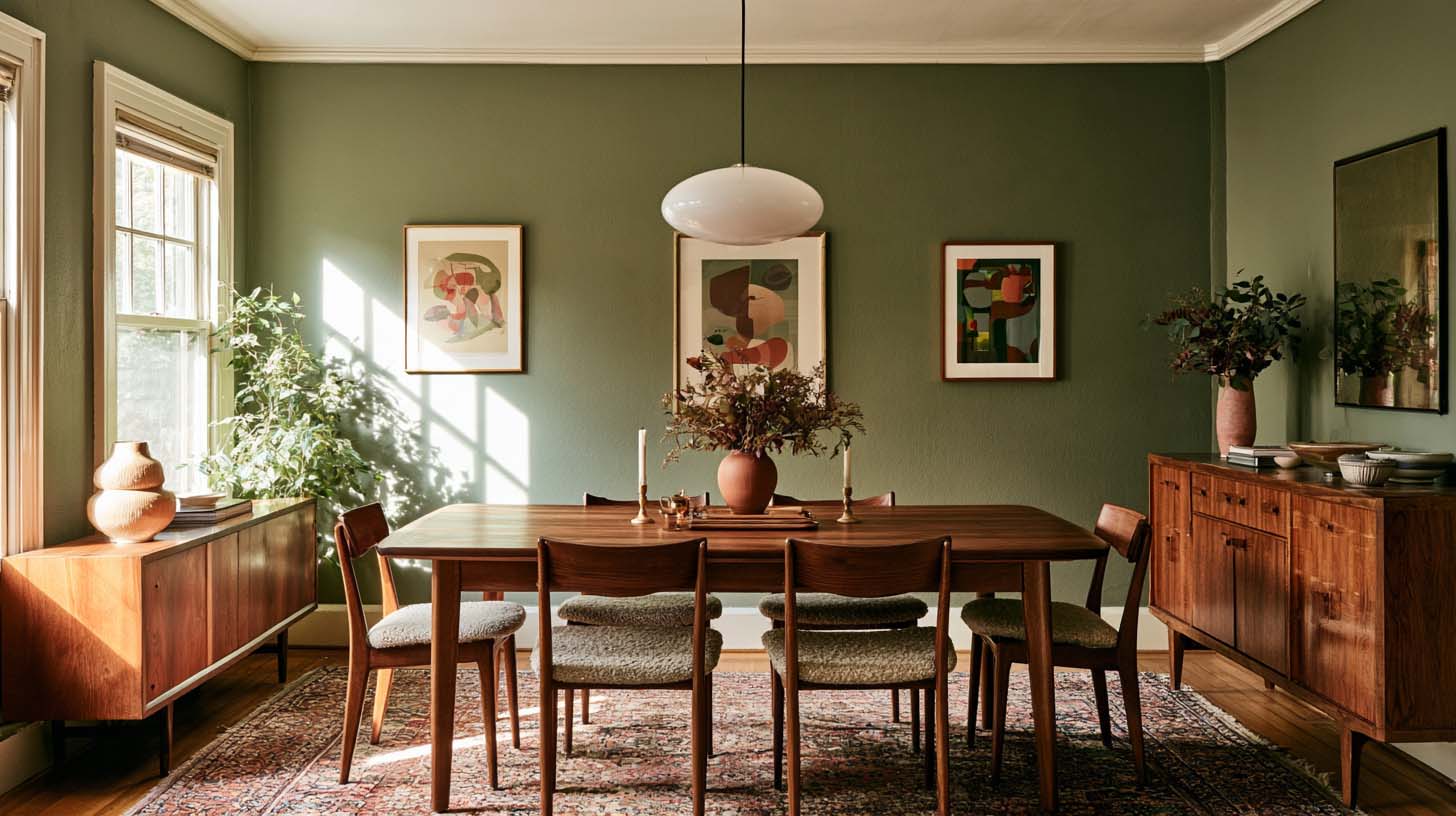
A dining table does more than provide somewhere to eat. It gives the house social capacity. Dinner. Friends. Family. Work. Games. Celebrations. If the home has a dining room or eating area, use it. You may not need a formal eight-person table immediately.
But you should have a real surface capable of supporting more than one person. A smaller round table can be excellent in tighter spaces. An extension table gives flexibility. Choose something that fits the architecture rather than the fantasy of the house you think you are supposed to own.
A Good Dining Table Can Last Decades
This is one area where material and construction may justify investment. Solid wood. Quality veneer. Stone where appropriate. Strong joinery. A form that does not depend heavily on one temporary trend. If the table survives several houses, the cost becomes easier to justify.
Fourth, Fix the Lighting
Builders provide enough ceiling light to pass inspection and illuminate a room. That does not mean the lighting plan is finished. Add table lamps, floor lamps, bedside lamps, desk lighting, and perhaps plug-in or hardwired sconces where appropriate.
A few good lamps can change a sparsely furnished home dramatically because they make the existing furniture and materials look better after sunset. Lighting is often a better early purchase than decorative objects.
Fifth, Buy Rugs Where the Room Actually Needs Them
Do not automatically put a rug in every room. Start where it solves a problem. Living room seating needs grounding. Bedroom needs softness over hard flooring. Dining room may need warmth and acoustic relief. Entry hall may need a runner. Choose size before pattern.
An under-scaled rug is one of the easiest mistakes to make when furnishing quickly because smaller rugs are cheaper and easier to buy. They also often weaken the room.
Sixth, Add Storage According to the House
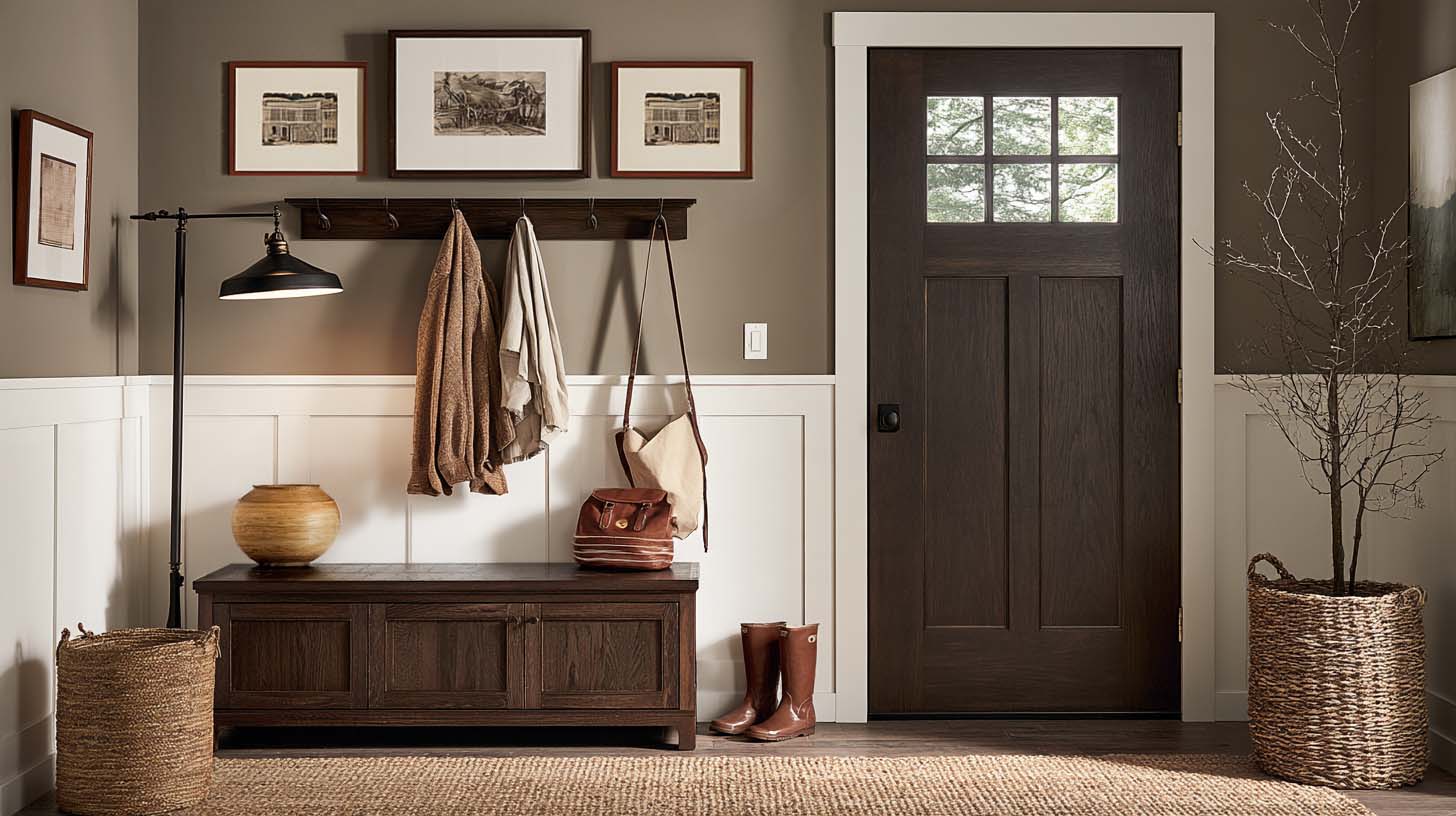
Do not assume every empty wall needs a cabinet. Live in the house long enough to discover what actually accumulates. Books. Shoes. Mail. Children's items. Office supplies. Records. Linens. Media equipment. Then buy storage around the problem. A cabinet purchased before you know what goes inside it may end up becoming another decorative object that still does not solve the clutter.
Closed Storage Usually Deserves Priority
When money is limited, useful closed storage often matters more than display shelving. It gives ordinary life somewhere to disappear. Then open shelving can hold the things that deserve visibility. Books. Collections. Art. Ceramics. This helps the home feel calm even before it is fully decorated.
Seventh, Begin Buying Art
Not "wall filler." Art. This does not mean expensive work. It means something you would still want if the room around it changed. Photography. Prints. Original paintings. Works on paper. Posters worth framing. Maps. Sculpture. Start slowly.
There is no reason to finish every wall during the first year. Art is one of the things most likely to improve when you give yourself time to develop taste.
Do Not Buy Generic Art to Finish the House
This is the first-home equivalent of buying fake plants for every empty corner. The room may technically look finished. It rarely becomes more personal. If you cannot find the right art yet, leave some walls empty. That is preferable to buying six objects you know you will eventually replace.
Eighth, Add Secondary Furniture
Once the primary rooms work, add a reading chair, bench, console, extra side table, office credenza, bedside chest, or occasional table. These pieces should solve specific spatial or functional needs. The house will tell you what it needs if you live in it long enough. Buying secondary furniture too early often produces crowded rooms because empty floor initially feels like wasted space.
Ninth, Let Collections and Personal Objects Accumulate
This is where the home begins becoming yours. Books. Travel objects. Inherited pieces. Ceramics. Photography. Records. Antiques. Tools. Models. Whatever reflects your actual interests. Do not shop for "personal objects." That is a contradiction. Let them arrive through life.
What Deserves Investment?
Not every purchase deserves the same budget. Spend more where you use the object constantly, where scale makes quality visible, where poor construction would become frustrating, where the piece is likely to move with you or remain long term, and where replacement would be difficult or wasteful. That may include the mattress, sofa, dining table, reading chair, rug, quality lighting, and custom storage where the home genuinely needs it.
What Can Be More Affordable?
Some supporting pieces can remain simple. Basic side tables. Simple frames. Some lamps. Secondary storage. Certain dining chairs. Textiles that may change as the room develops. Price is not always visible. A simple object with good proportion often looks better than an expensive object trying too hard to look luxurious.
Buy Used Furniture Where Age Helps
First homes are excellent places to begin learning antiques and vintage furniture. Consider used dining tables, chests, side tables, desks, bookcases, and some chairs. Older furniture can give a new home immediate chronology while often costing less than comparable new craftsmanship.
Inspect condition. Smell. Drawers. Joinery. Repairs. Do not buy simply because something is old. But do not assume new is automatically better either.
Avoid Buying Everything in One Finish
New homeowners often gravitate toward consistency. Walnut bed. Walnut dresser. Walnut nightstands. Walnut desk. Walnut dining table. Everything appears coordinated. The house starts looking like one furniture collection. Mix materials. Walnut + painted furniture. Oak + blackened metal. Wood + stone. Leather + wool. Old + new. The home gains depth through difference.
Do Not Furnish Rooms You Do Not Use Yet
Guest bedroom nobody visits. Formal dining room not used. Basement you have not figured out. Empty loft. There is no prize for completing them immediately. Prioritize your real life. Living room. Bedroom. Dining. Office if you work from home. Then expand. An unused room can remain largely empty without the home being unfinished.
Empty Space Is Useful Information
The first year in a home reveals things. Where everyone walks. Which room gets morning light. Where mail collects. Whether you actually use the formal dining room. Where guests gather. Which wall would be better for the television. Where a reading chair makes sense. Empty space allows these answers to appear. Do not eliminate all of it before you learn the house.
Paint Can Wait Until You Understand the Light
There is often pressure to paint before moving furniture in. Sometimes that is efficient. But if you do not yet understand the room's natural light or how your furniture colors behave there, waiting can produce a better result. The same olive that worked in your last home may look entirely different here. Live with samples. Watch morning and evening light. Then commit.
Window Treatments Often Belong Earlier Than Decor
Curtains and shades are frequently postponed because they do not feel exciting. They affect the room more than many accessories. Privacy. Light control. Verticality. Softness. Acoustics. A living room with proper curtains and very little decor can feel more finished than a room full of accessories with bare windows.
Make Sure the House Is Safe Before Styling It
A first home comes with basic responsibilities that are more important than furniture. Smoke alarms should be present inside each bedroom, outside sleeping areas, and on every level of the home; the U.S. Fire Administration also recommends testing alarms monthly and replacing units when they reach 10 years of age. (U.S. Fire Administration)
Tall furniture and televisions should also be secured appropriately. The CPSC continues to advise anchoring dressers, bookcases, and TVs to reduce tip-over hazards. (U.S. Consumer Product Safety Commission) A home is not finished because it photographs well. It also has to function safely.
Designer Eyes: Rank Every Purchase by Influence
Before buying, ask: How much of the room will this object control? A sofa controls a lot. A rug controls a lot. Curtains control a lot. One small decorative bowl controls almost nothing. This helps establish budget priorities. If you have $3,000 remaining, the room may improve more from a better rug and lamps than from twenty accessories. Spend according to influence.
Do Not Confuse "Complete" With "Full"
A room is complete when the function works, the furniture scale makes sense, lighting is sufficient, windows are addressed, there is enough storage, walls are not unintentionally empty, and the room has personality. That does not mean every corner contains something.
Negative space is part of a finished room. This becomes especially important in a first home because the temptation to fill emptiness is strong.
Let the House Improve With You
Your first home probably will not be your final expression of taste. Good. Buy enough quality that you are not constantly replacing everything. Leave enough flexibility that your preferences can evolve. Perhaps the living room becomes more traditional.
Perhaps the office gains antiques. Perhaps your art becomes more serious. Perhaps you begin collecting books or photography. A house should not be frozen around the person you were on closing day.
The TMH Perspective
Furnishing a first home is not a race toward visual completion. The goal is to establish a strong foundation and then allow judgment to improve. Buy the bed. Buy the sofa. Give yourself a table. Fix the lighting. Ground the important rooms with rugs. Solve storage. Then slow down.
A home filled too quickly often tells the story of one shopping season. A home furnished gradually begins to tell the story of the person living there. That is worth waiting for. The U.S. Fire Administration recommends smoke alarms inside every bedroom, outside each sleeping area, and on every level of the home, along with monthly testing and replacement once alarms reach 10 years old. (U.S. Fire Administration) The CPSC likewise continues to recommend anchoring TVs and tall furniture such as dressers and bookcases securely to the wall to reduce tip-over hazards. (U.S. Consumer Product Safety Commission)
If you are furnishing a new home and want to avoid spending heavily in the wrong order, TMH Full-Service Interior Design can establish the room-by-room hierarchy, furniture scale, materials, lighting, rugs, storage, and long-term direction before the purchasing begins.
Frequently Asked Questions
What furniture should I buy first for my first home?
Start with the bed, living-room seating, a dining surface, essential lighting, and storage. Rugs and secondary furniture should follow once the main layout is proven.
Should I furnish every room immediately?
No. Prioritize the rooms you actually use and allow less important spaces to remain unfinished while you learn how the home functions.
What first-home furniture is worth investing in?
The mattress, sofa, dining table, frequently used chairs, good rugs, lighting, and durable storage often justify more investment because of how heavily they are used and how much visual influence they carry.
Should I buy matching furniture sets?
Usually not. Matching sets are efficient but can make the home feel purchased all at once. Mixing materials, eras, and furniture sources generally creates more depth.
Is buying used furniture a good idea for a first home?
Yes, particularly for wood tables, chests, desks, cabinets, and some seating. Vintage and antique pieces can bring better material character and age into a new home, provided condition is evaluated carefully.


Facebook
Instagram
Youtube