How to Make a New House Look Old and Collected
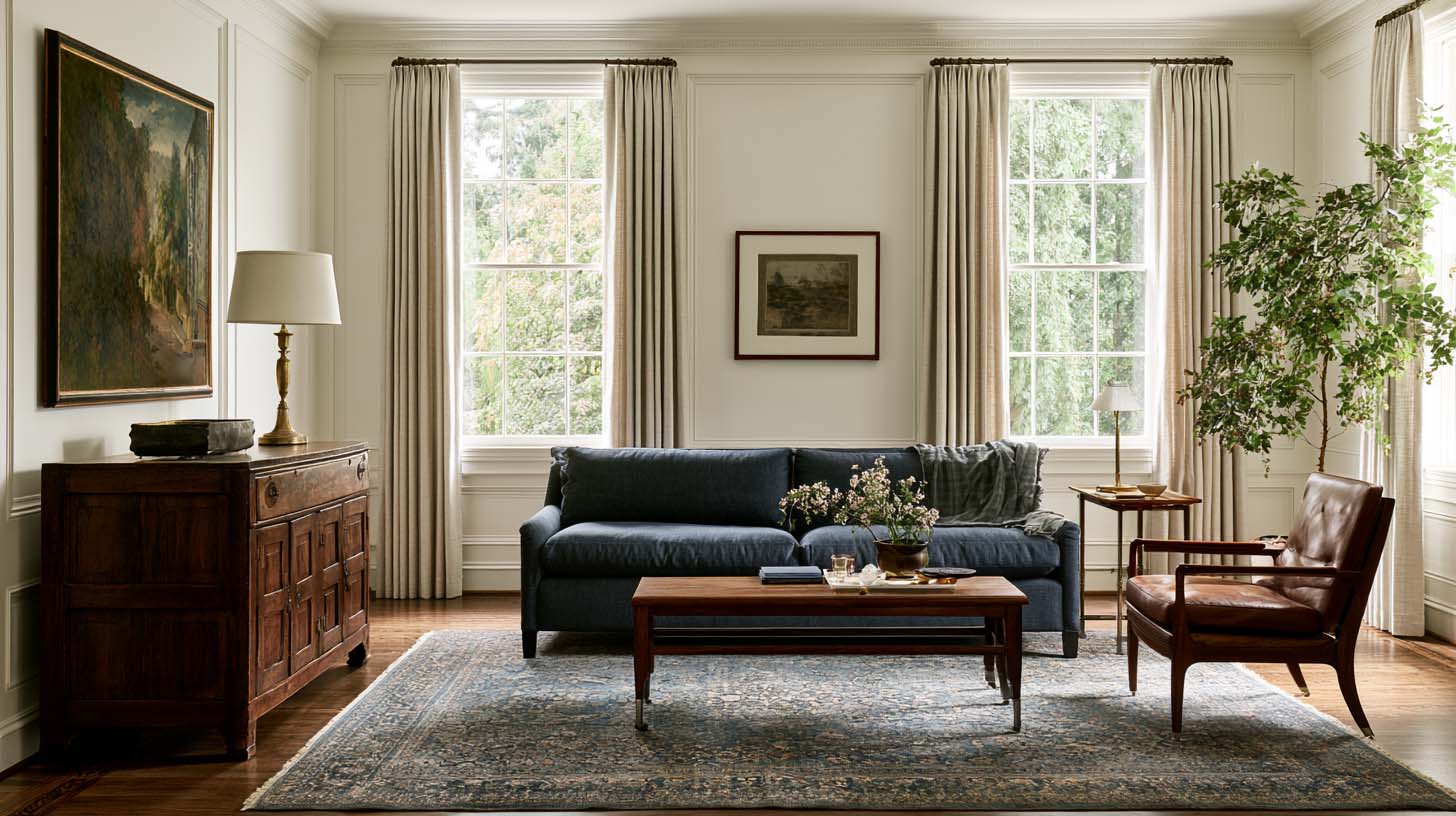
New houses have many advantages: straight walls, modern systems, efficient windows, fresh finishes, and nothing leaking into the basement from 1897. What they often lack is something considerably harder to specify on a construction drawing: time.
Old homes possess evidence of previous lives. Wood darkens. Stone wears. Brass changes. Floors acquire marks. Furniture comes from different periods. Books accumulate. Artwork arrives over decades rather than one delivery window. Architecture carries details that reflect the hands, technology, and expectations of another era.
The goal when figuring out how to make a new house look old is not to manufacture fake history. It is to give the house the depth, variation, craftsmanship, and accumulation that age normally creates naturally. That distinction is the difference between a timeless new home and a new home pretending to be historic.
First, Understand What Age Actually Gives a Room
People often say they want a home to feel "old" when what they actually want is one or more of the following: permanence, warmth, craftsmanship, irregularity, patina, architectural depth, biography, material richness, and a sense that the room was not assembled all at once. The National Trust for Historic Preservation describes part of the appeal of older buildings in terms of proportion, craftsmanship, harmony, and the marks of time. (Saving Places)
That is an important distinction. You do not need fake cracks in the plaster. You need the qualities that make old rooms compelling.
Do Not Buy the Entire House at Once
Few things make a new house feel newer than furnishing every room from one retailer in the same month: matching dining set, matching bedroom suite, matching living room, matching lamps, matching accessories. The result can be visually competent. It also tells you exactly when the home was furnished.
Collected interior design works differently. Rooms acquire pieces from different periods, sources, price levels, and stories. A new sofa might sit beside an antique side table. A recently commissioned painting might hang over an inherited chest. A contemporary lamp might stand on an old desk. The house begins feeling older because the objects do not share one manufacturing date. You cannot buy genuine accumulation instantly, but you can avoid actively eliminating it. Our Masculine Interior Style Guide covers how to mix periods on purpose instead of by accident, so the room reads as collected rather than mismatched.
Introduce One Real Antique Before Ten Reproductions
If you want age, buy something old. This sounds obvious, but many people instead purchase newly manufactured furniture designed to look old: a heavily distressed console, an artificially aged mirror, fake antique brass, or a mass produced "vintage" cabinet.
There is a place for reproductions. Good reproductions can solve size, budget, availability, and function problems extremely well. But one genuine antique brings something reproductions struggle to imitate: evidence. Old joinery. Wear in logical places. Oxidized hardware. Minor repairs. Wood that has changed color. A drawer that has been opened thousands of times. A surface touched by people who are gone. That object creates a time reference for everything around it.
Designer Eyes: Add Age Where the Eye Can Study It
An antique is particularly valuable in locations where people naturally get close enough to notice it: beside a chair, at an entry, as a desk, at the end of a hallway, under artwork. A tiny antique hidden across a large room contributes less than a substantial old piece someone encounters directly.
Use Natural Materials That Are Capable of Aging
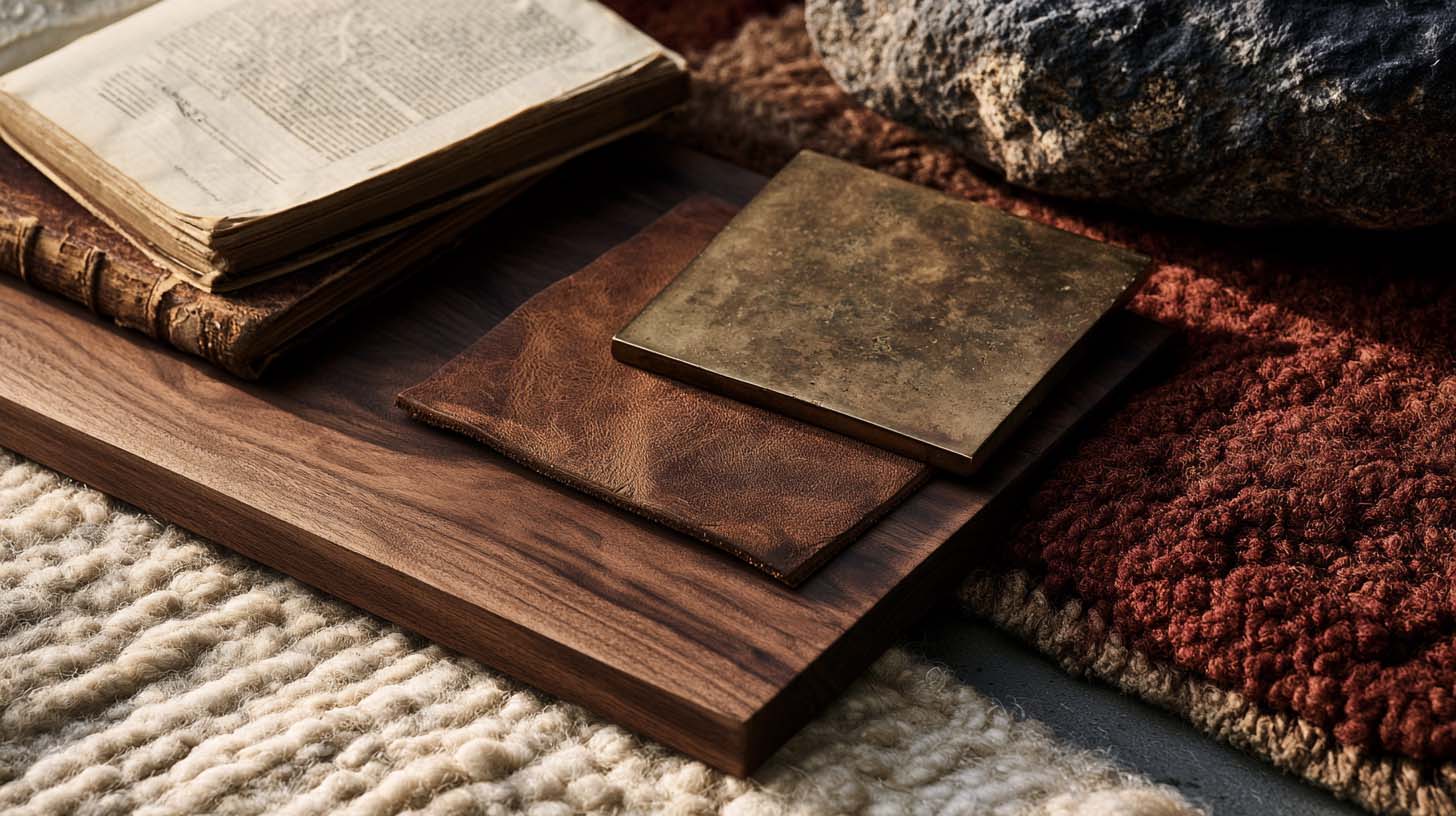
A timeless house should contain materials that have a future: wood, leather, wool, linen, stone, brass, bronze, clay, and plaster. These materials are not compelling because they instantly look old. They are compelling because their surfaces can respond to use and environment over time.
Historic furniture itself often combines wood, veneers, brass, steel, stone, glass, leather, and textiles, and museum conservators treat those materials according to the ways they naturally respond to light, humidity, and aging. (Met Museum Resources) In a home, we obviously are not trying to accelerate deterioration. The larger point is that authentic materials possess material behavior. Wood expands and contracts. Leather develops creases. Unlacquered brass oxidizes. Stone develops wear. Wool softens. Those changes are part of why old interiors possess depth.
Learn the Difference Between Patina and Fake Distress
Patina is the surface evidence produced by time, handling, oxidation, light, polishing, friction, and use. Distressing is something done to an object to imitate that evidence. Sometimes distressed finishes are convincing. Often they are not.
The problem is usually randomness. Real wear has logic. A brass handle changes where hands touch it. Leather softens at contact points. A wood floor wears along traffic paths. A table develops marks where people actually use it. Factory distressing frequently spreads "age" evenly across surfaces that would never wear evenly. If you want a home to become more convincing with age, choose materials that can develop legitimate patina rather than insisting that everything look pre-aged on delivery day.
Traditional Rugs Give a New Room an Immediate Past
A traditional rug is one of the fastest ways to introduce age and visual complexity: Persian, Turkish, Caucasian, kilim, old Oriental rugs. Even well selected vintage examples that are not rare or expensive can bring enormous character.
Why? Because the patterns are layered. The colors are rarely one dimensional. The surface has texture. Older rugs may contain fading and irregularity. They also immediately disrupt the showroom quality of brand new furniture. A new sofa sitting on a new solid rug remains very clearly new. Put the same sofa on a faded old rug and the room gains another chronological layer. The point is not pretending the sofa is antique. It is preventing the entire room from belonging to one moment.
Replace Builder Lighting With Fixtures That Have Character
New construction often contains technically adequate lighting chosen because it can be repeated efficiently: flush mounts, recessed lights, generic pendants, standard vanity fixtures. Nothing may be wrong with them, but they rarely contribute much to the character of the house.
Lighting is an excellent place to introduce historical reference. Consider aged brass, bronze, milk glass, opaline glass, shaded sconces, traditional lanterns, library lights, ceramic lamps, antique chandeliers, or vintage table lamps. Not every fixture needs to be old. A good reproduction or historically informed contemporary fixture can provide appropriate scale and material without creating electrical headaches. The important point is that a fixture should feel like an object, not simply equipment attached to the ceiling.
Give the Walls Architecture
One reason old houses feel established before furniture arrives is that the walls often already contain information: molding, paneling, trim, picture rails, deep casings, built-ins, plaster, fireplace surrounds, arches, and doors with substantial profiles. New construction frequently strips these layers away, and owners then try to restore depth with decorations.
Sometimes the better answer is architectural. Picture frame molding can give a large blank wall rhythm. A proper mantel establishes hierarchy. Built-in shelves create depth. Substantial window and door casings give openings visual importance. Paneled walls can transform a study. The Metropolitan Museum’s period rooms demonstrate the historic relationship between furniture, wall treatments, decorative art, and architecture. (The Metropolitan Museum of Art)
Do Not Add Historic Detail Without Understanding the Architecture
There is another danger. Once homeowners decide they want "old house character," historical elements begin appearing everywhere: Georgian molding, Victorian fireplace, Craftsman cabinetry, Tudor beams, French chandelier, English paneling, all in the same house.
Old houses often feel coherent because their details belong to a recognizable architectural logic. If you are adding historical character to a new build, decide what language makes sense. The National Trust recommends understanding and respecting an existing building's architectural features when working with historic interiors. (Saving Places) A new house has more freedom, but the principle remains valuable: details should look as though the same builder might reasonably have chosen them.
Old Books Add More Than Color
Books are useful in collected interiors because they naturally accumulate. Bindings vary. Sizes vary. Subjects reveal interests. Some become worn. Some are gifts. Some belonged to family. That makes them inherently different from decorative accessories chosen simultaneously.
Old books can add historical texture, but do not buy hundreds simply to fabricate a scholarly background. Ten books you actually care about are more convincing than fifty linear feet selected by spine color. Let the collection grow.
Hang Art That Does Not All Come From the Same Source
Art is one of the most effective ways to break the chronological sameness of a new house. Mix original paintings, works on paper, photography, antique prints, drawings, family pieces, contemporary art, maps, and small inherited works. The goal is not creating an eclectic gallery for its own sake. It is avoiding the visual effect of purchasing six coordinating prints as a wall package. Old homes feel layered partly because possessions come from different places. Your walls should be allowed to do the same.
Use Aged Metals Instead of Making Everything Matte Black
Matte black is useful. It has also become one of the strongest visual indicators of recent construction: black windows, black handles, black faucets, black lighting, black cabinet hardware. Again, none of this is inherently bad.
But if your goal is to make a new build feel timeless, aged metals frequently bring more nuance: unlacquered brass, antique brass, bronze, oil rubbed bronze, pewter, iron, or nickel where appropriate. Metals that vary with handling and light give the room a less factory perfect surface.
Introduce Irregularity Without Manufacturing Damage
Old houses are rarely perfectly repetitive. Doors vary. Floors shift. Objects do not align with millimeter precision. Furniture comes from different periods. A handmade ceramic bowl is slightly irregular. An old frame is imperfect. A rug is not mechanically exact.
You do not need crooked construction to capture some of this. Use handmade objects. Mix furniture periods. Allow natural materials to vary. Choose art in different frames. Avoid making every bookshelf perfectly symmetrical. The goal is controlled irregularity. This allows the house to feel lived rather than staged.
Collections Give the House Biography
A home begins feeling established when there are things inside it that could not have been purchased as part of the furnishing project: travel objects, books, art, records, antique tools, ceramics, family possessions, historical objects, photography, models, maps, and natural specimens.
Collections create continuity between the home and the occupant's life. This is particularly powerful in masculine interiors because it prevents the room from relying on stereotypically masculine decoration. A house full of meaningful possessions does not need to announce masculinity through signage. It simply reflects a man who has lived long enough to acquire interests.
Do Not Try to Finish the Collected Look
This is the paradox. The more aggressively you try to make the entire house look collected immediately, the less collected it tends to feel. Every room does not need an antique, old books, a traditional rug, a brass lamp, a vintage painting, a ceramic vessel, a sculpture, and a weathered table. That becomes another formula.
Leave some room unfinished. Buy the exceptional piece when you find it. Bring objects home from travel. Inherit something. Replace a temporary piece when you discover a better one. Move furniture between rooms. Let the house develop. Time is not the enemy of interior design. Sometimes it is one of the materials.
The TMH Perspective
In client work, new homes often present the same underlying issue: the individual items are attractive, but everything has the same age. New upholstery, new rug, new table, new lamp, new artwork, new accessories. Nothing is necessarily wrong, yet the room lacks tension. Adding even one legitimately older piece, or an object with personal history, often changes how the entire composition reads. The new furniture suddenly becomes contemporary by comparison rather than simply new. That relationship is what creates depth.
If your new home is beautiful but still feels as though everything arrived last month, the answer may not be more decorating. TMH's Full-Service Interior Design can develop the architecture, furniture, antiques, lighting, rugs, materials, artwork, and collected details as one environment, so the house feels established rather than newly assembled.
Frequently Asked Questions
What is the fastest way to make a new house look old?
Add one genuine antique in a spot people get close to, like an entry table or a desk, and put a traditional or vintage rug under your main seating. Those two moves do more than any amount of new "aged" decor.
Is it okay to mix antiques with modern furniture?
Yes. In fact it is preferable. A room where every piece is old can feel like a museum, and a room where every piece is new can feel like a showroom. Mixing periods is what makes a space feel collected rather than staged.
What is the difference between patina and distressed furniture?
Patina is real wear that develops logically, where hands and use actually touch an object. Distressing is manufactured to imitate that wear, and it often looks uniform in a way real aging never does.
Do I need architectural details like molding to make a new house feel old?
It helps, but it is not required. Molding, paneling, and built-ins give a room instant depth, but if that is not in the budget, natural materials, an antique or two, and a traditional rug can accomplish much of the same effect.


Facebook
Instagram
Youtube