How to Develop an Eye for Interior Design
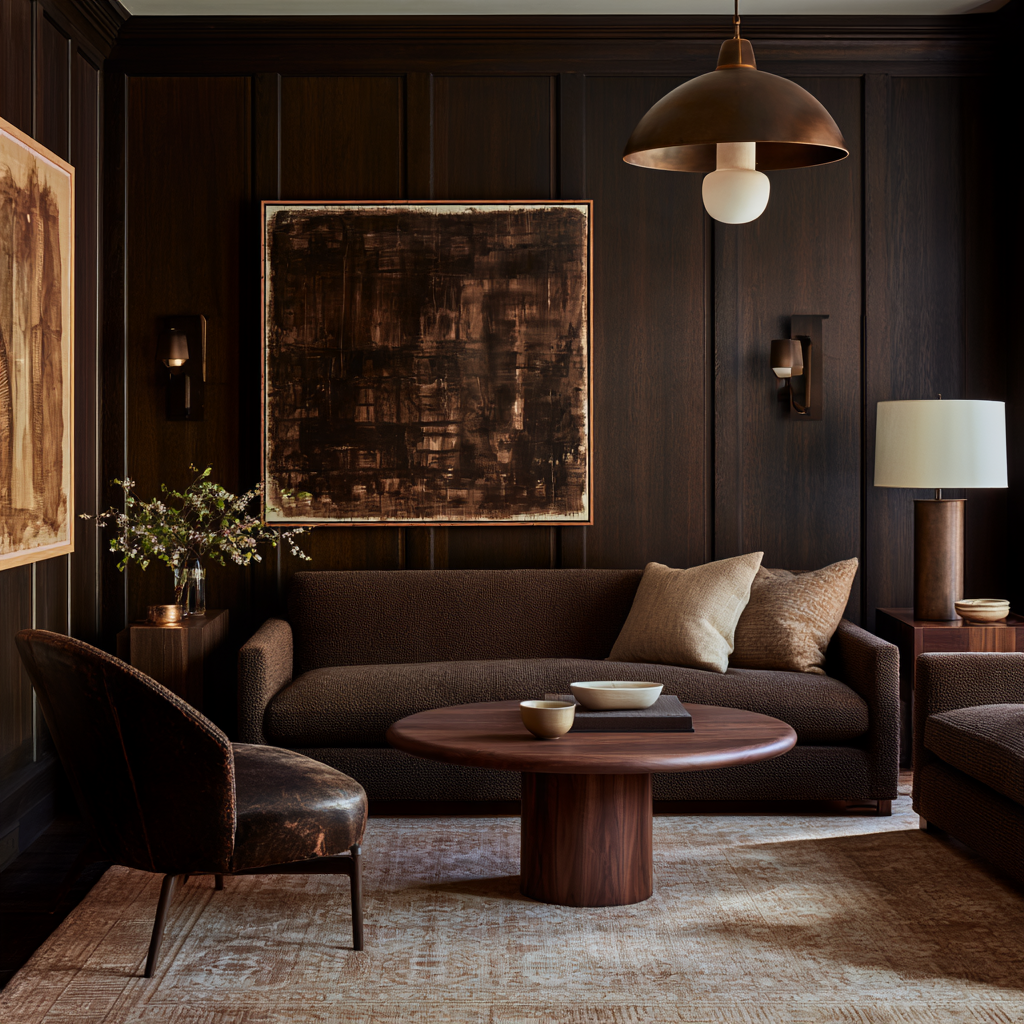
Some people seem to walk into a room and immediately see what is wrong. The sofa is too small. The artwork is hung too high. The rug is not carrying enough of the furniture. The lamp is technically attractive but visually too weak. The wood tones are not the problem. The fact that every piece has the same visual weight is.
Another person can stand in the same room, recognize that something feels wrong, and have no idea why. This difference is often described as talent. Or taste. Or having "an eye." That makes good design judgment sound mysterious. It is not.
Learning how to develop an eye for interior design is largely the process of becoming better at observation. You start noticing relationships rather than objects. Scale instead of size. Material quality instead of material names. Hierarchy instead of decoration. Architecture instead of Pinterest style.
What has been omitted as carefully as what has been added. The room stops being a collection of products. It becomes a composition. That can be learned. While you are learning, TMH's Full-Service Interior Design can plan your own rooms with you.
Stop Memorizing Decorating Rules
Rules can be useful when you are beginning. Hang curtains higher. Use a larger rug. Mix lighting sources. Do not make everything match. These ideas prevent predictable mistakes. But rules eventually become limiting because every room has different architecture.
Different light. Different proportions. Different furniture. Different purpose. A good designer does not enter a room with a fixed answer. He enters with better questions. What is the architecture asking for? Where is the visual weight? What deserves attention? What does the room need more of? What does it need less of? Is the problem color, or is color merely exposing a problem with scale? Learning those questions will take you further than memorizing a hundred decorating formulas.
Look at Excellent Rooms More Slowly
Most of us consume interiors quickly. Scroll. Like. Save. Next. That can give you broad exposure without teaching you much. If you genuinely want to learn interior design basics, slow down. Take one room you think is excellent. Do not immediately ask what style it is. Ask why it works. What is the largest object? What is the darkest? Where does your eye land first? How many wood tones are present? How many obvious colors? Are the furniture legs visually heavy or light? How much wall remains empty? What repeats? What appears only once?
Where is the oldest-looking piece? What would happen if the rug disappeared? What would happen if the artwork disappeared? This is visual training. The National Gallery of Art uses a similar principle in its visual-literacy programming: careful observation, interpretation, perspective, and analysis of composition can be developed through looking rather than requiring prior formal training. (National Gallery of Art) Interior design benefits from the same discipline.
Proportion Is One of the First Things to Learn
A beautiful object can still look wrong because its proportions are wrong for the room. Consider a lamp. The lamp itself may be excellent. But perhaps the shade is too narrow for the table. Or the whole fixture is too short beside a large sofa.
The homeowner sees "I need a better lamp." The designer may see "I need a larger lamp." Those are completely different diagnoses. Proportion concerns the relationship between dimensions. Table width to lamp width. Headboard height to wall height. Art size to furniture below it. Coffee-table length to sofa length. Chandelier size to dining table. As your eye improves, you begin seeing these relationships before you see the product.
Scale Is About the Room
Proportion and scale overlap, but it is useful to separate them. Scale asks whether something belongs to the overall space. A substantial Chesterfield might be beautifully proportioned internally. In a small apartment, it could still overwhelm the room.
A delicate chair might be perfectly elegant. Place it inside a library with tall built-ins and a large stone fireplace and it may look insignificant. This is why shopping from isolated product images is dangerous. There is no room around the object to tell you how large it will feel. Always put furniture back into a spatial context.
Learn to See Visual Weight
This is one of the most useful concepts in design. Two objects can occupy similar physical dimensions and possess completely different visual weight. A chair with black leather, broad arms, low block feet, and deep cushions looks heavier than a chair with cream linen, open wood arms, thin legs, and exposed floor beneath it.
The footprint may be almost identical. The eye does not read them equally. Visual weight can come from dark color, thickness, density, ground contact, pattern, material, height, mass, and complexity. This matters because rooms need balance without necessarily requiring symmetry.
A large dark cabinet on one side may need to be balanced by two lighter objects on the other. Your eye improves once you stop balancing object count and start balancing perceived weight.
Ignore Color for a Moment
Color is extremely noticeable, which makes it easy to blame. Sometimes a room feels wrong because the colors truly conflict. But color can also distract you from a more basic issue. Try mentally converting the room to grayscale. Or take a photograph and actually do it.
Now look at dark and light masses, large and small shapes, open and closed forms, and vertical and horizontal elements. Perhaps the "color problem" disappears. What remains is an enormous sofa, tiny artwork, a weak rug, and several undersized tables. That is much more useful information.
Study Silhouette
Furniture has outlines. Track arm. Rolled arm. Curved back. Square table. Round table. Turned leg. Plinth base. Thin metal frame. Rooms become monotonous when every silhouette behaves the same way. Square sofa. Square chair. Rectangular coffee table. Rectangular console. Rectangular art.
The color palette may be beautiful and the room can still feel visually flat. Introduce one curve. One turned leg. A circular table. A chair with a different arm profile. The eye begins detecting rhythm through shape.
Learn Material, Not Merely Material Names
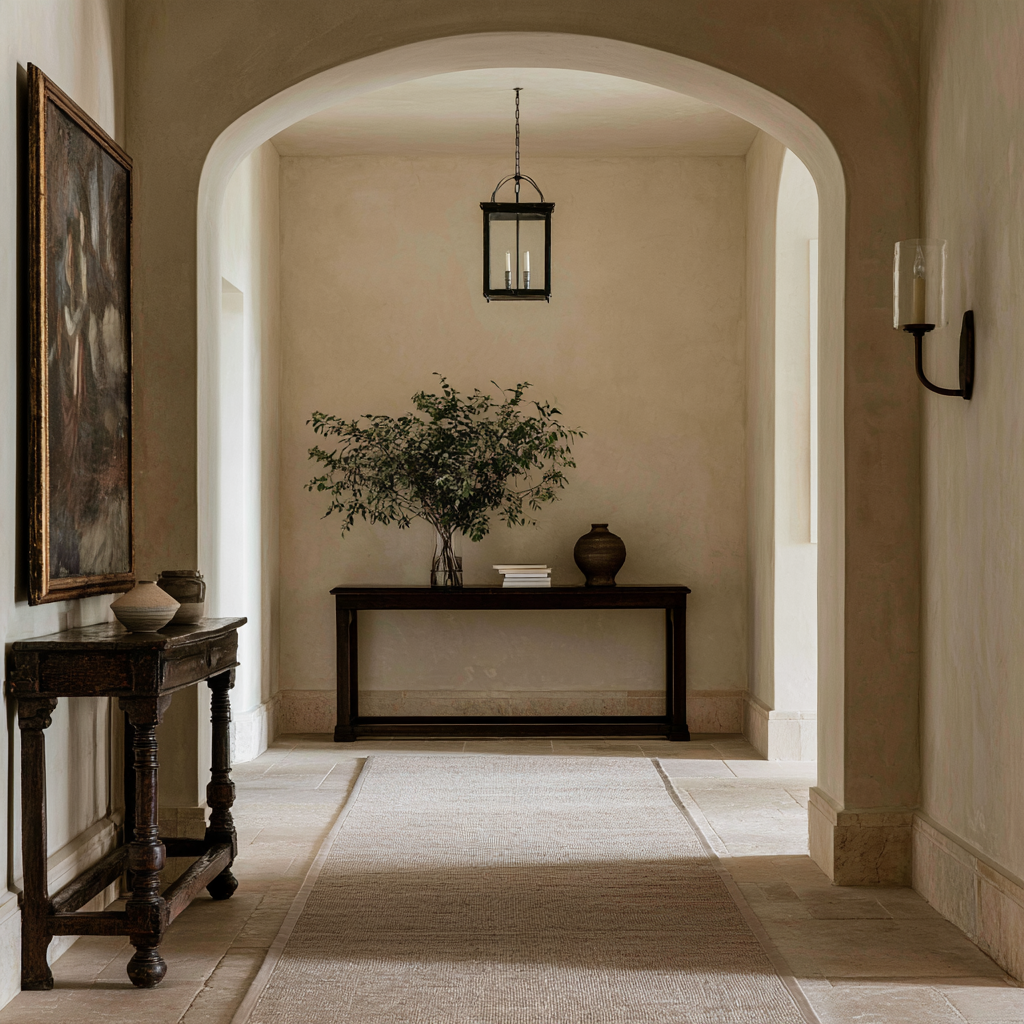
"Walnut" does not guarantee quality. Neither does leather, marble, brass, wool, or linen. The word tells you the category. You still need to look. Walnut can have beautiful grain or flat grain, a good matte finish or a muddy stain, excellent joinery or poor construction.
Leather can be supple, overly corrected, heavily pigmented, beautifully aging, or artificially distressed. Stone can be honed, polished, bookmatched, poorly selected, or badly fabricated. Developing taste means moving beyond prestige words. Learn what the material is actually doing.
Touch Things
Online images are useful. They cannot teach material quality completely. When possible: Run your hand across wood. Open the drawer. Sit in the chair. Touch the upholstery. Feel the hardware. Look at the underside. Look at the edge. Study how stone changes in raking light.
Notice how wool differs from a synthetic imitation. Furniture museums are particularly useful for this kind of education even when touching is obviously prohibited. The Smithsonian's furniture collections emphasize furniture as both functional craft and artistic expression, which is exactly the mindset worth developing: construction, shape, material, and personality belong together. (Smithsonian American Art Museum) You are training yourself to notice more than appearance.
Repetition Creates Cohesion
Look carefully at good rooms and you will often find repetition hiding everywhere. The same bronze appears in a lamp, a frame, and hardware. The same olive reappears in the rug, artwork, and a chair. Walnut occurs in two or three places. Curves repeat. Black outlines appear several times.
Repetition tells the eye that the objects belong together. It does not mean matching. Matching is obvious. Repetition can be subtle. A sophisticated room often uses repeated relationships instead of repeated products.
Learn the Difference Between Matching and Belonging
A matching sofa and chair belong together because a manufacturer made them identical. An antique chair, contemporary sofa, and traditional rug may belong together for far more interesting reasons. Similar visual weight. Repeated colors. Compatible proportions. Material contrast. Shared formality. Architecture that supports all three. This is a more advanced form of cohesion. The pieces did not come from the same place. Yet they feel as though they eventually found one another.
Negative Space Is Part of the Room
The inexperienced eye sees an empty wall and asks: What should go there? The more developed eye may ask: Does anything need to go there? This is an enormous shift. Empty space allows furniture to read clearly, artwork to gain authority, architectural detail to breathe, collections to remain legible, and the eye to rest.
Negative space is not unfinished space. It is space performing a visual job.
Stop Filling Corners Automatically
Empty corner. Plant. Another empty corner. Floor lamp. Another one. Chair. This habit creates rooms that feel solved through inventory. Some corners should remain empty. The question is whether the room needs function, balance, height, or light.
If none is missing, nothing may be required. The ability to leave space alone is one of the strongest signs that taste is developing.
Architecture Comes Before Decorating Style
Suppose you love English interiors. You live in a highly contemporary glass apartment. You could add heavy crown molding, historic paneling, ornate traditional furniture, and antique reproduction details. At some point the room can begin feeling like an imposed stage set.
The stronger approach is often to translate the qualities you love. Dark wood. Pattern. Age. Leather. Traditional rugs. Books. Warm light. Perhaps one antique. The architecture remains contemporary while the interior gains some of the character that attracted you to the older rooms. A trained eye asks, "What can the architecture support naturally?" Not, "How do I force this style into the room?"
Study Rooms That Are Different From Your Taste
This accelerates learning. If you love traditional interiors, study exceptional modern ones. If you love dark rooms, study excellent pale ones. If you love maximalism, examine minimalist architecture. Ask why it works even though you would not personally live there.
This separates design quality from personal preference. You begin learning to say, "That is good. Even if it is not mine." That distinction is essential to developing discernment.
Learn From Bad Rooms Too
A bad room can sometimes teach faster than a good one because the problem is more visible. Look for too-small furniture, too many competing finishes, all furniture against walls, tiny rugs, artwork floating too high, every object dark, everything matching, everything trying to be a focal point, one central overhead light, and no evidence of the owner.
Do not simply label the room ugly. Diagnose it. What one change would improve it most? That is the exercise.
Age Is a Design Material
Older objects do something new objects cannot. They introduce another point in time. An antique chair. Old rug. Vintage lamp. Inherited table. Older artwork. A room furnished entirely in one purchasing cycle can feel visually thin even when every object is excellent.
Age introduces chronology. It also teaches you to look differently. You begin noticing patina, wear, historical construction, old proportions, and past design languages. These make contemporary furniture easier to evaluate because you have a broader reference library.
Go to Antique Shops Without Shopping
You do not need to buy anything. Walk slowly. Open drawers if permitted. Look underneath. Study hardware. Compare wood. Look at old upholstery. Notice furniture dimensions. You may discover that chairs were smaller. Tables were sometimes lighter. Cabinet construction differs.
Veneer appears in fine work far more often than popular furniture advice suggests. Exposure expands your visual vocabulary.
Go to Expensive Furniture Stores Too
Not to imitate. To calibrate. What does excellent upholstery look like? How does a good drawer feel? How substantial is the hardware? What does fine wool upholstery look like under light? How do expensive pieces handle seams and edges? Now visit a mid-market store. Compare.
The objective is not becoming a luxury shopper. It is making quality differences easier to detect.
Photography Can Teach Composition
Take photographs of your own rooms. Do not edit them for social media. Study them. Photography compresses depth and makes certain relationships more visible. The National Gallery's photography education materials explicitly use changes in viewpoint and composition to teach how visual choices alter what a viewer sees and understands. (National Gallery of Art)
Try the same exercise at home. Photograph the room from the doorway, the opposite corner, a seated position, and a low angle. What becomes obvious? Perhaps the chair looks stranded. The lamp is tiny. The artwork disappears. The room has no dark anchor. You are borrowing the camera's eye to train your own.
Study One Variable at a Time
Do not attempt to learn everything at once. Spend a week noticing only rugs. Next week, lamps. Then sofa arm styles, curtains, furniture legs, artwork scale, and wood finishes. This builds a mental reference library faster because the comparison becomes focused.
You begin seeing patterns. "This lamp keeps looking better because the base is larger." "These sofas look more established because the arms have greater visual weight." "These rooms all use larger rugs than I would have chosen." Now taste becomes less mysterious.
Save Rooms for Specific Reasons
Instead of one enormous inspiration folder, create categories. Excellent lighting. Good rug scale. Strong furniture mix. Paint color. Art placement. Masculine bedroom. Collected room. Excellent use of antiques. When saving an image, write one sentence explaining why.
"This room uses a light sofa to give dark paneling relief." "This chair works because its curved silhouette breaks up the rectangular furniture." You are converting passive inspiration into active analysis.
Revisit What You Saved a Year Ago
This is one of the most revealing tests of taste. Some images will still look excellent. Others will suddenly seem over-styled, trendy, too dark, too coordinated, or overfilled. You may wonder why you saved them. Good. That is evidence that your eye changed. Taste develops partly through rejection.
Designer Eyes: The Five-Minute Room Exercise
When you enter a good restaurant, hotel, library, club, museum room, or private home, take five minutes. Ask: 1. What is carrying the room? Architecture? Furniture? View? Art? Material? 2. Where is the visual weight? Dark cabinet? Sofa? Rug? Fireplace? 3. What repeats? Color? Material? Shape? 4. What has been deliberately left empty? 5. What would I remove first if something had to go? Do this consistently and ordinary rooms become design lessons.
Learn to Explain Why You Like Something
"I like it" is useful. "I like it because..." develops taste. Perhaps: The proportions are substantial without being heavy. The walnut brings warmth against the gray stone. The rug introduces age into otherwise modern furniture. The room has dark walls but enough cream upholstery to remain legible.
The lighting establishes three separate areas. Once you can explain preference, you can reproduce principles without copying rooms. That is the difference between inspiration and understanding.
Learn to Disagree With Good Rooms
Eventually you should be able to look at an excellent room and say, "I understand why this works. I would still change that." That is a mature position. Taste is not obedience to authority. It is informed preference. You learn the principles well enough to know when your own judgment differs.
Stop Asking Whether Something Is "In"
Trend awareness can be useful. It should not become your primary evaluation tool. A piece can be unfashionable and excellent. Fashionable and mediocre. Ask: Is the proportion good? Is the material credible? Does it belong to the architecture? Will I want to keep it? Does it improve the composition? Those questions age better than: Is everyone using this right now?
Good Taste Is Not Expensive Taste
Some people develop an eye and immediately equate improvement with higher price. That is another mistake. Good taste can recognize a simple well-proportioned chair, a humble vintage table, an inexpensive lamp with excellent form, a restrained cotton curtain, and good art bought cheaply. Taste improves purchasing because it helps distinguish what needs quality from what merely needs judgment.
The TMH Perspective
Developing an eye is not learning how to identify expensive rooms. It is learning to see relationships. You begin noticing why the lamp feels wrong. Why a rug changes the room. Why the antique works beside the modern sofa. Why the chair with the prettier fabric is still the weaker chair.
Why the empty corner should remain empty. Why one room feels collected and another simply coordinated. Eventually you do not need the rule first. You see the problem. That is what an eye for design really is. Not intuition without explanation. Observation practiced long enough that the explanation becomes fast.
If you want to see those principles applied directly to a room you already own, TMH's Full-Service Interior Design brings our designer's eye to the whole room: what matters most, what we would change first, and how it all comes together.
Prefer to design it yourself? Homefeld, our guided room design tool, lets you upload photos of your room, explore a new look, and get a practical plan to put it together.
Frequently Asked Questions
Can you actually develop an eye for interior design?
Yes. Repeated observation, comparison, analysis, exposure to excellent rooms, and learning concepts such as scale, proportion, visual weight, material quality, and negative space improve visual judgment.
How do I develop good taste in interiors?
Look widely, study strong rooms slowly, expose yourself to styles outside your preference, visit museums and furniture stores, analyze why you like something, and revisit old preferences as your eye develops.
What should I learn first in interior design?
Start with scale, proportion, furniture placement, lighting, material relationships, and visual hierarchy. These influence rooms more deeply than accessory styling.
Do I need formal interior design training to have good taste?
No. Formal education can teach technical and professional skills, but visual discernment itself can be strengthened through deliberate observation and practice.


Facebook
Instagram
Youtube