What Makes an Interior Feel Masculine?
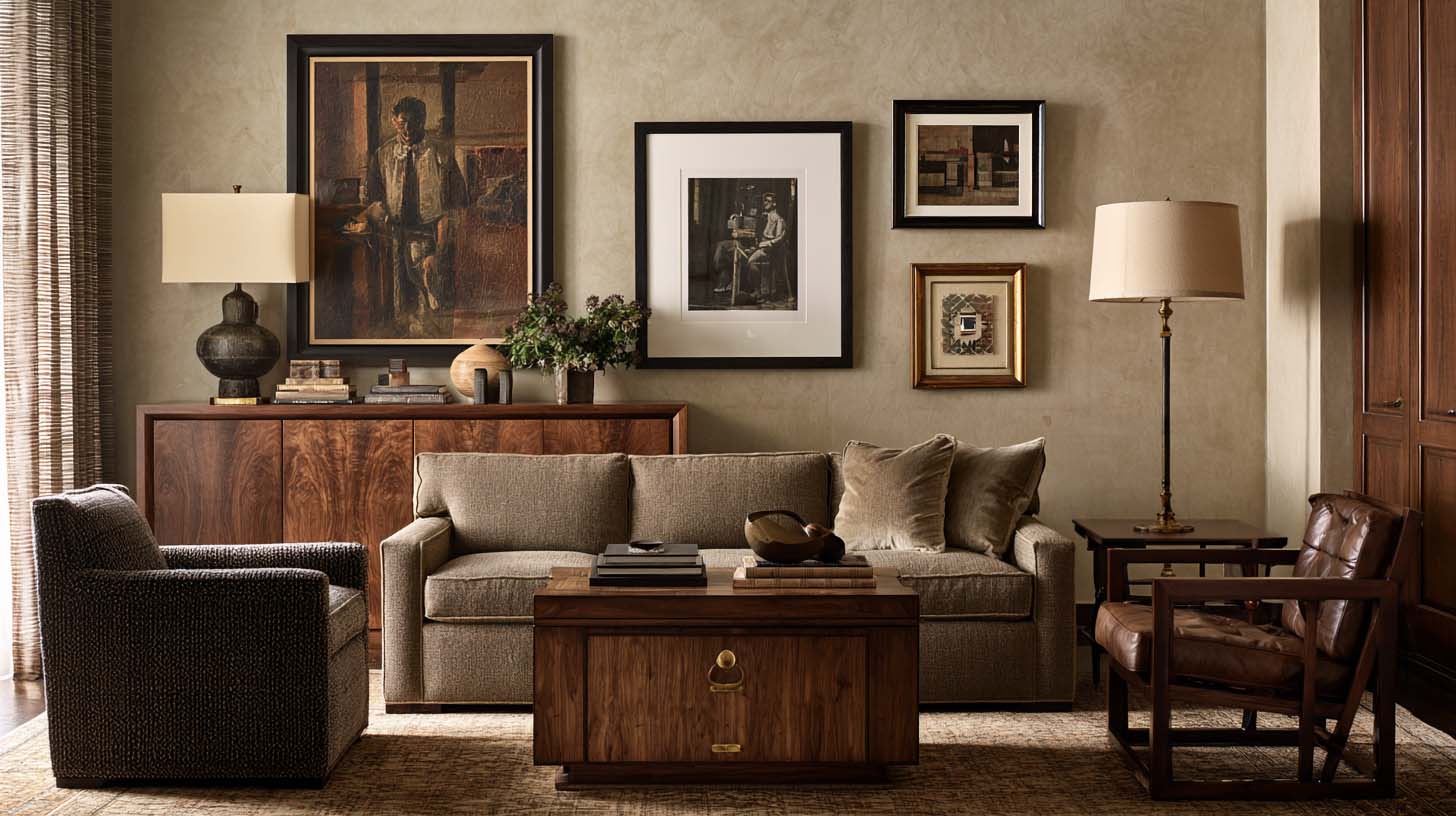
Search for masculine interior design and you will quickly encounter a familiar collection of things.
Dark walls. Leather sofas. Black metal. Whiskey bottles. Industrial lighting. Perhaps a vintage motorcycle photograph hanging somewhere in the background.
None of those things are inherently wrong. But none of them, individually or collectively, explain what actually makes an interior feel masculine.
A room can be painted cream, furnished with linen, filled with antiques, and still possess considerable masculine character. Another room can contain black walls, a leather Chesterfield, and enough dark wood to furnish a private club, and somehow feel like a caricature.
The difference is that masculinity in an interior is not primarily created through objects associated with men. It is created through the way the room carries itself.
Proportion. Weight. Material. Restraint. Utility. Architecture. Age. Contrast. And eventually, the identity of the person who lives there.
Understanding those principles is far more useful than memorizing a list of supposedly masculine decorating ideas. If you are not sure what your own room needs to feel confident, TMH's Full-Service Interior Design can plan it with you.
Masculine Interior Design Begins With Visual Weight
One of the easiest qualities to recognize in a masculine room is visual weight.
Furniture feels substantial rather than delicate. A table appears capable of remaining in the house for decades. Chairs have enough presence to anchor their portion of the room. Lamps possess mass. Artwork is appropriately scaled.
This does not mean everything needs to be enormous. Visual weight comes from several characteristics working together: thickness, proportion, material, color, silhouette, and the amount of visual space an object occupies.
Consider two writing desks of identical dimensions. One might have slender tapered legs, a thin top, and delicate brass hardware. Another might have a thick walnut writing surface, substantial drawers, and broad pedestal bases.
They occupy approximately the same physical footprint. They do not possess the same visual weight. The second naturally introduces greater gravity into the room.
This is one reason substantial furniture often plays such an important role in masculine home design. It gives the interior an underlying sense of permanence.
Designer Eyes: Look at the Legs
When evaluating furniture, ignore the upholstery or finish for a moment and look at its structural members.
Leg thickness, arm width, apron depth, and the relationship between the base and top tell you surprisingly much about how substantial a piece will feel. This is especially useful when shopping online, where photographs can disguise scale.
Masculinity Is Not the Same as Darkness
Dark rooms can be extraordinarily masculine. So can light rooms.
Confusing darkness with masculinity has probably done more than anything else to flatten masculine interiors into a recognizable formula.
Charcoal, blackened green, navy, and deep brown can introduce gravity. But the same can be achieved with warm oak, limestone, cream plaster, tobacco leather, aged brass, and a heavy wool rug.
A light room with substantial architecture and grounded furniture may feel considerably more masculine than a black room filled with thin, inexpensive furniture.
The important question is not how dark the room is. It is how much visual authority the room possesses. Color contributes to that answer, but it does not determine it.
This distinction becomes especially important when choosing a masculine color palette for an entire home. Masculinity can be warm or cool, dark or light, traditional or contemporary. The palette should support the room rather than serve as proof that the room is masculine. If you are not sure where to start, TMH's free 10 Masculine Color Palettes guide is a useful first step before you buy paint.
Material Honesty Creates Character
Masculine interiors tend to respond particularly well to materials that reveal what they are.
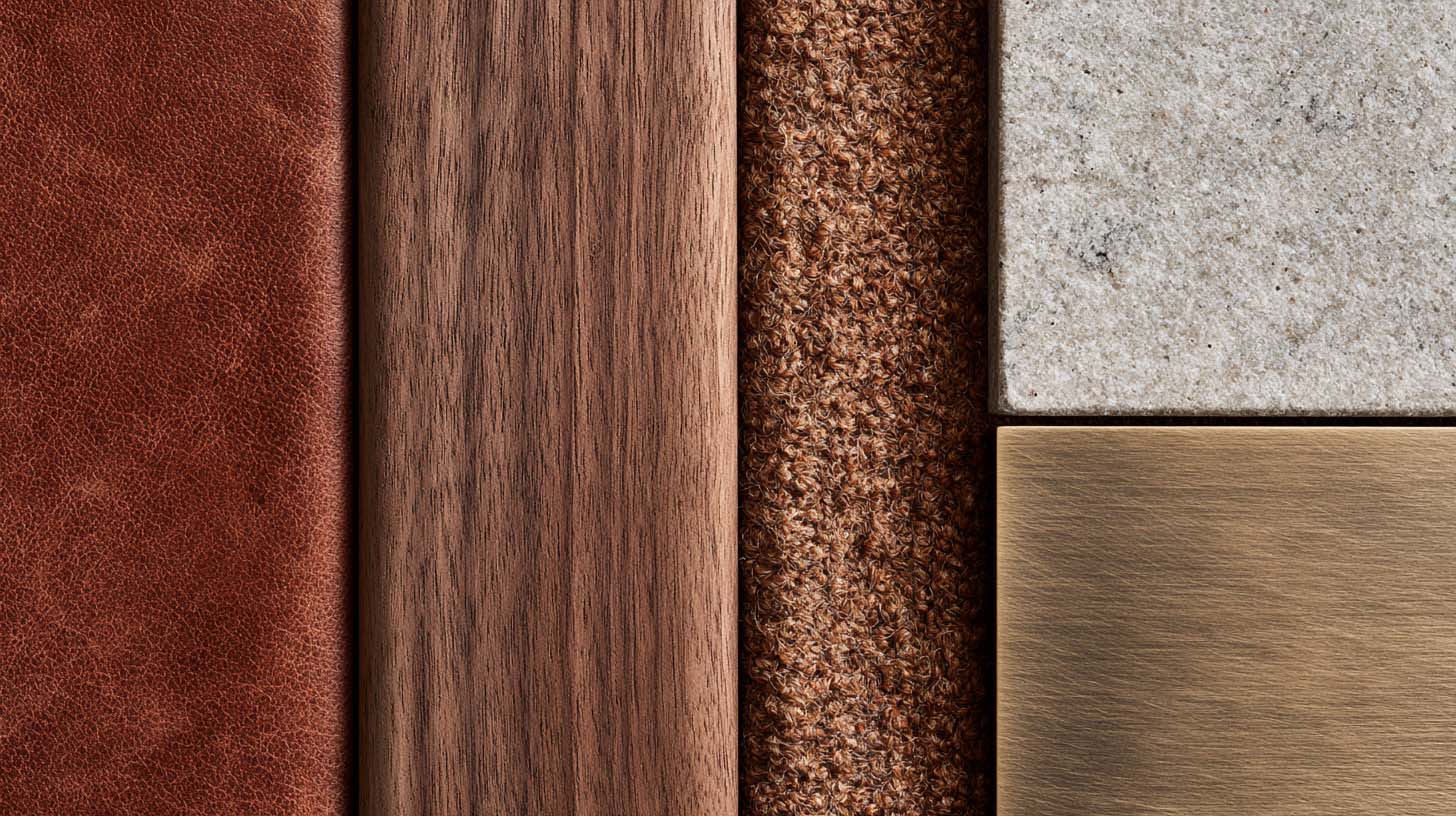
Wood should look and feel like wood. Stone should retain some evidence of geology. Leather should develop creases and variation. Metal can oxidize. Wool should possess texture. Linen is allowed to wrinkle.
These materials become more interesting because their surfaces reveal use and age rather than attempting to remain perfectly unchanged.
A walnut desk acquires small marks. Unlacquered brass darkens where it is handled. Vegetable-tanned leather develops variation. A wool rug softens with years of traffic. The object begins recording the life around it.
This is one reason natural materials have such enduring relevance to masculine interior design. Their character does not depend on ornament. Their substance provides the interest.
That does not mean synthetic materials are forbidden or every piece must become an heirloom. It means materials should generally be selected with an understanding of how they look, feel, perform, and age.
Restraint Matters More Than Masculine Decoration
One of the quickest ways to weaken a masculine room is trying too hard to make it masculine.
The signs are usually obvious: a whiskey sign above the bar, a collection of novelty cigar accessories, industrial pipe shelving, black furniture because black supposedly means masculine, or several pieces of automobile artwork in a room simply because the owner likes cars.
Nothing is inherently wrong with displaying whiskey, cigars, or automobiles if those things genuinely matter to the owner. The problem occurs when an interior begins communicating a category rather than a person.
Good masculine interiors tend to exercise restraint. They allow materials, furniture, and meaningful possessions to establish character without constantly announcing what kind of room this is supposed to be.
A single framed photograph of a meaningful automobile may say considerably more than a wall covered in generic automotive imagery. A bottle of bourbon sitting naturally on a bar says more than a neon bourbon sign installed to establish atmosphere.
The room becomes more convincing when its identity appears incidental rather than staged.
Substantial Silhouettes Establish the Foundation
Silhouette matters.
A rolled-arm sofa communicates something different from a thin modular sectional. A barrel-backed club chair behaves differently in a room than a lightweight accent chair. A pedestal dining table creates a different center of gravity than a narrow table supported by delicate legs.
Masculine furniture frequently benefits from forms that feel grounded. That might mean broad arms, deeper seats, substantial headboards, thick table tops, architectural casegoods, grounded bases, strong vertical elements, or simple but confident geometry.
None of these features require furniture to become bulky. The objective is presence without clumsiness.
This is where proportion becomes more important than size. A beautifully proportioned chair can feel powerful without being oversized. An enormous sectional can occupy half a room and still feel visually weak. Masculinity is not measured in cubic feet.
Architecture Can Do More Than Decoration Ever Will
There is a point at which adding more objects stops improving a room. Architecture changes the equation entirely.
Wall paneling, substantial trim, ceiling beams, built-in cabinetry, stone fireplaces, plaster, archways, handsome doors, and properly scaled molding create character before furniture enters the room.
That matters because architecture establishes hierarchy. Imagine an empty room with white drywall, builder-grade baseboards, and a flush-mounted ceiling light. Now imagine the same dimensions with oak paneling, a limestone fireplace, substantial crown molding, and deep window casings.
Neither room contains furniture. Yet one already possesses far more character.
This is why attempting to decorate around weak architecture can become frustrating. Sometimes the room does not need another object. It needs stronger bones.
Even modest interventions, such as painting trim and walls together, improving casing profiles, replacing undersized lighting, or adding a simple chair rail, can alter how established a room feels.
Contrast Gives Masculine Rooms Definition
Masculine rooms frequently benefit from contrast, not necessarily dramatic black-and-white contrast, but tension between materials and qualities.
Hard stone beside soft wool. Dark walnut against warm plaster. A worn antique beneath contemporary artwork. Polished brass against heavily grained oak. A tailored sofa sitting on an old Persian rug. Smooth leather beside coarse linen.
These combinations prevent the room from becoming one-dimensional. This is particularly important in dark interiors. If every surface is dark, smooth, and heavy, the room can become visually dead. Contrast gives the eye something to distinguish.
The objective is not uniform masculinity. It is a composition in which different materials reinforce one another.
Patina Makes Masculinity Feel Lived Rather Than Manufactured
There is something inherently convincing about a room containing objects that have survived time: a scratched writing desk, faded leather, a rug whose colors have softened, old books, darkened brass, a chair repaired rather than discarded.
These imperfections introduce biography.
Patina should not be confused with neglect. A damaged object and an aging object are not necessarily the same thing. Good patina results from material changing honestly through time and use.
A room in which every surface looks as though it arrived from the factory yesterday can certainly be beautiful. But it is difficult for that room to possess the same sense of permanence as one containing objects from different moments in time.
Utility Is Part of the Aesthetic
Masculine rooms tend to become more convincing when the objects inside them have a reason to exist.
A reading lamp belongs beside the chair because someone reads there. The desk contains drawers because work happens there. Books occupy shelves because they are read. A decanter sits near glasses because drinks are served. A wool throw lives on the chair because the room becomes cold at night.
This creates an important distinction between styling and use. Styled rooms often arrange objects to produce photographs. Developed homes arrange objects around life. The best interiors manage to do both.
Beauty and utility are not opposing ambitions. In many masculine interiors, utility actually contributes to beauty because it gives the room credibility.
Masculinity Can Be Refined
There is no requirement that a masculine interior feel rugged.
Mahogany, polished brass, fine wool, tailored upholstery, classical artwork, and silk lampshades can create a deeply masculine room. So can raw oak, iron, stone, and canvas.
The difference is the expression of masculinity. One is refined. One is rugged. Other rooms might feel scholarly, contemporary, aristocratic, rustic, artistic, minimal, or worldly.
This is why defining masculine interior design as a single aesthetic is ultimately limiting. There are many masculine design languages. The deeper principles remain surprisingly consistent: weight, restraint, material integrity, purpose, character.
The Most Important Ingredient Is Identity
Eventually, a masculine home should stop looking like someone's idea of masculine design. It should start looking like the man who lives there.
His books. His interests. His travels. His profession. His artwork. His collections. His inherited objects. His habits. His standards.
A room becomes considerably more interesting when you can infer something about its occupant without seeing him. Perhaps there are books on military history beside an antique map. Perhaps the owner collects contemporary photography. Maybe there is a model of an aircraft he actually flew, rather than aviation decor purchased because it looked masculine. Maybe an old chair belonged to his grandfather.
Those things cannot be recreated through shopping. They give the home biography. This is the point at which interior design becomes more than assembling attractive furniture. The home becomes a portrait.
What Makes a Room Masculine?
If you are trying to make a room feel more masculine, resist beginning with a shopping list. Instead, evaluate the room through a more useful set of questions.
Does the furniture possess enough visual weight? Are the materials convincing? Does the room contain contrast? Is there architectural character? Are objects useful or merely decorative? Has the room been over-styled? Are there materials capable of aging gracefully? Does anything reveal who lives here?
Most importantly: does the room feel confident without constantly trying to prove what it is? That is usually where the strongest masculine interiors begin.
The TMH Perspective
Masculine design is not a look to be assembled. It is the result of a few honest decisions made in the right order: weight, material, restraint, and what the room is actually for.
When those decisions are made together, the room does not need to announce anything. It reads as calm and confident, and it belongs to the person who lives there.
If you want that confidence carried through your own home, TMH's Full-Service Interior Design can develop the furniture, materials, lighting, and art as one coherent room.
Prefer to design it yourself? Homefeld, our guided room design tool, lets you upload photos of your room, explore a new look, and get a practical plan to put it together.
Frequently Asked Questions
Does masculine interior design have to be dark?
No. Darkness is one way to introduce gravity into a room, but it is not the only way. Warm oak, limestone, cream plaster, and heavy wool textures can create the same sense of authority in a light-filled room that charcoal walls create in a dark one.
What is the fastest way to make a room feel more masculine?
Look at the furniture's structural members first. Legs, arms, and bases with real thickness and proportion do more for a room's masculine character than any single decorative object.
Is masculine interior design just about buying "manly" decor?
No, and this is one of the most common mistakes. Objects purchased specifically because they are marketed as masculine, such as novelty signs or generic automotive art, tend to weaken a room. Restraint and material honesty do far more work than decoration aimed at a category rather than a person.
How do I know if my furniture has enough visual weight?
Compare pieces of similar size by their proportion, silhouette, and material rather than their footprint. A thick walnut desk with substantial drawers will always read as more grounded than a slender, delicate piece occupying the same square footage.


Facebook
Instagram
Youtube