Masculine Interior Design Styles Every Man Should Know
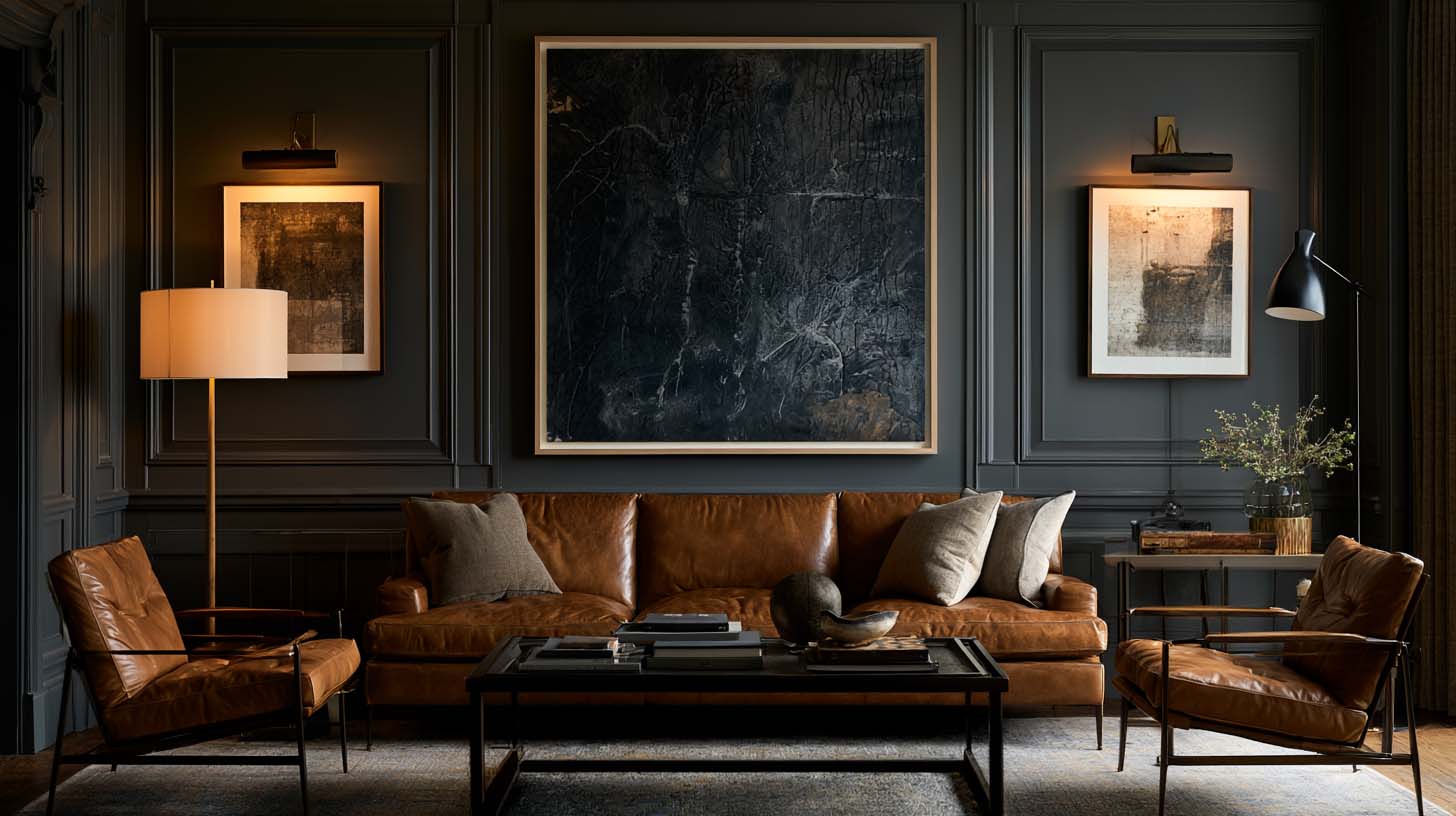
There is no single masculine interior design style, and that distinction matters. Masculinity can appear in a paneled English study filled with antiques, a restrained modern apartment furnished in walnut and stone, a Western home layered in leather and wool, or a mid-century house whose strongest features are architecture, proportion, and beautifully made furniture. All of these can feel masculine. They simply speak different design languages.
The problem starts when those languages get treated as interchangeable. A Chesterfield sofa, industrial pipe shelving, a Persian rug, a mid-century credenza, rustic beams, and minimalist black lighting can each be called "masculine" on their own. Put them together without understanding where they come from, though, and the result often feels less masculine than simply confused.
Learning the major masculine interior design styles gives you something more useful than a folder of inspiration photos: a vocabulary. Once you understand that vocabulary, you can decide which parts actually belong in your home. If you are still not sure where you land, a Room Audit is a fast way to get an outside read on your space before you commit to a direction.
Style Is More Than a Collection of Objects
An interior style is not determined by one chair, paint color, or material. It is a recognizable relationship between architecture, furniture silhouettes, materials, color, pattern, ornament, historical reference, formality, and proportion.
Traditional interiors, for example, often rely on symmetry, classical architectural detail, familiar furniture silhouettes, and materials such as wool, velvet, wood, and brass. (Architectural Digest) Mid-century modern design emerged from a very different lineage, emphasizing function, simpler forms, organic influence, and new relationships between architecture, furniture, and nature. (Architectural Digest) Both can become masculine, but they arrive there differently, which is exactly why style should be understood before it gets mixed.
1. Traditional Gentleman
Traditional Gentleman is probably the visual language most immediately associated with The Masculine Home: substantial wood furniture, wool rugs, restrained leather, tailored upholstery, brass lighting, books, framed art, cabinetry, and architectural detail. The best versions feel established rather than theatrical.
Typical materials include walnut, mahogany, oak, leather, wool, linen, brass, bronze, marble, and aged metals. Furniture tends to have recognizable historical silhouettes: rolled arms, club chairs, wingbacks, pedestal tables, writing desks, bookcases, chests, and consoles. Colors may include tobacco, oxblood, olive, camel, warm cream, charcoal, brown, navy, and blackened green.
Where It Goes Wrong
The danger is turning the room into a costume. Too much tufted leather, too many whiskey references, dark paneling everywhere, hunting imagery, tartan, brass, and shelves of unread leather-bound books can make a room resemble a hospitality concept rather than someone's home. Traditional masculinity is strongest when the references stay restrained.
Designer Eyes
Look for hierarchy. A strong traditional room usually has one or two dominant architectural or furniture elements, and everything else supports them. If every piece is trying to look important, nothing is.
2. English Country Masculine
English Country is more relaxed than the formal gentleman's study, and it tolerates wear. In fact, it often improves because of it. The masculine version may include worn leather chairs, patterned wool, old wood tables, traditional rugs, books, botanical or sporting art, antique casegoods, brass lamps, pottery, linen, and collected objects. Rooms rarely look newly installed, and that is part of the appeal.
You will often find floral or botanical patterns beside tartan, stripes, leather, and antique wood. This flexibility matters because masculine interiors do not need to eliminate pattern or decoration to feel masculine.
The Defining Character
English Country masculinity comes through age, utility, and accumulated familiarity rather than severity. A chair can be comfortable rather than architectural. A room can hold several patterns. A wooden surface can show wear. The interior feels inhabited.
Where It Goes Wrong
Too many fox-hunting references, equestrian prints, plaid textiles, and deliberately distressed objects can push the style into theme. The room should look as though things accumulated naturally, not as though someone ordered the "English gentleman" package.
3. Dark Academia
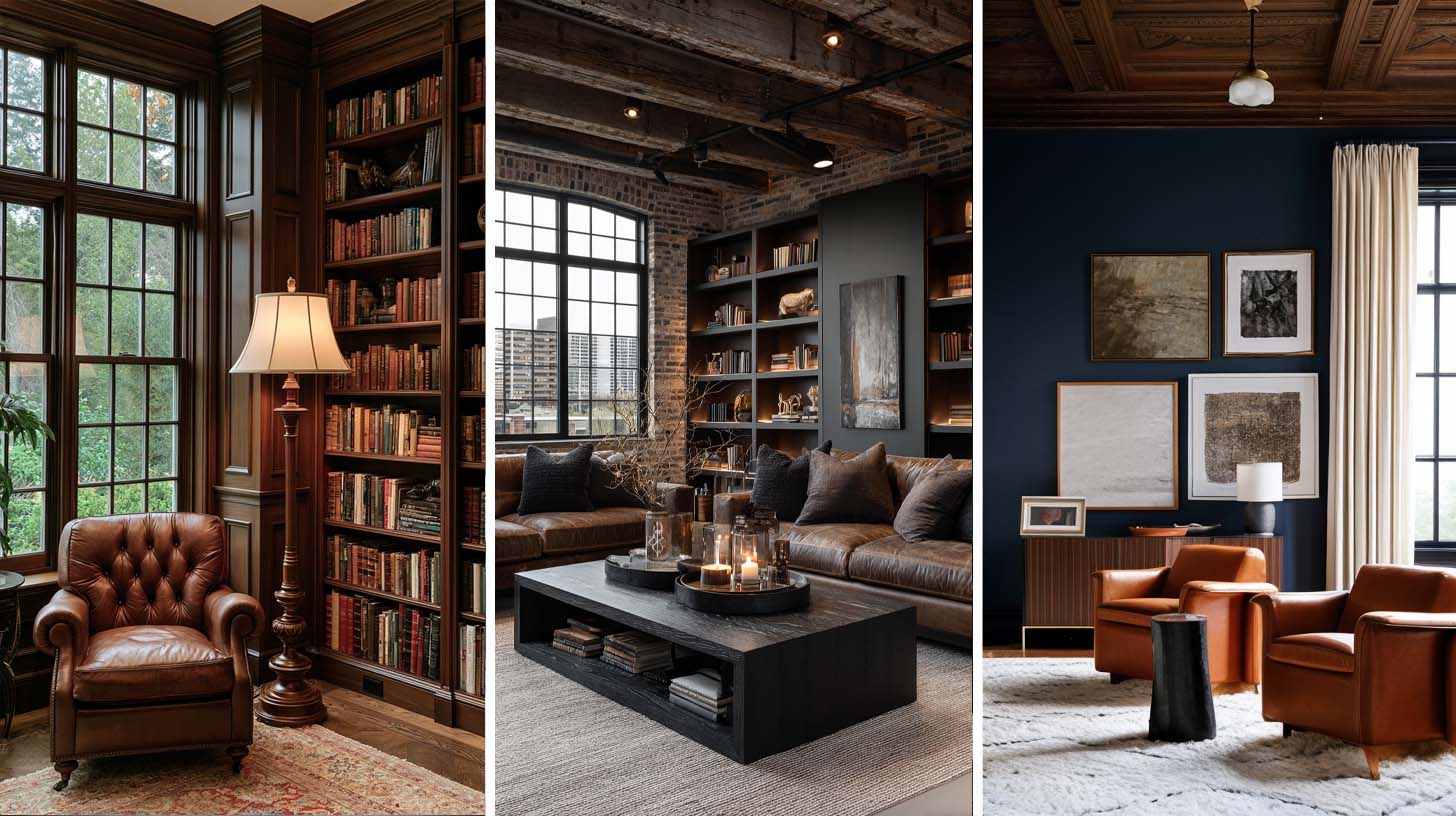
Dark Academia borrows heavily from libraries, old universities, studies, European institutional architecture, and scholarly environments. Its palette often includes brown, burgundy, forest green, black, muted gold, cream, and deep wood tones. Common elements include bookshelves, dark wood, traditional rugs, antique desks, portraiture, classical art, shaded lamps, aged brass, plaster or paneling, leather, velvet, and maps or scholarly objects.
The style lends itself naturally to masculine rooms because it relies on intellectual atmosphere, material weight, and age. But its greatest strength is not darkness. It is scholarly density.
Where It Goes Wrong
The internet version of Dark Academia sometimes mistakes low light for depth. Painting the walls brown and stacking a few decorative books does not create an academic interior. The more convincing version depends on real books, real interests, meaningful art, and furniture appropriate to reading, writing, and thought.
4. Contemporary Masculine
Contemporary Masculine strips away much of the historic ornament without removing substance. Furniture tends toward cleaner lines, architecture may be simpler, and decoration is reduced, but visual weight still matters. Think broad upholstered sofas, low stone tables, warm oak or walnut cabinetry, sculptural lamps, textured walls, substantial rugs, restrained artwork, and a limited material palette. The strongest contemporary masculine rooms feel edited rather than empty.
Materials
Walnut, smoked oak, travertine, limestone, plaster, bronze, blackened steel, linen, wool, leather, mohair, and textured ceramics are especially useful here.
Where It Goes Wrong
Contemporary masculine design can slide into generic luxury remarkably fast: beige sectional, stone coffee table, black metal, abstract art, decorative books, repeat. Without biography, age, or one unusual object somewhere in the composition, the room can feel expensive but anonymous.
5. Industrial Masculine
Industrial interiors developed from environments associated with factories, workshops, warehouses, and converted industrial spaces. Exposed structure, brick, concrete, metal, visible systems, open space, and limited ornament remain defining features. (Architectural Digest) Typical elements include blackened steel, concrete, brick, reclaimed wood, factory-style lighting, leather, iron windows, visible ductwork, and utilitarian furniture.
The Better Version
Industrial design works best when the architecture actually supports it. A loft with high ceilings, large factory windows, brick walls, and structural steel can carry industrial furniture effortlessly. A suburban drywall room usually cannot. In those cases, borrow the materials rather than impersonating the building: one iron cabinet may work, a restrained steel-and-oak shelf may work, but decorative pipe fixtures installed everywhere usually do not.
Designer Eyes
Ask whether the industrial element looks structural or decorative. Industrial design feels most convincing when an object appears to exist because it performs a function.
6. Mid-Century Masculine
Mid-century modern design offers a lighter, less traditionally heavy form of masculinity. The movement broadly spanned the middle decades of the twentieth century and became known for functional forms, organic influence, clean geometry, modern materials, and a strong relationship between architecture and nature. A masculine interpretation might use walnut, teak, leather lounge chairs, low sofas, architectural lamps, geometric rugs, stone, sculptural ceramics, restrained color, and graphic artwork.
The furniture is often visually lighter than traditional masculine furniture, but that does not mean it lacks presence. A beautifully proportioned walnut credenza can carry a room without being bulky.
Where It Goes Wrong
Buying every famous-looking mid-century silhouette can turn a room into a showroom. Mixing in contemporary art, a traditional rug, older objects, or architecture from another period keeps the room from becoming a period recreation.
7. Rustic and Western Masculine
Rustic and Western interiors get their masculine character from materials more than formal geometry. Wood grain is pronounced, stone is heavy, leather is thick, wool is visible, and metal may be forged or aged. Objects often reference landscape, craftsmanship, ranching, riding, hunting, or regional history. A good Western masculine home may include oak or reclaimed wood, saddle leather, wool, stone, Navajo or regional textiles used respectfully, antique furniture, forged iron, landscape art, handmade pottery, and substantial fireplaces.
The Key Is Restraint
A Western room does not need horseshoes on the walls. It needs materials and objects that communicate place. A legitimate ranch photograph, an old saddle, a regional landscape, a handmade blanket, or an inherited tool carries more meaning than generic cowboy decoration.
8. Modern Heritage
Modern Heritage is particularly useful for men who appreciate traditional rooms but do not want to live inside one. The formula is roughly historic reference plus contemporary restraint: a traditional Persian rug with a clean sofa, a paneled wall with modern lighting, an antique chest with contemporary art, a traditional wing chair upholstered in an unexpected wool, old brass beside simple plaster.
Modern Heritage lets architecture and antiques supply age while contemporary furniture keeps the room from feeling overly formal. It is one of the easiest styles to evolve over time because it expects objects from different periods to coexist.
9. European Traditional
European Traditional overlaps with Traditional Gentleman but leans more heavily into classical architecture, continental antiques, stone, plaster, old-world proportions, and European decorative traditions. Depending on the reference point, you might see French, Italian, Belgian, Spanish, or broader continental influences. Common elements include limestone, marble, plaster, aged oak, antique walnut, iron, traditional tapestries or rugs, classical sculpture, old paintings, formal curtains, and architectural molding.
Masculinity here often comes from architecture and material permanence rather than overtly masculine objects. A limestone fireplace can provide more gravity than an entire room of black furniture.
10. Minimal Masculine
Minimal masculine design is often misunderstood. Minimalism does not require white walls, tiny furniture, and almost no possessions. A masculine minimal room can hold very few pieces while making sure each piece carries real presence: one deep sofa, one monolithic coffee table, one large artwork, one sculptural lamp, one heavy rug, and beautiful architecture. The fewer things a room contains, the more important each becomes, which makes material quality, proportion, and placement unforgiving.
Where It Goes Wrong
Minimal interiors fail when "minimal" becomes an excuse for unfinished. An empty wall is not automatically negative space. A bare window is not automatically restraint. A room missing lighting, proper furniture, and artwork is simply incomplete.
You Do Not Need to Choose One Style Forever
Most interesting homes eventually become hybrids, but there is a real difference between mixing styles intentionally and accumulating unrelated furniture. A Traditional Gentleman room might contain mid-century lighting. A contemporary house might use an antique campaign chest. A Modern Heritage room may combine a Georgian-inspired chair, a modern sofa, a Persian rug, and a contemporary painting.
The room stays coherent because some qualities repeat: a restrained palette, a connecting wood tone, silhouettes with similar visual weight, or an architecture that establishes the dominant language. That repetition is what gives you freedom without chaos. If you want to see which colors already tie your rooms together, the free 10 Masculine Color Palettes guide is a useful starting point.
Find the Style That Describes You, Not the One That Looks Most Masculine
The right interior design style for a man is not necessarily the darkest or most overtly masculine one. It is the one that supports the way he actually wants to live. If you dislike ornate rooms, Traditional Gentleman will become a costume on you. If you own hundreds of books, pure minimalism will constantly fight your life. If you love antiques, a tightly controlled contemporary interior may leave your best possessions stranded. If you live in a mid-century house, respecting its architecture will likely produce a stronger home than imposing English paneling everywhere.
Your home does not need to prove that you understand masculine design. It needs to translate your tastes, possessions, architecture, and lifestyle into a coherent environment. Style is simply the language that helps you do it.
Still deciding on a direction? Try the Masculine Interior Style Guide
Frequently Asked Questions
What is the most masculine interior design style?
There is not one. Traditional Gentleman, Industrial, Mid-Century, and Minimal Masculine can all read as strongly masculine because masculinity comes from visual weight, material honesty, and restraint, not from any single aesthetic.
Can I mix multiple masculine styles in one home?
Yes, and most well-designed homes do. The key is intentional mixing: repeat a wood tone, a palette, or a silhouette weight across rooms so the mix reads as coherent rather than accidental.
Is industrial design too harsh for a full house?
Often, yes, unless the architecture supports it. Industrial elements work best in spaces with real structural bones, like exposed brick or steel. In a standard drywall home, borrow a few industrial materials rather than recreating the whole aesthetic.
How do I know which masculine style fits me?
Start with how you actually want to live, not with a mood board. If you are unsure, the Masculine Interior Style Guide walks you through identifying your visual language before you buy anything.

Facebook
Instagram
Youtube