Masculine Aesthetics: The Design Principles Behind Timeless Interiors
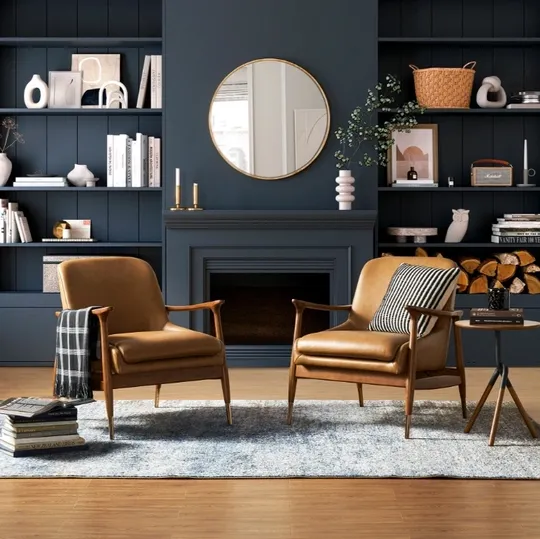
Have you ever walked into a room and immediately thought,
"Everything just feels right."
You may not know why.
The furniture isn't necessarily expensive.
The architecture isn't extraordinary.
Nothing is demanding your attention.
Yet the room feels calm, balanced, and effortlessly refined.
That's the difference between decorating and understanding design.
Great interiors aren't built by following trends or copying photographs. They're built by applying a handful of design principles that quietly influence how every room is experienced.
Once you understand these principles, you'll begin seeing your home differently.
Balance Is More Important Than Matching
Many people confuse balance with symmetry.
They're not the same thing.
Balance is simply the feeling that nothing in the room overwhelms everything else.
A large leather sofa can be balanced by a substantial fireplace.
A dramatic bookshelf can be balanced by oversized artwork across the room.
The goal isn't making both sides identical.
The goal is making the room feel visually settled.
Designer Eyes
Stand in the doorway of your room.
Does one side immediately feel heavier than the other?
If so, ask yourself why.
Is there a large dark piece of furniture with nothing visually supporting it elsewhere in the room?
Balance begins by learning to notice visual weight.
Learn to See Visual Weight
Not everything occupies a room equally.
Some objects naturally command more attention than others.
Several factors influence visual weight:
Larger furniture feels heavier than smaller pieces.
Dark colors feel heavier than lighter ones.
Rich textures like leather, stone, and heavy wood create more presence than smooth painted surfaces.
Furniture positioned closer to the floor generally feels more substantial.
Objects standing alone appear heavier than similar objects surrounded by complementary pieces.
The goal isn't eliminating visual weight.
It's distributing it intentionally throughout the room.
When visual weight feels balanced, the room immediately becomes more comfortable to experience.
Use Symmetry as a Tool, Not a Rule
Symmetry creates order.
But too much symmetry creates predictability.
A pair of matching bedside tables works because it reinforces the importance of the bed.
Matching lamps beside a fireplace often create stability.
However, repeating everything identically can make a room feel rigid.
The strongest masculine interiors often combine symmetrical foundations with carefully chosen moments of variation.
Balance matters more than perfect duplication.
Respect the Scale of the Room
Furniture should respond to architecture, not simply fit inside it.
Oversized furniture overwhelms compact rooms.
Undersized furniture disappears inside expansive spaces.
Ceiling height also influences perception.
Tall rooms often require larger artwork, taller shelving, and more substantial furniture to feel properly grounded.
Smaller rooms benefit from cleaner silhouettes and more restrained proportions.
Scale isn't about measurements alone.
It's about creating harmony between the room and everything inside it.
Designer Eyes
Imagine shrinking every piece of furniture in your room by twenty percent.
Would the room suddenly feel empty?
Now imagine enlarging everything by twenty percent.
Would it feel cramped?
Somewhere between those two extremes is where the room wants to be.
Build Your Color Palette With Intention
Many rooms feel disconnected because every object introduces a new color.
Instead, think of your palette as a conversation.
Allow colors to repeat naturally throughout the room.
A deep green chair may quietly connect to artwork on the opposite wall.
Warm walnut furniture can echo picture frames and shelving.
Leather tones might reappear in decorative accessories.
When colors communicate with one another, the room feels cohesive instead of accidental.
Contrast Creates Energy
Without contrast, rooms become visually flat.
Contrast doesn't require dramatic black-and-white combinations.
It can appear through materials.
Smooth stone beside textured wood.
Soft linen against polished leather.
Dark walls surrounding light artwork.
Straight architectural lines balanced by organic plants.
Contrast introduces rhythm, making the room more engaging without overwhelming it.
Accessories Should Finish the Story
Many people begin decorating with accessories.
Designers usually finish with them.
Accessories only become meaningful after the architecture, furniture, lighting, and layout have already established the room's identity.
Books.
Collected objects.
Artwork.
Ceramics.
Candles.
These details should reinforce the room rather than compete with it.
Designer Eyes
Remove every accessory from a room.
If it suddenly feels incomplete, the foundation may still need work.
Accessories should elevate a great room, not rescue an unfinished one.
Negative Space Is Part of the Design
One of the easiest ways to improve almost any room is resisting the urge to fill every empty surface.
Space has value.
Empty walls allow artwork to stand out.
Open shelves highlight meaningful collections.
Clear floor space improves movement while making furniture feel more substantial.
Negative space gives your eye somewhere to rest.
Confident interiors rarely feel crowded.
Commit to One Clear Direction
The fastest way to create visual confusion is trying to combine too many competing ideas.
Industrial.
Mid-century.
Farmhouse.
Coastal.
Minimalist.
Traditional.
Each style has beautiful qualities.
Few rooms successfully become all of them at once.
Choose one primary design language.
Allow every decision to reinforce it.
Consistency creates confidence.
Timeless Rooms Are Built on Principles, Not Trends
Styles evolve.
Furniture changes.
Paint colors come and go.
The principles behind great design remain remarkably consistent.
Balance.
Proportion.
Hierarchy.
Contrast.
Restraint.
Visual rhythm.
Once you begin seeing these relationships, you stop asking whether a room is fashionable.
You begin asking whether it feels right.
And that's the question timeless interiors have been answering for generations.
Continue Building Your Eye for Design
Great interiors aren't created by memorizing decorating rules. They're built by understanding the principles that shape how every room looks, feels, and functions.
The Masculine Interior Style Guide teaches the ten timeless masculine interior styles we believe every man should understand, complete with exact paint colors, material palettes, furniture direction, styling guidance, and the principles that define each style. It also includes a 30-minute video walkthrough to help you confidently apply those ideas in your own home.
Whether you're redesigning a single room or creating an entire home, the guide will help you make thoughtful design decisions with confidence and create spaces that feel cohesive, refined, and unmistakably yours.
Explore The Masculine Interior Style Guide →

Facebook
Instagram
Youtube