Luxury Masculine Interior Design Without the Flash
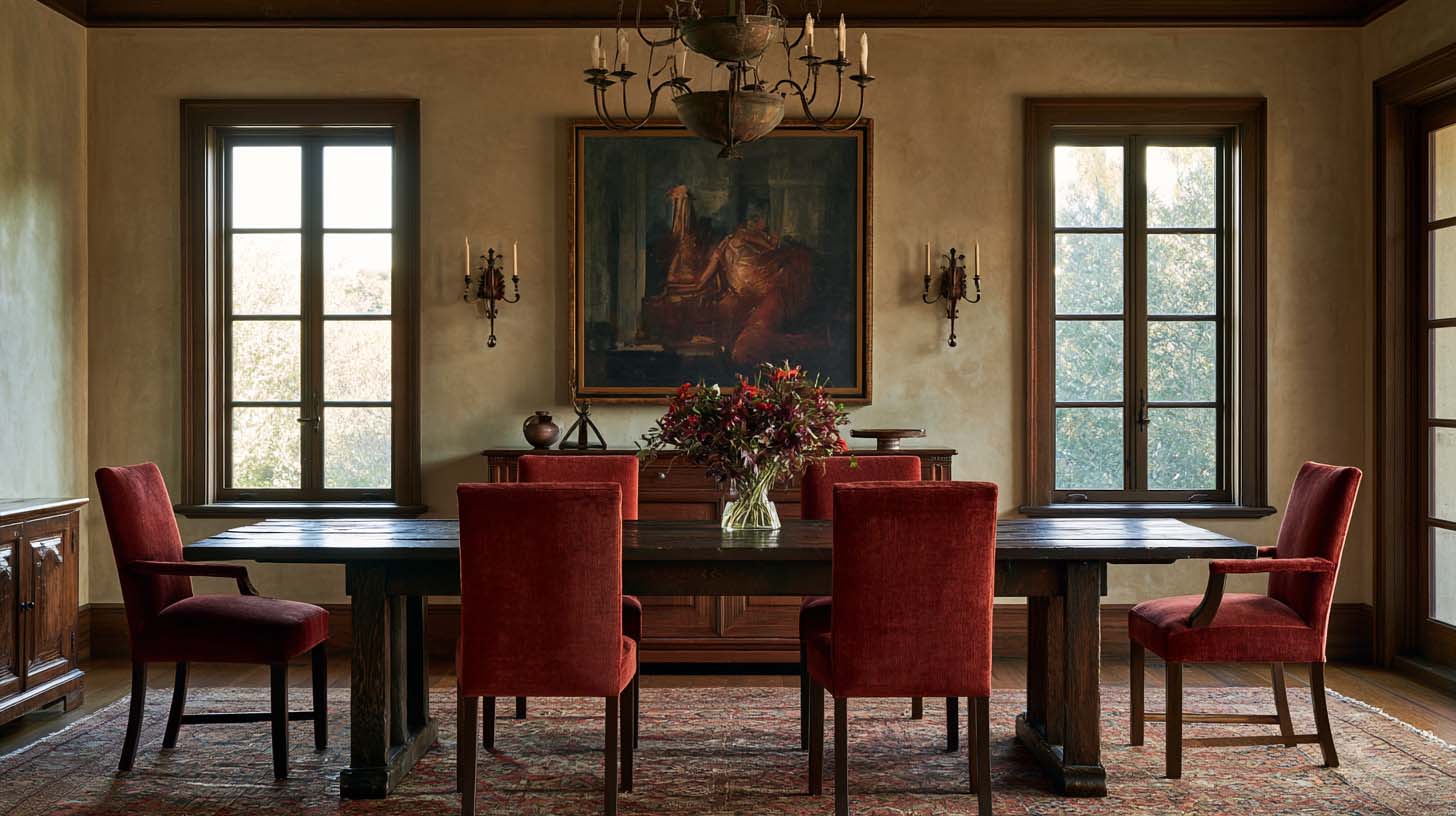
Luxury is one of those words that becomes less useful the more aggressively a room tries to demonstrate it.
Marble everywhere. Gold everywhere. Oversized chandeliers. Designer logos. Glossy surfaces. Furniture selected because the brand is recognizable. Every object insisting that it cost a great deal.
The room may certainly be expensive. That does not necessarily make it luxurious.
The best luxury masculine interior design often communicates value much more quietly.
A chair with exceptional proportions. Walnut with beautiful grain. A wool curtain that falls properly. Stone selected for character rather than drama. A hand-knotted rug. Artwork that was chosen rather than matched. Cabinetry that aligns perfectly with the architecture. A lamp that makes the room beautiful at night.
These things may also be expensive. The difference is that expense is not the subject. Quality is. If you are not sure whether your own rooms read as quality or just expense, a Room Audit is a fast way to get an outside opinion.
Luxury Begins With Things Being Right
Before adding expensive materials, fix the room. Furniture scale. Layout. Lighting. Curtain length. Rug size. Art placement. Storage. Proportion.
A $15,000 sofa in the wrong location remains a sofa in the wrong location. A rare marble coffee table sitting on an undersized rug does not rescue the rug. An expensive chandelier hung badly still looks badly hung.
This is why genuinely sophisticated rooms can contain modest objects and still feel luxurious. The basic decisions are resolved. Nothing is visibly fighting the architecture.
If you want luxury masculine interiors, begin there.
Material Quality Matters More Than Material Quantity
You do not need marble on six surfaces. You need one good piece of stone. You do not need walnut covering every wall. Perhaps the cabinetry is walnut. You do not need leather sofa plus leather chairs plus leather ottoman. One exceptional leather chair may be enough.
Luxury becomes more legible when materials have space around them. This is particularly important with natural materials because their interest comes from variation. Wood grain. Stone veining. Leather patina. Wool texture. Metal oxidation.
If five luxurious materials are shouting at once, you notice none of them properly.
Craftsmanship Is Often Visible in Small Places
Look at how a drawer closes. How the wood grain continues across cabinet fronts. How upholstery wraps a chair arm. How corners meet. How a stone edge is finished. How a curtain is lined. How a table leg joins the apron. How hardware feels in your hand.
Luxury often appears through resolution. The object has been considered beyond the point where most inexpensive products stop.
Historic decorative arts provide an extreme illustration. A Peter Glass center table in the Smithsonian's collection contains more than 30,000 pieces of inlaid wood. The point is not that a contemporary home needs elaborate marquetry; it is that material value and craftsmanship can reside in the making of an object rather than in a logo attached to it.
This distinction matters. A recognizable brand can tell someone what something cost. Craftsmanship gives them something worth looking at.
Scale Creates Luxury Without Adding Decoration
Large rooms require furniture with enough authority to occupy them. This does not mean everything should be enormous. It means the relationships need to feel deliberate.
A proper dining table beneath a chandelier of corresponding scale. A substantial sofa with chairs that can hold their own beside it. Curtains generous enough for tall windows. A rug broad enough to contain the seating. Large artwork where the wall demands it.
Under-scaled furniture makes even expensive rooms feel tentative. Scale communicates confidence.
Designer Eyes: Find the Timid Piece
When a room contains expensive furniture but still does not feel luxurious, look for the timid object. The tiny lamp on the large console. The little rug beneath the king bed. The narrow art above the long sofa. The undersized chandelier. The small coffee table marooned between large seating pieces. Replacing one timid element with something properly scaled can improve the room more than adding several decorative luxuries.
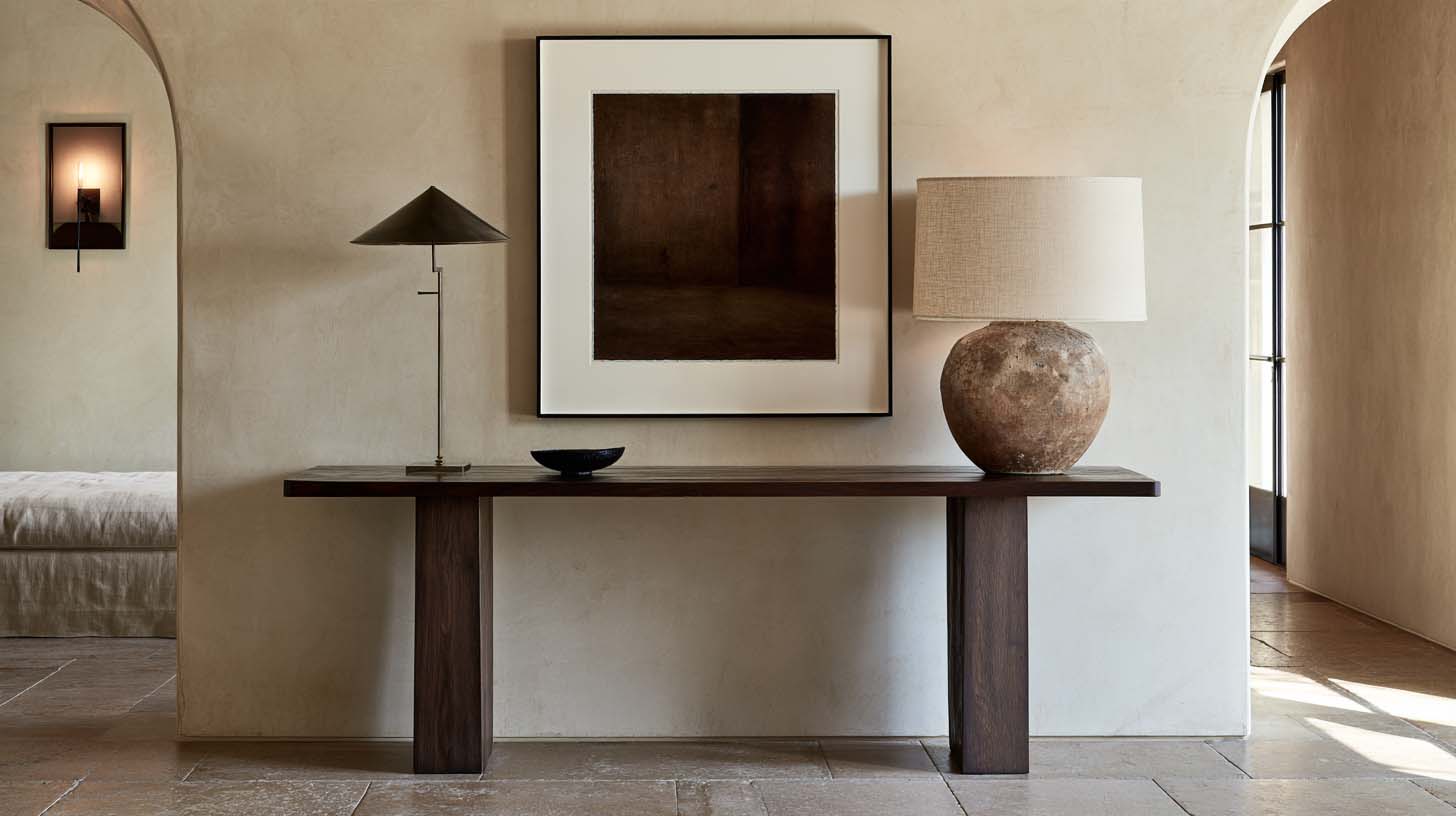
Architecture Is the Strongest Luxury
Millwork. Molding. Paneling. Built-ins. Proper doors. Fireplace surrounds. Window casings. Ceiling details. Integrated cabinetry.
Architecture makes luxury feel permanent. Furniture can leave tomorrow. Architecture suggests the room itself was considered.
This is why even restrained millwork can transform a plain room. A simple bookcase wall designed around the proportions of the room may contribute more than several pieces of expensive furniture.
If budget is limited, spending on the architectural element you will live with for years can sometimes produce greater long-term value than upgrading every movable object.
Luxury Home Decor for Men Should Not Become Merchandise
There is a market for objects that announce status. Designer trays. Logo blankets. Branded books. Fashion-house accessories. Automotive merchandise. Luxury-brand decorative objects.
Some may be beautifully designed. The issue is motive. Would you still want the object if the logo disappeared? That question is remarkably clarifying.
A home becomes more sophisticated when its objects have aesthetic, functional, historical, or personal value beyond brand recognition. The room should reveal taste. Not purchasing power.
Art Is One of the Clearest Distinctions Between Expense and Taste
Art does not need to be famous to improve a room. It needs to be chosen. An original painting from a lesser-known artist can contribute more identity than a recognizable luxury accessory.
A strong photograph. A work on paper. A historical print. A sculpture. A textile. A drawing.
The value is partly that art asks the owner to form an opinion. Do I like this? Why? Would I want to live with it? That process develops a room that is harder to duplicate.
Tailoring Makes Ordinary Materials Feel Expensive
Luxury is not always about the raw material. Sometimes it is what happens to it.
Curtains with correct fullness and lining. A sofa upholstered neatly. A properly fitted slipcover. A rug cut to the right dimensions. A tailored bed skirt where appropriate. A cushion with enough fill to hold its shape. A shade proportioned correctly to the lamp.
These are small acts of fit. Clothing provides an obvious analogy. An expensive suit that fits poorly does not look luxurious. Neither does an expensive room.
Good Lighting Is a Luxury Multiplier
The most beautiful materials in the world can look ordinary under poor light. Walnut loses depth. Stone looks flat. Leather becomes one brown surface. Artwork loses color. Metal becomes glare.
Layered lighting allows each material to reveal itself differently after sunset. A shaded lamp across wool. Picture light on art. Sconce against plaster. Warm light catching bronze. A chandelier dimmed for dinner.
Luxury is partly the ability to control atmosphere.
Use Metal as an Accent, Not Evidence
Brass, bronze, nickel, and silver-toned metals can add enormous richness. But metallic finishes are easy to overuse when the intention is luxury.
Gold faucet. Gold cabinet hardware. Gold lighting. Gold table base. Gold mirror. Gold accessories. Eventually, the finish stops feeling precious because it is everywhere.
One beautifully aged brass lamp may feel more luxurious than ten matching gold objects. Bronze can be especially useful because its darker surface feels rich without demanding attention. The same principle applies to polished nickel and other reflective finishes.
Give metal something matte to sit beside. Wood. Plaster. Wool. Stone. Linen. Contrast creates value.
Natural Materials Do Not Need to Look Perfect
Luxury has often been confused with flawlessness. Perfect stone. Perfect leather. Perfect wood. Perfectly uniform finish.
But many natural materials become convincing precisely because they contain variation. A knot. Vein. Color shift. Grain change. Crease. Patina.
This is not an argument for poor quality. It is an argument for distinguishing natural irregularity from defect. A marble slab with extraordinary veining may be more compelling because no second slab is identical. A leather chair can become more personal as its surface records use. Unlacquered brass can change. Wood may deepen in color.
The room becomes less factory-perfect and more alive.
Things That Age Well Feel More Luxurious Over Time
There is an underappreciated form of luxury: not needing to replace something.
A solid table that develops marks but remains structurally excellent. A wool rug that remains useful. A leather chair that becomes more attractive. A brass object that changes surface. A bookcase that can be repaired.
This is where material substance begins to matter more than trend. Luxury becomes stewardship. The object is good enough to keep. That may be the clearest distinction between a high-end home and a merely expensive one.
Restraint Allows Quality to Be Seen
Imagine a console with a lamp, one painting, one ceramic object, and a few books. Now imagine the same console with twelve accessories.
The first arrangement allows you to notice the lamp. The second asks you to process the styling.
This is why negative space appears so often in sophisticated interiors. Not because empty space itself is luxurious. Because it allows important things to remain important.
Do Not Confuse Minimalism With Restraint
A luxurious masculine interior does not need to be sparse. Libraries can be full. Collected homes can contain hundreds of books. Traditional rooms can layer rugs, curtains, art, furniture, and objects.
Restraint simply means knowing where to stop. A collected room may contain many things, but each category has structure. Books belong together. Art has hierarchy. Objects have space. Patterns relate.
The opposite of restraint is not abundance. It is indiscrimination.
Luxury Can Be Deeply Traditional
Luxury does not have to look contemporary. Mahogany. Persian rugs. Wool drapery. Oil paintings. Antique furniture. Bronze lamps. Paneling.
These materials can create extraordinary luxury because their richness comes through history and craft. The danger is turning the room into an imitation private club.
Traditional luxury works best when some elements are quieter. Perhaps the sofa is simple. Art is personal. Lighting is restrained. Not every object needs provenance.
Luxury Can Also Be Very Modern
Modern luxury may contain fewer objects, which makes material quality even more visible. One walnut wall. A limestone table. Wool sofa. Large painting. Bronze lamp. Excellent rug.
The room may be simple. It is not empty. The interest has migrated from decoration into proportion and material.
This is why inexpensive modern interiors can sometimes struggle more than inexpensive traditional ones. When there are fewer things, every one of them matters more.
Comfort Is Part of Luxury
A chair nobody wants to sit in is not luxurious. Neither is a sofa too shallow for the owner. A dining chair that becomes uncomfortable after thirty minutes. A beautiful bedroom with poor reading light. A marble bathroom that is freezing underfoot.
Luxury should improve experience. This sounds obvious, yet photographs encourage us to judge rooms visually first.
Sit down. Open the drawer. Turn on the lamp. Walk through the room. Use it at night. Real luxury survives contact.
Quiet Technology Feels More Luxurious Than Visible Technology
Technology is part of modern life. Televisions. Speakers. Routers. Charging. Controls. Security. Climate.
The luxurious move is not necessarily hiding everything. It is integrating technology so it does not dictate the visual composition.
Cables disappear. Controls have logical locations. Speakers belong to the room. Televisions are acknowledged rather than surrounded by awkward camouflage. Charging happens where devices are actually used.
The technology works without making the home look like an electronics display.
Maintenance Is a Luxury Signal
A chipped wall. Loose handle. Burned-out bulb. Crooked shade. Damaged rug edge. Dirty grout. Scratched furniture left neglected.
These undermine luxury faster than the absence of expensive objects. A cared-for modest home can feel more elevated than a neglected expensive one.
This is because maintenance communicates stewardship. The owner notices. He fixes things. He expects the environment to remain in good order. That is part of the atmosphere.
Personal Objects Make Luxury Credible
Without personal material, luxury can become generic. Books. Art. Travel objects. Inherited pieces. Collections. Photography. Objects related to interests.
These prevent a beautiful room from looking transferable. The expensive hotel suite is designed to offend nobody. A luxurious home should belong unmistakably to someone.
Do Not Finish the Room All at Once
This may be counterintuitive. If you can afford to furnish the room immediately, why would you wait?
Because time is one ingredient money cannot convincingly imitate. The antique found later. Painting purchased on a trip. Books accumulated. Chair inherited. Object discovered. Rug replaced when the right one appears.
A luxurious home can still be professionally designed. But leaving enough flexibility for biography prevents the finished room from feeling frozen on installation day.
Designer Eyes: Ask What Would Still Look Good Without the Styling
Remove the pillows. Take the accessories off the coffee table. Clear the console. Ignore the flowers. Does the room still work? Good architecture, furniture, materials, scale, and lighting should survive. Styling should enrich a strong room. It should not conceal a weak one.
The TMH Perspective
In our design work, the rooms that feel most expensive are not necessarily the ones where the most money was spent. They are often the ones where the spending was concentrated intelligently.
A better sofa rather than three unnecessary chairs. Real wool curtains instead of several decorative objects. One substantial piece of art. A rug with age. Cabinetry that solves an architectural problem. Lighting that transforms the room at night.
Luxury becomes convincing when you stop asking, what can we add that looks expensive? A better question is: what deserves to be better? That usually leads somewhere much more interesting.
For a higher-end room or whole-home project, TMH Full-Service Interior Design can develop the architecture, materials, furniture, art direction, lighting, and details as one coherent environment, placing investment where it will actually change how the home looks, feels, and ages.
Frequently Asked Questions
What makes a masculine interior look luxurious?
Material quality, proportion, craftsmanship, architectural detail, good lighting, art, tailoring, comfort, and restraint tend to create a stronger sense of luxury than overtly expensive decoration.
How can I make my home look luxurious without spending everywhere?
Concentrate investment. Upgrade the objects with the greatest visual or functional influence: sofa, rug, curtains, lighting, art, cabinetry, or one architectural feature rather than buying many decorative luxuries.
What colors work in luxury masculine interiors?
Oxblood, olive, tobacco, deep blue, espresso, charcoal, cream, warm ivory, stone, brown, and complex earth tones all work. Luxury comes more from material relationships than any particular color.
Does a luxury home need expensive furniture?
Not every piece. Mixing investment furniture with antiques, vintage finds, modest supporting pieces, books, art, and personal objects often creates a more convincing home than purchasing an entire room from one luxury source.
Is marble necessary for luxury interior design?
No. Walnut, oak, wool, leather, linen, plaster, bronze, limestone, ceramics, and many other materials can communicate quality. Excessive marble can actually make luxury feel more conspicuous rather than more refined.

Facebook
Instagram
Youtube