Home Office Ideas for Men Worth Working In
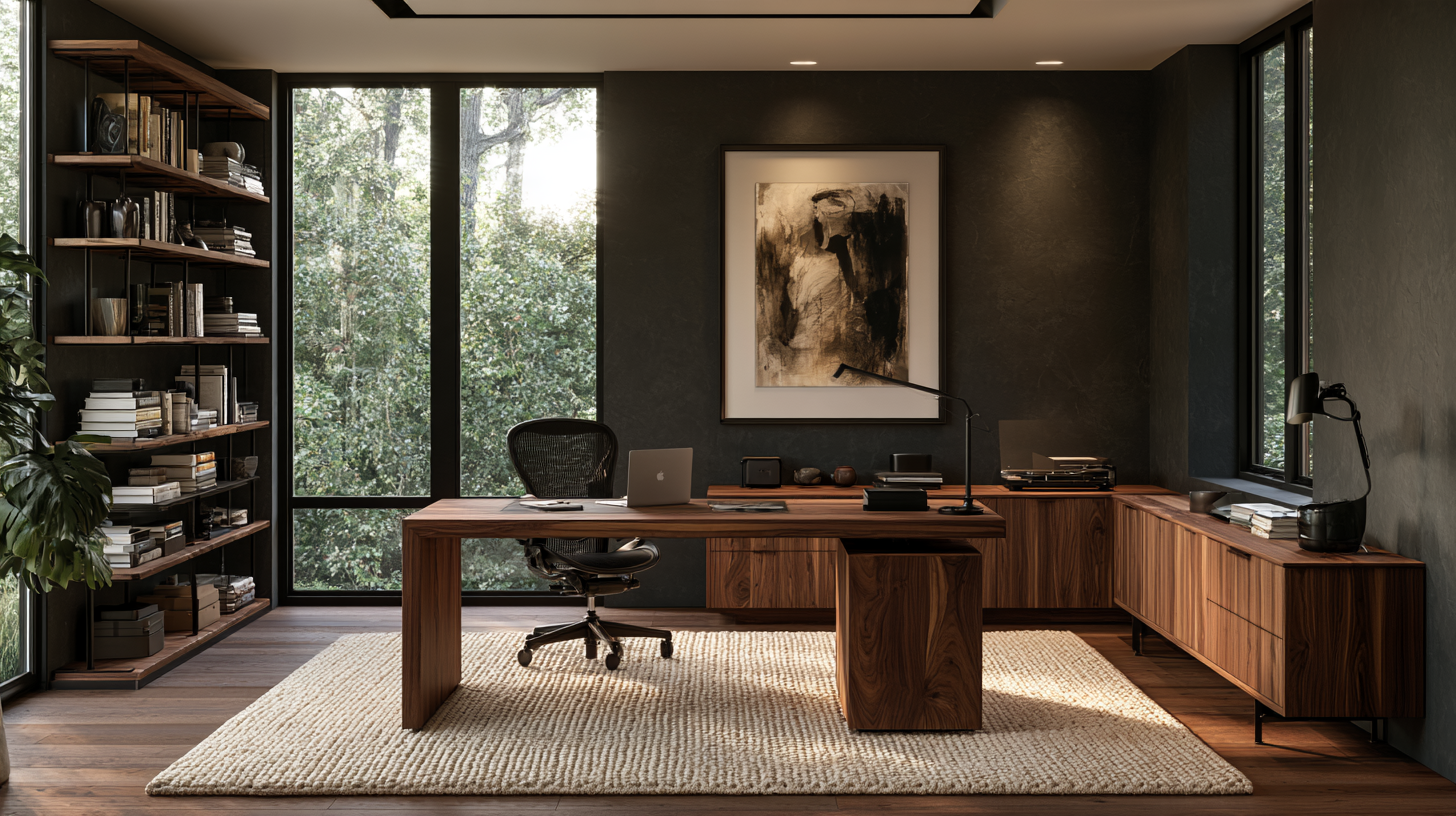
The home office is one of the few rooms where appearance can become completely disconnected from performance. A beautiful desk. Dark walls. Leather chair. Bookshelves. A brass lamp. Several framed prints. It photographs as an office. Then someone actually works there. The desk is too shallow for the monitor.
The chair becomes uncomfortable after ninety minutes. Sunlight reflects directly off the screen. There is nowhere to put files. The camera points toward an open closet. Cables hang everywhere. The reading chair is too dark to read in.
A good list of home office ideas for men should therefore begin somewhere less glamorous: What kind of work needs to happen here? Serious computer work? Writing? Reading? Calls? Client meetings? Creative work? Research? Managing a business? A combination? The home office becomes distinguished when it supports that work first and then builds a residential identity around it.
Not the other way around. If your own office is not supporting the work yet, TMH's Full-Service Interior Design can plan it around how you work.
Design Around the Man Using the Office
Before shopping for a desk, define the workday. How many hours are spent there? Laptop or desktop? One monitor? Ultrawide? Dual screens? Printed material? Phone calls? Video meetings? Writing by hand? Samples? Books? Documents? Audio equipment? Storage? Do people ever enter the office? The answers determine almost everything.
A writing room needs very different furniture from a trading workstation. A private executive office differs from a creative studio. A study used for one hour at night differs from the room where a business is run for eight hours a day. "Masculine office" is too broad to design from. Work is specific.
Start With the Desk Position, Not the Desk Style
Before deciding between walnut, oak, executive, campaign, or modern, decide where the desk belongs. Consider the door, windows, view, glare, background, circulation, storage, and power. The desk may face into the room. Sit perpendicular to the windows. Live against a wall. Float in front of bookshelves.
Each produces different practical consequences. A desk floating in the room can feel substantial. It also exposes the back, cables, monitor hardware, and power. A desk against a wall simplifies wiring. It may produce a weaker arrival view. Placement is a functional and architectural decision.
Avoid Putting the Screen Directly Against the Window
Window placement matters because glare and contrast affect computer work. OSHA recommends placing computer monitors directly in front of the user, with typical viewing distance around 20 to 40 inches, and notes that a monitor positioned perpendicular to windows can help reduce glare. The top of the screen should generally be at or slightly below eye level. (OSHA)
This often leads to one of the best office layouts, with the desk roughly perpendicular to the main window. You still receive daylight. The monitor is less likely to sit directly against strong brightness. The view may remain accessible without becoming the screen background. Good design and ergonomics frequently point in the same direction.
Desk Depth Is a Serious Design Constraint
A handsome desk that cannot accommodate the work is bad furniture. OSHA's workstation purchasing guidance recommends enough desk depth to place a monitor at least about 20 inches from the eyes, while also allowing adequate space for keyboard, pointing device, and other frequently used work items. (OSHA)
That matters especially with ultrawide monitors, large displays, monitor speakers, docking stations, laptop stands, and multiple screens. A shallow antique writing desk may be beautiful. It may also be inappropriate for serious computer work. Choose the desk around the equipment you actually use.
Keep the Desk Surface Larger Than the Technology
There is a subtle visual issue too. If the monitor nearly spans the full desk width and every inch contains equipment, the desk begins reading as a platform for technology. Leave some furniture visible. Wood. Leather writing surface. Stone detail. Whatever the desk is made from.
A desk should remain a piece of furniture after the equipment is installed. This is particularly important if it floats in the room and becomes one of the main visual objects.
The Chair Is a Work Tool Before It Is Decor
This is where men's home offices frequently prioritize appearance too aggressively. Tufted leather chair. Tall executive back. Beautiful stitching. But perhaps it has no lumbar support, poor adjustment, the wrong arm height, or the wrong seat depth.
The chair is used forty hours a week. Function wins. OSHA emphasizes adjustability, back support, a comfortable seat, relaxed shoulders, supported feet, and the ability to adjust the chair in relation to the desk, keyboard, and monitor. (OSHA)
The best office may therefore contain an ergonomic chair that is visually quieter than the rest of the room. That is fine. The furniture supporting the work earns priority.
Make the Ergonomic Chair Belong Visually
A modern task chair does not have to destroy the room. Surround it with residential furniture. Walnut desk. Wool rug. Bookshelves. Ceramic lamp. Artwork. Curtains. Reading chair. The task chair becomes one technical element inside an actual room rather than the defining design language. This is much better than selecting a beautiful but unsuitable chair to protect a particular office aesthetic.
Build More Than One Posture Into the Room
Serious work benefits from physical variety. Desk. Standing position if useful. Reading chair. Small table. Perhaps a secondary surface. You do not necessarily need an elaborate sit-stand system. Even changing from desk to reading chair for documents or calls can break the monotony of one posture. The office becomes more capable because every task does not require the same body position.
Bookshelves Should Support the Work
A bookshelf is not automatically intellectual because books are visible. Ask what needs to be stored. Reference books. Files. Samples. Equipment. Awards. Objects. Documents. Closed lower cabinets are often valuable because some work materials are visually unattractive.
Open shelves can then hold books, selected objects, artwork, and perhaps a few photographs. The office remains personal without being visually overloaded.
Do Not Turn the Bookshelves Into a Styling Exercise
Office shelves often end up containing one decorative object, two books placed horizontally, another decorative object, empty space, and three books backward. Repeat. It looks professionally styled. It may not look like someone works there. Let useful books exist in groups. Allow files where needed. Place objects connected to actual interests. The office should tolerate evidence of activity.
Your Accomplishments Can Be Visible Without Becoming a Trophy Room
Diplomas. Awards. Credentials. Professional photography. Published work. Objects connected to significant projects. These can belong in a home office. The issue is scale and concentration. If every wall communicates achievement, the office begins feeling like a lobby designed to impress visitors.
Choose the things with the greatest meaning. Perhaps one diploma. One award. Several books connected to your profession. A photograph from an important project. Distinction is often strengthened by editing.
Your Interests Should Also Be Present
An office is a private room. That creates room for specificity. Cars. Architecture. Military history. Travel. Sport. Art. Music. Photography. Books. Whatever genuinely matters. The home office is often an excellent place for objects too specialized for the living room.
One framed technical drawing. A model. A collection on a shelf. An old instrument. The difference between personality and theme is restraint.
Office Decor for Men Should Not Become a Costume
This is the office version of the gentleman's-club problem. Dark wall. Leather. Whiskey. Globe. Banker's lamp. Brass telescope. Old books. All assembled because each individually says "serious male office." The result may communicate less about the actual man than a single shelf of his real books would.
A serious office does not need symbolic seriousness. Work supplies the credibility.
The Camera-Facing Background Is Now Part of Office Design
Video calls have created an architectural elevation that did not matter nearly as much twenty years ago. What does the camera see? Open door? Blank wall? Closet? Bed? Bookshelves? Artwork? Window? Think about the background deliberately. A good camera-facing wall may contain bookshelves, one piece of artwork, a cabinet, several books, a lamp, and a restrained collection.
It does not need to look like a podcast studio. The goal is simple: The background should feel like the same room you are sitting in.
Keep the Background Far Enough Behind You
When possible, avoid pressing the desk chair directly against the background wall. A little physical depth can improve the camera image considerably. Furniture and artwork behind you become part of a room rather than appearing as a flat backdrop.
A lamp in the background can add warmth. Bookshelves may recede. The office starts looking residential rather than digitally staged.
Avoid Curating the Background Too Perfectly
There is now a recognizable "Zoom bookshelf" aesthetic. Perfect books. Plant. One sculpture. Warm lamp. Everything visible only because it photographs well. A real office can be better. Use your actual books. Art. Objects. Perhaps one shelf is messier.
The camera should see a genuine room that happens to be well designed. Not a background assembled entirely for the camera.
Lighting the Desk and Lighting Your Face Are Different Problems
A desk lamp helps you work. It does not necessarily make you look good on video. Likewise, a ring light may illuminate your face while doing nothing for the room. If video calls matter, consider both. Natural light from a window positioned forward and to the side can be useful.
A soft lamp may supplement. The monitor's brightness should not be the primary face light. Then design the room lighting separately. Ceiling. Desk. Reading chair. Background. Artwork. This creates several useful lighting modes.
Use Task Lighting Where the Task Happens
Desk lamp for paper. Reading lamp by the chair. Shelf lighting if it provides actual visibility. General ambient lighting for circulation. Good office lighting follows activity. Not decoration. You should not need to illuminate the entire room intensely simply because you want to read one printed document.
Curtains Control More Than Appearance
Window treatment can manage glare, direct sun, privacy, heat gain, visual softness, and camera lighting. Sheer or light-filtering curtains may soften harsh daylight. Heavier drapery or shades can control direct afternoon sun. The exact choice depends on window direction and work requirements.
This is another reason window treatments in offices are more than decoration. They regulate the environment.
The Office Should Have Good Air Too
A beautiful office that becomes stale by mid-afternoon is not truly well designed. EPA guidance identifies inadequate ventilation as one factor that can allow indoor pollutant levels, odors, temperature, and humidity problems to increase. It recommends appropriate outdoor-air ventilation and source control as important parts of residential indoor-air quality. (US EPA)
Practical implications are simple. Do not block supply or return vents with furniture. Use windows for ventilation when conditions safely permit. Maintain HVAC systems and filters according to manufacturer guidance. Be thoughtful about paints, furnishings, cleaners, fragrances, and other indoor pollutant sources. Especially in a room occupied for many consecutive hours, comfort involves more than furniture.
Hide the Cables Properly
Nothing undermines an expensive home office faster than a power strip on the floor, a monitor cord, a laptop charger, an Ethernet cable, speaker wires, and a phone charger, all hanging behind a beautiful desk. Cable management should be planned before the desk arrives if possible.
Under-desk trays. Grommets. Cable sleeves. Integrated power. Floor outlet where construction permits. Cabinetry. The goal is not technological invisibility. It is visual order.
A Floating Desk Requires a Higher Standard of Cable Planning
Against a wall, many sins disappear. Float the desk and everything is exposed. This is worth understanding before committing to the classic executive-office arrangement. Where does power come from? Can the desk conceal a strip? Is the monitor arm visible from the entrance? Does the desk have a finished front and back? If the answer is no, the wall placement may actually create the more distinguished room.
Closed Storage Protects Concentration
Paper. Printer supplies. Equipment. Mail. Cables. Receipts. Files. Technology boxes. These objects may be necessary. They do not need to remain visible. Cabinetry with doors or drawers helps the office reset. That matters psychologically. A desk surrounded by unresolved visual information can make it harder for the room to feel focused even when the owner is accustomed to the clutter.
The Desk Should Be Able to Reset at the End of the Day
You do not need to clear every object. But there is value in an office that can return to a controlled state. Notebook away. Papers filed. Cup removed. Technology stays. Desk becomes visually calm again. This is particularly important when the office shares a room with another function.
Bedroom. Guest room. Library. Living space. The room should not remain permanently trapped in "workday" mode.
Add a Reading Chair Only If You Will Use It
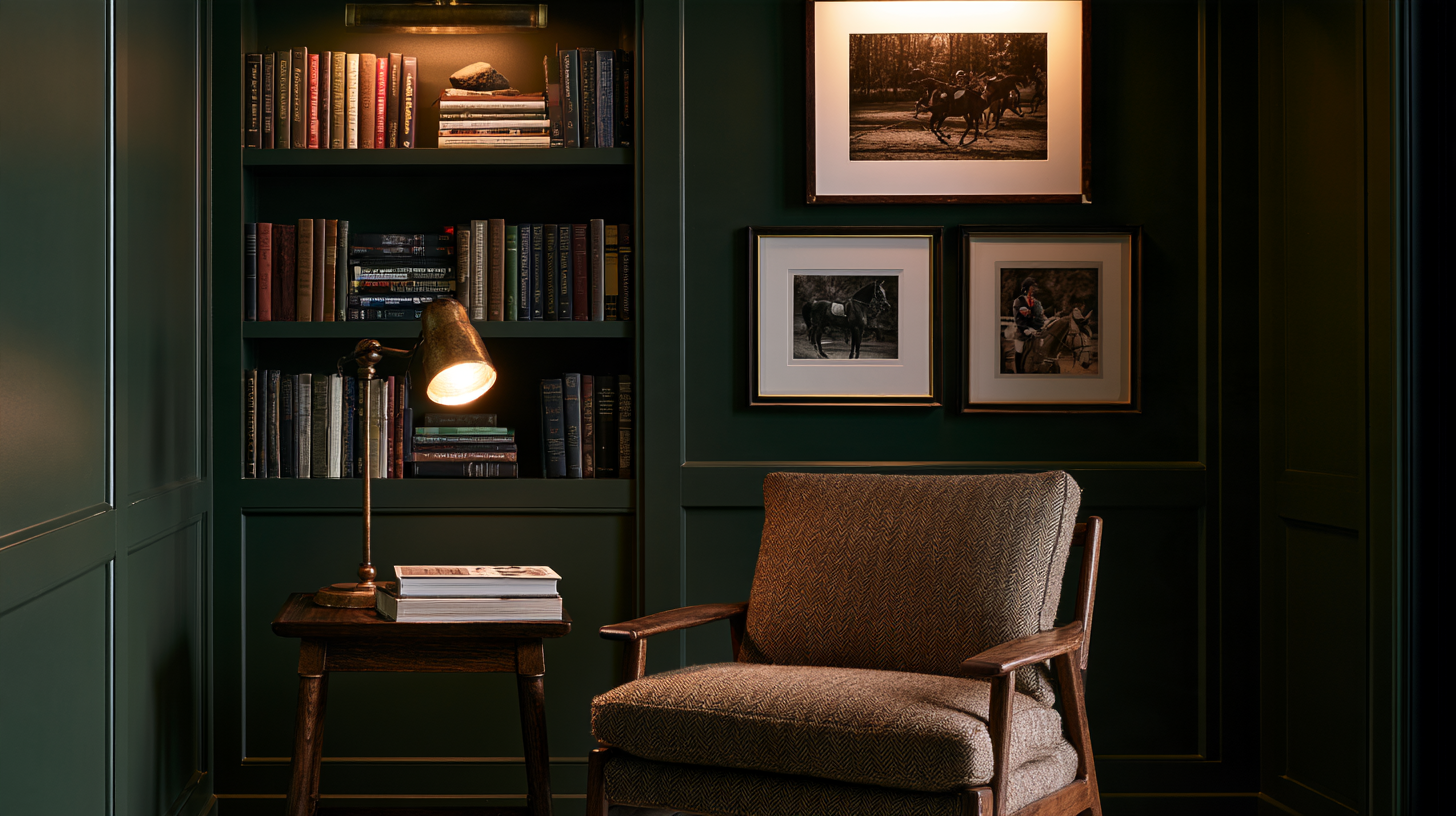
Home-office photography loves the ceremonial leather chair in the corner. But if you never sit there, it is occupying valuable space. Use a reading chair when you genuinely read, take calls away from the desk, review documents, think, or listen.
Then give the chair a lamp, a side table, and perhaps books nearby. Now it becomes a functional second zone. If not, use the floor area for something the office actually needs.
Consider Sound
Video calls. Phone conversations. Speakers. Hard floors. Bare walls. Large windows. All affect how the office sounds. Rugs. Curtains. Upholstered chairs. Books. These materials naturally reduce some of the harsh reflectivity common in empty offices.
You do not necessarily need visible acoustic panels. Often a properly furnished residential room improves significantly through ordinary soft materials.
Artwork Helps Separate the Office From Corporate Space
The office should not feel like it was furnished from an office-supply catalog. Art introduces subjectivity. Landscape. Photography. Abstraction. Historical work. Print. Drawing. Something related to a genuine interest. This matters especially when the desk and task chair are highly technical. Artwork and residential materials remind you that this room belongs inside a home.
Plants Are Optional, Not Mandatory Office Accessories
A plant can add life to a workspace. It can also become another object requiring maintenance. Use one when the light supports it, you like caring for it, and the room benefits from organic form. Do not add a tiny plant beside every monitor because office-design photographs told you greenery improves productivity. Good offices are allowed to exist without foliage.
Your Office Should Make Serious Work Easier to Begin
This is the deeper standard. When you enter: The chair is ready. Desk is clear enough. Equipment works. Lighting is appropriate. Materials are available. Clutter is contained. There is no daily setup ritual involving moving piles and untangling cables.
The environment lowers friction. That is what a work room is ultimately for.
Designer Eyes: Photograph the Office From Three Positions
Take one photograph from the doorway, one from the desk chair, and one from the camera. Each reveals a different room.
From the doorway
Does the desk anchor the space? Are cables visible? Does furniture feel properly scaled?
From the desk
What do you stare at for eight hours? Blank wall? Window glare? Art? Shelves?
From the camera
What do clients or colleagues see? These three views expose far more than a single styled photograph.
The Home Office Should Be Worth Closing the Laptop In
Perhaps the best home offices possess another quality. At the end of the day, they remain good rooms. The monitor goes dark. And there is still beautiful wood, a proper chair, books, art, a rug, good lighting, and something worth looking at.
The office does not disappear because the technology stops. That is what separates an office installed inside a house from a room worth working in.
The TMH Perspective
The best home office ideas for men do not begin with dark walls or leather chairs. They begin with the work. What do you need to do? For how long? At what equipment? What must remain within reach? What should disappear? Where does the monitor belong? Where does the light come from? What does the camera see? Once those questions are solved, the room can become personal.
Walnut or oak. Traditional or modern. Dark or light. Books. Art. Collections. Reading chair. The office earns its character because serious work can actually happen there. That is more convincing than any collection of "masculine office decor" could ever be.
If you spend serious hours working from home and the room still feels like a desk installed in a spare bedroom, TMH Full-Service Interior Design can develop the desk placement, storage, lighting, monitor setup, camera background, furniture, art, and materials as one complete working environment.
Prefer to design it yourself? Homefeld, our guided room design tool, lets you upload photos of your room, explore a new look, and get a practical plan to put it together.
Frequently Asked Questions
What should every man's home office have?
A desk large enough for the actual work, a supportive chair, properly placed monitor, useful task lighting, controlled storage, good cable management, and enough personal material that the room still feels residential.
Where should a home office desk face?
There is no universal direction. Consider windows, glare, doorway relationship, power, camera background, and circulation. For monitor-heavy work, a position perpendicular to windows often helps control glare.
How deep should a home office desk be?
It needs enough depth to support the equipment while maintaining comfortable monitor distance. OSHA recommends a work surface capable of positioning the monitor at least about 20 inches from the eyes.
What colors work well in a men's home office?
Slate, olive, forest green, deep blue, tobacco, warm ivory, mushroom, clay, charcoal, and many wood tones can work. Function, daylight, furniture, and atmosphere matter more than choosing a stereotypically masculine color.
How can I make my home office look professional on video calls?
Plan the camera-facing elevation intentionally. Use genuine books, art, cabinetry, lighting, or collections; control clutter and cables; and allow some physical depth between your chair and the background when possible.


Facebook
Instagram
Youtube