Home Design for a Single Man That Feels Permanent
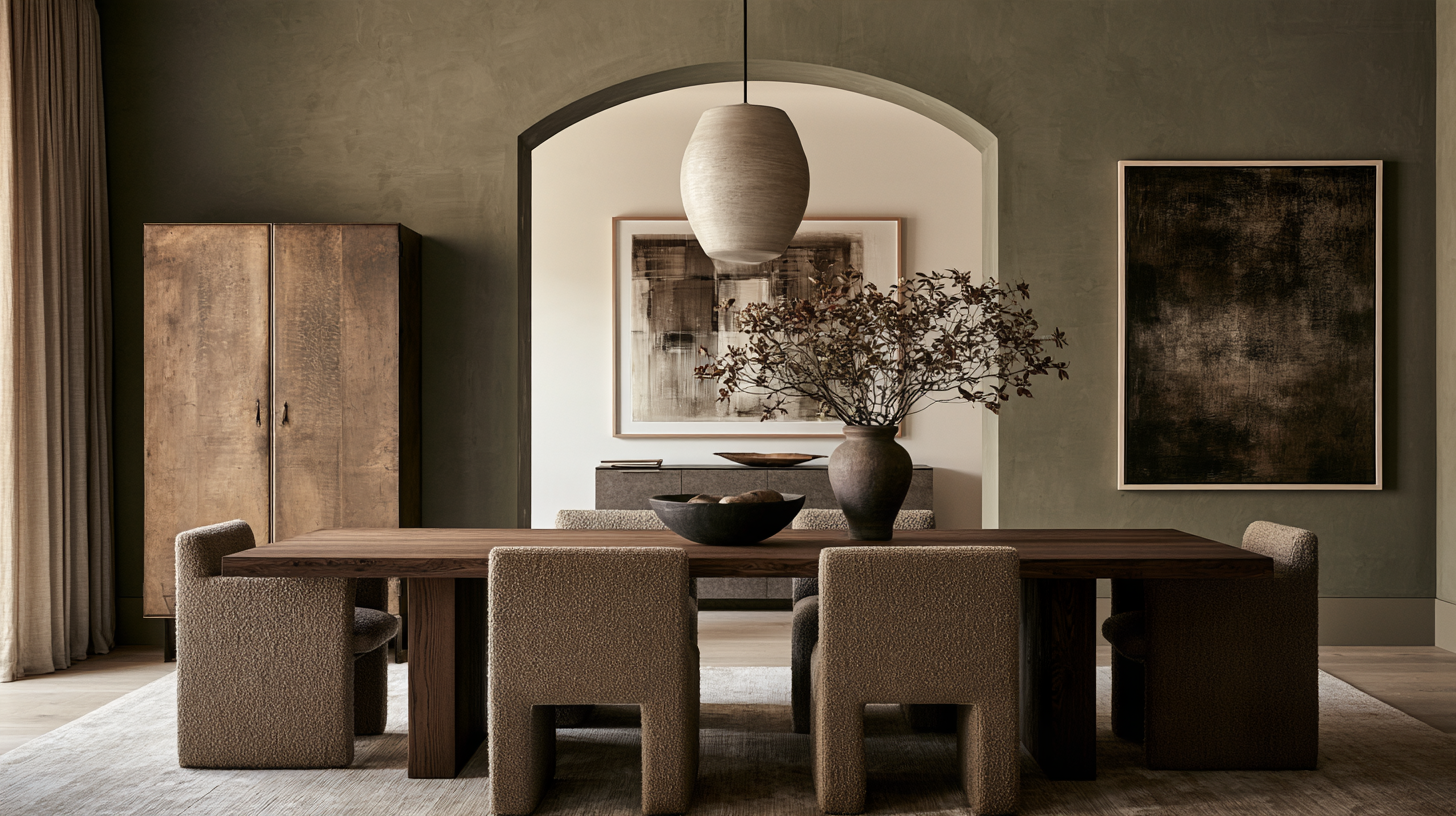
There is a particular kind of home that is difficult to describe until you walk into one. Nothing is necessarily wrong. There is a sofa, a television, a bed, a desk, and perhaps a dining table. The owner may have lived there for three years. Yet the entire place still feels as though he arrived six weeks ago.
This is one of the most common problems in home design for single man households. And it usually has little to do with money. The home feels temporary because too many decisions are still provisional. The nightstand was something he already owned.
The sofa works well enough. The dining room is mostly empty because he lives alone. The artwork can wait. The guest room is storage. Curtains never seemed necessary.
A few rooms remain half-furnished because there is an assumption underneath all of it: I'll finish this when life changes. When I get married. When I buy a different house. When I stop renting. When I have children. When I make more money.
A man can spend an astonishing amount of his life inside a home he has unconsciously categorized as for now. There is a better standard. You can design a home fully around one person while leaving plenty of space for another chapter to arrive later.
Completion and permanence are not the same thing as permanence of circumstance. If you want your own home to feel finished rather than temporary, TMH's Full-Service Interior Design can plan it with you.
Living Alone Is a Real Life Stage, Not a Waiting Room
One reason homes occupied by one man feel temporary is that they are sometimes treated as incomplete by definition. The future family home is imagined as the real home. The current apartment or house becomes transitional. But years lived alone are still years of life.
You still sleep there, eat there, work there, recover there, read there, have people over, celebrate things, acquire books and objects, build routines, and develop taste. The home deserves to acknowledge that. A single man home does not need to imitate a family home. It simply needs to support the life that actually exists inside it.
Permanent Does Not Mean Filling Every Room
There is an important distinction here. Making a home feel permanent does not mean furnishing every empty wall and unused bedroom immediately. Quite the opposite. A mature home can contain emptiness. Perhaps you own a three-bedroom house and use only one bedroom, one office, and one guest room.
The third space does not need a hurried collection of discount furniture simply to appear complete. Leave it flexible. What matters is that the rooms you do use feel resolved. Your bedroom should not look provisional because a hypothetical future person may someday share it.
Your dining room should not remain empty because most meals are currently eaten alone. Your living room should not contain one seat optimized exclusively around a television. Finish the life you have. Leave unused capacity for the life that may come.
Start With the Rooms You Touch Every Day
If a home occupied by one man feels temporary, we would begin with the rooms that shape his daily routine. Usually that means the bedroom, living room, kitchen or dining area, home office if he works there, entry, and bathroom. These spaces create the psychological impression of home far more than an unused guest bedroom.
The bedroom
Give yourself a real bed, proper nightstands, good bedding, useful bedside light, a finished window, storage, and perhaps artwork and a rug. The bedroom should look as though someone intends to continue sleeping there.
The living room
Start with a sofa of proper scale, at least one additional seat where appropriate, a surface for drinks, a rug connecting the furniture, lamps, art, and storage. The living room should support more than watching something.
The dining area
This is where men living alone often leave capacity on the table. Literally.
Own a Dining Table Before You "Need" One
A man living alone can reasonably ask: Why do I need a table for four or six people? Because a dining table provides a function larger than your average nightly headcount. It supports dinner, conversation, friends, family visits, work, games, holidays, takeout eaten from an actual plate, and a place where another person can sit across from you.
The table creates social capacity. That is useful before a family exists. A small apartment may need a round table for four. A larger house may warrant something more substantial. The point is not size. It is acknowledging that the home can receive people.
Design for Hospitality Before You Have a Reason
Hospitality is one of the fastest ways to expose whether a home is truly finished. Imagine four people arriving tonight. Where do their coats go? Where do they sit? Where does someone place a drink? Can you offer them a meal at a real table? Does the bathroom feel presentable without hurriedly hiding half its contents?
Is there enough lighting to spend an evening comfortably? A man can live alone and still own a home that expects other human beings occasionally. That expectation changes furniture planning. It creates a home with capability.
The Smithsonian's research and domestic-life collections treat household objects, furnishings, and routines as records of how people build identity and belonging through ordinary life. That is a useful reminder that a home becomes meaningful through use, not simply occupancy. (National Museum of American History)
Buy Furniture That Belongs to You, Not Just This Address
One of the clearest signs of permanence is furniture that feels connected to the owner rather than only to the current property. Ask: If I moved next year, which pieces would I unquestioningly pay someone to move? A good dining table, an excellent chair, your desk, a real rug, a chest, artwork, a good bed, and perhaps the sofa.
Those objects begin creating continuity between homes. The address changes. The possessions continue. That is one reason better furniture can make sense even for a renter or someone who expects to move again. The goal is not buying "forever furniture." It is gradually increasing the proportion of your home that you would genuinely want to keep.
Stop Buying Temporary Furniture Repeatedly
Most temporary furniture enters the home for a reasonable reason. You needed a desk. This one was inexpensive. You needed nightstands quickly. Those were available. You inherited a small television console. Fine. The problem begins when five years later, all of those objects remain because each is individually tolerable.
A home filled with tolerable furniture can remain psychologically temporary indefinitely. You do not need to replace it all at once. Prioritize the pieces with the greatest influence. Start with the bed, the sofa, the dining table, the desk, storage, and the rug. One by one, replace "works for now" with "I chose this."
Do Not Buy Everything at Once Either
The opposite mistake produces a different kind of impermanence. A man decides the house finally needs to look finished. One weekend becomes a living-room set, a bedroom set, a dining set, matching lamps, coordinated art, and accessories. The rooms become complete immediately. They also become strangely anonymous. Nothing has biography. Nothing was discovered. Nothing belonged to an earlier chapter.
Nothing reflects a decision made after living in the room. The home looks finished but not established. Leave room for time.
Art Is One of the Best Ways to Stop a Home Feeling Temporary
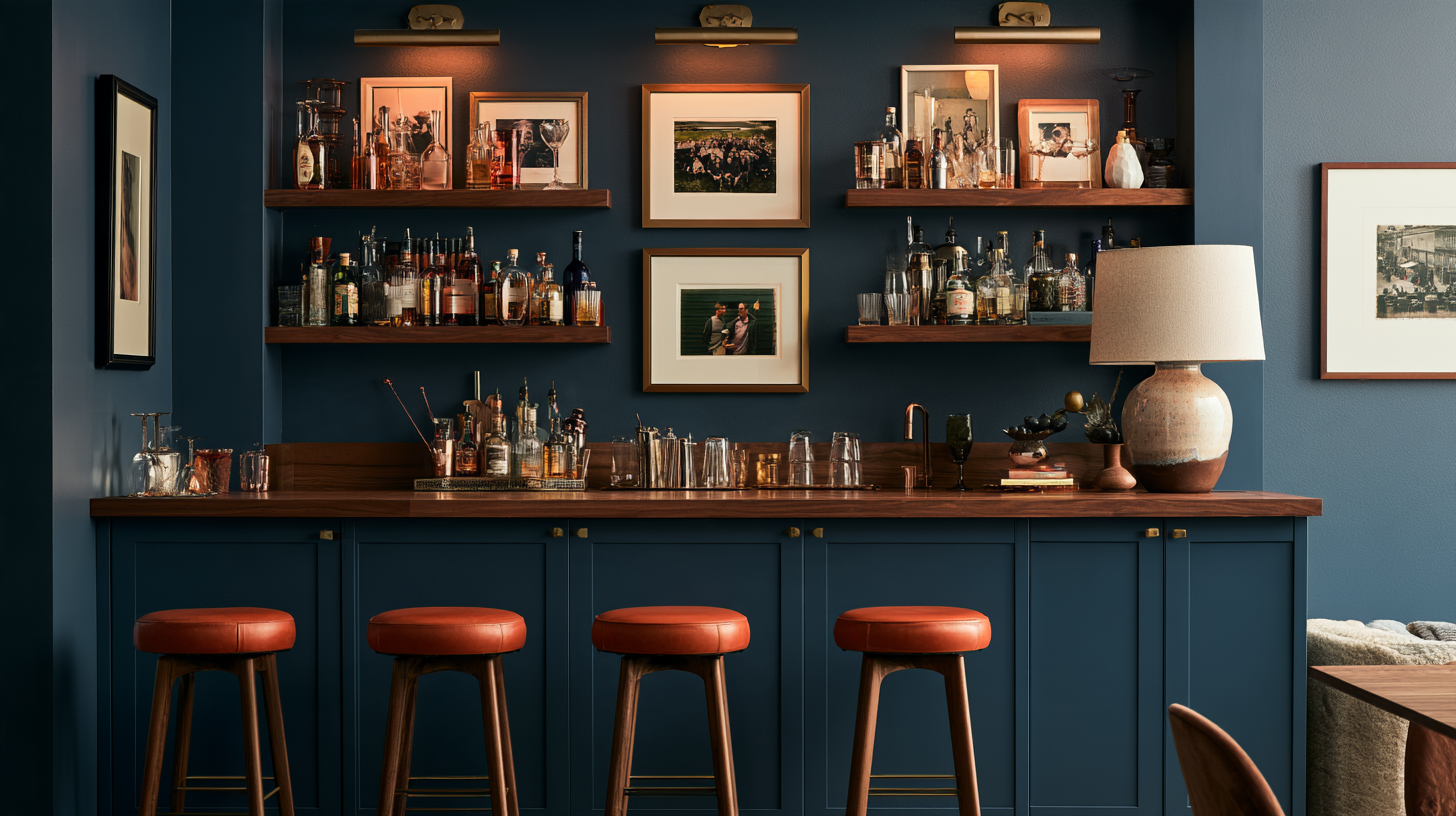
Blank walls are one of the clearest provisional signals. Not because every wall needs something. But because living with every wall untouched suggests that visual ownership has never begun. Choose art slowly: photography, painting, prints, maps, works on paper, framed posters, something connected to a real interest, or something you simply love looking at. Then frame it properly and hang it.
The physical act of putting something meaningful on the wall changes the relationship to the home. You are no longer preserving a blank surface for the next resident.
Collections Give the Home Continuity
Books, records, cameras, watches, ceramics, models, historical objects, photography: anything collected seriously introduces chronology automatically. The collection usually was not created for the room. It existed before the room and may continue after it.
That makes it particularly powerful in a home occupied by one person. The possessions begin creating a thread through different life stages. Give collections proper territory, whether that is shelving, a cabinet, one wall, or a table. The home begins saying: This is where these things live. That sounds small. It is psychologically significant.
Buy Storage Before You Buy More Decor
A temporary-feeling home often has one of two problems. Almost nothing is visible. Or everything is. The second happens when there is insufficient storage. Mail, electronics, shoes, gym equipment, boxes, cables, laundry, supplements, and work materials all end up in view.
Everything occupies visible territory because the room has nowhere else to put it. Closed storage creates permanence because belongings acquire addresses. This cabinet holds documents. Those drawers hold electronics. The entry contains shoes. The closet actually works. Once logistics disappear, art and meaningful objects become far more visible.
Finish the Windows
Bare builder blinds are remarkably powerful. A room can contain a beautiful sofa, rug, artwork, and tables and still feel slightly unfinished because the architecture stops abruptly at the window. Curtains or appropriate shades create softness, verticality, light control, privacy, material, and a visual boundary.
They are also one of the improvements most men postpone because the room technically functions without them. That is exactly why they are often one of the final steps between a functional room and a resolved one.
Use Lamps Like You Intend to Be There After Dark
Temporary spaces tend to rely on whatever illumination came with the building. That usually means a ceiling fixture, recessed lights, and a bathroom vanity fixture. A mature home develops another layer: a lamp beside the sofa, a reading light, bedside lamps, a desk lamp, and perhaps picture lighting.
The room becomes inhabitable after sunset rather than merely visible. Lighting also changes how ownership feels. Turning on several warm lamps in a developed room produces a very different experience from switching on six recessed lights in a sparsely furnished one.
Your Home Should Reflect Current Interests, Not Generic Male Identity
Decorating for single men often falls into one of two extremes. Either nothing is personal, or the home fills with aggressively masculine products: a whiskey sign, car art, dark leather, industrial objects, and sports memorabilia. There is nothing wrong with any of those subjects when they reflect actual interests.
But the home becomes permanent when the specificity gets deeper. Not generic automotive imagery. A photograph connected to a car, race, road, or era you care about. Not generic travel decor. The ceramic you actually brought home. Not fake old books. Books you read. Not "gentleman" accessories. Objects tied to your actual life.
You Do Not Need to Decorate for a Future Woman
A man sometimes attempts to escape the bachelor-pad problem by making the home aggressively neutral. He removes anything potentially polarizing and chooses beige, generic art, and safe furniture. The imagined future partner is allowed to approve everything in advance.
This creates another kind of temporary home. Your home should belong to you now. A future relationship will naturally change the environment because another person will begin belonging there too. That is healthy. But there is no need to erase your identity in preparation for someone who has not arrived.
Create a Guest-Ready Home, Not a Guest-Designed Home
There is another important distinction. You should be able to receive people. You do not need to live for them. Guest readiness means clean towels, a comfortable place to sit, reasonable dining capacity, and a usable bathroom. Perhaps a proper guest bed if you genuinely host overnight visitors.
It does not mean sacrificing your preferred room arrangement to hypothetical guests who visit twice a year. Design primarily for daily life. Give it enough flexibility for hospitality.
Let Some Things Age With You
A home becomes less temporary when materials begin recording time. A leather chair creases, wood develops minor marks, brass changes, books accumulate, a rug softens, and the dining table gains evidence of meals. The goal is not damage. It is use. Objects capable of aging well become especially meaningful because their future appearance depends partly on the life lived around them. This creates something instant decor cannot provide: Continuity.
Maintenance Creates Permanence Too
Temporary spaces are easy to neglect. Why repair that wall if I may move? Why replace the cheap lamp if it still works? Why fix the drawer? Why properly organize the closet? Eventually the home begins reflecting accumulated postponement. Maintenance sends the opposite message. The home is worth caring for. Replace the bulb. Fix the handle. Repair the damage. Clean the rug. Touch up the wall. Deal with the cable mess. A well-maintained modest home often feels far more permanent than an expensive home filled with unresolved neglect.
Designer Eyes: Find the Sentence "I'll Deal With That Later"
Walk through the home and notice what produces that sentence. It might be the empty wall, the wrong desk, the tiny nightstand, the box still sitting in the dining room, the unused guest room full of storage, the missing curtains, or the broken lamp. You do not need to solve every item immediately.
But those sentences reveal the unresolved areas creating the temporary feeling. Start with the one you see every day.
A Home Can Evolve Without Looking Unfinished
This is the ideal balance. The important questions have answers. Where do you sleep? Where do you eat? Where do you work? Where do friends sit? Where do books go? Where does clutter disappear? What belongs on the walls? At the same time, some shelves remain open.
Perhaps the perfect chair has not appeared yet. A future painting will replace an empty wall. Another antique will arrive. The home is complete enough to live well and open enough to continue developing. That is very different from provisional living.
The TMH Perspective
A man living alone does not need to design a bachelor pad. He does not need to simulate a future family home either. He needs a home capable of supporting the life he has now. A real bedroom. Somewhere worth eating. A living room that can receive another person.
Furniture worth keeping. Art that reveals taste. Books and objects that connect the home to a life outside it. Storage that brings order. Light that makes evenings better. The home may eventually change completely. That is fine. A home can be temporary in ownership without feeling temporary in spirit.
The goal is not to prove you will remain there forever. It is to live as though the years you spend there count.
For a full home where several rooms still feel provisional, TMH Full-Service Interior Design can establish one long-term direction without requiring every room to be furnished at once.
Prefer to design it yourself? Homefeld, our guided room design tool, lets you upload photos of your room, explore a new look, and get a practical plan to put it together.
Frequently Asked Questions
How should a single man design his home?
Design it around the life you currently lead: sleeping, working, eating, entertaining, reading, hobbies, collecting, and storage. Do not furnish according to a generic bachelor-pad identity.
How do I make my home stop feeling temporary?
Resolve the high-impact provisional decisions first: proper bed, seating, dining, lighting, window treatments, art, storage, and furniture you would genuinely want to take to another home.
Does a single man need a dining table?
Not necessarily a large one, but a real dining surface gives the home social capacity and supports meals, guests, work, and conversation.
Should I fully furnish unused rooms?
No. Finish the rooms you actually use and leave genuinely unused spaces flexible rather than filling them with rushed purchases.


Facebook
Instagram
Youtube