Bachelor Pad Ideas vs. a Grown Man's Home
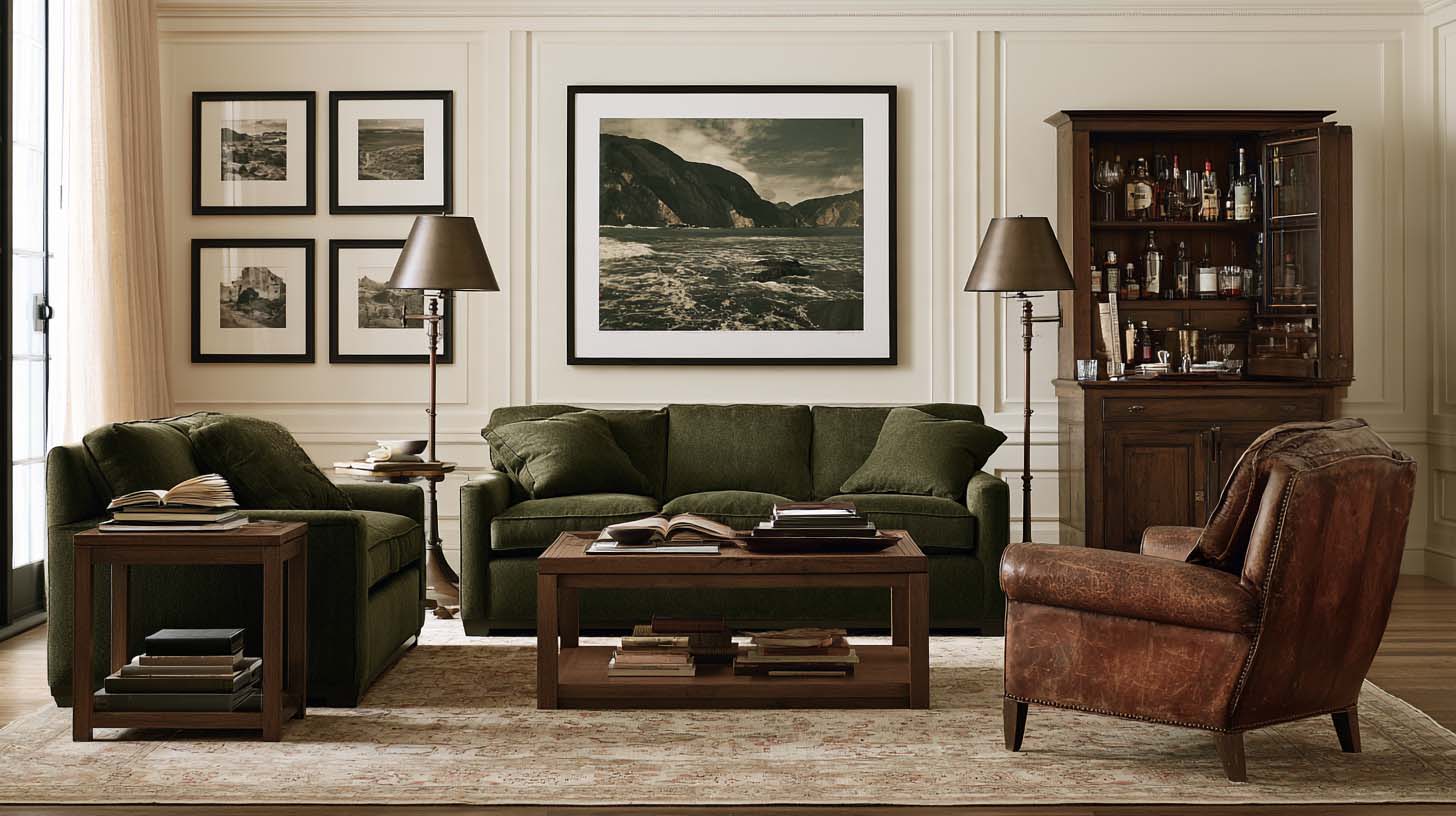
The bachelor pad has become one of the strangest categories in interior design. A man lives alone, so apparently the home should contain a large television, a dark sectional, a bar cart, black metal, some automotive art, expensive technology, perhaps a neon sign, and very little else.
The stereotype is not offensive because those things are inherently bad. It is limiting because it treats living alone as though it were a temporary stage that does not deserve a fully developed home. The best bachelor pad ideas are not really about creating a better bachelor pad.
They are about outgrowing the idea that a man's home should look provisional simply because he is the only person currently living there. A grown man apartment or house can still be masculine. Still relaxed. Still contain the television, records, car photography, whiskey, gaming system, or whatever else the owner genuinely enjoys.
The difference is that those things become part of a larger home built around comfort, hospitality, craftsmanship, personal history, and stewardship. That is maturity. Not pretending to be married. Not pretending to be older.
Simply treating your home as a place worth finishing now. If you are not sure what your own place still needs to feel finished, TMH's Full-Service Interior Design can plan it with you.
A Bachelor Pad Is Often Designed Around Consumption
Look at the stereotypical bachelor pad and most of its strongest objects are things consumed through. Television. Gaming system. Speakers. Liquor. Computer. Screen. The room is organized around passive entertainment. Again, there is nothing wrong with any of these things.
The problem appears when there is no counterbalance. No place to read. No table for dinner. No art that carries meaning. No comfortable place for another person. No books. No objects connected to history or travel. No real lighting beyond recessed fixtures and the glow of a television. The home begins feeling like a sophisticated waiting room between work and sleep.
A Grown Man's Home Supports More of Life
The more developed home supports several modes of living. Watching a film. Having someone over. Reading. Eating properly. Working. Sleeping. Listening to music. Making coffee. Conversation. Perhaps raising a child eventually. Perhaps not. The point is that the home has enough infrastructure to support life beyond the owner's most frequent solo activity.
This is one of the clearest distinctions between a stereotypical bachelor pad and a sophisticated bachelor pad. The second is prepared for more.
Living Alone Does Not Mean Living Provisionally
This is the philosophical center of the issue. Many men unconsciously tell themselves: I'll buy a proper dining table when I have a family. I'll worry about decorating once I own rather than rent. I'll get the better sofa in the next house. I'll buy art eventually. I'll finish the bedroom once someone else cares what it looks like.
That can last for years. The result is not minimalism. It is postponement. A home should support the person you are now while remaining flexible enough to evolve later. You do not need to furnish imaginary children’s rooms. You do need somewhere decent to sit.
A Real Bed Is One of the First Dividing Lines
The bedroom tells the story quickly. A mattress on a metal frame. Tiny nightstand. One lamp. Television. Bare window. This is functional. It is not necessarily complete. A mature bedroom usually has a bed with visual presence, nightstands proportional to it, useful lamps, good bedding, window treatments, storage, and artwork or some intentional wall composition.
Nothing particularly luxurious is required. The difference is simply that decisions have been made.
The Living Room Should Accommodate Another Person Comfortably
A bachelor pad is frequently optimized for one body. One preferred seat. Television directly in front. Coffee table at exactly the right distance. Everything works beautifully for the owner. Then someone visits. Where do they sit? Where do they put a drink? Can two people actually face one another? A mature living room considers hospitality even if the owner lives alone.
This does not require a massive sectional. Sometimes it means one sofa and one excellent chair arranged intelligently. Perhaps two chairs. A side table. Enough light. The room should not become socially dysfunctional because only one person usually occupies it.
Hospitality Is a Design Principle
Hospitality changes how you see the house. Do you own more than one usable glass? Is there somewhere to eat? Can someone hang a coat? Is the bathroom prepared for a guest? Does every surface contain personal clutter? Can another person find a comfortable reading light? This is not about impressing people.
It is about being able to receive them without disrupting the entire home. Historically, domestic interiors have often served this social function. The Smithsonian American Art Museum describes the nineteenth-century parlor as a center of domestic life where furnishings and pictures expressed a household's aesthetics, aspirations, history, and social identity. (Smithsonian American Art Museum)
We do not need Victorian parlors again. The underlying point remains useful: The primary living spaces of a home communicate how seriously the owner takes both private life and hospitality.
A Dining Table Changes a Single Man's Home
One of the first pieces omitted in apartments occupied by one man is the dining table. Why own a table for six when one person lives there? Because the table does more than accommodate your average headcount. It provides a real place to eat, a place to invite someone, a surface for conversation, games, work, dinner with friends, family visits, and celebration.
A kitchen island is useful. It is not identical. A dining table gives the home another mode.
Matching Furniture Is Not Maturity
There is another trap. A man decides to "upgrade" the bachelor pad and purchases an entire matching suite. Sofa. Loveseat. Chair. Coffee table. End tables. Matching bedroom set. Everything suddenly looks coordinated. It may also look like a showroom.
A more developed home often contains different pieces that work together rather than identical pieces sold together. New sofa. Older leather chair. Walnut table. Painted cabinet. Vintage rug. Different periods. Different materials. The room begins looking assembled through judgment rather than purchased in one afternoon.
The Television Can Stay
A grown man's home is not a monastery. If you love films, sports, games, or television, keep the television. Make it good. The issue is not its existence. The issue is whether every room appears architecturally subordinate to it. In the primary living room, consider giving the screen some competition.
Artwork. Bookshelves. Fireplace. Millwork. A strong media cabinet. A deeper wall color. Perhaps the room reads as a living room first and reveals the television second. That is very different from pretending technology does not exist.
Technology Should Be Integrated Rather Than Worshipped
Speakers. Computer. Television. Gaming system. Smart-home controls. Charging. All can belong. But technology changes rapidly. Furniture, artwork, rugs, books, and architecture tend to carry longer visual lives. That argues for integrating technology into the room rather than using it as the room's primary identity.
Hide the wires. Give speakers intentional locations. Store controllers. Conceal charging where possible. Let technology work extremely well without requiring the house to resemble an electronics showroom.
Status Objects Should Mean Something Beyond Price
A luxury watch book. Designer tray. Expensive speaker. Car model. Branded bar accessory. These objects are not inherently bad. But a room filled with things whose primary message is this costs money rarely becomes more sophisticated as the price rises.
Ask: Would I still want this object without the logo? Do I care about its design? Does it connect to an interest? Was it acquired for a reason? The strongest objects often communicate meaning before status.
Books Make a Home Look Lived In Because They Are Lived With
Books add more than texture. They communicate attention. What does the owner think about? History? Design? Philosophy? Business? Fiction? Automobiles? Art? Biography? You do not need hundreds. Twenty books you have actually read are more interesting than two hundred purchased because the bindings are brown.
The point is not building a library for appearance. It is allowing the things you genuinely use to become part of the home.
Art Separates Taste From Shopping
A generic bachelor pad often relies on imagery chosen because the subject sounds masculine. Car. City skyline. Whiskey. Boxing. Watch. Again, those subjects can make excellent art when genuinely loved. But art becomes more interesting when the selection reflects taste instead of category.
A landscape you cannot stop looking at. A photograph from a photographer whose work you follow. An abstract piece whose colors make the room stronger. A painting acquired while traveling. A historical print connected to an interest. The artwork does not need to prove anything about you. It simply needs to deserve the wall.
Proper Lighting Changes the Psychological Age of a Room
One bright ceiling fixture can make even expensive furniture feel temporary. Table lamps change that. Floor lamps. Sconces. Picture lights. Task lighting. Once light begins appearing at several heights, the room develops zones and atmosphere.
The home feels cared for rather than merely illuminated. A sophisticated bachelor pad should look better after sunset. Not simply darker.
Curtains Matter More Than Most Men Expect
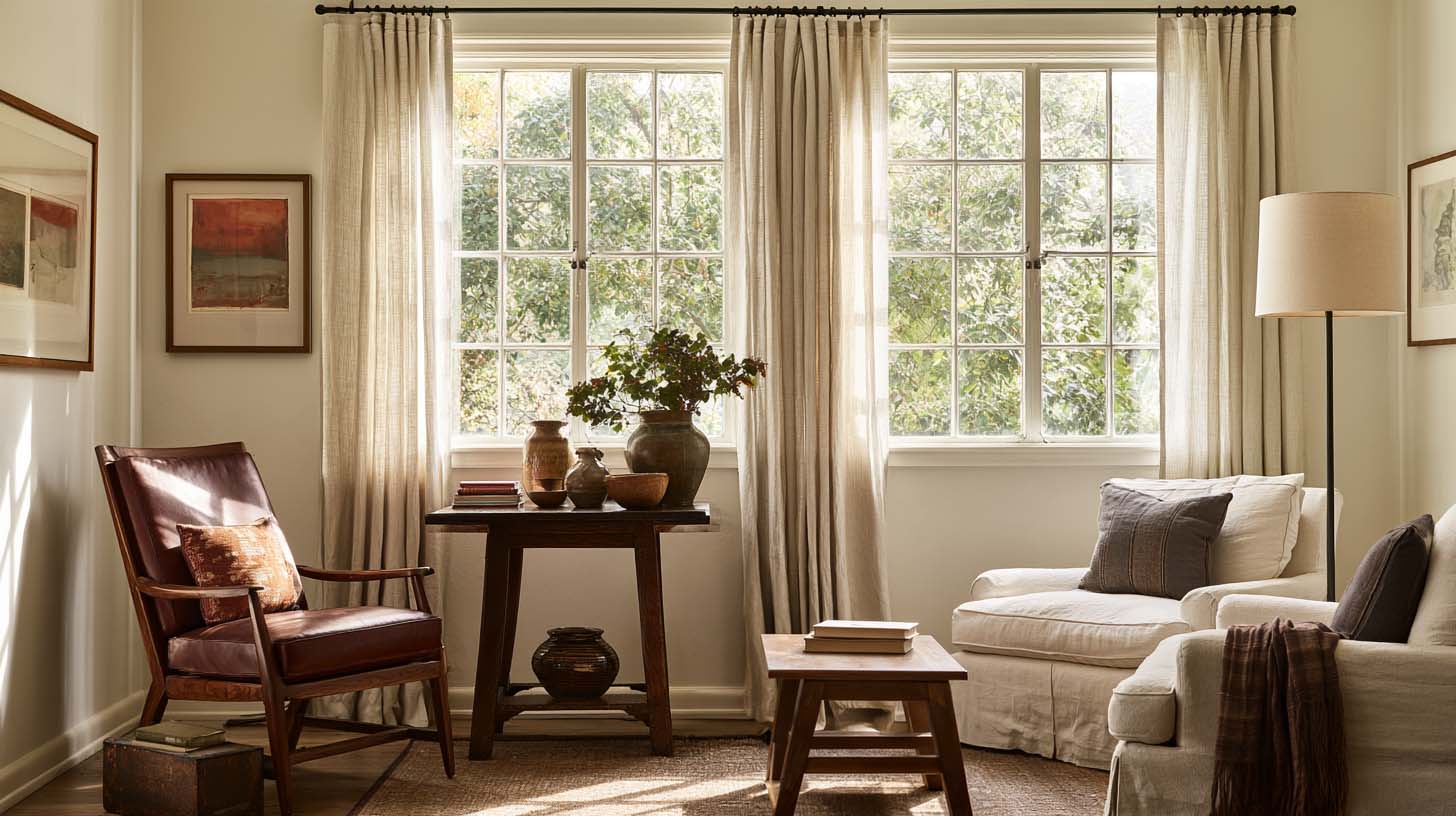
Bare blinds are one of the easiest signals of a provisional home. They provide privacy. They rarely provide completion. Curtains bring verticality, texture, warmth, light control, acoustic softness, and a relationship between the architecture and furniture.
Warm ivory linen. Brown wool. Muted stripe. Deep-blue drapery. The material depends on the room. The point is simply acknowledging the windows.
Rugs Should Be Large Enough to Belong
Another provisional signal is a small rug floating under the coffee table. This happens because rugs are expensive and a smaller one appears to solve the problem cheaply. It usually creates another problem. The furniture sits outside the composition.
A proper rug helps establish the room's territory and makes the existing sofa and chairs feel more substantial. A faded traditional rug can also introduce age into an apartment where everything else is new.
A Grown Man's Home Has Closed Storage
The bachelor pad tends to put everything on display. Controllers. Boxes. Bottles. Sneakers. Technology. Collectibles. Supplements. Mail. The grown home understands that ordinary life contains unattractive objects. Cabinets. Drawers. Closets. Baskets. Storage furniture.
These allow meaningful things to remain visible while logistics disappear. Organization is not decorative. It is what permits decoration to work.
Personal Objects Beat Generic Men's Decor
This may be the strongest distinction. A sophisticated room contains evidence of the owner. Travel ceramics. A photograph. Inherited watch box. Old camera. Military object from family history. Books. Records. Model connected to a real interest. A framed document. An old map. A sculpture.
These things cannot be replicated by searching "bachelor pad accessories." The Smithsonian's Domestic Life Collection similarly treats household furnishings and everyday objects as evidence of family life, rituals, technology, identity, and lived experience rather than merely decoration. (National Museum of American History) Your home becomes more interesting when its objects begin functioning in the same way: as evidence.
Cleanliness and Maintenance Matter More Than Luxury
A sophisticated bachelor pad with expensive furniture still feels immature when lamps are missing bulbs, paint is damaged, the bathroom is dirty, laundry sits everywhere, cables run across floors, furniture is broken, or the kitchen is permanently cluttered.
Maturity at home has less to do with luxury than stewardship. The owner notices when something needs attention. Then handles it. That creates a stronger impression than any designer brand.
Scent Should Come From Cleanliness First
A home should smell good. That does not require an aggressive diffuser system. Begin with clean textiles, ventilation, trash managed properly, the kitchen cleaned, the bathroom clean, and laundry controlled. Then introduce fragrance if desired. Candle. Diffuser. Incense. Natural materials. Subtlety matters. You do not want visitors to walk into a wall of "masculine cedar bourbon smoke" because a product told you that was what men smell like.
A Grown Man's Home Can Still Be Playful
Maturity does not mean removing everything fun. Arcade cabinet. Record collection. Sports memorabilia. Gaming setup. Bar. Movie posters. Automotive photography. These can all belong. The difference is integration. Frame the poster. Give memorabilia one controlled display area.
Build storage around the records. Put gaming equipment in cabinetry. Treat the objects with enough respect that they become part of the interior. Growing up does not require becoming visually boring.
Do Not Decorate for an Imaginary Future Partner
There is an opposite mistake. A man hears that his place should look more grown up and begins neutralizing everything to make the home acceptable to some hypothetical future woman. That is not the goal either. Your home should reflect you now. When life changes, the home can change. The aim is not pre-compromise. It is intentionality.
Designer Eyes: Look for Anything That Says "For Now"
Walk through the home and identify the object that makes you mentally say: "That's just for now." Temporary folding desk. Plastic storage tower. Bare mattress frame. Unframed poster. Broken lamp. Cheap side table you dislike. Maybe the answer is not replacing everything immediately.
But those objects show you where the room remains provisional. Fix the ones with the greatest visual or functional influence first.
The TMH Perspective
A grown man's home is not the opposite of a bachelor pad because it contains fewer masculine things. It is the opposite because the home is no longer waiting for someone or something to justify its completion. There is somewhere to sit. Somewhere to eat. A proper place to sleep. Light worth turning on at night. Art worth looking at. Books worth reading. Objects worth keeping.
Enough order that another person can enter without throwing the whole system into chaos. A man does not need to stop being a bachelor. He needs to stop treating his life as though it has not started yet. The Smithsonian American Art Museum's Pictures in the Parlor exhibition archive provides useful historical context for the social room as a place where household identity, aspirations, photographs, and objects were made visible. (Smithsonian American Art Museum)
The Smithsonian National Museum of American History's Domestic Life Collection similarly documents household furnishings and objects as evidence of real domestic life across generations rather than merely as decorative products. (National Museum of American History)
For a full apartment or house that needs one coherent direction, TMH Full-Service Interior Design can build the environment around how you actually live now, not around the bachelor-pad stereotype.
Frequently Asked Questions
What makes a bachelor pad look immature?
Usually not one particular object. The larger signals are temporary furniture, incomplete rooms, poor storage, bare windows, weak lighting, novelty decor, excessive technology, and little evidence of personal taste beyond products.
Can a sophisticated bachelor pad still have a big TV and gaming setup?
Absolutely. Integrate them deliberately, manage cables and storage, and make sure the rest of the room supports conversation, reading, art, and hospitality too.
What should a single man buy first to improve his home?
A proper bed, good sofa or seating, useful lamps, a correctly scaled rug, closed storage, and art usually have far more impact than decorative accessories.
Does a grown man's home need to look traditional?
No. Mid-century, modern, industrial, Scandinavian, traditional, rustic, and eclectic homes can all feel mature. Completion and stewardship matter more than style.


Facebook
Instagram
Youtube