Modern Industrial Design: The Essential Guide for Masculine Homes
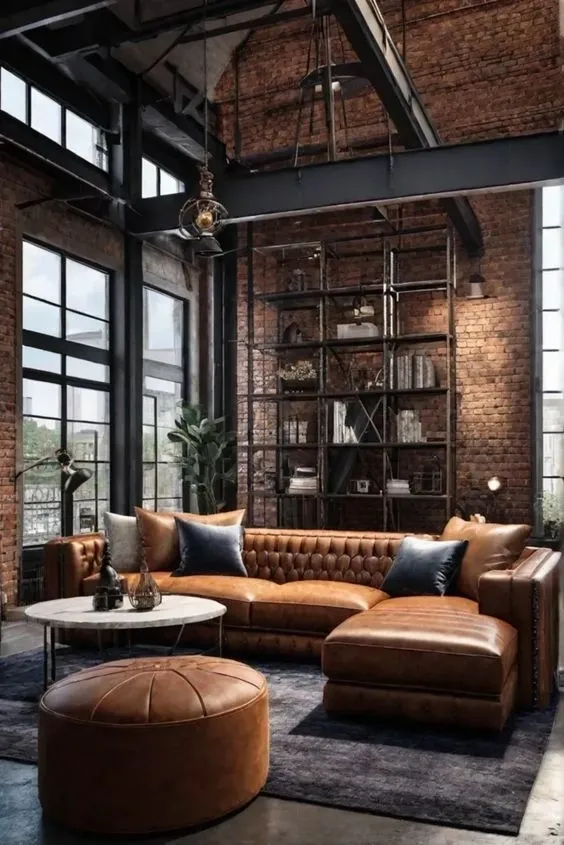
Modern industrial design is one of the most misunderstood interior styles.
Many people assume it simply means exposed brick, black metal, and Edison bulbs.
That aesthetic has certainly become popular, but those elements alone don't create an industrial interior.
They're just the vocabulary.
The real appeal of industrial design lies much deeper.
It's a style built around honesty.
Honest materials.
Honest construction.
Honest craftsmanship.
Nothing pretends to be something it isn't.
Steel looks like steel.
Concrete looks like concrete.
Wood proudly displays its grain, knots, and imperfections.
That authenticity is one of the reasons industrial interiors continue feeling timeless while trend-driven spaces quickly begin to age.
Industrial Design Celebrates the Building Itself
Most decorating styles try to hide a building's structure.
Industrial design does the opposite.
It celebrates it.
Exposed brick.
Steel beams.
Concrete floors.
Visible ductwork.
Large factory-style windows.
These aren't flaws to disguise.
They're architectural features that become part of the room's character.
Even if your home wasn't originally built as an industrial space, you can still embrace this philosophy by choosing materials that feel authentic rather than decorative.
Designer Eyes
Look around your room.
Which materials are genuine?
Which ones are simply imitating something else?
Industrial design almost always favors the real thing.
Build Around Honest Materials
Materials are the foundation of industrial interiors.
Rather than relying on ornament, the style creates richness through texture and craftsmanship.
Some of the defining materials include:
Blackened steel
Reclaimed wood
Full-grain leather
Concrete
Brick
Natural linen
Aged brass
Woven textiles
Notice that many of these materials improve with age.
Leather develops patina.
Wood gains character.
Steel becomes richer through use.
That's one reason industrial interiors often become more beautiful over time rather than less.
Warmth Is What Separates Great Industrial Design From Cold Industrial Design
One of the biggest mistakes people make is treating industrial interiors as purely mechanical.
The result often feels cold and uncomfortable.
Great industrial interiors balance strength with warmth.
Leather softens steel.
Warm walnut balances concrete.
Wool introduces comfort.
Natural light reflects off darker materials.
The contrast between rugged and refined is what gives the style its depth.
Without that balance, industrial design quickly becomes sterile.
Designer Eyes
Imagine removing every leather, wood, and fabric element from the room.
Would the remaining space feel welcoming?
Probably not.
Warmth isn't an accessory.
It's an essential ingredient.
Keep the Color Palette Restrained
Industrial interiors don't rely on bright colors for interest.
Instead, they allow materials to become the focal point.
A strong palette often includes:
Charcoal
Black
Warm white
Concrete gray
Walnut brown
Leather cognac
Deep olive
Burnt rust
These colors provide enough variation to create depth without distracting from the architecture.
When brighter colors appear, they're usually introduced sparingly through artwork or collected objects rather than dominating the room.
Choose Furniture That Feels Substantial
Industrial furniture often appears simple.
But simplicity shouldn't be mistaken for lightness.
Look for pieces with visual weight.
Solid wood dining tables.
Leather sofas.
Steel shelving.
Heavy coffee tables.
Furniture should feel grounded within the architecture rather than floating above it.
Industrial interiors reward craftsmanship far more than ornamentation.
Lighting Deserves Special Attention
Because industrial materials naturally absorb light, lighting becomes one of the defining characteristics of the room.
Rather than depending entirely on overhead fixtures, layer multiple sources.
Factory-inspired pendants.
Wall sconces.
Floor lamps.
Task lighting.
Accent lighting.
These create warmth while emphasizing the texture of brick, steel, wood, and concrete.
The room becomes dramatically more inviting after sunset.
Designer Eyes
Turn on every light in an industrial room.
Now turn off the overhead fixtures and leave only the lamps.
Notice how the materials suddenly become more interesting.
That's because texture is revealed by directional light, not uniform brightness.
Let Personal Objects Tell the Story
Industrial interiors provide a beautiful backdrop for personal collections.
Vintage cameras.
Architectural drawings.
Old factory clocks.
Mechanical tools.
Travel photography.
Books.
Vinyl records.
These objects feel at home because industrial design naturally celebrates craftsmanship and history.
Decoration becomes meaningful rather than decorative.
Industrial Design Is About Character, Not Construction
Many people believe they can't achieve industrial style because their home lacks exposed brick or concrete walls.
Those features certainly help.
But they aren't what define the style.
Industrial design is really about choosing authentic materials, celebrating craftsmanship, embracing restraint, and allowing honest construction to become part of the beauty.
That's why it works equally well in downtown lofts, suburban homes, and modern apartments.
The architecture may change.
The philosophy remains exactly the same.
Continue Building Your Eye for Design
Industrial design is more than exposed brick and black steel. It's one of ten timeless masculine interior styles, each built on its own distinct combination of materials, colors, furniture, and architectural character.
The Masculine Interior Style Guide teaches all ten styles in detail, complete with exact paint colors, material palettes, furniture direction, styling guidance, and the principles that define each one. It also includes a 30-minute video walkthrough to help you confidently choose the style that best fits your home and bring it to life.
Whether industrial design speaks to you or you're still exploring your options, the guide will help you create a home that feels cohesive, timeless, and unmistakably yours.
Explore The Masculine Interior Style Guide →
Read More
Modern Masculine Interior Design: The Principles Behind Timeless Style
How to Use Real Materials to Create a Masculine, Sophisticated Interior

Facebook
Instagram
Youtube