Masculine Living Room Ideas for a Sophisticated Home
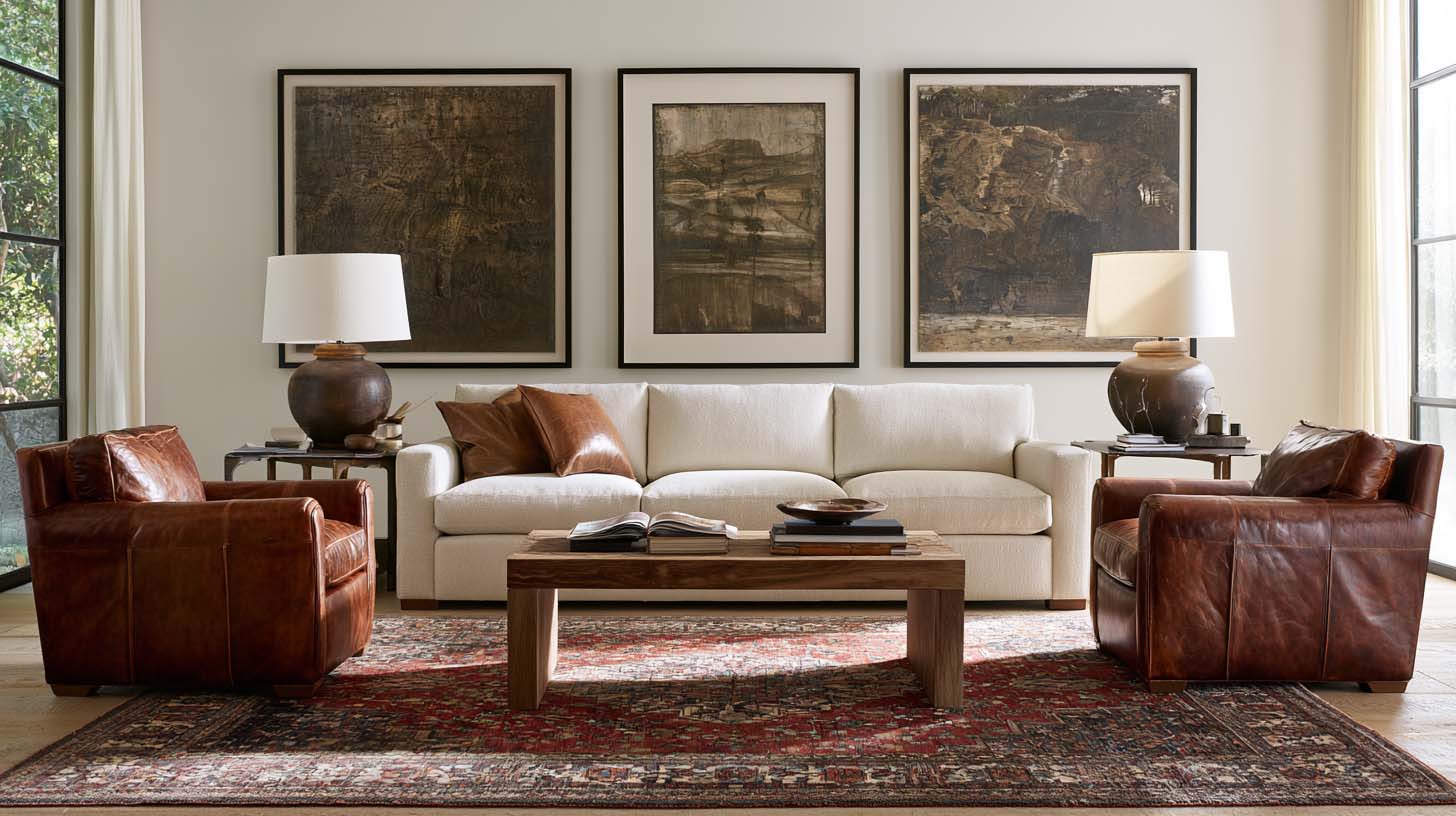
A masculine living room should not look as though someone searched for "men's living room ideas" and purchased the first ten objects that appeared.
It should feel like a proper room. Comfortable enough to spend an evening alone. Composed enough to receive guests. Personal enough that someone entering it understands something about the person who lives there.
That requires more than a leather sofa and dark paint.
The strongest masculine living rooms are built through relationships: the sofa to the chairs, the rug to the conversation area, the lamps to the furniture, the artwork to the wall, and the materials to one another.
Get those relationships right, and almost any masculine style can work, from traditional to contemporary.
Begin With What the Living Room Needs to Do
Before choosing furniture, decide what happens here. Do you entertain? Read? Watch television? Listen to music? Have conversations? Spend evenings with family? Need space for children? Keep books nearby? Serve drinks?
These questions determine the room more intelligently than choosing an aesthetic first. A living room designed primarily around television will naturally develop a different geometry than one centered around conversation and a fireplace. Neither is automatically better.
The problem comes when the room claims to support one lifestyle while its furniture supports another. A beautiful reading chair across the room from the only lamp is decoration. A reading chair with a table and lamp beside it becomes a place. Good rooms are composed of places.
Build the Seating Arrangement Before Buying Accessories
The seating arrangement is the skeleton of a living room. Everything else depends on it.
One of the most common mistakes is placing a sofa against one wall, a television against another, and scattering miscellaneous chairs around whatever space remains.
Instead, establish a recognizable conversation area. In many rooms that means a sofa facing or sitting perpendicular to two chairs. In others, two sofas work opposite one another. A sectional can be effective where its scale and orientation genuinely fit the architecture.
The objective is to make sitting together feel natural. Furniture does not necessarily need to hug the walls. Pulling seating inward can create a stronger room while establishing circulation behind it.
Designer Eyes: Watch the Empty Center
If a living room contains plenty of furniture but still feels strangely empty, look at the distance between the pieces. Often the problem is not insufficient furniture. It is insufficient relationship.
When chairs, sofas, and tables sit too far apart, each piece becomes an island. Tightening the composition can make the room feel complete without adding anything.
Choose a Sofa With Enough Presence for a Masculine Living Room
The sofa usually establishes the visual baseline.
Masculine living rooms tend to benefit from sofas with enough visual weight to anchor the room: substantial arms, a confident back profile, appropriate seat depth, and upholstery that does not appear overly delicate.
Leather is an option. It is not an obligation. A beautifully tailored wool, linen blend, mohair, velvet, or textured performance fabric can produce a sophisticated masculine sofa.
The silhouette matters as much as the material. A Chesterfield creates historical character. A rolled-arm sofa can feel traditional and comfortable. A tuxedo sofa introduces formality. A clean track-arm sofa can work beautifully in a contemporary masculine interior.
Choose the sofa according to the room rather than according to a masculine stereotype.
Add Chairs That Create Contrast
Buying the matching chair that accompanies the sofa is easy. It is rarely the most interesting solution.
A masculine living room becomes richer when the seating relates without matching exactly. A linen sofa might sit opposite two cognac leather club chairs. A leather sofa could pair with wool wingbacks. A contemporary sofa might benefit from an antique wood-framed chair.
This creates material and silhouette contrast while preventing the room from looking as though it was purchased as a package. Matching furniture sets remove many opportunities for composition. Collected rooms rely on relationships rather than identical finishes.
The Rug Should Hold the Room Together
A rug is not a decorative rectangle placed beneath the coffee table. It establishes the territory occupied by the furniture.
In most living rooms, the rug should be large enough to visually connect the major seating pieces. When the rug is too small, the furniture appears to float independently around it.
Traditional Persian and Turkish rugs work particularly well in masculine interiors because they introduce age, pattern, and complex color. But they are hardly the only option. A textured wool rug, restrained geometric pattern, kilim, or natural fiber can work depending on the room.
Gray is not required. In fact, a room filled with brown wood and leather often benefits from a rug containing muted red, olive, rust, blue, or cream. The rug can become the bridge between otherwise separate colors.
Use More Than One Kind of Light
A ceiling fixture cannot carry an entire living room. The room needs layers.
At minimum, consider ambient light, table lamps, floor lamps, task or reading light, accent lighting, and picture lights or sconces where appropriate.
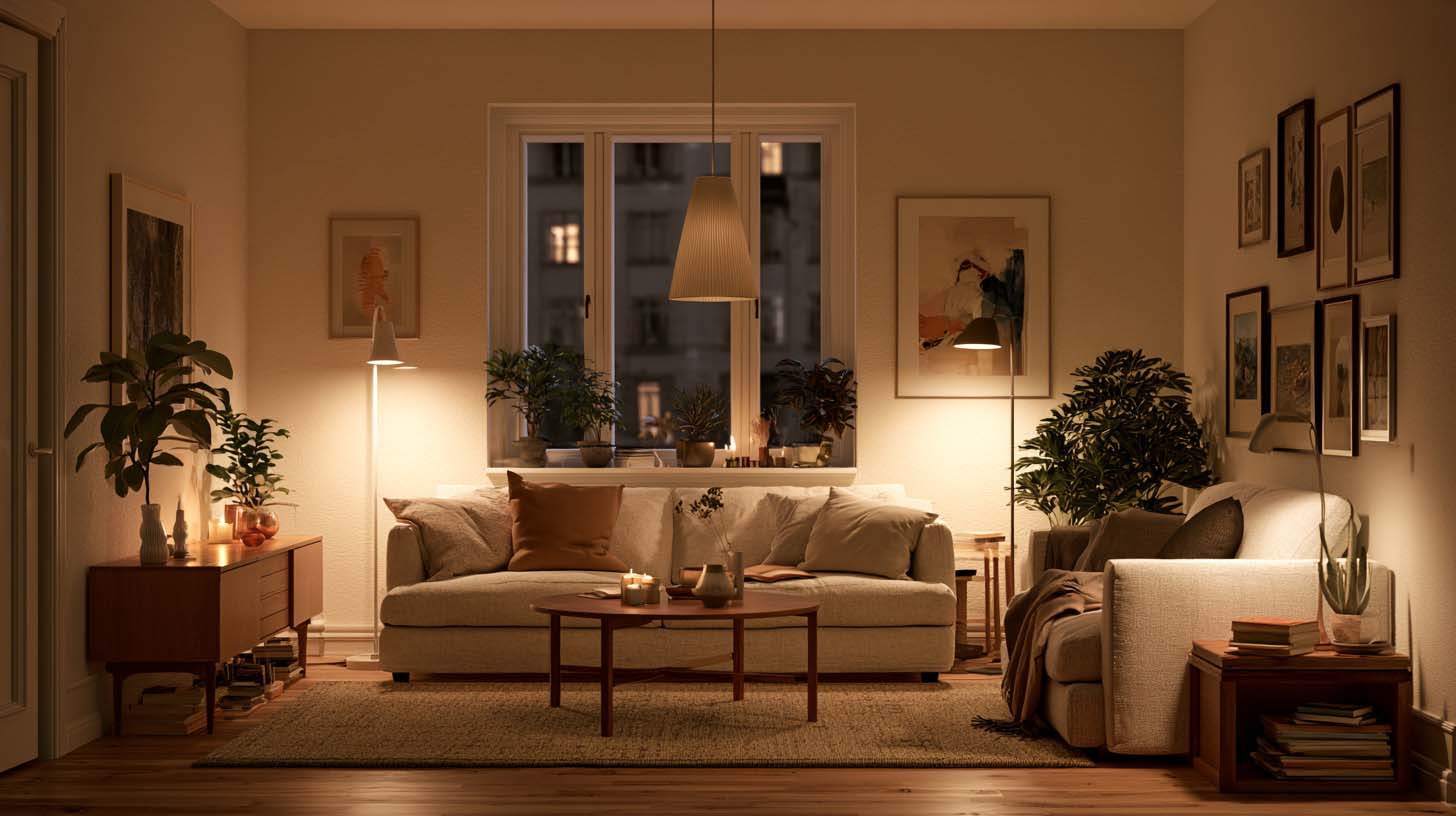
The objective is not maximum brightness. It is control. During the day, architecture and windows may carry much of the room. At night, lamps should create smaller pools of light around the places people actually occupy.
This is particularly important in dark masculine rooms. If every surface is dark and the only illumination comes from recessed ceiling lights, the room can feel flat and severe. Warm, localized light reveals texture: leather develops highlights, wood grain appears, brass catches light, artwork becomes visible. The room gains depth.
Choose Materials That Improve One Another
A sophisticated masculine living room rarely depends on one material. Leather everywhere is not more masculine. Wood everywhere is not more sophisticated. Instead, create a material vocabulary.
For example: walnut, wool, cognac leather, aged brass, and limestone. Or white oak, linen, blackened steel, textured plaster, and saddle leather. Or mahogany, velvet, antique brass, marble, and Persian wool.
Each material contributes something different. Hard surfaces need softness. Smooth materials benefit from texture. New furniture benefits from something old. Dark colors benefit from moments of lightness. The room becomes compelling through contrast. TMH's Masculine Interior Style Guide walks through how to build a material vocabulary like this for your own home.
Masculine Color Does Not Mean Making Everything Dark
Dark living rooms can be exceptional. They can also become oppressive surprisingly quickly.
If you choose deep walls, balance them with materials capable of reflecting or warming the available light: medium wood, brass, warm leather, cream lampshades, lighter upholstery, artwork, and textiles.
Conversely, a light masculine living room may need stronger furniture silhouettes and deeper accents to keep the room grounded.
Olive, tobacco, oxblood, warm brown, camel, blackened green, muted blue, stone, and cream all belong comfortably within a masculine palette. Color should support the architecture and natural light. It should not obey a gendered formula. If you are staring at paint chips and getting nowhere, TMH's $17 Paint Playbook is built to shortcut exactly that decision.
Artwork Should Establish Identity
Artwork is where many otherwise good masculine rooms become generic.
Mass-produced photographs of whiskey, sports cars, and anonymous city skylines communicate categories of interest without revealing much about the owner.
Choose art because it holds your attention. That might include landscape painting, portraiture, abstract work, architectural drawings, photography, maps, sporting art, historical works, works on paper, textiles, or original pieces from local artists.
Scale matters. A small picture stranded above a large sofa will make both the artwork and sofa feel poorly considered. One substantial piece may be enough. A gallery arrangement can also work, but it should possess some organizing principle: subject, framing, medium, color, or personal meaning.
The objective is not filling wall space. It is giving the walls something worth looking at.
Give the Coffee Table a Job
A coffee table should relate directly to the seating. Its height, length, and distance from the sofa determine whether it feels useful or merely decorative.
Material also changes the room considerably. A heavy wood table introduces warmth. Stone provides mass. Leather adds softness. Glass can visually reduce the weight of a crowded room. Metal can provide contrast.
Avoid treating the surface as a miniature showroom. A few books, a substantial bowl or object, and enough open surface to actually place a drink are usually more convincing than elaborate accessory arrangements. A living room should remain usable after it has been styled.
Window Treatments Make the Room Feel Finished
Bare windows often make a room feel temporary. That does not mean every masculine living room needs elaborate drapery.
Simple full-length linen, wool, or cotton curtains can soften architecture, control light, and improve the acoustic quality of the space. Roman shades can work where curtains are impractical. Woven shades can introduce natural texture.
The key is intentionality. Builder blinds left in place indefinitely communicate something very different from a deliberately selected window treatment.
Add Architectural Character Where the Room Needs It
Furniture cannot solve every problem. If a living room still feels generic after being furnished properly, examine the architecture.
A fireplace surround. Built-in bookshelves. Wall paneling. Picture-frame molding. Substantial trim. Ceiling beams. Improved doors. Even a strong paint treatment can alter architectural perception.
These interventions establish hierarchy and permanence. They also reduce the burden placed on accessories. A room with compelling architecture requires surprisingly little decoration.
Collections Should Reveal the Owner
Bookshelves are not an invitation to purchase thirty unrelated decorative objects. Use them to reveal actual interests: books, photography, travel objects, ceramics, models, antiques, records, natural specimens, family objects, and things collected over time.
The distinction between decorating and collecting is important. Decoration is often acquired because a surface appears empty. Collections grow because someone cares about the objects. The second almost always produces a more interesting home.
What a Sophisticated Masculine Living Room Actually Feels Like
The final room should not feel aggressively masculine. It should feel complete.
The seating makes conversation easy. A drink can be placed within reach. There is enough light to read. The rug grounds the furniture. The artwork means something. The curtains frame the architecture. Materials improve with age.
Nothing appears included merely to prove that a man lives here. That is sophistication. Not the removal of masculinity, but its maturation.
Not sure where to start? Book a Room Audit
Frequently Asked Questions
What is the most important piece of furniture in a masculine living room?
The sofa. It establishes the room's visual baseline and dictates how substantial everything else needs to feel, so it is worth prioritizing over accessories.
Do masculine living rooms have to use leather?
No. Wool, linen blends, mohair, velvet, and textured performance fabrics can all produce a sophisticated masculine sofa. Silhouette and visual weight matter more than the material itself.
How do I stop my living room from feeling like a furniture showroom?
Avoid buying matching sets. Introduce contrast between pieces, let the rug bridge the colors in the room, and build in items that reveal genuine interests rather than objects chosen simply to fill space.
What size rug should I use in a masculine living room?
Large enough to visually connect your major seating pieces. A rug that is too small makes furniture look like it is floating, which undercuts the grounded, substantial feeling a masculine room depends on.

Facebook
Instagram
Youtube