Home Decor for Men: What Is Actually Worth Owning?
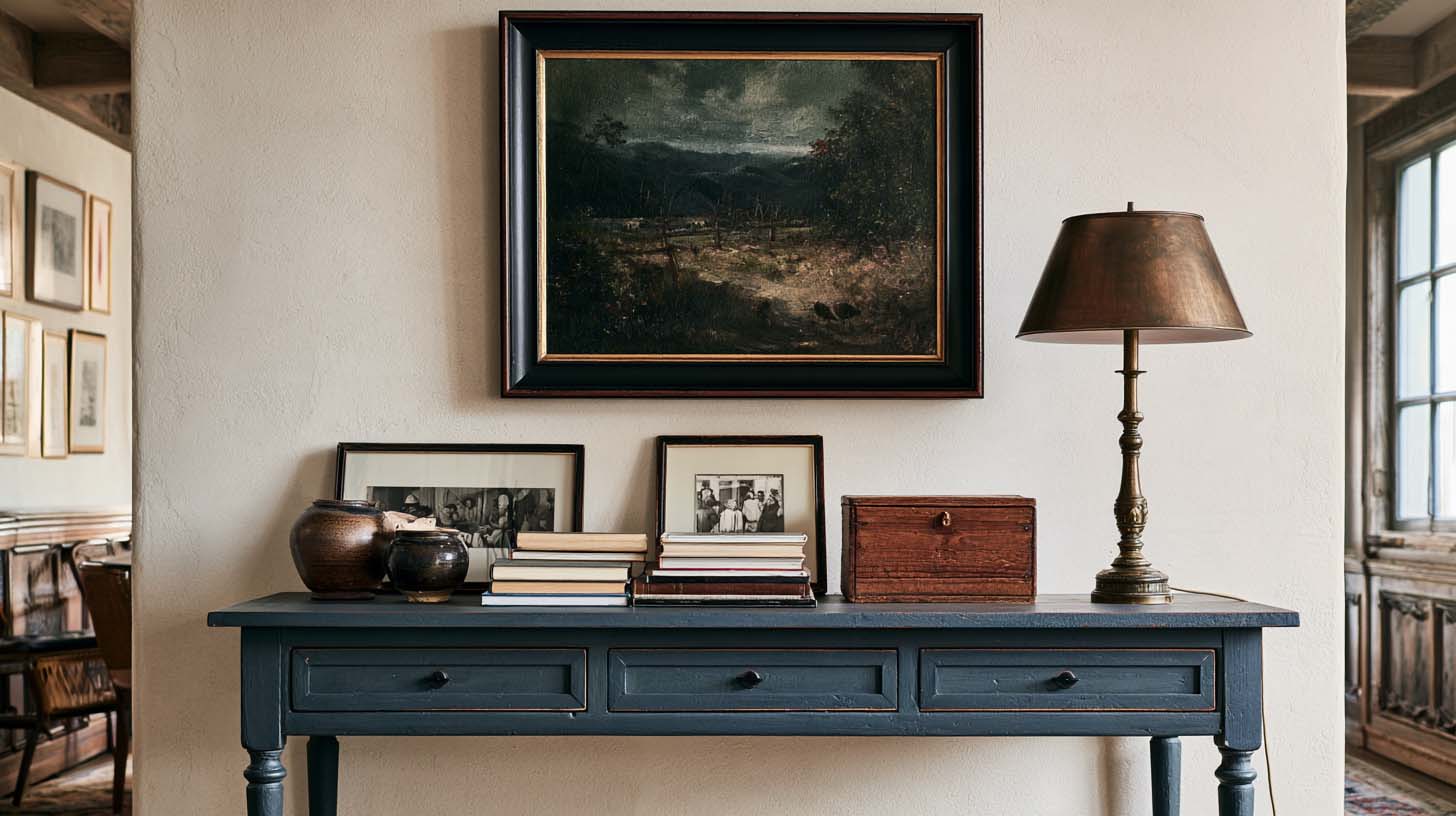
Search for home decor for men and you enter a peculiar marketplace. Metal signs. Whiskey glasses. Black world maps. Watch stands. Car sculptures. Industrial clocks. Motorcycle art. Fake vintage objects. Leather trays. Novelty bookends. Some of these may be perfectly good objects. The problem is the category itself. It assumes men decorate through a predetermined set of symbols rather than through taste.
A better question is not: What decor should a man buy? It is: What deserves to occupy space in your home? That produces a much more useful list.
Books you read. Artwork you respond to. Ceramics with material character. Photography. Antiques. Maps connected to actual places or interests. Sculpture. Collections. Textiles. Clocks. Trays and boxes that organize daily life. Plants. Objects tied to family, travel, professions, hobbies, and personal history. The strongest men's home decor is rarely purchased because it was men's decor.
It was purchased because it mattered. If you are not sure which of your own objects are earning their space, TMH's Full-Service Interior Design can plan the room around the pieces worth keeping.
Decor Should Add Meaning, Beauty, or Function
Before buying an object, ask what it contributes. Does it make the room more beautiful, reveal something personal, add history, introduce a useful material, organize something, carry memory, support a collection, or provide color or texture?
If the answer is none of these, perhaps the object does not deserve the space. This standard immediately eliminates a great deal of decorative clutter.
Books Are Among the Best Decor Objects Because They Are Not Decor Objects
Books have visual texture. Color. Different heights. Different ages. They make shelves more interesting naturally. But their real value is content. The book exists for a reason independent of the shelf. That is exactly what makes it convincing.
A stack of books about architecture because you love architecture has credibility. A stack selected because all the spines are beige has visual coordination but little else. Use the books you own. Let the collection look like your reading life.
Books Should Be Reachable
Do not turn books into wall texture. If you read them, shelves should make them accessible. Group broadly by subject, author, genre, use, or whatever system makes sense to you. A home becomes more personal when useful objects remain useful.
Original Art Is Worth Considering Early
Art is one of the few things in an interior with almost no practical obligation. That is why it matters. You choose it because you want to look at it. Original artwork does not need to be famous or expensive. A painting from a local artist. Photography. A work on paper. Drawing. Small sculpture. The decision begins developing your eye.
Over time, the home becomes difficult to reproduce because another person would not have made the same choices. That is what personality looks like in an interior.
Prints Can Be Excellent Too
Originality is not a moral requirement. Historical prints. Museum reproductions. Limited editions. Photography. Vintage posters. Maps. Architectural drawings. These can be excellent. The question is whether you chose the image deliberately.
Framing matters. Matting matters. Scale matters. A $100 print professionally presented may look more considered than a far more expensive object casually placed.
Photography Can Be Deeply Personal
Photography is one of the easiest ways to bring specificity into men's home decor. Travel photography you took. Family photographs. Work from photographers you admire. Historical photographs. Architectural photography. Automotive photography if cars genuinely matter to you.
The difference between generic wall decor and good photography is usually specificity. Not "a Porsche picture." A photograph of a particular racing moment, chassis, road, or car whose story matters to you. Interest becomes visible through detail.
Maps Work When They Have a Reason
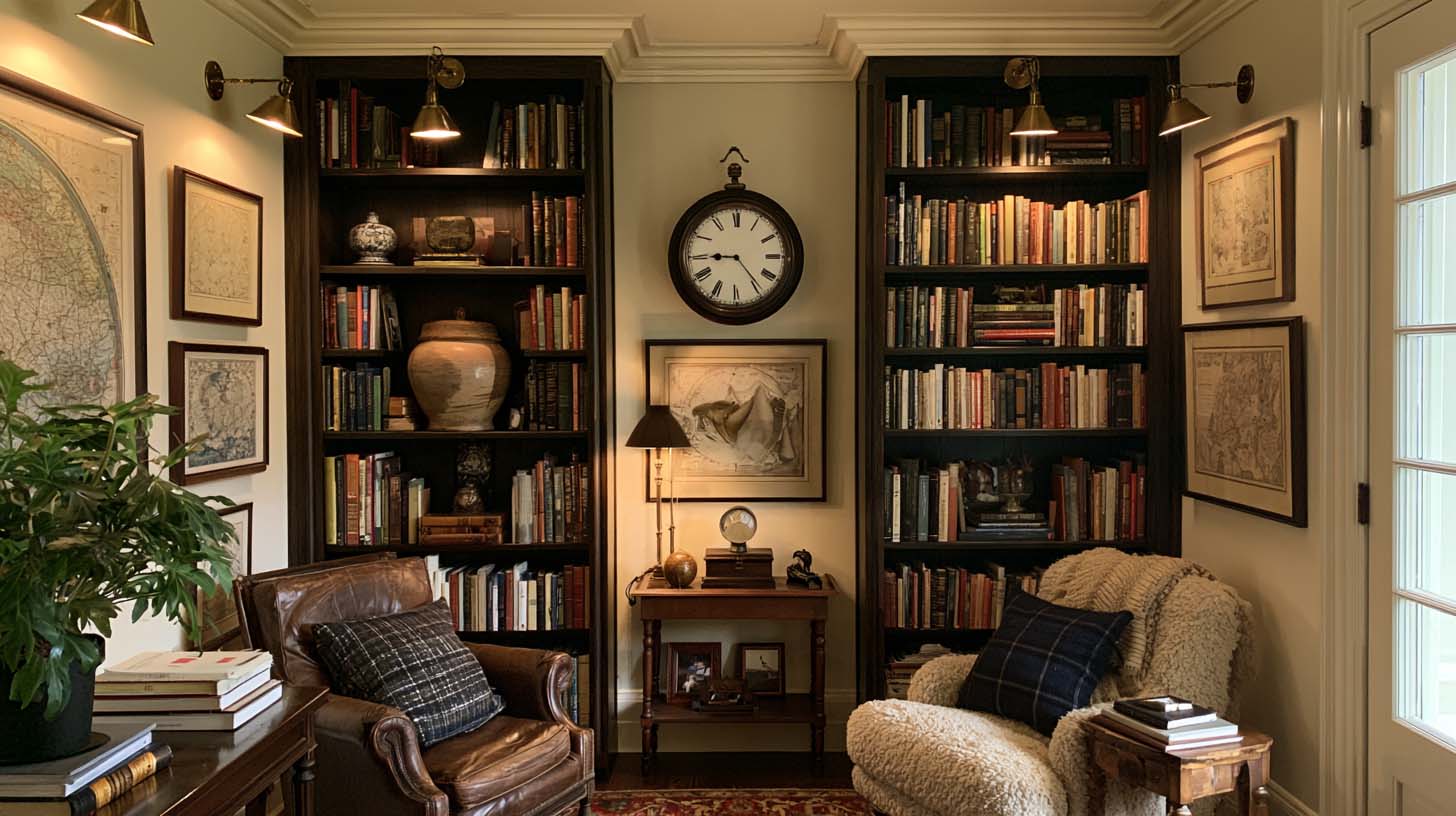
Maps are repeatedly recommended as masculine wall decor. That does not make them bad. But the map should mean something. Your hometown. A place you lived. A city you love. A region you traveled. A historical campaign you study. A nautical chart connected to sailing. A topographic map connected to hiking. Now it is an object with context. A giant world map purchased solely because it fills the wall communicates very little.
Ceramics Introduce Hand and Irregularity
Many masculine interiors contain hard, manufactured surfaces. Rectangular furniture. Steel. Glass. Leather. Electronics. Ceramics introduce something formed rather than machined. A substantial vessel. Hand-thrown bowl. Old pot. Glazed lamp. Sculptural object. You do not need dozens. One good ceramic piece can soften a console or bookcase precisely because it does not share the geometry of everything around it.
The Material Matters
Clay. Stoneware. Porcelain. Terracotta. Glaze. Raw earthen surfaces. Different ceramics communicate different things. A black ceramic vase may look modern. A rough terracotta vessel feels older and earthier. Blue-and-white porcelain introduces more pattern and historical association.
Do not choose according to masculinity. Choose according to what the room lacks.
Sculpture Can Replace Several Small Accessories
One sculpture often does more than an arrangement of five unrelated objects. Bronze. Stone. Wood. Ceramic. Metal. Abstract. Figurative. Historical. The scale should suit the surface. A substantial sculpture on a console can provide enough object presence that almost nothing else is required. This is a useful strategy when you want the room to feel decorated without feeling accessorized.
Antiques Bring Something New Objects Cannot: Time
An old box. Clock. Chair. Chest. Lamp. Vessel. Tool. Sculpture. These introduce chronology. The surface may show wear. The design comes from another era. The material has changed. This is especially valuable in a newly furnished home. A room containing one antique immediately stops looking as though every object arrived from the same retailer.
Family Objects Usually Matter More Than Purchased "Heritage Decor"
An inherited object may have little monetary value. It can still be one of the most important things in the room. Grandfather's clock. Father's camera. A framed letter. Military object. Old tool. Family photograph. Ceramic inherited from a relative. These things create personal chronology.
Do not force them into the room if you dislike them. But when you genuinely value the object, its story gives the room something no catalog can provide.
Travel Objects Are Better When They Came From Travel
This sounds obvious. Yet "global decor" is an enormous retail category. A Moroccan-style vessel purchased from a chain retailer because it looks traveled is not the same thing as an object you brought back from Morocco. That does not make the retail object illegitimate.
It simply means it should stand on its design merit rather than borrowed biography. Objects from actual travel carry memory. Where you found it. Who you were with. What the place was like. That invisible context adds something to the home.
Collections Become Decor Naturally
A collection can be books, records, watches, cameras, models, historical objects, ceramics, maps, art, photography, mechanical objects, or vinyl. The strongest collections develop because the owner becomes interested enough to distinguish good examples from ordinary ones.
That discernment itself becomes visible. A shelf with five carefully chosen cameras feels different from a shelf containing five random "vintage camera decor" objects.
Collections Need Territory
Do not scatter related objects across the whole house. Give them one place. A cabinet. Shelf. Table. Wall. This creates more visual authority while keeping the rest of the room quiet. One strong display looks intentional. The same number of objects distributed everywhere can look like clutter.
Trays Are Useful When They Contain Real Things
Trays have become standard decorative accessories. Use them functionally. Keys. Wallet. Watch. Remote controls. Bar tools. Coffee equipment. Perfume. A tray works because it converts several loose objects into one visual group. It gives daily life a boundary. A tray containing three decorative objects purchased solely to decorate the tray is less interesting.
Boxes Hide the Things You Need But Do Not Want to See
Decorative boxes are extremely useful. Remote controls. Charging cables. Documents. Small electronics. Miscellaneous objects. A good wood, leather, or lacquered box can sit on a table while performing actual storage. This is the ideal intersection of decor and function. The object earns its space twice.
Clocks Can Be Excellent Objects
A good mantel clock. Wall clock. Desk clock. Vintage industrial clock. Mechanical clock. These can bring shape, history, metal, wood, sound, and movement. Again, quality and relevance matter more than masculinity. Do not buy a giant gear clock simply because it looks industrial. Buy a clock you actually like looking at.
Plants Add Something Manufactured Rooms Need
Plants introduce irregular natural form. That can be particularly helpful in masculine interiors containing straight lines, wood, metal, leather, stone, and dark walls. One substantial plant may be enough. Olive tree. Rubber plant. Palm. Ficus.
Whatever suits the room's light and your willingness to care for it. Do not buy plants solely to fill empty corners. Empty space is allowed.
Textiles Are Decor Too
Blankets. Pillows. Rugs. Curtains. They contribute pattern, texture, and color while remaining functional. A rust wool blanket over a chair. A patterned cushion. Linen curtains. A faded rug. These often add more to a room than hard accessories because textiles correct the visual severity of wood, stone, leather, and metal.
Decorative Pillows Should Be Kept Under Control
Pillows have become the default method of decorating sofas. They are easy to buy and easy to replace. That does not mean the sofa needs six. One or two useful pillows with strong fabric may contribute enough. Wool. Linen. Velvet. Tweed. Pattern. Better to have two with material character than a collection of generic slogan cushions.
Mirrors Are Functional Architecture
A mirror provides reflection, light, depth, and a strong vertical or horizontal shape. In an entry hall, bedroom, dining room, or living room, a mirror can act almost like architectural punctuation. The frame matters. Dark wood. Bronze. Painted timber. Iron. Antique gilding. Simple frameless modern forms.
A mirror should reflect something worth seeing where possible. Artwork. Window. Lighting. Architecture.
Personal Photographs Should Not Be Banished
There was a period when highly styled interiors seemed to contain no family photography. That is an odd standard for an actual home. Use personal photography thoughtfully. A few framed photographs on a desk or cabinet. One wall. A staircase. A controlled grouping. Your home is allowed to contain your life.
The Smithsonian American Art Museum notes that domestic photographs historically served exactly this expressive purpose: household pictures in parlors reflected aesthetics, status, aspirations, and family history. (Smithsonian American Art Museum) The medium has changed. The human impulse has not.
Everyday Objects Can Carry Identity
Museums of domestic life preserve surprisingly ordinary things. Kitchen tools. Furniture. Textiles. Household technology. Personal belongings. Why? Because the ordinary things people use reveal how they lived. The Smithsonian's Domestic Life Collection documents home life from the seventeenth century to the present through furnishings and objects connected to household routines, rituals, life stages, and technology. (National Museum of American History)
This gives us a useful design principle. Not every meaningful object needs to have been sold as art. Sometimes the thing connected to your actual life is the better decorative object.
Do Not Decorate With Things You Do Not Understand
Old scientific instrument. African mask. Military artifact. Religious object. Historical document. Ethnographic textile. Antique weapon. If the meaning is unclear, learn what it is before using it decoratively. Some objects carry cultural, religious, historical, or personal significance that deserves more respect than simply matching the room. Knowledge makes collecting more interesting anyway.
Avoid Fake Books
Books whose only job is to pretend someone reads are among the strangest decorative inventions. Decorative boxes disguised as books can occasionally have a practical role. But shelves filled with fake volumes undermine the reason books make rooms interesting in the first place.
Use actual books. If you do not own many yet, leave some shelf space. A collection can grow.
Avoid Generic Text Signs
"WHISKEY." "MAN CAVE." "WORK HARD." "GOOD VIBES." A home rarely becomes more personal through instructions printed on the wall. There are exceptions. Historical signage. A meaningful vintage business sign. Typography tied to a specific memory. But generic slogans usually communicate the opposite of individuality.
Avoid Objects Whose Only Idea Is "Masculine"
Miniature motorcycle. Fake grenade. Decorative dumbbell. Black skull. Novelty whiskey barrel. Again, perhaps one genuinely interests you. Fine. The problem begins when the only reason for the object is that a retailer has decided men should want it. You have better material available. Your actual interests.
Do Not Fill Every Surface
This is perhaps the most important decorating rule. Console. Coffee table. Bookcase. Nightstand. Dresser. Dining table. Mantel. Each does not need three objects. Some surfaces can remain mostly empty. Negative space gives the objects you care about more authority. A lamp, one painting, and one ceramic piece can be enough for an entire console.
Designer Eyes: Remove Half the Accessories
If a room feels cluttered or generic, remove half the small objects temporarily. Do not rearrange them. Physically take them out of the room. Then look again. Can you see the furniture more clearly? The wood? Artwork? Lamp? Rug? If the room improves immediately, you probably did not need better accessories. You needed fewer.
The TMH Perspective
The best decor ideas for men usually stop being recognizable as "men's decor." There is a painting. Several books. A ceramic vessel. Old photograph. Wooden box. One object from a trip. A clock. Plant. Perhaps something inherited. The room feels masculine because it belongs to the man living there, not because each object was selected from a masculine category.
Decoration becomes much more sophisticated once you stop asking: "Does this look masculine?" And start asking: "Does this deserve to be here?" The Smithsonian National Museum of American History's Domestic Life Collection documents furnishings, textiles, household technologies, and everyday objects as records of how people actually lived in the home across centuries. (National Museum of American History)
The Smithsonian American Art Museum's Pictures in the Parlor is especially relevant to personal decor: it examines domestic photographs and images that conveyed household aesthetics, aspirations, status, and family history. (Smithsonian American Art Museum)
If you keep buying accessories but the room still does not feel personal, TMH's Full-Service Interior Design can establish the larger visual framework first, so books, art, objects, materials, and collections become part of a coherent room rather than additional clutter.
Frequently Asked Questions
What is the best home decor for men?
Books, art, photography, ceramics, antiques, maps, sculpture, collections, textiles, clocks, boxes, trays, plants, and personal artifacts all work when they genuinely contribute meaning, material, beauty, or function.
What decor makes a home look masculine?
There is no required category. Masculinity usually emerges from the full composition: materials, scale, color, furniture, restraint, and personal identity.
How do I decorate without creating clutter?
Use fewer larger objects, group collections together, leave negative space, use closed storage for ordinary clutter, and avoid feeling obligated to decorate every surface.
Are car or whiskey decorations bad?
Not inherently. They work when those subjects genuinely matter to you. The problem is using them merely because they have been marketed as masculine decor.


Facebook
Instagram
Youtube