6 Indoor Plants That Instantly Elevate a Masculine Space
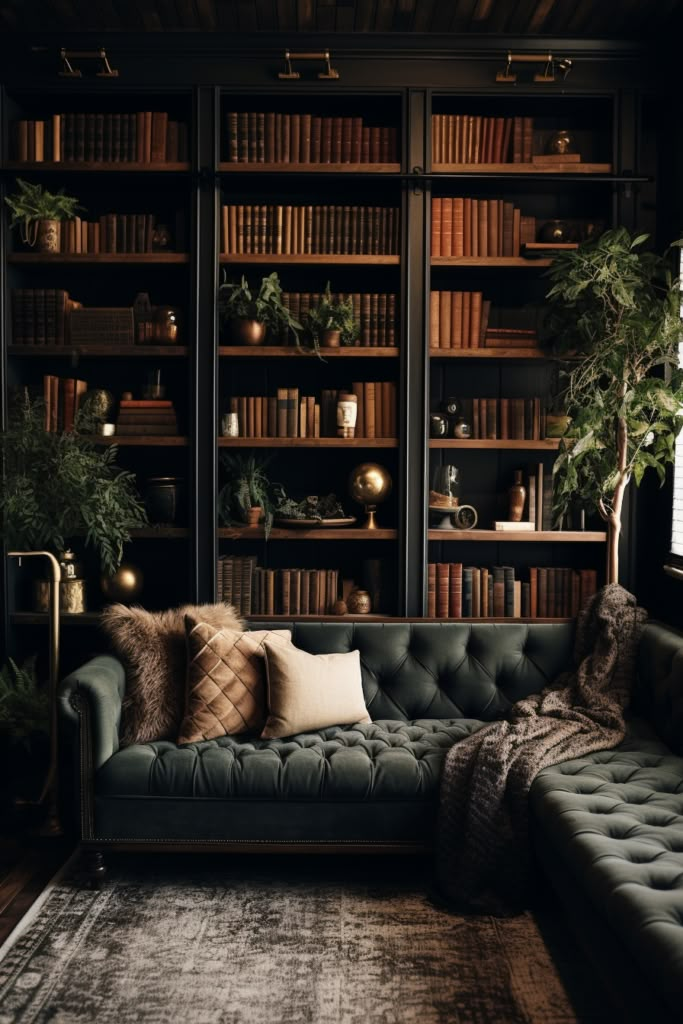
Plants are often treated as decoration.
They're usually the last thing added to a room, placed wherever there's an empty corner that feels unfinished.
That's unfortunate.
Because when they're chosen thoughtfully, plants become architectural elements.
They soften hard materials.
Introduce movement.
Balance visual weight.
And bring life into rooms dominated by wood, leather, stone, and metal.
The key isn't simply adding greenery.
It's choosing plants with the same confidence and structure as the rest of the interior.
Here are six that consistently work well in masculine homes.
1. Fiddle Leaf Fig
The fiddle leaf fig has become popular for good reason.
Its oversized leaves create an almost sculptural silhouette that immediately gives a room more presence.
Rather than disappearing into the background, it becomes part of the architecture.
It works particularly well beside fireplaces, reading chairs, or large windows where it has enough room to breathe.
Best suited for
Living rooms
Libraries
Entryways
Double-height spaces
Designer Eyes
Treat a fiddle leaf fig like a piece of furniture, not an accessory.
Give it enough space to stand on its own.
2. Rubber Tree
The rubber tree brings visual weight.
Its broad, glossy leaves feel rich and substantial without becoming overly dramatic.
It's also one of the easier large plants to maintain, making it an excellent choice for those who want impact without constant attention.
Placed beside walnut furniture or leather seating, it quietly reinforces the richness of those materials.
3. Monstera
The Monstera introduces movement.
Its distinctive split leaves create bold shadows while adding an organic quality to interiors dominated by straight lines and heavier materials.
Despite its tropical origins, it rarely feels delicate.
Instead, it brings a confident, sculptural energy that works beautifully in contemporary masculine spaces.
Best suited for
Modern apartments
Industrial lofts
Contemporary living rooms
Creative studios
4. Snake Plant
Few plants offer as much visual impact with as little maintenance.
Its upright, architectural form naturally complements modern interiors.
Rather than spreading outward, it emphasizes verticality, making ceilings appear taller while introducing structure into smaller spaces.
It's an ideal choice for anyone who appreciates simplicity.
Designer Eyes
Notice how the vertical leaves echo bookshelves, paneling, fireplaces, and architectural lines.
That's one reason snake plants feel so naturally at home in masculine interiors.
5. Bird of Paradise
The Bird of Paradise creates drama.
Its oversized leaves introduce a bold silhouette that feels both luxurious and relaxed.
Unlike smaller decorative plants, it has enough visual weight to anchor an entire corner of a room.
High ceilings, abundant natural light, and open layouts allow this plant to perform at its best.
6. Olive Tree
The olive tree creates a completely different mood.
Its soft gray-green foliage feels restrained, elegant, and timeless.
Rather than commanding attention, it quietly contributes to the atmosphere of the room.
It's particularly effective in interiors built around natural stone, plaster, linen, and warm wood because it shares the same understated character.
Best suited for
Dining rooms
Bedrooms
Transitional spaces
Mediterranean-inspired interiors
The Planter Matters as Much as the Plant
One of the quickest ways to undermine a beautiful plant is placing it in the wrong container.
The planter should feel consistent with the rest of the room.
Concrete.
Matte black ceramic.
Aged terracotta.
Natural stone.
Weathered metal.
These materials reinforce masculine interiors because they carry the same visual language as the furniture and architecture.
Brightly colored or highly decorative pots often compete with the room instead of supporting it.
Placement Is More Important Than Quantity
A common mistake is scattering small plants throughout the home.
Instead, use fewer plants with greater intention.
Allow them to anchor a seating area.
Frame a fireplace.
Balance a large piece of furniture.
Soften an empty architectural corner.
Plants become dramatically more effective when they're treated as part of the room's composition rather than simply filling empty space.
Designer Eyes
Before buying another plant, ask yourself:
"What visual problem am I trying to solve?"
If you can't answer that question, you probably don't need another plant.
Plants Should Support the Room, Not Compete With It
The best interiors don't use plants because plants are fashionable.
They use them because they introduce balance.
They soften hard materials.
They create movement where architecture feels rigid.
They add life without adding clutter.
When chosen thoughtfully, a single well-placed plant often contributes more to a room than an entire shelf of decorative accessories.
That's because it isn't simply decoration.
It's part of the architecture of the room.
Continue Building Your Eye for Design
Plants are only one part of a thoughtfully designed room. Their real power comes from how they interact with the furniture, lighting, materials, color palette, and architecture surrounding them.
The Masculine Interior Style Guide teaches the ten timeless masculine interior styles we believe every man should understand, complete with exact paint colors, material palettes, furniture direction, styling guidance, and the principles that define each style. It also includes a 30-minute video walkthrough to help you confidently choose the style that best fits your home and bring it to life.
Whether you're adding the finishing touches or designing an entire home, the guide will help you make thoughtful design decisions with confidence and create spaces that feel cohesive, timeless, and unmistakably yours.
Explore The Masculine Interior Style Guide →

Facebook
Instagram
Youtube