Why Mixing Woods Is Hard (And the One Rule That Actually Works)
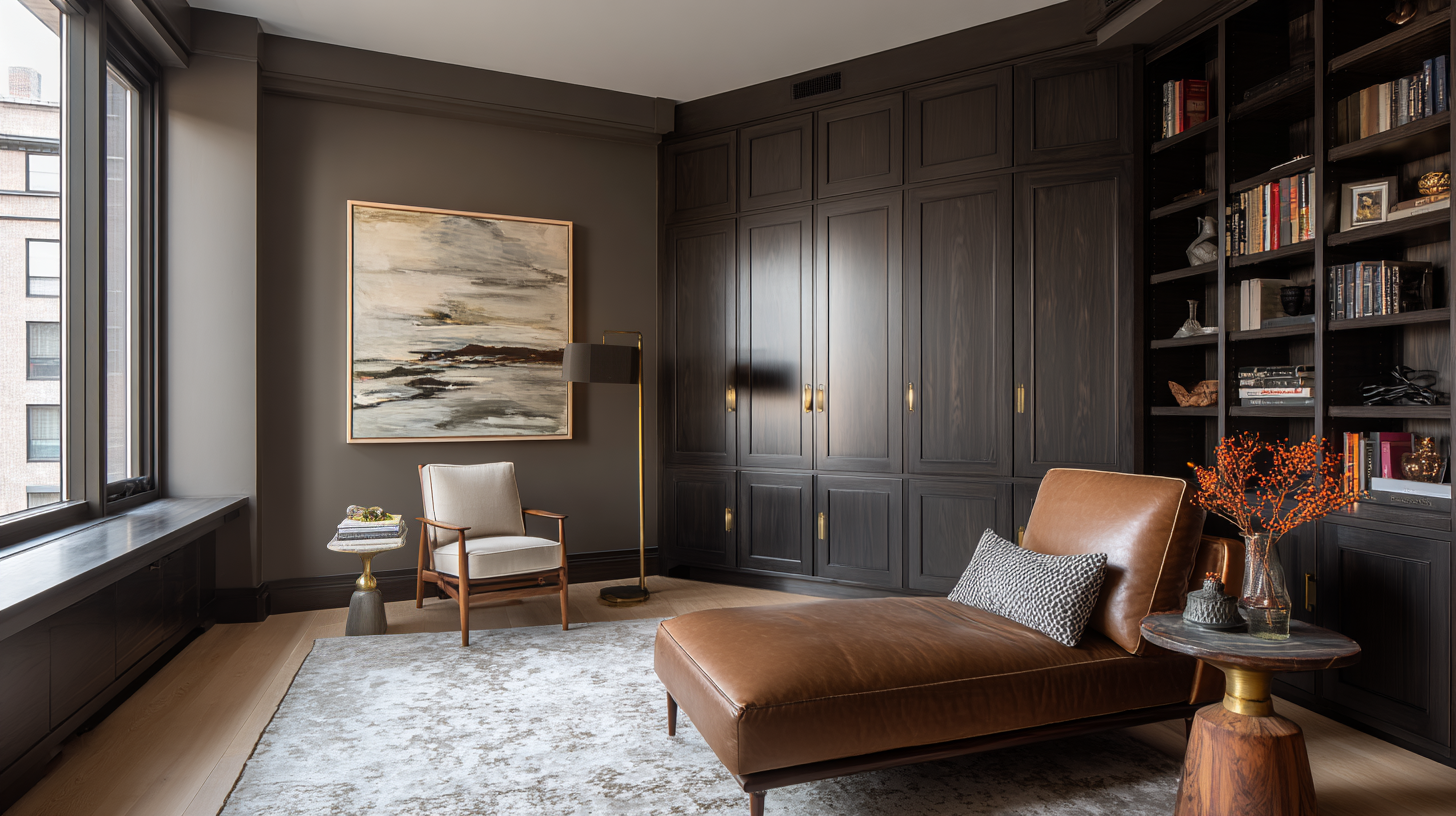
One of the biggest fears people have when designing a room is mixing wood tones.
"Can I pair walnut with oak?"
"Will this coffee table clash with my hardwood floors?"
"Do all my wood furniture pieces have to match?"
The answer is no.
In fact, rooms where every wood finish matches perfectly often feel less natural than rooms that intentionally combine several species.
The problem isn't mixing woods.
It's mixing them without a system.
Most Rooms Have Too Many Leaders
The biggest mistake isn't choosing the wrong wood.
It's allowing every wood tone to compete equally.
Dark walnut cabinetry.
Medium oak flooring.
Light ash shelving.
Espresso coffee table.
Cherry sideboard.
None of them acknowledge one another.
Each is trying to become the dominant material.
The room feels unsettled because your eye doesn't know which one to trust.
Great masculine interiors establish hierarchy first.
Designer Eyes
Walk into your room and ask yourself,
"Which wood tone is leading this space?"
If you can't answer immediately, the room probably doesn't have one.
Start With One Dominant Wood
Every successful combination begins with a primary wood.
This becomes the room's visual foundation.
Maybe it's your flooring.
Your dining table.
Your built-in shelving.
Your kitchen cabinetry.
Whatever carries the greatest visual weight should establish the room's direction.
Everything else becomes supporting material.
Not competition.
This single decision makes mixing woods dramatically easier because every future choice now has something to relate to.
Temperature Matters More Than Color
People often focus on whether one wood is darker or lighter.
Professionals usually pay closer attention to temperature.
Some woods feel warm.
Others feel cool.
Some lean golden.
Others lean gray.
When several woods share a similar undertone, they naturally feel related even if their colors are very different.
That's why light oak and walnut often work beautifully together.
They're different in value.
But they're often similar in warmth.
Designer Eyes
When comparing two wood samples, squint slightly.
Ignore the grain.
Pay attention only to whether each feels warm or cool.
That's usually what determines whether they'll live comfortably together.
Contrast Should Feel Intentional
Many people try to make every wood almost match.
Ironically, this often creates more tension.
Instead, commit.
Either allow the woods to feel closely related...
Or make them confidently different.
A rich walnut table against pale white oak flooring feels deliberate.
A medium brown table beside slightly darker medium brown flooring often feels accidental.
Strong contrast creates clarity.
Let Finish Unite the Room
Color isn't the only characteristic wood carries.
Finish matters too.
A room filled with matte and satin woods feels quiet and timeless.
Introduce one highly polished surface among them and it immediately begins asking for attention.
The sheen becomes another layer of contrast.
When mixing woods, keeping similar finish levels often creates more cohesion than trying to match colors exactly.
Repeat Wood Tones Throughout the Room
One walnut chair can feel random.
Three walnut moments begin feeling intentional.
Repeat important wood tones throughout the room.
A walnut coffee table.
Walnut picture frames.
Walnut shelving.
Suddenly the material becomes part of the room's language instead of an isolated decision.
Repetition creates rhythm.
Rhythm creates cohesion.
Think Like an Orchestra
The easiest way to understand mixed woods is to stop thinking about matching.
Start thinking about music.
Every orchestra has many instruments.
But only one melody.
Your dominant wood establishes the melody.
The supporting woods provide harmony.
None of them need to disappear.
They simply shouldn't all perform the solo at the same time.
That's why the best masculine interiors feel layered instead of chaotic.
Different materials.
One clear direction.
Continue Building Your Eye for Design
Choosing wood finishes becomes much easier once you understand how materials, color, proportion, lighting, and visual hierarchy work together. Great interiors aren't built from matching products. They're built from thoughtful relationships.
The Masculine Interior Style Guide teaches the ten timeless masculine interior styles we believe every man should understand, complete with exact paint colors, material palettes, furniture direction, styling guidance, and the principles that define each style. It also includes a 30-minute video walkthrough to help you confidently choose the style that best fits your home and bring it to life.
Whether you're selecting furniture for one room or designing an entire home, the guide will help you make thoughtful design decisions with confidence and create spaces that feel cohesive, timeless, and unmistakably yours.